What Is an Internal Carbon Budget? A Comprehensive Guide
An internal carbon budget is a voluntary, self-imposed limit on the total greenhouse gas emissions an organization can produce over a set period. It…
Search results
Guides, research and analysis matching your search.
118 resultsAn internal carbon budget is a voluntary, self-imposed limit on the total greenhouse gas emissions an organization can produce over a set period. It…
Sustainable aviation fuel (SAF) offers a promising pathway to reduce aviation's carbon footprint, with lifecycle emission reductions of up to 80% compared to conventional…
A sustainable city integrates compact urban form, efficient transport, renewable energy, green infrastructure, and inclusive governance to reduce environmental impact and improve quality of…
Chemical production is a primary driver of the 'novel entities' planetary boundary, which addresses the release of synthetic chemicals and other human-made substances into…
Net zero refers to achieving a balance between the amount of greenhouse gases emitted into the atmosphere and the amount removed. It is a…
Science-based targets are corporate greenhouse gas reduction goals aligned with the level of decarbonization required to meet the Paris Agreement’s aim of limiting global…
Greenwishing is the practice of setting environmental goals that far exceed an organization's or government's actual ability to achieve them. Unlike greenwashing, it often…
Precision agriculture (PA) is a farming management approach that uses information technology to tailor crop inputs to specific field conditions, aiming to increase efficiency…
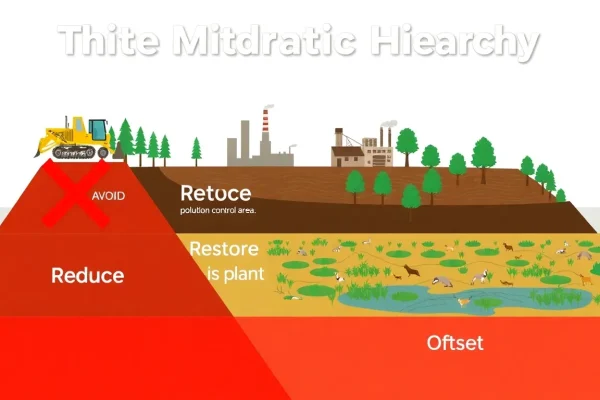
The mitigation hierarchy is a structured approach to managing the environmental impacts of development projects, prioritizing avoidance, then reduction, restoration, and finally offsetting. While…
Environmental regulation uses government-mandated rules and technology standards to control pollution, while market-based policies harness economic incentives like taxes, tradable permits, and subsidies to…