Systems Thinking for Sustainability
Learn how systems thinking helps solve sustainability challenges by understanding feedback loops, complexity, resilience, leverage points, and interconnected Earth systems.
Search results
Guides, research and analysis matching your search.
103 resultsLearn how systems thinking helps solve sustainability challenges by understanding feedback loops, complexity, resilience, leverage points, and interconnected Earth systems.
Learn how sustainable development can meet human needs while respecting planetary boundaries, balancing economic prosperity, social equity, and Earth-system resilience.
Learn what novel entities are, why chemicals, plastics, PFAS, pesticides, and other synthetic substances are a planetary boundary, and how they threaten Earth's life-support…
Learn the foundations of Earth System Science, Earth's interconnected spheres, energy flows, biogeochemical cycles, feedbacks, tipping points, and human impacts.
Human civilization depends on more than economic growth, technological innovation, and political stability. It also depends on a functioning planet. Reliable rainfall supports agriculture.…
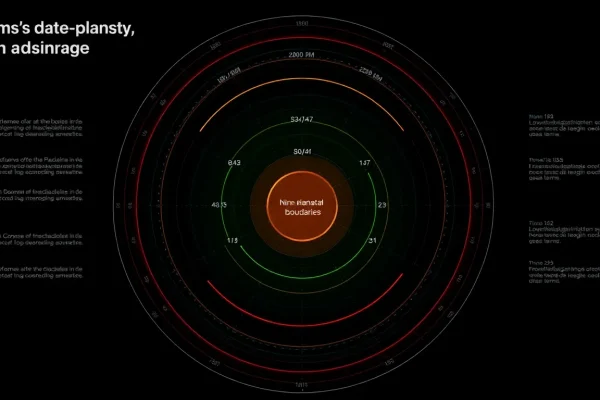
The “safe operating space for humanity” is the central concept of the planetary boundaries framework, defining a Holocene-like state in which human societies can…
The planetary boundaries framework defines a safe operating space for humanity, but not all boundaries are global in scale. Some, like climate change and…
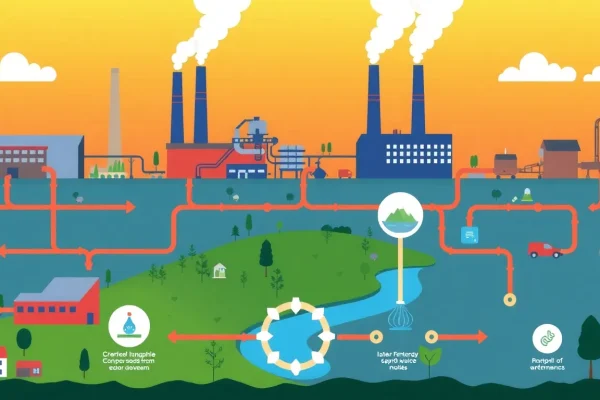
Industrial symbiosis is a collaborative approach where waste or by-products of one company become valuable inputs for another, mimicking natural ecosystems. It offers a…
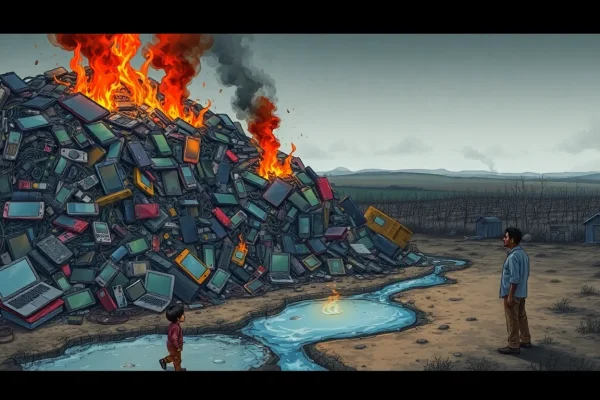
Electronic waste, or e-waste, contains hazardous substances such as lead, mercury, and flame retardants that, when improperly disposed of or informally recycled, contaminate air,…
A material footprint measures the total amount of raw materials extracted globally to satisfy a country's final consumption, including materials used in producing imported…