What Is Regenerative Agriculture?
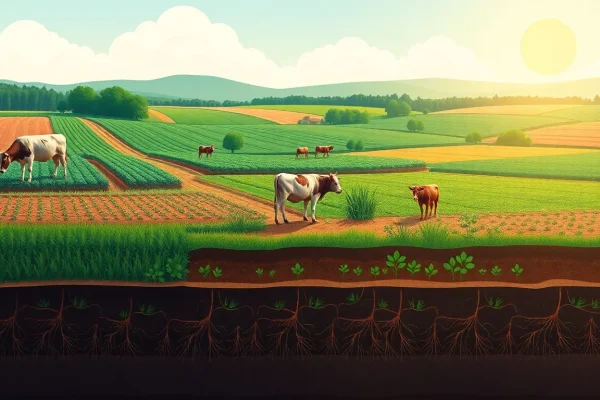
Regenerative agriculture is a holistic approach to farming and grazing that focuses on restoring soil health, increasing biodiversity, and enhancing ecosystem services. It goes…
Search results
Guides, research and analysis matching your search.
238 resultsRegenerative agriculture is a holistic approach to farming and grazing that focuses on restoring soil health, increasing biodiversity, and enhancing ecosystem services. It goes…
The planetary boundaries framework defines a safe operating space for humanity, but not all boundaries are global in scale. Some, like climate change and…
Electronic waste, or e-waste, contains hazardous substances such as lead, mercury, and flame retardants that, when improperly disposed of or informally recycled, contaminate air,…
Genetic diversity is the variety of genes within a species, enabling adaptation, while functional diversity refers to the range of biological traits that influence…
Keystone species have a disproportionately large effect on their ecosystem relative to their abundance, while indicator species signal the health or condition of an…
A material footprint measures the total amount of raw materials extracted globally to satisfy a country's final consumption, including materials used in producing imported…
Chemical pollution is difficult to measure because of the vast number of chemicals in use, their complex environmental behavior, and limitations in analytical technology.…
Pollinators, including bees, butterflies, birds, and bats, are essential for the reproduction of many flowering plants, including a significant portion of global food crops.…
Climate mitigation and climate adaptation are two complementary strategies for addressing climate change. Mitigation focuses on reducing greenhouse gas emissions to slow global warming,…
Ecosystem services are the direct and indirect contributions of ecosystems to human well-being. They include provisioning services like food and water, regulating services such…