In brief
At a glance
Quick Facts
- Definition
- A consumption-based indicator of the total raw materials extracted globally to meet a country's final demand.
- Unit of measurement
- Tonnes of raw materials (biomass, fossil fuels, metal ores, non-metallic minerals).
- Global average per capita
- Approximately 12 tonnes per person per year.
- Highest per capita footprints
- High-income countries, often exceeding 25 tonnes per person per year.
- Lowest per capita footprints
- Low-income countries, typically below 5 tonnes per person per year.
- Main material categories
- Biomass, fossil fuels, metal ores, and non-metallic minerals.
- Key difference from DMC
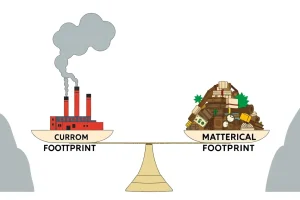
- Material footprint includes upstream raw materials of imports; domestic material consumption does not.
- Primary driver
- Affluence and consumption patterns, more than population growth.
Key Takeaways
- A material footprint measures the total amount of raw materials extracted globally to meet a country’s final consumption, including materials embodied in imports.
- It provides a consumption-based perspective, revealing the true resource demand of a population beyond territorial boundaries.
- Material footprints are closely linked to environmental pressures such as climate change, biodiversity loss, and resource depletion.
- High-income countries typically have material footprints several times larger than low-income countries, highlighting global inequalities in resource use.
What Is a Material Footprint?
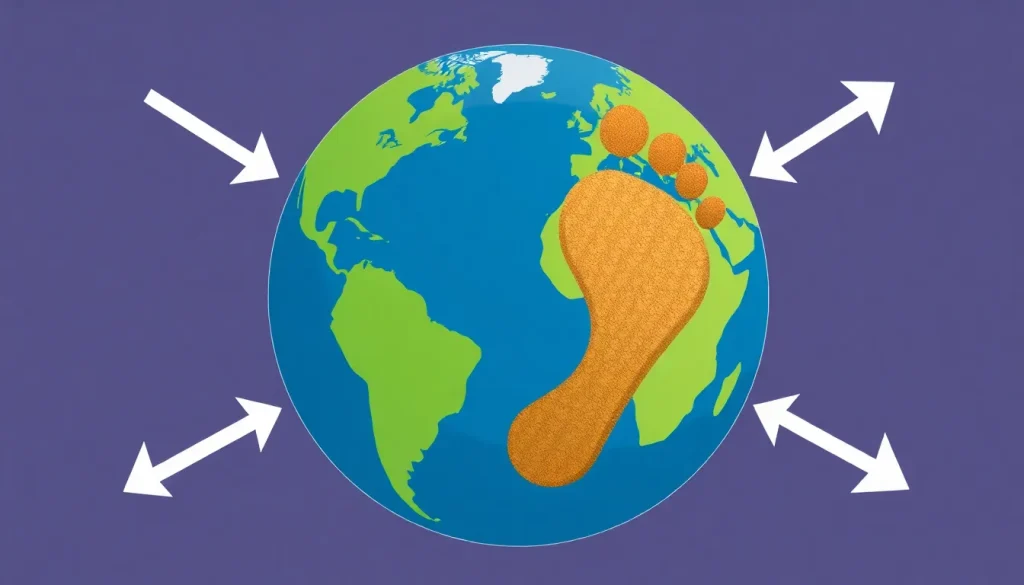
A material footprint is a comprehensive indicator that quantifies the total amount of raw materials extracted from the natural environment to support a country’s final consumption of goods and services. Unlike production-based measures that only account for materials extracted within a country’s borders, the material footprint includes all upstream raw materials required to produce the goods that are ultimately consumed, regardless of where in the world the extraction occurred. This makes it a consumption-based indicator that reveals the true resource intensity of a nation’s lifestyle and economic activities.
The concept is rooted in material flow accounting (MFA), a framework used to track the flows of natural resources through economies. The material footprint aggregates four main categories of raw materials: biomass (such as crops, wood, and fish), fossil fuels (coal, oil, natural gas), metal ores (iron, copper, bauxite), and non-metallic minerals (sand, gravel, clay). By capturing the global extraction associated with final demand, the material footprint highlights the hidden resource costs of consumption, including the materials used in producing imported goods that are often not visible to the end consumer. It is a key metric for understanding the environmental pressures linked to economic activity and for monitoring progress toward sustainable resource use.
How It Works
The material footprint is calculated using environmentally extended input-output analysis, which links economic data on production and trade with physical data on material extraction. The process begins with detailed statistics on the extraction of raw materials in each country, broken down by material type. These domestic extraction figures are then combined with trade data to trace the flow of materials through global supply chains. The goal is to allocate all extracted materials to the final consumer who ultimately drives the demand, regardless of where in the world the extraction took place.
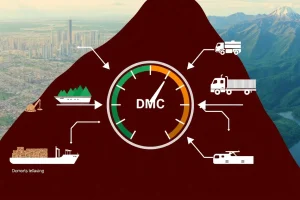
For example, if a country imports a car, the material footprint includes not only the steel and plastic in the car itself but also the metal ores mined to produce that steel, the crude oil extracted to make the plastic, and the sand and gravel used in the factory that assembled the car. This allocation is done using multi-regional input-output models that map the interdependencies between industries and countries. The result is a per capita or national total material footprint, often expressed in tonnes. This method contrasts with domestic material consumption (DMC), which only measures materials physically used within a country’s borders, thus overlooking the resource demands of imported goods.
Importance and Impact
The material footprint is a critical metric for understanding the environmental sustainability of consumption patterns. By revealing the full resource requirements of a country’s lifestyle, it exposes the hidden environmental costs that are often outsourced to other regions. A high material footprint indicates a heavy reliance on natural resource extraction, which is a primary driver of environmental degradation, including deforestation, soil erosion, water scarcity, and greenhouse gas emissions. Monitoring material footprints helps policymakers identify whether economic growth is decoupling from resource use—a key goal of sustainable development.
Moreover, the material footprint highlights global inequalities. High-income countries typically have material footprints that are many times larger than those of low-income countries, even when their domestic material consumption appears moderate. This is because wealthy nations import large quantities of resource-intensive goods, effectively shifting the environmental burden of their consumption to developing countries. The indicator is therefore essential for discussions on climate justice, resource efficiency, and the circular economy, as it provides a more accurate picture of a country’s true resource demand and its global environmental impact.
Main Causes or Drivers
The size of a country’s material footprint is driven by a combination of economic, demographic, and technological factors. The most significant driver is the level and pattern of final consumption, which is closely linked to affluence. As incomes rise, households tend to consume more goods and services, many of which are material-intensive, such as housing, vehicles, and electronic devices. Population growth also contributes to increasing total material demand, although per capita consumption levels are the dominant factor in explaining differences between countries.
Other important drivers include the structure of the economy, the efficiency of production processes, and the types of materials used. Economies with large manufacturing sectors or heavy reliance on fossil fuels tend to have higher material footprints. Technological innovation can either increase or decrease the footprint: while efficiency improvements reduce the amount of material needed per unit of output, they can also lead to rebound effects where lower costs stimulate greater overall consumption. Additionally, urbanization and infrastructure development drive demand for construction minerals, which account for a large share of global material use.
Environmental and Human Impacts
The extraction and processing of materials to meet consumption demands have profound environmental consequences. Mining for metal ores and fossil fuels leads to habitat destruction, soil contamination, and water pollution. The extraction of biomass, such as timber and agricultural products, is a major cause of deforestation and biodiversity loss. The production of non-metallic minerals, including sand and gravel for construction, can result in landscape degradation and the depletion of finite resources. These activities also generate significant greenhouse gas emissions, contributing to climate change.
Human communities are directly affected by the material footprint of consumption, particularly in resource-rich but economically disadvantaged regions. The expansion of extractive industries can lead to land displacement, loss of livelihoods, and social conflicts. Pollution from mining and processing facilities poses health risks to local populations. Furthermore, the global demand for materials can exacerbate geopolitical tensions over resource access. By linking consumption in one part of the world to environmental and social impacts in another, the material footprint underscores the interconnectedness of global sustainability challenges.
Regional Differences
Material footprints vary significantly across regions, reflecting differences in income levels, consumption patterns, and economic structures. High-income countries, such as those in North America and Western Europe, typically have the largest per capita material footprints, often exceeding 25 tonnes per person per year. These regions rely heavily on imports of finished goods and raw materials, meaning a substantial portion of their footprint is outsourced to other countries. In contrast, low-income countries generally have per capita footprints below 5 tonnes, as their consumption is limited and they often serve as net exporters of raw materials.
Emerging economies present a mixed picture. Rapidly industrializing nations, such as China and India, have seen their material footprints grow dramatically due to rising affluence and infrastructure development. However, their per capita footprints remain lower than those of wealthy nations. Regional differences also exist in the composition of material footprints: for example, construction minerals dominate in countries with high urbanization rates, while biomass is more significant in agrarian economies. Understanding these regional patterns is essential for designing targeted policies to reduce global resource use.
What Individuals Can Do
While systemic changes are necessary to reduce material footprints at scale, individual actions can collectively make a meaningful difference. One of the most effective steps is to adopt more sustainable consumption habits, such as buying fewer but higher-quality products that last longer, repairing items instead of replacing them, and choosing second-hand goods. Reducing food waste and shifting toward plant-based diets can also lower the material footprint, as animal products are typically more resource-intensive to produce.
Individuals can also reduce their material footprint by minimizing the use of single-use products, recycling materials whenever possible, and supporting businesses that prioritize resource efficiency and circular economy principles. Being mindful of housing choices—such as living in smaller, energy-efficient homes—and opting for public transportation, cycling, or walking over private car use can further decrease the demand for construction materials and fossil fuels. Education and awareness about the hidden material costs of everyday products empower consumers to make choices that align with a more sustainable future.
FAQ
What is a material footprint?
A material footprint is the total amount of raw materials extracted from the environment to produce the goods and services consumed by a country, including materials used abroad to make imported products.
How does a material footprint differ from domestic material consumption?
Domestic material consumption (DMC) measures only the materials physically used within a country's borders, while the material footprint includes all upstream raw materials required for imported goods, giving a consumption-based view.
Why does the material footprint matter?
It reveals the true environmental pressure of a country's lifestyle, highlights global inequalities in resource use, and helps track progress toward sustainable resource management and decoupling economic growth from environmental degradation.
References
- United Nations Environment Programme, International Resource Panel. Global Material Flows and Resource Productivity.
- Organisation for Economic Co-operation and Development (OECD). Material Resources, Productivity and the Environment.
- Eurostat. Material Flow Accounts and Resource Productivity.