Food Systems and Planetary Boundaries
Learn how food systems affect climate, biodiversity, freshwater, land, nutrients, and the planetary boundaries—and how sustainable food systems can nourish people and the planet.
Search results
Guides, research and analysis matching your search.
249 resultsLearn how food systems affect climate, biodiversity, freshwater, land, nutrients, and the planetary boundaries—and how sustainable food systems can nourish people and the planet.
Learn what ocean acidification is, how rising CO₂ changes seawater chemistry, its impacts on marine life, and why it has become a planetary boundary.
Learn what novel entities are, why chemicals, plastics, PFAS, pesticides, and other synthetic substances are a planetary boundary, and how they threaten Earth's life-support…
Learn how human disruption of the nitrogen and phosphorus cycles affects climate, freshwater, biodiversity, food production, and Earth's planetary boundaries.
Learn how agriculture, deforestation, and land-use change affect climate, biodiversity, freshwater, and Earth's resilience through the land-system change planetary boundary.
Learn how freshwater change affects rivers, groundwater, soil moisture, climate, ecosystems, and why the global water cycle is a planetary boundary.
Learn why biodiversity and biosphere integrity are essential for Earth system stability, ecosystem resilience, climate regulation, and human well-being.
A complete guide to climate change, including causes, scientific evidence, impacts, adaptation, mitigation, carbon cycles, and practical climate solutions.
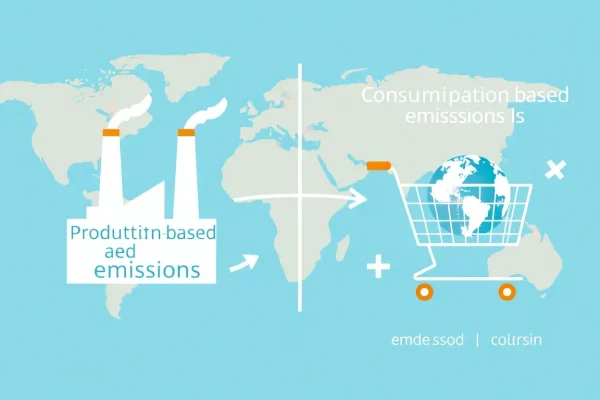
In 2022, global production-based CO2 emissions from fossil fuels and industry were 36.1 GtCO2, while consumption-based emissions were identical globally but varied by country…
Learn the foundations of Earth System Science, Earth's interconnected spheres, energy flows, biogeochemical cycles, feedbacks, tipping points, and human impacts.