In brief
Every meal connects us to the Earth system.
A loaf of bread depends on fertile soil, rainfall, pollinating insects, and nutrients. A bowl of rice reflects centuries of agricultural innovation and complex irrigation networks. A piece of fruit embodies sunlight, water, biodiversity, transport, and global trade.
Food is far more than nutrition.
It is one of humanity’s largest interactions with the biosphere.
Modern food systems encompass everything involved in bringing food from ecosystems to our plates, including agriculture, fisheries, livestock production, food processing, transportation, storage, retail, consumption, and waste management.
These systems have enabled remarkable progress. They support nearly eight billion people, have dramatically reduced famine in many regions, and provide unprecedented food diversity.
Yet they also place extraordinary pressure on Earth’s life-support systems.
Agriculture occupies roughly half of the world’s habitable land, consumes about 70% of global freshwater withdrawals, and is a major driver of deforestation, biodiversity loss, nutrient pollution, and greenhouse-gas emissions. Food systems as a whole account for roughly 30% of global greenhouse-gas emissions. (EAT)
Recognizing these connections, scientists increasingly view food not simply as an agricultural issue, but as an Earth-system issue.
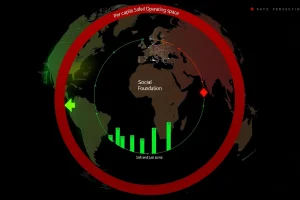
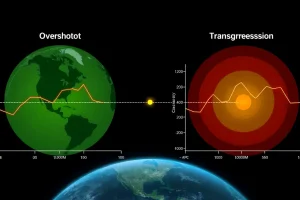
The EAT-Lancet Commission and Earth-system researchers argue that transforming food systems is essential if humanity is to remain within the Planetary Boundaries while ensuring healthy diets for a growing global population. According to the 2025 Commission, food systems are the largest contributor to the transgression of five of the nine planetary boundaries. (EAT)
Quick Answer
A food system includes every activity involved in producing, processing, transporting, selling, consuming, and disposing of food.
Food systems influence nearly every planetary boundary through:
- Greenhouse-gas emissions
- Deforestation
- Freshwater use
- Nitrogen and phosphorus pollution
- Biodiversity loss
- Chemical pollution
- Ocean impacts
- Waste generation
Modern assessments conclude that transforming food systems is essential for simultaneously improving human health, reducing environmental pressures, and maintaining Earth’s safe operating space. (EAT)
What Is a Food System?
Food systems extend far beyond farms.
They include:
- Crop production
- Livestock production
- Fisheries
- Aquaculture
- Fertilizer production
- Food processing
- Transportation
- Packaging
- Retail
- Restaurants
- Household consumption
- Food waste management
Every stage consumes energy, water, land, and materials.
Every stage also creates environmental impacts.
Understanding these interactions requires an Earth-system perspective rather than viewing agriculture alone.
Food Systems as Earth-System Drivers
Food systems interact with all major Earth-system components.
They influence:
- Atmosphere
- Biosphere
- Hydrosphere
- Geosphere
- Cryosphere (indirectly through climate)
Because agriculture depends upon healthy ecosystems while simultaneously modifying them, food systems represent one of the clearest examples of humanity’s interconnected relationship with the Earth system.
Food and the Planetary Boundaries
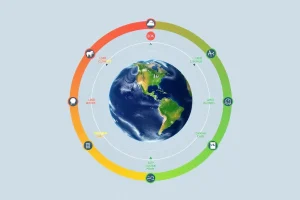
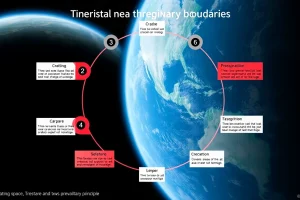
The Planetary Boundaries framework identifies nine processes that regulate Earth’s stability.
Food systems affect all of them to varying degrees.
Recent EAT-Lancet analyses conclude that food systems are the primary driver of transgression for:
- Land-system change
- Biosphere integrity
- Freshwater change
- Biogeochemical flows
- Novel entities
They are also major contributors to:
- Climate change
- Ocean acidification
- Atmospheric aerosol loading
while influencing stratospheric ozone through selected agricultural emissions. (EAT)
Climate Change
Food contributes to climate change through:
Agriculture
Emissions arise from:
- Livestock
- Rice cultivation
- Fertilizer use
- Soil management
Land-use change
Deforestation releases stored carbon.
Loss of forests also reduces future carbon uptake.
Supply chains
Additional emissions result from:
- Processing
- Refrigeration
- Transportation
- Packaging
- Retail
Together these activities account for roughly 30% of global greenhouse-gas emissions. (EAT)
Biosphere Integrity
Agriculture is the largest direct driver of habitat conversion.
Expansion of cropland and pasture affects:
- Forests
- Grasslands
- Wetlands
- Savannas
Consequences include:
- Habitat fragmentation
- Species decline
- Reduced ecological connectivity
- Loss of ecosystem resilience
At the same time, agriculture depends heavily on biodiversity through:
- Pollination
- Soil organisms
- Natural pest control
- Genetic diversity
Food systems therefore both depend upon and alter the biosphere.
Land-System Change
Modern agriculture occupies approximately half of Earth’s habitable land.
Expansion occurs through:
- Cropland
- Pasture
- Plantation agriculture
This conversion changes:
- Carbon storage
- Water cycling
- Surface energy balance
- Biodiversity
Reducing unnecessary land expansion is therefore essential for maintaining Earth’s resilience.
Freshwater Change
Agriculture accounts for about 70% of global freshwater withdrawals.
Water supports:
- Irrigation
- Livestock
- Food processing
Excessive withdrawals can reduce:
- River flows
- Wetlands
- Groundwater
- Aquatic biodiversity
Agricultural land management also influences:
- Soil moisture
- Groundwater recharge
- Flood regulation
Nitrogen and Phosphorus
Synthetic fertilizers have dramatically increased crop yields.
However:
- Plants absorb only part of applied nutrients.
- Remaining nitrogen and phosphorus often enter rivers and lakes.
Consequences include:
- Eutrophication
- Harmful algal blooms
- Dead zones
- Greenhouse-gas emissions
- Biodiversity loss
Food production is therefore central to the planetary boundary for biogeochemical flows.
Novel Entities
Modern food production also relies upon:
- Pesticides
- Herbicides
- Veterinary pharmaceuticals
- Plastic packaging
- Industrial chemicals
While many improve food security and productivity, they also contribute to the growing challenge of novel entities, particularly when persistent substances accumulate in ecosystems.
Ocean Acidification
Food systems contribute indirectly to ocean acidification by emitting carbon dioxide.
They also influence marine ecosystems through:
- Nutrient runoff
- Coastal pollution
- Fisheries
- Aquaculture
Marine food systems therefore both affect and depend upon healthy oceans.
Food Security and Planetary Boundaries
A central challenge is balancing two legitimate goals.
Humanity must:
- Feed a growing population.
- Protect Earth’s life-support systems.
These goals are often presented as competing.
Earth-system science suggests they must instead be achieved together.
Healthy ecosystems support long-term food production through:
- Fertile soils
- Stable rainfall
- Pollinators
- Climate regulation
- Freshwater availability
Crossing planetary boundaries ultimately threatens agriculture itself.
Agriculture Is Not the Problem—Unsustainable Agriculture Is
Agriculture is indispensable.
Without farming:
- Civilization could not exist.
- Most people could not obtain sufficient food.
The challenge is not eliminating agriculture.
The challenge is designing agricultural systems that produce enough nutritious food while reducing unnecessary environmental pressure.
This distinction is fundamental.
Sustainable Food Production
Multiple approaches can improve sustainability.
Precision Agriculture
Applying:
- Water
- Fertilizer
- Pesticides
only where needed reduces waste.
Regenerative Agriculture
Practices may include:
- Cover crops
- Reduced tillage
- Crop rotation
- Soil restoration
These approaches aim to improve soil health and resilience.
Agroforestry
Combining trees with crops or livestock can:
- Store carbon
- Protect soils
- Improve biodiversity
- Increase resilience
Sustainable Livestock Management
Improved grazing practices, manure management, and feed efficiency can reduce environmental impacts while maintaining food production.
Sustainable Fisheries
Healthy fisheries depend upon:
- Science-based harvest limits
- Habitat protection
- Ecosystem management
The Planetary Health Diet
One of the most influential ideas linking nutrition and sustainability is the Planetary Health Diet, developed by the EAT-Lancet Commission.
The diet is:
- Rich in vegetables
- Rich in fruits
- Rich in legumes
- Rich in whole grains
- Rich in nuts
while generally recommending:
- Moderate amounts of dairy
- Moderate amounts of fish
- Smaller quantities of red meat
- Limited added sugars
It is designed as a global reference diet, not a universal prescription, and is intended to be adapted to local cultures, traditions, and nutritional needs. (EAT)
Food Loss and Food Waste
A substantial share of food produced globally is never eaten.
Food losses occur during:
- Harvest
- Storage
- Transportation
Food waste occurs during:
- Retail
- Restaurants
- Households
Reducing waste decreases pressure on:
- Land
- Water
- Energy
- Fertilizer
- Biodiversity
without requiring additional agricultural expansion.
Equity and Food Systems
Food-system transformation is not only an environmental issue.
It is also a question of:
- Nutrition
- Affordability
- Livelihoods
- Rural development
- Human rights
The 2025 EAT-Lancet Commission emphasizes that future food systems must be healthy, sustainable, and just, recognizing that billions of people still lack access to healthy diets while environmental impacts are distributed unevenly across societies. (EAT)
Technology and Innovation
Innovation can reduce food-system pressures.
Examples include:
- Precision irrigation
- Improved crop breeding
- Methane-reducing livestock feeds
- Alternative proteins
- Digital agriculture
- Better food storage
- Waste recycling
- Renewable energy in agriculture
Technology alone, however, cannot transform food systems.
Governance, markets, infrastructure, education, and consumer behavior also matter.
Food Systems in the Anthropocene
The Anthropocene recognizes humans as a major Earth-system force.
Food systems illustrate this clearly.
Human decisions about:
- What to grow
- How to farm
- What to eat
- How much to waste
collectively influence:
- Climate
- Biodiversity
- Water
- Soils
- Nutrient cycles
- Ecosystem resilience
Food is therefore one of humanity’s largest levers for shaping Earth’s future.
Common Misunderstandings
“Sustainable food systems mean everyone must eat the same diet.”
No.
Healthy sustainable diets can vary greatly across cultures, climates, and traditions.
“Livestock should disappear entirely.”
Not necessarily.
Environmental impacts differ by production system, species, geography, and management.
Improving efficiency and reducing the highest-impact practices are often more practical than one universal solution.
“Food systems only affect climate.”
Food systems influence nearly every planetary boundary, including biodiversity, freshwater, nutrient cycles, land use, and chemical pollution. (EAT)
“Individual dietary choices alone can solve the problem.”
Individual choices matter, but large-scale transformation also requires changes in agricultural practices, infrastructure, policy, markets, technology, and food governance.
Frequently Asked Questions
What is a food system?
A food system includes all activities involved in producing, processing, transporting, selling, consuming, and disposing of food.
Why are food systems important for planetary boundaries?
Food systems influence climate, biodiversity, freshwater, land use, nutrient cycles, chemical pollution, and several other Earth-system processes. (EAT)
What is the Planetary Health Diet?
The Planetary Health Diet is a science-based reference dietary pattern designed to promote human health while reducing environmental pressures. It emphasizes plant-rich foods with moderate amounts of animal-source foods adapted to local contexts. (EAT)
Can sustainable agriculture feed a growing population?
Current scientific assessments conclude that feeding a global population approaching 10 billion people within planetary boundaries is possible, but only through combined changes in diets, food production, and reductions in food loss and waste. (EAT)
Why does food waste matter?
Food waste wastes land, water, fertilizer, energy, and labor while increasing unnecessary greenhouse-gas emissions.
What is the biggest challenge?
The central challenge is ensuring that all people have access to healthy, affordable diets while keeping food production within Earth’s ecological limits.
Conclusion
Food systems sit at the intersection of human health and planetary health.
They nourish societies, sustain livelihoods, and underpin global economies, yet they are also among the largest drivers of climate change, biodiversity loss, freshwater depletion, land conversion, nutrient pollution, and chemical contamination.
Modern Earth-system science increasingly shows that food cannot be treated as an isolated agricultural issue. Every stage—from fertilizer production and farming to processing, transportation, consumption, and waste—interacts with the planet’s life-support systems.
The latest EAT-Lancet assessments conclude that food systems are currently the largest driver of transgression for five planetary boundaries. At the same time, they demonstrate that a different future is possible: one in which healthier diets, more sustainable farming practices, reduced food loss and waste, technological innovation, and fairer governance work together to keep humanity within Earth’s safe operating space. (EAT)
Ultimately, the future of food is not simply about producing more.
It is about producing enough nutritious food for everyone while preserving the climate, ecosystems, freshwater, soils, and biodiversity upon which agriculture itself depends.