In brief
At a glance
Quick Facts
- Global groundwater use
- Groundwater provides nearly half of all drinking water worldwide and about 40% of irrigation water.
- Rate of depletion
- Many major aquifers are being depleted at rates of 10–50 cm per year, far exceeding natural recharge.
- Fossil water
- Some aquifers contain water that fell as rain thousands of years ago and are essentially non-renewable.
- Land subsidence
- Overpumping has caused land to sink by more than 9 meters in parts of California's San Joaquin Valley.
- Saltwater intrusion
- Coastal aquifers in over 100 countries face saltwater contamination due to excessive pumping.
- Energy consumption
- Deeper water tables increase pumping energy use, raising costs and carbon emissions.
Key Takeaways
- Groundwater depletion occurs when water is pumped from aquifers faster than natural recharge can replenish it, leading to long-term declines in water tables.
- The primary drivers are agricultural irrigation, urban water supply, and industrial use, often exacerbated by climate variability and population growth.
- Consequences include reduced water availability, land subsidence, saltwater intrusion, ecosystem damage, and increased pumping costs.
- Addressing depletion requires integrated water management, improved efficiency, artificial recharge, and policy interventions to balance extraction with recharge.
What Is Groundwater Depletion: Causes and Consequences?
Groundwater depletion is the sustained lowering of the water table and reduction of groundwater storage in aquifers due to human extraction exceeding natural recharge. It is a global environmental challenge that threatens water security, food production, and ecosystem health. The causes are rooted in the growing demand for freshwater for agriculture, industry, and domestic use, while the consequences manifest as dry wells, sinking land, degraded water quality, and economic losses. Understanding both the drivers and impacts is essential for developing sustainable groundwater management strategies.
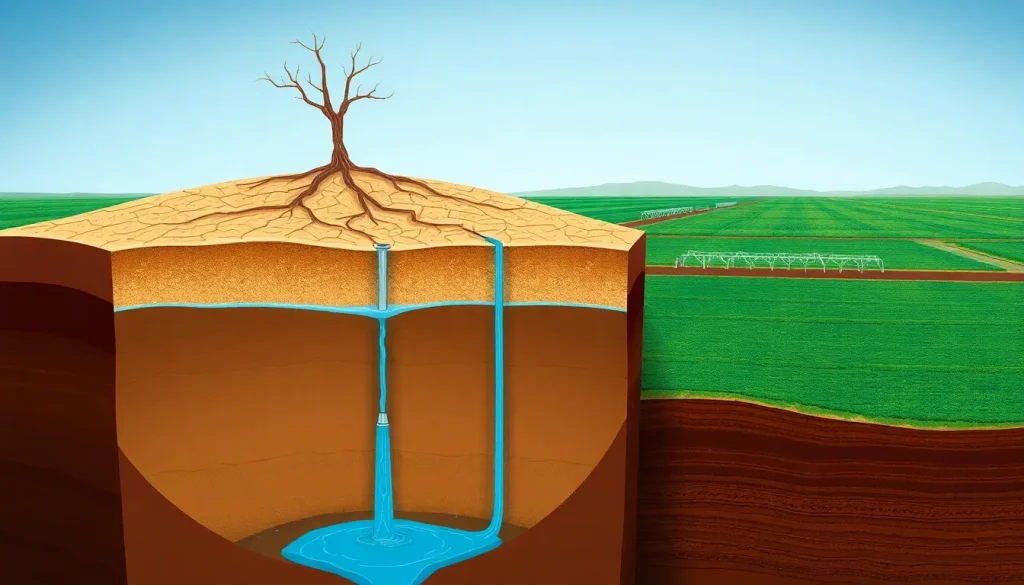
Groundwater is a critical component of the Earth’s freshwater resources, stored in permeable rock formations called aquifers. When extraction rates surpass the rate at which water is replenished by rainfall and surface water infiltration, the aquifer’s water level drops. This imbalance can persist for decades, and in some cases, the water removed is effectively non-renewable, having accumulated over thousands of years. The consequences extend beyond water scarcity, affecting infrastructure, ecosystems, and the long-term viability of the aquifer itself.
Overview
Groundwater is the water stored beneath the Earth’s surface in porous rock formations called aquifers. It accounts for about 30% of the world’s freshwater and serves as a critical buffer during droughts. However, in many regions, groundwater is being extracted at rates that far exceed natural replenishment from rainfall and surface water infiltration. This imbalance, known as groundwater depletion or overdraft, has been accelerating since the mid-20th century due to the expansion of irrigated agriculture and the availability of powerful pumps. Once depleted, some aquifers may take centuries to recharge, while others contain “fossil” water that is effectively non-renewable. The problem is not limited to arid regions; even humid areas with high rainfall can experience depletion if extraction is concentrated and recharge areas are limited.
How It Works
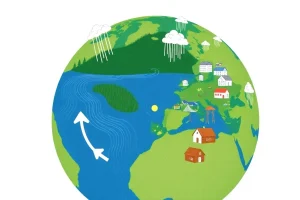
Groundwater systems are part of the hydrologic cycle. Water from precipitation and surface bodies percolates through soil and rock layers to reach the saturated zone, where all pore spaces are filled with water. The top of this zone is the water table. When a well is pumped, it creates a cone of depression in the water table around it. If the rate of pumping is less than or equal to the rate of recharge, the system remains in balance. Depletion occurs when total extraction from an aquifer exceeds the recharge rate over a sustained period, causing a regional decline in the water table. This can lead to a cascade of effects: shallower wells run dry, springs and baseflow to rivers diminish, and the aquifer’s storage capacity may be permanently reduced if the sediments compact.
Main Causes or Drivers
The primary cause of groundwater depletion is excessive extraction for human use. Key drivers include:
- Agricultural irrigation: Agriculture accounts for roughly 70% of global groundwater withdrawals. In major food-producing regions such as the U.S. High Plains, India’s Punjab, and the North China Plain, intensive pumping for crops like wheat, rice, and cotton has led to severe aquifer declines.
- Urban and domestic water supply: Rapid urbanization and population growth increase demand for drinking water and sanitation. Many megacities, including Mexico City, Jakarta, and Beijing, rely heavily on groundwater, causing local and regional depletion.
- Industrial use: Industries such as mining, manufacturing, and energy production often require large volumes of water, which can be sourced from groundwater, contributing to overdraft in industrial zones.
- Climate variability and change: Droughts reduce natural recharge and increase reliance on groundwater, while altered precipitation patterns can diminish long-term replenishment. Climate change is expected to intensify these pressures.
- Inefficient water management: Lack of regulation, subsidized energy for pumping, and open-access policies encourage overuse without regard for sustainable limits.
Environmental and Human Impacts
The consequences of groundwater depletion are far-reaching and often interconnected:
- Water scarcity and food insecurity: As water tables drop, wells go dry, reducing water availability for drinking and irrigation. This can lead to crop failures, higher food prices, and increased competition for remaining resources.
- Land subsidence: When water is removed from aquifer sediments, the ground can compact and sink irreversibly. Subsidence damages buildings, roads, and pipelines, and can permanently reduce the aquifer’s storage capacity. In some areas, such as California’s San Joaquin Valley, land has sunk by several meters.
- Saltwater intrusion: In coastal aquifers, overpumping allows seawater to migrate inland, contaminating freshwater supplies. This renders the water unusable for drinking or irrigation without expensive treatment.
- Ecosystem degradation: Groundwater feeds rivers, lakes, and wetlands. Depletion can reduce streamflow, dry up springs, and harm aquatic habitats, leading to loss of biodiversity.
- Increased pumping costs and energy use: Deeper water tables require more energy to lift water to the surface, raising costs for farmers and communities and contributing to greenhouse gas emissions if fossil fuels are used.
Regional Differences
Groundwater depletion is not uniform; it varies widely by region depending on geology, climate, and water use patterns. Some of the most critically affected areas include:
- High Plains Aquifer (Ogallala), United States: One of the world’s largest aquifers, it supports a major agricultural economy. Water levels have declined by more than 30 meters in parts of Texas and Kansas since the 1950s, with recharge rates too slow to recover in many areas.
- North China Plain: Intensive wheat and corn production has caused water tables to drop by 1–2 meters per year, threatening food security for hundreds of millions of people.
- India and Pakistan: The Indus Basin and aquifers in northwestern India are among the most overexploited globally, driven by subsidized electricity for pumping and rice-wheat cropping systems.
- Middle East and North Africa: Arid countries like Yemen, Saudi Arabia, and Libya rely on fossil aquifers that receive negligible recharge. Depletion here is essentially permanent.
- Australia’s Murray-Darling Basin: Over-allocation of groundwater licenses has led to declining water tables and salinity issues, prompting government buybacks and stricter regulations.
Solutions
Addressing groundwater depletion requires a combination of technological, policy, and behavioral approaches:
- Improved irrigation efficiency: Switching to drip or sprinkler systems, scheduling irrigation based on soil moisture, and adopting drought-resistant crops can significantly reduce agricultural water demand.
- Managed aquifer recharge (MAR): Deliberately directing excess surface water, treated wastewater, or stormwater into aquifers can replenish groundwater stores. Techniques include infiltration basins, injection wells, and check dams.
- Regulation and pricing: Implementing groundwater extraction limits, metering, and pricing mechanisms can discourage overuse. Tradable water rights and community-based management have shown success in some regions.
- Conjunctive use of surface and groundwater: Coordinating the use of both sources allows for groundwater to be used as a buffer during dry periods while surface water is used when available, reducing overall depletion.
- Protection of recharge zones: Preserving natural recharge areas such as wetlands, forests, and permeable surfaces ensures that precipitation can infiltrate and replenish aquifers.
- Public awareness and education: Encouraging water conservation at all levels helps reduce demand and fosters support for sustainable policies.
FAQ
What is groundwater depletion?
Groundwater depletion is the long-term decline in the amount of water stored in underground aquifers, caused by pumping water out faster than it is naturally replenished.
How does groundwater depletion occur?
It occurs when the rate of groundwater extraction for agriculture, industry, or domestic use exceeds the rate of recharge from rainfall and surface water infiltration over a sustained period.
Why does groundwater depletion matter?
It matters because it threatens water supplies for billions of people, reduces food production, causes land subsidence and saltwater intrusion, damages ecosystems, and increases energy costs.
References
- United States Geological Survey (USGS) – Groundwater Depletion
- NASA GRACE Satellite Observations of Groundwater Trends
- Food and Agriculture Organization of the United Nations (FAO) – The State of the World's Land and Water Resources for Food and Agriculture