In brief
For most of Earth’s 4.5-billion-year history, the planet’s atmosphere, oceans, climate, landscapes, and ecosystems were shaped primarily by natural forces.
Plate tectonics built mountains. Volcanoes altered atmospheric chemistry. Ice ages transformed continents. Asteroid impacts caused mass extinctions. Evolution slowly reshaped life over millions of years.
Today, however, another force has joined that list.
Human civilization.
Not because humans are physically larger than natural processes, but because billions of people collectively modify nearly every component of the Earth system through energy use, agriculture, mining, transportation, urbanization, industry, trade, technology, and resource extraction.
Human activity now influences atmospheric composition, global temperature, biodiversity, freshwater cycles, nutrient flows, sediment transport, coastlines, oceans, and even the geological record itself.
This realization gave rise to one of the most influential concepts in modern Earth-system science: the Anthropocene.
The Anthropocene proposes that humanity has become a planetary force capable of altering Earth on a geological scale.
Whether or not it becomes an officially recognized geological epoch, the concept fundamentally changes how we understand humanity’s place within nature.
Instead of existing outside Earth’s systems, humans have become one of the dominant drivers of those systems. (Anthropocene Working Group)
Quick Answer
The Anthropocene is a widely used scientific concept describing the period during which human activity became a major force shaping the Earth system.
It is not currently an officially recognized geological epoch. In 2024, the proposal to formally add the Anthropocene to the Geological Time Scale was rejected by geological voting bodies. Nevertheless, the concept remains widely used across Earth-system science, climate science, ecology, geography, economics, archaeology, environmental history, and sustainability research because it accurately describes humanity’s unprecedented planetary influence. (AGU Publications)
What Does “Anthropocene” Mean?
The word comes from two Greek roots:
- Anthropos — human
- Kainos — new or recent
Literally, it means:
“The age of humans.”
The term was popularized in 2000 by Nobel Prize-winning atmospheric chemist Paul Crutzen, together with limnologist Eugene Stoermer, after recognizing that human influence had become so extensive that it rivaled major geological forces. (Quaternary Stratigraphy)
Their central idea was remarkably simple:
Humanity was no longer merely responding to Earth’s environment.
Humanity had begun reshaping it.
Earth Before the Anthropocene
To understand why the Anthropocene matters, it helps to understand the period before it.
For approximately 11,700 years, Earth has existed in the Holocene Epoch, beginning after the last Ice Age.
Compared with earlier geological periods, the Holocene has been unusually stable.
Global temperatures fluctuated within relatively narrow ranges.
Sea levels stabilized.
Large ice sheets retreated.
Rainfall patterns became comparatively predictable.
Agriculture emerged.
Permanent settlements developed.
Civilizations expanded.
Trade networks formed.
Nearly every society humans have ever built developed under Holocene conditions.
The Anthropocene concept argues that human activities are now pushing Earth away from that relatively stable Holocene state toward something fundamentally different. (Quaternary Stratigraphy)
Humans Have Always Changed Nature—So What’s Different?
Humans have modified landscapes for thousands of years.
Examples include:
- Fire management
- Hunting
- Irrigation
- Domestication
- Forest clearing
- Rice cultivation
- Mining
- Cities
These activities certainly altered local and regional environments.
The Anthropocene argument is not that humans suddenly began affecting nature.
Rather, something unprecedented happened during the twentieth century:
Human impacts became global, simultaneous, measurable, and capable of changing Earth-system processes themselves.
Instead of affecting one valley or one continent, human activities now influence the entire atmosphere, oceans, biosphere, and climate.
That difference is what distinguishes the Anthropocene concept from ordinary environmental change. (Anthropocene Working Group)
The Great Acceleration
Most Earth-system scientists identify the Great Acceleration as the defining transition into the Anthropocene.
Beginning around the middle of the twentieth century, nearly every measure of human activity increased dramatically.
Population.
GDP.
Industrial production.
Energy consumption.
Plastic production.
Fertilizer use.
Automobile ownership.
Air travel.
Dam construction.
Urbanization.
International trade.
Greenhouse-gas emissions.
Resource extraction.
Many of these curves show remarkably similar exponential growth beginning around 1950.
At the same time, Earth responded.
Carbon dioxide concentrations rose rapidly.
Species extinction accelerated.
Nitrogen cycles changed.
Freshwater withdrawals increased.
Ocean chemistry shifted.
Forest loss intensified.
Climate warming became unmistakable.
Scientists refer to this parallel growth of human activity and Earth-system change as the Great Acceleration, and many proposals for a formal Anthropocene boundary place its beginning in the mid-twentieth century. (ScienceDirect)
What Makes Humans an Earth-System Force?
Earth-system forces influence the functioning of the entire planet.
Historically these included:
- Solar energy
- Plate tectonics
- Orbital cycles
- Volcanoes
- Ocean circulation
- Evolution
Human civilization now affects many of the same planetary processes.
Atmosphere
Humans have increased atmospheric concentrations of carbon dioxide, methane and nitrous oxide through fossil-fuel combustion, agriculture, industry and land-use change.
These changes alter Earth’s energy balance and drive climate change.
Climate
Human greenhouse-gas emissions are warming the atmosphere and oceans.
The consequences include:
- Rising temperatures
- More frequent heat extremes
- Melting glaciers
- Sea-level rise
- Changing rainfall patterns
- Stronger hydrological extremes
Biosphere
Human activity influences biodiversity through:
- Habitat destruction
- Pollution
- Invasive species
- Overexploitation
- Climate change
Current extinction rates greatly exceed long-term natural background rates.
Land
More than three-quarters of Earth’s ice-free land has been modified directly or indirectly by human activities.
Agriculture, infrastructure, forestry and urban expansion have transformed landscapes worldwide.
Oceans
Humans affect oceans through:
- Warming
- Acidification
- Overfishing
- Plastic pollution
- Nutrient runoff
- Coastal development
Water Cycle
Reservoirs, irrigation, groundwater pumping, wetland drainage and land-use change alter freshwater movement at regional and global scales.
Biogeochemical Cycles
Industrial fertilizer production has dramatically altered global nitrogen and phosphorus cycles.
Human influence now rivals or exceeds many natural Earth-system processes.
Collectively, these changes justify describing humanity as an Earth-system force rather than merely an ecological species. (Anthropocene Working Group)
Evidence of the Anthropocene
Scientists identify numerous signals showing that human influence has become globally detectable.
Atmospheric Carbon
Carbon dioxide concentrations are higher than at any time in hundreds of thousands of years.
The source is overwhelmingly fossil fuels and land-use change.
Artificial Materials
Human-made materials now appear worldwide:
- Plastics
- Concrete
- Aluminum
- Synthetic chemicals
- Fly ash
- Microplastics
Many will remain in sediments for geological timescales.
Radioactive Fallout
Atmospheric nuclear weapons testing during the 1950s and early 1960s distributed radionuclides worldwide.
These provide one of the clearest globally synchronous geological markers.
Sediment Changes
Human activities accelerate erosion, dam construction and sediment redistribution.
Many rivers now transport dramatically different sediment loads than before industrialization.
Biological Changes
Humans have reshaped ecosystems through:
- Species introductions
- Extinctions
- Domesticated animals
- Agriculture
- Fisheries
Wildlife populations increasingly reflect human influence rather than natural evolutionary processes.
Climate Signals
Ice cores, tree rings, corals, marine sediments and instrumental observations all record the rapid environmental changes of recent decades.
Together these multiple lines of evidence demonstrate that human activity has become embedded within Earth’s geological record. (ScienceDirect)
Is the Anthropocene an Official Geological Epoch?
This is where scientific discussion becomes more nuanced.
Many people assume the Anthropocene is already an official geological epoch.
It is not.
Following years of evaluation, proposals to formally recognize the Anthropocene were rejected during the geological approval process in 2024.
As a result:
- The Holocene remains the officially recognized geological epoch.
- The Anthropocene is not part of the formal Geological Time Scale.
- The concept nevertheless continues to be used extensively in Earth-system science and many other disciplines. (The Guardian)
Why Was Formal Recognition Rejected?
The rejection was not because scientists denied human influence.
Instead, disagreements centered on geological classification.
Major questions included:
- Exactly when should the Anthropocene begin?
- Does it satisfy formal stratigraphic rules?
- Should geological epochs describe ongoing processes?
- Is one global marker sufficient?
Some researchers favored a beginning around:
- Early agriculture
- The Industrial Revolution
- European colonization
- The Columbian Exchange
- Mid-twentieth-century nuclear fallout
Although no consensus emerged for formal stratigraphy, there is broad agreement that human influence on the Earth system is profound and unprecedented. (The Guardian)
The Anthropocene Is More Than Geology
Even without formal geological status, the Anthropocene has become one of the defining ideas of the twenty-first century.
It has transformed research across:
- Climate science
- Ecology
- Economics
- Environmental history
- Geography
- Sustainability
- Political science
- Philosophy
- Law
- Anthropology
- Urban planning
Why?
Because it changes the central question.
Instead of asking:
How does nature affect humans?
Researchers increasingly ask:
How do humans reshape the Earth system—and how does that altered Earth system reshape humanity?
This shift has profound implications for governance, economics, ethics and long-term planning. (Anthropocene Working Group)
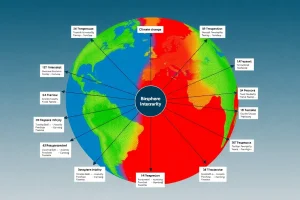
The Anthropocene and Planetary Boundaries
The Anthropocene explains why humans became a planetary force.
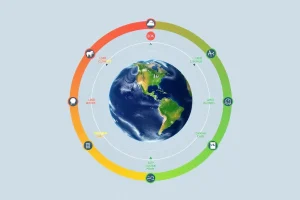
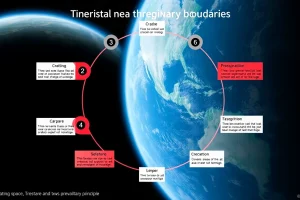
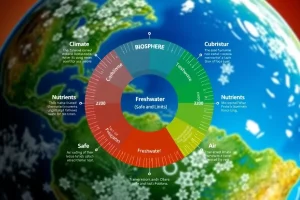
The Planetary Boundaries framework helps evaluate whether that force remains within Earth’s safe operating space.
The two concepts complement each other.
The Anthropocene describes a new Earth-system reality.
Planetary boundaries assess the risks created by that reality.
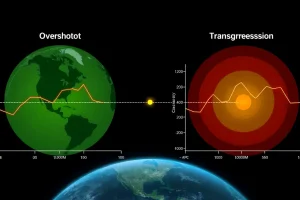
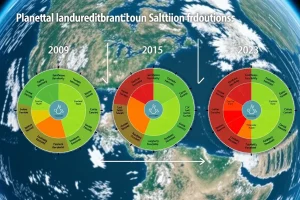
Current assessments indicate that seven of nine planetary boundaries have already been transgressed, illustrating how Anthropocene pressures are affecting multiple Earth-system processes simultaneously. (AGU Publications)
Common Misunderstandings
“The Anthropocene blames every individual equally.”
No.
Human impacts differ enormously among countries, industries, corporations and income groups.
Responsibility is highly uneven.
“The Anthropocene means humans control nature.”
Humans strongly influence Earth systems, but they do not control them.
Earth continues to respond through complex feedbacks that often surprise scientists.
“It only refers to climate change.”
Climate change is one part of the Anthropocene.
The concept also includes biodiversity loss, pollution, freshwater alteration, chemical contamination, land transformation and many other global changes.
“Because it isn’t official geology, it isn’t real.”
Formal geological terminology and scientific usefulness are different questions.
Even without official epoch status, the Anthropocene remains one of the most influential frameworks for understanding contemporary planetary change. (AGU Publications)
Frequently Asked Questions
Who coined the term Anthropocene?
The term was popularized in 2000 by Paul Crutzen and Eugene Stoermer. (Quaternary Stratigraphy)
Are we officially living in the Anthropocene?
Not in the formal Geological Time Scale. The Holocene remains the official epoch, although the Anthropocene is widely used across scientific disciplines. (The Guardian)
When did the Anthropocene begin?
There is no universally accepted start date. Many Earth-system scientists associate it with the Great Acceleration beginning around the mid-twentieth century, while other proposals emphasize earlier historical transitions. (ScienceDirect)
Why is the Great Acceleration important?
It marks the period when population, industrialization, energy use and many environmental indicators increased rapidly, producing globally detectable Earth-system change. (ScienceDirect)
Is the Anthropocene only an environmental idea?
No.
It has become an interdisciplinary framework spanning natural sciences, social sciences, economics, law, governance, philosophy and sustainability studies. (AGU Publications)
Can humanity shape a positive Anthropocene?
Many researchers argue that recognizing humanity as an Earth-system force also implies responsibility. Future trajectories will depend on decisions about energy, food, biodiversity, technology, governance and international cooperation. (AGU Publications)
Conclusion
The Anthropocene represents one of the most important conceptual shifts in modern science.
For centuries, humanity viewed itself primarily as a species living within nature.
Earth-system science reveals a different picture.
Human civilization has become a force capable of altering the atmosphere, oceans, biosphere, freshwater systems and even the geological record itself.
Whether or not the Anthropocene ultimately becomes an official geological epoch, its scientific significance is already undeniable.
It explains why climate change, biodiversity loss, pollution, freshwater disruption and resource depletion cannot be understood as isolated environmental problems.
They are interconnected expressions of humanity’s growing influence on the Earth system.
The central challenge of the Anthropocene is therefore not simply reducing environmental damage.
It is learning how to exercise planetary influence responsibly.
Humanity has become powerful enough to reshape Earth.
The defining question of the twenty-first century is whether it can also become wise enough to sustain it.
FAQ
What is the Anthropocene?
The Anthropocene is a proposed geological epoch that marks the time when human activities began to have a dominant, global impact on Earth’s climate, ecosystems, and geological processes.
When did the Anthropocene begin?
Most scientists locate the start of the Anthropocene in the mid‑20th century, coinciding with the Great Acceleration of industrial activity, population growth, and resource use.
Is the Anthropocene an officially recognized geological epoch?
As of 2024, the International Union of Geological Sciences has not formally ratified the Anthropocene as a distinct epoch, though the concept is widely used in Earth‑system science.
What are the main indicators of the Anthropocene?
Key markers include elevated atmospheric CO₂, widespread plastic debris, radioactive isotopes from nuclear testing, and unprecedented rates of species extinction and land‑use change.
How does the Anthropocene relate to planetary boundaries?
The Anthropocene concept underscores that human activities are pushing several planetary boundaries—such as climate change, biogeochemical flows, and biosphere integrity—beyond safe limits.
What are the implications of the Anthropocene for policy and society?
Recognizing the Anthropocene encourages integrated policies that address climate mitigation, biodiversity protection, sustainable resource use, and equitable socioeconomic transitions.