In brief
Human civilization depends on more than economic growth, technological innovation, and political stability. It also depends on a functioning planet.
Reliable rainfall supports agriculture. Forests regulate water and store carbon. Healthy ecosystems pollinate crops, maintain soils, and moderate disease. The atmosphere protects life from harmful radiation, while the ocean absorbs heat and carbon dioxide. These systems are so familiar that they can appear permanent. Yet they are neither limitless nor invulnerable.
The planetary boundaries framework was created to answer a fundamental question:
How far can humanity alter Earth’s life-support systems before the risk of destabilizing the planet becomes unacceptably high?
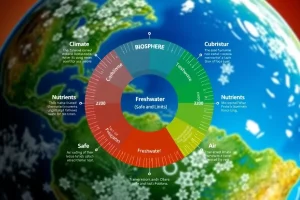
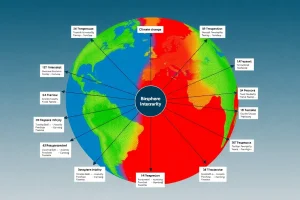
The framework identifies nine critical Earth-system processes and proposes limits for human pressure on each one. Together, these limits describe a safe operating space for humanity—a range of environmental conditions within which societies are more likely to develop without triggering dangerous, abrupt, or irreversible planetary change.
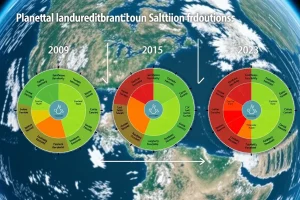
The framework was first proposed in 2009 and substantially updated in 2015, 2023, and 2025. The most recent annual assessment concluded that seven of the nine planetary boundaries have been breached. Only stratospheric ozone depletion and global atmospheric aerosol loading remain within their designated global safe zones. :contentReference[oaicite:0]{index=0}
This does not mean that the planet will suddenly collapse. It means that humanity has entered a widening zone of risk in which environmental shocks, tipping points, and self-reinforcing changes become more likely.
What Are Planetary Boundaries?
Planetary boundaries are scientifically informed limits placed around human disturbance of the major processes that regulate Earth’s stability, resilience, and capacity to support life.
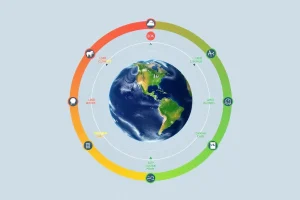
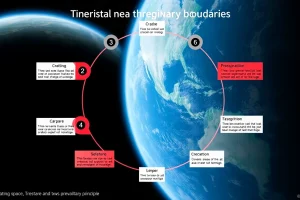
The nine boundaries cover:
- Climate change
- Biosphere integrity
- Land-system change
- Freshwater change
- Biogeochemical flows
- Ocean acidification
- Atmospheric aerosol loading
- Stratospheric ozone depletion
- Novel entities
Scientists assess each boundary using one or more measurable indicators known as control variables. Atmospheric carbon dioxide concentration, for example, is one of the control variables used to assess the climate boundary. Forest cover is used for land-system change, while changes in streamflow and soil moisture are used for freshwater change. :contentReference[oaicite:1]{index=1}
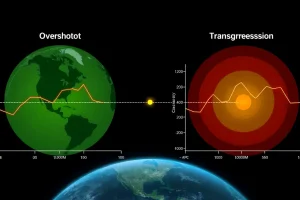
A planetary boundary is not necessarily the exact location of a tipping point. It is generally positioned before the area where the probability of severe or irreversible change becomes unacceptably high. In that sense, a boundary works more like a safety barrier than a prediction of the exact moment a system will fail.
Quick Answer: How Many Planetary Boundaries Have Been Crossed?
According to the Planetary Health Check 2025, seven of the nine boundaries are outside the safe operating space:
| Planetary boundary | Latest global status |
|---|---|
| Climate change | Breached |
| Biosphere integrity | Breached |
| Land-system change | Breached |
| Freshwater change | Breached |
| Biogeochemical flows | Breached |
| Ocean acidification | Breached |
| Novel entities | Breached |
| Atmospheric aerosol loading | Within the global boundary |
| Stratospheric ozone depletion | Within the boundary |
All seven transgressed boundaries show increasing pressure. Ocean acidification became the seventh boundary formally assessed as breached in 2025. :contentReference[oaicite:2]{index=2}
Atmospheric aerosol loading remains inside its global boundary, although dangerous air pollution persists in many regions. Stratospheric ozone remains within the safe operating space and shows signs of gradual recovery, demonstrating that coordinated international action can reduce a planetary-scale environmental threat. :contentReference[oaicite:3]{index=3}
Why the Holocene Matters
For approximately 10,000 years before the rapid industrial expansion of modern society, Earth experienced a comparatively stable climatic period known as the Holocene.
This stability did not mean that climate and ecosystems never changed. Droughts, floods, volcanic eruptions, and regional ecological shifts still occurred. However, global environmental conditions remained within a relatively narrow range. That stability supported the development of agriculture, permanent settlements, cities, trade networks, and complex civilizations.
The planetary boundaries framework uses Holocene-like conditions as an important reference because human societies developed within them. It does not claim that the past was environmentally perfect or socially just. Instead, it recognizes that the climatic and ecological stability of that period provided a dependable foundation for civilization.
Since the middle of the twentieth century, energy consumption, industrial production, fertilizer use, deforestation, transportation, material extraction, and pollution have accelerated dramatically. Scientists often call this period the Great Acceleration. Human activity has consequently become a major force shaping the atmosphere, biosphere, freshwater system, oceans, and global nutrient cycles. :contentReference[oaicite:4]{index=4}
Understanding the Safe Operating Space
The safe operating space can be imagined as a zone of planetary resilience.
Inside this zone, Earth’s systems retain a greater capacity to absorb shocks, recover from disturbances, and continue providing the conditions on which societies depend. Crossing a boundary pushes the system into a zone of increasing risk. Continuing farther may eventually lead into a high-risk zone where large-scale, persistent, or irreversible changes become substantially more probable.
Three distinctions are important.
Crossing a boundary does not mean immediate collapse
Environmental systems often respond gradually at first. Damage may accumulate unnoticed until feedback mechanisms accelerate it. A forest may continue to exist while becoming less diverse, less resilient to fire, and less capable of regulating rainfall.
Boundary transgression therefore signals rising risk rather than a predetermined date of disaster.
A boundary is not identical to a tipping point
A tipping point is a threshold beyond which relatively small additional pressure can produce a major and potentially self-reinforcing change. Examples include destabilization of large ice sheets, abrupt ecosystem conversion, or disruption of major ocean circulation patterns.
Planetary boundaries are intended to keep human pressure sufficiently far from such uncertain danger zones. :contentReference[oaicite:5]{index=5}
Global safety does not guarantee local safety
A process may remain within its global boundary while causing severe regional harm. Atmospheric aerosols illustrate this problem. The global aerosol boundary is currently classified as unbreached, yet individual cities and regions can still experience hazardous particulate pollution.
The reverse can also occur: local environmental management may improve while the global system continues deteriorating. Effective governance must therefore connect global goals with regional, national, watershed, city, and community-level action.
The Nine Planetary Boundaries
1. Climate Change
The climate boundary addresses human interference with Earth’s energy balance.
Greenhouse gases trap heat that would otherwise escape into space. Human activities—especially fossil-fuel combustion, land clearing, industrial processes, agriculture, and waste—have increased the concentration of carbon dioxide, methane, nitrous oxide, and other heat-trapping gases.
The planetary boundaries framework currently assesses climate change using two major control variables:
- Atmospheric carbon dioxide concentration
- Total human-caused radiative forcing
The 2025 assessment reported atmospheric carbon dioxide at approximately 423 parts per million, compared with a planetary boundary of 350 ppm. Total anthropogenic radiative forcing was assessed at approximately +2.97 watts per square metre, compared with a boundary of +1 watt per square metre and a high-risk reference line of +1.5 watts per square metre. :contentReference[oaicite:6]{index=6}
Climate change influences nearly every other planetary boundary. Warming changes rainfall, soil moisture, river flows, wildfire patterns, forest health, ocean chemistry, species distributions, ice cover, and ecosystem productivity.
It can also weaken natural carbon sinks. Damaged forests, degraded soils, warmer oceans, and disrupted ecosystems may absorb less carbon, leaving a larger fraction of human emissions in the atmosphere. This creates a dangerous feedback: climate change damages systems that would otherwise help slow climate change.
What returning toward the climate boundary requires
The central priority is a rapid and sustained reduction in greenhouse-gas emissions. Important measures include:
- Replacing unabated fossil-fuel use with low-carbon energy
- Electrifying transportation, buildings, and industrial processes where practical
- Improving energy and material efficiency
- Reducing methane emissions
- Protecting and restoring natural carbon stores
- Avoiding land conversion that releases carbon
- Developing durable methods for managing residual emissions
Climate stability cannot be restored through carbon management alone. Biosphere protection, freshwater management, food-system reform, and pollution reduction must proceed alongside energy-system transformation.
2. Biosphere Integrity
Biosphere integrity describes the ability of living systems to maintain their diversity, functions, and resilience.
The biosphere includes genes, species, populations, food webs, ecosystems, and the ecological processes connecting them. Biodiversity is therefore not simply a catalogue of rare animals and plants. It is the living infrastructure through which ecosystems produce biomass, recycle nutrients, form soils, regulate water, pollinate plants, store carbon, and recover from disturbances.
Two dimensions are used to assess this boundary:
Genetic diversity
Genetic diversity is commonly represented by extinction rates. The proposed boundary is 10 extinctions per million species-years, while the 2025 assessment estimated the current rate at approximately 100 to 1,000 extinctions per million species-years.
Functional integrity
Functional integrity measures whether ecosystems continue performing their planetary roles. One control variable is the share of natural net primary production appropriated by humans. Net primary production represents the plant energy generated through photosynthesis after accounting for plants’ own respiration.
The proposed boundary is 10% of preindustrial net primary production appropriated by humans. The 2025 value was estimated at approximately 30%, exceeding the framework’s 20% high-risk line. :contentReference[oaicite:7]{index=7}
The main drivers include habitat conversion, harvesting, overfishing, invasive species, pollution, climate change, freshwater alteration, nutrient overload, and ocean acidification.
Why biosphere integrity is a core boundary
The 2015 framework identified climate change and biosphere integrity as two “core boundaries.” Either one, if substantially altered, could independently push the Earth system into a fundamentally different state. :contentReference[oaicite:8]{index=8}
The two are also deeply connected. Climate change increases ecological stress, while damaged ecosystems lose some of their capacity to regulate climate. Research on the coupled climate and biodiversity crises consequently emphasizes that neither can be solved effectively in isolation. :contentReference[oaicite:9]{index=9}
3. Land-System Change
Land-system change refers primarily to the conversion and degradation of forests, grasslands, wetlands, and other natural ecosystems.
Agriculture, livestock grazing, logging, mining, roads, reservoirs, settlements, and urban expansion can alter land cover. These changes affect more than wildlife habitat. They also modify carbon storage, evaporation, rainfall recycling, surface temperature, erosion, fire behavior, and freshwater flows.
The current global control variable focuses on remaining forest cover compared with estimated original forest cover. The 2025 assessment placed global forest cover at roughly 59% of its original extent, below the framework’s global safe reference of 75%. The assessment also concluded that the major tropical, temperate, and boreal forest biomes had crossed their respective safety thresholds. :contentReference[oaicite:10]{index=10}
The quality of remaining forests matters as much as the area shown on a map. A fragmented, heavily logged, frequently burned, or biologically simplified forest may retain tree cover while losing much of its ecological function.
Future assessments may therefore increasingly incorporate:
- Forest integrity
- Habitat connectivity
- Fragmentation
- Species composition
- Ecosystem condition
- Capacity to regulate climate and water
Returning land systems toward safety
Land strategies must combine protection with better production. Priorities include ending conversion of intact ecosystems, restoring degraded landscapes, securing Indigenous and local land rights, increasing agricultural productivity without expanding into natural habitats, and reducing avoidable demand for land-intensive commodities.
Restoration should not be treated as a license for continued destruction. Newly planted trees cannot immediately replace the biodiversity, carbon storage, hydrological function, and ecological complexity of an old natural forest.
4. Freshwater Change
Freshwater is not limited to water stored in rivers, reservoirs, lakes, and aquifers.
The updated framework distinguishes between:
- Blue water: rivers, lakes, reservoirs, and groundwater
- Green water: water stored in soil and available to plants
Earlier assessments concentrated mainly on global freshwater withdrawals. More recent work recognizes that human disruption of streamflow and soil moisture can destabilize ecosystems even when total global water use appears acceptable.
The 2025 assessment estimated that human activity had significantly disturbed streamflow across approximately 22.6% of global land area, compared with a boundary of 12.9%. Soil-moisture disturbance affected approximately 22%, compared with a boundary of 12.4%. :contentReference[oaicite:11]{index=11}
Freshwater change is driven by irrigation, dams, groundwater extraction, drainage, deforestation, urbanization, industrial use, household demand, and climate change. The effects can include depleted aquifers, reduced river flows, disappearing wetlands, soil drying, waterlogging, greater flood risk, ecological decline, and conflict among users.
Because water conditions vary enormously, global measurements must be translated into basin-level limits. A water-use level that is sustainable in a humid basin may be destructive in an arid one.
Better freshwater stewardship
Effective freshwater policy should:
- Maintain environmental river flows
- Prevent aquifer withdrawals from consistently exceeding recharge
- Restore wetlands and floodplains
- Improve irrigation efficiency without encouraging unlimited expansion
- Reduce industrial and agricultural pollution
- Increase urban water reuse
- Protect soil moisture through vegetation and soil management
- Plan water use at the watershed or river-basin scale
5. Modification of Biogeochemical Flows
Biogeochemical flows describe the circulation of elements through living organisms, soils, water, oceans, and the atmosphere.
The planetary boundary framework pays particular attention to nitrogen and phosphorus. Both are essential nutrients. Modern agriculture depends on them, but excessive use disrupts natural nutrient cycles.
Industrial nitrogen fixation converts atmospheric nitrogen into reactive forms that crops can absorb. Phosphorus is mined and applied to agricultural land. When crops fail to absorb these nutrients, they can escape into rivers, lakes, groundwater, coastal waters, and the atmosphere.
The 2025 assessment estimated:
- Agricultural phosphorus application at approximately 18.2 teragrams per year, compared with a boundary of 6.2 teragrams
- Intentional nitrogen fixation for agriculture at approximately 165 teragrams per year, compared with a boundary of 62 teragrams
Both indicators were beyond the framework’s high-risk reference levels. :contentReference[oaicite:12]{index=12}
Excess nutrients can cause algal blooms, oxygen depletion, fish deaths, contaminated drinking water, soil acidification, nitrous oxide emissions, and coastal dead zones. At the same time, some farmers and regions lack sufficient access to fertilizers. The challenge is therefore not simply to eliminate nutrient use but to distribute and manage nutrients more effectively.
Reducing nutrient overload
Important interventions include:
- Applying fertilizer at the correct rate, time, and location
- Matching nutrient inputs more closely to crop requirements
- Recycling nutrients from wastewater, manure, and organic waste
- Preventing soil erosion and runoff
- Using cover crops and crop rotations
- Improving manure storage and application
- Reducing food waste
- Addressing regional overconsumption while improving nutrient access where it is inadequate
6. Ocean Acidification
The ocean absorbs a substantial share of the carbon dioxide released by human activities. This slows atmospheric warming, but it changes seawater chemistry.
When carbon dioxide dissolves in seawater, it forms carbonic acid and reduces the availability of carbonate ions. These ions are needed by corals, shellfish, pteropods, and other organisms to build calcium carbonate shells and skeletons.
The planetary boundary is measured using the aragonite saturation state of surface seawater. Lower values indicate conditions that make calcification more difficult.
The 2025 assessment reported a global mean surface aragonite saturation state of approximately 2.84, just below the revised planetary boundary of 2.86. Ocean acidification was consequently classified as the seventh transgressed planetary boundary. :contentReference[oaicite:13]{index=13}
The global average can conceal more severe regional conditions. Polar and coastal waters may experience faster or more variable chemical changes, while organisms can be exposed simultaneously to warming, oxygen loss, pollution, overfishing, and habitat degradation.
Addressing ocean acidification
The fundamental solution is to reduce carbon dioxide emissions. Local actions cannot fully protect marine ecosystems from globally driven acidification, but they can improve resilience by reducing sewage, nutrient runoff, destructive fishing, plastic pollution, and habitat loss.
Protecting seagrasses, mangroves, salt marshes, coral reefs, and other coastal ecosystems can provide additional ecological benefits, although restoration cannot substitute for reducing atmospheric carbon dioxide.
7. Atmospheric Aerosol Loading
Atmospheric aerosols are tiny solid particles or liquid droplets suspended in the air.
They include sulfates, soot or black carbon, mineral dust, sea salt, smoke, and organic particles. Aerosols can alter cloud formation, rainfall, atmospheric circulation, and the amount of sunlight absorbed or reflected by Earth.
Their effects are complex. Some particles produce a temporary cooling influence by reflecting sunlight. Others, such as black carbon, absorb heat. Many contribute to respiratory and cardiovascular disease.
The current global control variable evaluates differences in aerosol optical depth between the Northern and Southern hemispheres. The 2025 value was approximately 0.063, below the proposed boundary of 0.10, placing this planetary process within the global safe operating space. The global trend was also assessed as improving. :contentReference[oaicite:14]{index=14}
However, a globally unbreached boundary should not be interpreted as proof of clean air. Severe aerosol pollution remains a major regional and urban health problem. The current global metric does not capture every local concentration, composition, or health effect.
Reducing aerosol pollution can also reveal warming previously masked by reflective particles. Climate and clean-air policies must therefore be coordinated: societies should reduce harmful aerosols while simultaneously cutting greenhouse gases.
8. Stratospheric Ozone Depletion
The stratospheric ozone layer absorbs much of the Sun’s harmful ultraviolet radiation.
During the twentieth century, chlorofluorocarbons and other ozone-depleting substances released chlorine and bromine into the stratosphere, destroying ozone and creating the recurring Antarctic ozone hole.
Global action under the Montreal Protocol dramatically reduced the production and consumption of many ozone-depleting chemicals. The 2025 assessment reported a global average stratospheric ozone concentration of approximately 285.7 Dobson Units, remaining on the safe side of the framework’s boundary of 277 Dobson Units. :contentReference[oaicite:15]{index=15}
Recovery is gradual because many ozone-depleting substances remain in the atmosphere for decades. Continued monitoring, enforcement, and management of replacement chemicals are therefore essential.
The ozone story is nevertheless one of the most important environmental successes of the modern era. It shows that governments can respond to scientific warnings, negotiate binding international rules, transform industries, and begin reversing damage to a planetary system.
9. Introduction of Novel Entities
Novel entities are substances, materials, organisms, or other human-created interventions that are new to the Earth system or introduced in quantities and forms capable of causing large-scale disruption.
They include:
- Synthetic chemicals
- Plastics and microplastics
- Per- and polyfluoroalkyl substances
- Pesticides
- Industrial compounds
- Pharmaceuticals and antibiotics
- Radioactive materials
- Heavy metals mobilized through industrial activity
- Some genetically modified or biologically engineered entities
More substances are produced and released than can be comprehensively tested for toxicity, persistence, ecological interaction, or cumulative effects.
The current assessment uses the share of synthetic chemicals released without adequate safety testing as an indicative control variable. Because substantial quantities enter production and the environment without sufficient evaluation, the boundary is classified as transgressed. Scientists acknowledge that precise quantification remains difficult because the category includes many substances, mixtures, pathways, and effects. :contentReference[oaicite:16]{index=16}
This uncertainty is not evidence of safety. Persistent substances may spread widely before their effects are fully understood, and removal can become technically difficult or economically impossible.
Managing novel entities
A precautionary strategy would shift chemical governance from reacting after contamination toward preventing unsafe release. Measures include:
- Requiring stronger premarket safety testing
- Evaluating mixtures and cumulative exposure
- Tracking chemical production and environmental release
- Eliminating nonessential uses of highly persistent substances
- Designing materials for safety, reuse, and recovery
- Holding producers responsible for product life cycles
- Improving international chemical transparency
- Preventing pollution rather than relying solely on cleanup
How the Planetary Boundaries Interact
The nine boundaries are not separate environmental compartments. They form an interconnected system.
Deforestation, for example, affects:
- Land-system change by removing forests
- Biosphere integrity by destroying habitat
- Climate change by releasing carbon and weakening sinks
- Freshwater change by altering evaporation, runoff, and soil moisture
- Biogeochemical flows by increasing erosion and nutrient leakage
Climate change warms the ocean, intensifies parts of the water cycle, shifts habitats, increases ecological stress, accelerates ice loss, and compounds ocean acidification.
Excess fertilizer can damage freshwater ecosystems, create coastal dead zones, emit nitrous oxide, and weaken marine biodiversity. Plastics and synthetic chemicals can affect organisms that participate in carbon cycling, food webs, and ecosystem regulation.
Crossing multiple boundaries simultaneously is therefore more dangerous than treating each transgression as an isolated problem. The combined effects can reduce Earth’s resilience and make shocks harder to absorb. The official framework emphasizes that only respecting all nine boundaries can maintain the safe operating space as a whole. :contentReference[oaicite:17]{index=17}
Planetary Boundaries, Human Needs, and Environmental Justice
A safe planet is necessary for human well-being, but environmental safety alone does not guarantee justice.
A society could theoretically reduce its environmental pressure while leaving millions of people without sufficient food, housing, energy, healthcare, mobility, or political power. Conversely, attempts to improve living standards through highly resource-intensive development could push Earth systems farther outside safe boundaries.
The challenge is to meet human needs within ecological limits.
A related Earth Commission assessment introduced safe and just Earth-system boundaries, combining biophysical stability with thresholds intended to reduce significant harm to people. It found that seven of eight globally quantified safe and just boundaries had already been exceeded. At least two boundaries were transgressed across 52% of the world’s land surface, affecting approximately 86% of the global population. :contentReference[oaicite:18]{index=18}
Responsibility is also uneven. Countries, corporations, and households differ enormously in historical emissions, consumption, wealth, vulnerability, and ability to act. A fair transition should therefore require faster reductions from actors placing the greatest pressure on planetary systems while expanding access to essential resources and resilient infrastructure for underserved populations.
Planetary boundaries define the size of the environmental space. Politics and ethics determine how that space is shared.
Common Misunderstandings About Planetary Boundaries
“Seven boundaries crossed means the planet is doomed”
No. Boundary transgression indicates increasing risk, not inevitable collapse. Earth retains substantial resilience, and environmental pressure can be reduced.
However, delay can make restoration more difficult, expensive, or impossible—especially when changes become self-reinforcing.
“The nine boundaries are exact scientific cliff edges”
They are not exact universal cliff edges. They combine evidence, uncertainty ranges, control variables, and precautionary safety margins. Some boundaries are more firmly quantified than others.
“Every country receives an equal numerical share”
The global framework does not automatically allocate national, corporate, or individual quotas. Translating planetary limits into fair shares requires additional ethical, economic, and political decisions.
“A global boundary replaces local environmental standards”
No. Many problems must be managed locally or regionally. Watersheds, forests, coastlines, and pollution hotspots can cross dangerous thresholds even when a global average appears acceptable.
“Technology alone will return Earth to safety”
Technological development is essential, but technology operates within economic and political systems. Efficiency gains can be cancelled out by rising total consumption. Lasting progress also requires institutional reform, regulation, ecosystem protection, infrastructure investment, and changes in production and demand.
Strengths and Limitations of the Framework
The planetary boundaries framework has several major strengths.
It presents environmental crises as a connected Earth-system problem rather than a collection of unrelated issues. It also gives governments, businesses, researchers, and communities a common language for discussing ecological risk.
However, the framework has limitations.
Some critics argue that globally aggregated boundaries can conceal regional differences, that certain control variables remain difficult to measure, and that translating global limits into political targets involves normative choices. The framework itself does not determine how responsibility, costs, or access to resources should be distributed. :contentReference[oaicite:19]{index=19}
These concerns do not make the framework useless. They show how it should be used: as a science-based risk framework that is continually refined, not as an infallible formula or a substitute for democratic decision-making.
How Humanity Can Return to the Safe Operating Space
Because the boundaries interact, isolated solutions are insufficient. The most effective strategy is a coordinated transformation of the systems responsible for multiple pressures.
Transform energy systems
Rapidly reduce greenhouse-gas emissions, expand low-carbon electricity, improve efficiency, electrify suitable end uses, cut methane, and reduce dependence on unabated fossil fuels.
Redesign food and agricultural systems
Protect natural ecosystems, improve nutrient efficiency, reduce food loss and waste, support soil health, manage water sustainably, and reduce unnecessary pressure from land-intensive production.
Protect and restore the biosphere
Conserve intact ecosystems, reconnect fragmented habitats, restore degraded land and water, prevent overexploitation, and respect the stewardship roles and rights of Indigenous peoples and local communities.
Build a circular and less toxic material economy
Reduce unnecessary extraction, design durable products, reuse materials, improve recycling, phase out hazardous substances, and require producers to manage environmental impacts throughout product life cycles.
Govern water at the basin level
Align withdrawals with hydrological limits, protect environmental flows, restore wetlands, manage groundwater, improve water quality, and prepare for increasing climatic variability.
Strengthen global environmental agreements
The recovery of stratospheric ozone demonstrates the value of binding international cooperation. Similar ambition is needed for climate, biodiversity, plastics, hazardous chemicals, land degradation, and marine protection.
Use better measures of progress
Gross domestic product records economic activity but does not reveal whether that activity strengthens human well-being or degrades planetary systems. Decision-makers need indicators covering ecological integrity, health, resilience, distribution, and long-term risk.
What Individuals and Communities Can Do
Planetary boundaries are driven primarily by large systems of energy, transportation, food, industry, infrastructure, and finance. Responsibility should not be transferred entirely to individual consumers.
Nevertheless, people can influence those systems through several roles:
- As citizens supporting effective environmental policies
- As workers improving organizational practices
- As voters holding institutions accountable
- As investors or customers questioning harmful supply chains
- As community members protecting local ecosystems
- As educators improving environmental understanding
- As consumers reducing avoidable energy, food, and material waste
Personal choices become most powerful when they reinforce collective, institutional, and political change.
Frequently Asked Questions
Who created the planetary boundaries framework?
The framework was initially proposed in 2009 by a group of 28 scientists led by Johan Rockström. It was updated in 2015, comprehensively reassessed in 2023, and incorporated into annual Planetary Health Check reporting beginning in 2024. :contentReference[oaicite:20]{index=20}
Are planetary boundaries legally binding?
No. They are scientific reference points rather than international laws. Governments and organizations may use them to guide policies, targets, risk assessments, and sustainability strategies.
Which planetary boundaries remain unbreached?
According to the 2025 assessment, stratospheric ozone depletion and global atmospheric aerosol loading remain within their respective global boundaries. Regional aerosol pollution can still be extremely harmful. :contentReference[oaicite:21]{index=21}
Which boundary was most recently crossed?
Ocean acidification was formally assessed as transgressed in 2025, becoming the seventh breached planetary boundary. :contentReference[oaicite:22]{index=22}
Which boundaries are considered the most important?
The 2015 framework described climate change and biosphere integrity as core boundaries because either could independently drive large-scale changes in the Earth system. In practice, all nine are interconnected and must be considered together. :contentReference[oaicite:23]{index=23}
Can a crossed planetary boundary be restored?
Some transgressions can be reduced, although recovery times differ. The ozone layer demonstrates that coordinated policy can reverse a dangerous trend. Forests, wetlands, soils, wildlife populations, and water systems can also recover under appropriate conditions.
Other changes may persist for centuries or become irreversible on human timescales. Earlier action therefore preserves more options.
Are planetary boundaries the same as the Sustainable Development Goals?
No. The Sustainable Development Goals cover social, economic, institutional, and environmental objectives. Planetary boundaries focus specifically on Earth-system stability. The two can complement each other: the boundaries describe an environmental ceiling, while development goals address human needs and social progress.
Conclusion: A Shared Map for Humanity’s Future
Planetary boundaries do not predict a single date on which Earth becomes uninhabitable. Nor do they imply that all places will experience the same consequences at the same time.
They provide something more useful: a map of rising systemic risk.
That map shows that climate, biodiversity, forests, water, nutrient cycles, ocean chemistry, and chemical pollution are not separate crises. They are connected symptoms of an economy and civilization placing more pressure on Earth than its life-support systems can safely absorb.
Seven of the nine planetary boundaries are now assessed as breached. The direction of travel is therefore deeply concerning. But the framework is not merely a description of decline. It also identifies leverage points.
Reducing fossil-fuel use can benefit climate, oceans, ecosystems, and air quality. Protecting forests can support biodiversity, rainfall, water security, and carbon storage. Improving agriculture can reduce land conversion, nutrient pollution, water stress, and greenhouse-gas emissions. Stronger chemical governance can protect organisms, food systems, freshwater, and human health.
The safe operating space for humanity is not a restriction on human flourishing. It is the foundation that makes enduring prosperity possible.
The central challenge of the twenty-first century is therefore not simply to produce more. It is to build societies that meet human needs, distribute opportunity fairly, and remain within the ecological conditions that allow civilization to thrive.
References and Further Reading
- Rockström and colleagues, A Safe Operating Space for Humanity, 2009. :contentReference[oaicite:24]{index=24}
- Steffen and colleagues, Planetary Boundaries: Guiding Human Development on a Changing Planet, 2015. :contentReference[oaicite:25]{index=25}
- Richardson and colleagues, Earth Beyond Six of Nine Planetary Boundaries, 2023. :contentReference[oaicite:26]{index=26}
- Planetary Boundaries Science, Planetary Health Check 2025. :contentReference[oaicite:27]{index=27}
- Rockström and colleagues, Safe and Just Earth System Boundaries, 2023. :contentReference[oaicite:28]{index=28}