In brief
At a glance
Quick Facts
- Primary cause of extinction
- Habitat loss is the leading cause of species extinction worldwide.
- Fragmentation effect on biodiversity
- Fragmentation can reduce species richness by 13–75% in remaining patches.
- Edge effects
- Fragmentation increases edge habitat, which can extend 100 meters or more into a patch, altering microclimate and species composition.
- Global forest loss
- Approximately 10 million hectares of forest are lost each year, much of it due to agricultural expansion.
- Protected areas
- About 15% of the Earth's land surface is designated as protected areas, but many are too small or isolated to sustain biodiversity.
- Corridors
- Ecological corridors can increase species movement between fragments by up to 50% compared to isolated patches.
- Extinction debt
- Fragmented habitats may harbor species for decades before they go extinct due to delayed population effects.
Key Takeaways
- Habitat loss is the complete removal or conversion of a natural ecosystem, while habitat fragmentation is the division of a continuous habitat into smaller, isolated patches.
- Both processes are primary drivers of species extinction and biodiversity decline worldwide.
- Fragmentation creates edge effects, reduces genetic connectivity, and makes populations more vulnerable to stochastic events.
- Addressing these issues requires a combination of habitat protection, restoration, and the creation of ecological corridors.
What Is Habitat Loss vs Habitat Fragmentation?
Habitat loss and habitat fragmentation are two distinct but often interconnected processes that degrade natural environments. Habitat loss refers to the outright destruction or conversion of a natural habitat into another land use, such as agriculture, urban development, or mining. When a forest is clear-cut to create farmland, or a wetland is drained for a housing development, the original habitat is lost entirely. The species that depended on that habitat must either relocate, adapt, or perish. Habitat loss is the single greatest threat to biodiversity globally, directly reducing the total area available for wildlife and plant communities.
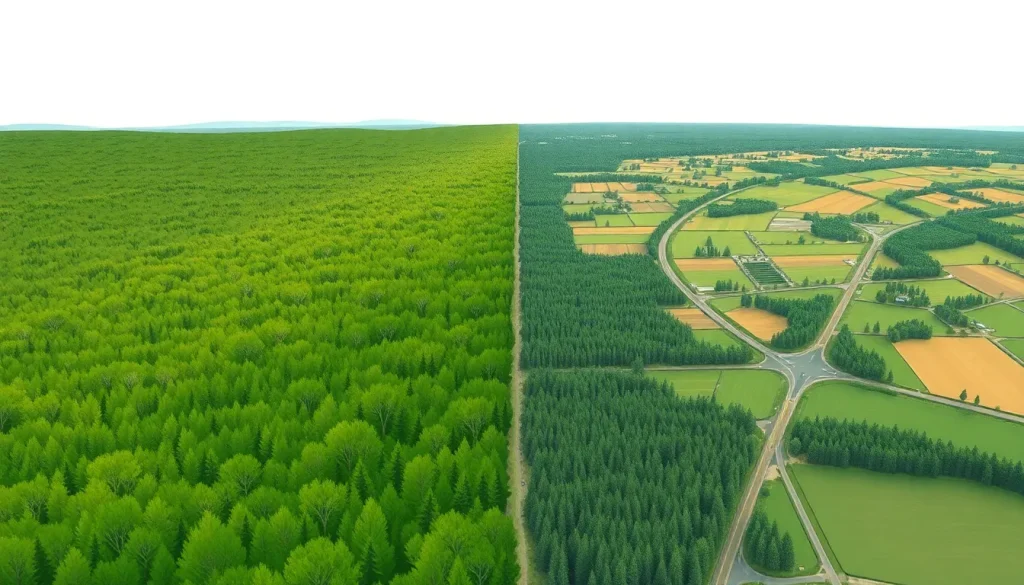
Habitat fragmentation, on the other hand, is the process by which a large, continuous area of habitat is divided into smaller, isolated patches. This often occurs as a result of human activities like road construction, logging, or agricultural expansion that create barriers within a previously intact landscape. While the total area of habitat may not be completely eliminated, the remaining fragments are separated by a matrix of altered, often inhospitable terrain. Fragmentation changes the spatial configuration of the habitat, leading to edge effects, reduced connectivity, and smaller population sizes that are more vulnerable to extinction. Although habitat loss and fragmentation frequently occur together, they are distinct phenomena with different ecological consequences and require different management approaches.
Overview
Habitat loss and fragmentation are among the most pressing environmental issues of the modern era, recognized as primary drivers of the global biodiversity crisis. The conversion of natural landscapes for human use has accelerated dramatically over the past few centuries, with agriculture, urbanization, and infrastructure development transforming vast areas of forests, grasslands, and wetlands. While habitat loss directly reduces the total area available for species, fragmentation compounds the problem by altering the quality and connectivity of the remaining habitat. Together, these processes disrupt ecological functions, reduce species richness, and can lead to local and global extinctions. Understanding the distinction between them is essential for designing effective conservation strategies and land-use policies.
How It Works
Habitat loss operates through the direct removal or conversion of natural ecosystems. When a forest is cleared for a palm oil plantation, the original habitat is destroyed, and the species that lived there must either adapt to the new environment or disappear. The process is often irreversible on human timescales, as the original ecological community cannot easily re-establish itself. Habitat loss reduces the carrying capacity of the landscape, leading to smaller population sizes and increased competition for remaining resources. It also fragments populations, making them more susceptible to inbreeding, disease, and local extinction.
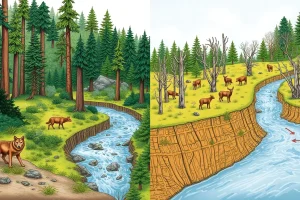
Habitat fragmentation works through a different mechanism. Even when some habitat remains, the division into smaller patches creates edge effects, where the microclimate and species composition at the boundary differ from the interior. Edges are often warmer, drier, and more exposed to wind and invasive species. Fragmentation also increases the distance between patches, making it harder for organisms to move, find mates, or recolonize areas after local extinctions. The surrounding matrix—whether farmland, roads, or urban areas—can act as a barrier to dispersal. Over time, fragmented habitats may lose species that require large territories or are sensitive to edge conditions, leading to a phenomenon known as “extinction debt,” where species persist for a while but are ultimately doomed.
Main Causes or Drivers
The primary driver of both habitat loss and fragmentation is land-use change for human activities. Agriculture is the largest single cause, with vast areas of forest, grassland, and wetland converted to cropland or pasture. Urbanization and infrastructure development, including roads, railways, and dams, also contribute significantly by both removing habitat and slicing remaining areas into smaller pieces. Logging, mining, and energy extraction further degrade and fragment natural landscapes. In many regions, these activities are driven by economic growth, population expansion, and global demand for commodities. Climate change can exacerbate these processes by altering habitat suitability and forcing species to shift their ranges, sometimes into already fragmented landscapes.
Environmental and Human Impacts
The environmental impacts of habitat loss and fragmentation are profound. Species extinction rates are now estimated to be 100 to 1,000 times higher than natural background rates, largely due to habitat destruction. Fragmentation reduces genetic diversity by isolating populations, making them more vulnerable to disease and environmental changes. It also disrupts ecological processes such as pollination, seed dispersal, and nutrient cycling. Edge effects can alter microclimates and increase predation and competition from invasive species. For humans, the loss of ecosystem services—such as clean water, flood control, and carbon sequestration—can have severe economic and social consequences. Indigenous and local communities that depend on intact habitats for their livelihoods and cultural practices are particularly affected.
Solutions
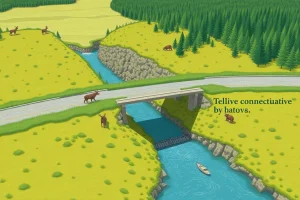
Addressing habitat loss and fragmentation requires a multi-pronged approach. The most effective strategy is to prevent further destruction by establishing protected areas and enforcing land-use regulations. For already fragmented landscapes, creating ecological corridors—strips of natural habitat that connect isolated patches—can restore connectivity and allow species to move and interbreed. Habitat restoration projects, such as reforestation and wetland rehabilitation, can reverse some damage, though they are often costly and time-consuming. Landscape-level planning that integrates conservation with sustainable agriculture and urban development can reduce future fragmentation. International agreements, such as the Convention on Biological Diversity, set targets for habitat protection, but implementation remains a challenge. On a smaller scale, individuals can support conservation organizations, advocate for sustainable land-use policies, and reduce their ecological footprint.
Common Misconceptions
A common misconception is that habitat fragmentation is simply a less severe form of habitat loss. In reality, fragmentation can have unique and severe ecological effects even when the total habitat area remains the same. For example, a single large reserve often supports more species than several small reserves of equal total area, due to reduced edge effects and larger population sizes. Another misunderstanding is that habitat loss and fragmentation are always separate processes; in practice, they often occur together, making it difficult to isolate their individual impacts. Finally, some believe that creating corridors or stepping stones between fragments fully mitigates fragmentation effects, but the quality and width of these connections are critical, and they may not benefit all species equally.
FAQ
What is the difference between habitat loss and habitat fragmentation?
Habitat loss is the complete destruction or conversion of a natural habitat, such as when a forest is cleared for farmland. Habitat fragmentation is the breaking apart of a continuous habitat into smaller, isolated patches, often by roads or development, without necessarily reducing the total area.
How does habitat fragmentation affect wildlife?
Fragmentation isolates populations, reduces genetic diversity, increases edge effects (like higher predation and altered microclimates), and makes it harder for species to find food, mates, or migrate. It can lead to local extinctions even if some habitat remains.
Why is it important to distinguish between habitat loss and fragmentation?
Distinguishing them is crucial because they require different conservation strategies. Preventing habitat loss focuses on protecting large areas, while addressing fragmentation may involve creating corridors or restoring connectivity between patches. Misdiagnosing the problem can lead to ineffective solutions.
References
- Fahrig, L. (2003). Effects of Habitat Fragmentation on Biodiversity. Annual Review of Ecology, Evolution, and Systematics, 34, 487–515.
- Haddad, N. M. et al. (2015). Habitat fragmentation and its lasting impact on Earth’s ecosystems. Science Advances, 1(2), e1500052.
- IPBES (2019). Global Assessment Report on Biodiversity and Ecosystem Services. Intergovernmental Science-Policy Platform on Biodiversity and Ecosystem Services.