In brief
At a glance
Quick Facts
- Verdict
- High potential, low current reliability
- Problem addressed
- Atmospheric CO2 removal via soil carbon storage
- Evidence strength
- Moderate for potential, limited for credit integrity
- Potential scale
- Global (0.4–8.6 GtCO2/year theoretical)
- Relative cost
- Low to moderate per tCO2e, but high MRV costs
- Time to impact
- Years to decades for measurable sequestration
Quick verdict
Soil carbon credits are a conceptually appealing but practically troubled climate solution. While agricultural soils can sequester significant amounts of carbon, the ability to reliably measure, verify, and guarantee the permanence of that stored carbon remains deeply contested. Current credit programs often rely on models and sparse sampling, leading to concerns about over-crediting and greenwashing. The solution is not without merit—it can improve soil health and support farmers—but as a primary tool for offsetting fossil fuel emissions, it is high-risk and not yet proven at scale. Rigorous, standardized measurement and long-term governance are essential before soil carbon credits can be considered a credible climate mitigation strategy.
Problem addressed
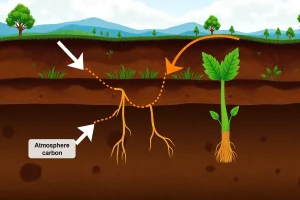
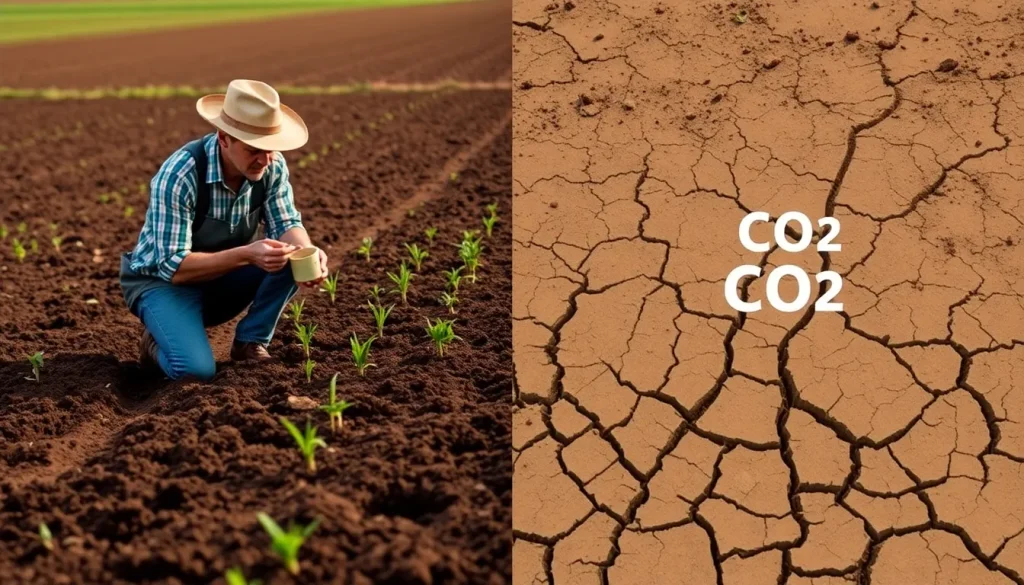
Soil carbon credits target two interconnected problems: the urgent need to remove carbon dioxide (CO₂) from the atmosphere to limit global warming, and the widespread degradation of agricultural soils. Soils represent the largest terrestrial carbon pool, holding more carbon than the atmosphere and all vegetation combined. However, conventional farming practices—such as intensive tillage, monocropping, and excessive use of synthetic fertilizers—have depleted soil organic carbon (SOC) by 30–70% in many regions, releasing CO₂ and reducing soil fertility. By incentivizing practices that rebuild SOC, soil carbon credits aim to turn agricultural lands into net carbon sinks while restoring soil health. The challenge is that SOC is dynamic, spatially variable, and easily reversed, making it difficult to quantify and guarantee as a permanent climate benefit.
How the solution works
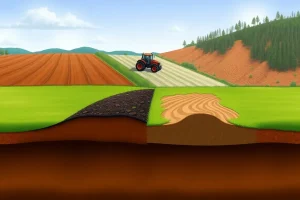
Soil carbon credits operate within voluntary or compliance carbon markets. Farmers or land managers adopt practices that increase SOC—such as no-till or reduced tillage, cover cropping, crop rotation, agroforestry, compost application, and improved grazing management. The additional carbon sequestered compared to a baseline scenario is quantified, verified by third parties, and converted into tradable credits (one credit typically equals one metric ton of CO₂ equivalent). These credits are then sold to companies or individuals seeking to offset their emissions. The process involves several steps: baseline establishment, practice implementation, monitoring (often through soil sampling and modeling), reporting, and verification (MRV). Credits are issued only for carbon that is deemed additional, measurable, and permanent over a defined period (commonly 20–100 years). However, the inherent complexity of soil systems makes each of these steps fraught with uncertainty.
Evidence strength
The evidence for soil carbon sequestration potential is moderate to strong in experimental settings, but limited and contested in real-world credit programs. Meta-analyses and field trials confirm that certain practices can increase SOC, with global technical potential estimates ranging from 0.4 to 8.6 GtCO₂ per year. However, these estimates are highly sensitive to assumptions about adoption rates, soil types, climate, and measurement methods. The evidence supporting the integrity of soil carbon credits—specifically additionality, accurate quantification, and permanence—is much weaker. Many projects rely on biogeochemical models rather than direct, repeated soil sampling, and model predictions often diverge significantly from measured values. Independent reviews have found that credited sequestration is frequently overestimated, and that leakage (emissions shifting to other areas) is rarely accounted for. Permanence remains a critical unresolved issue: SOC gains can be rapidly reversed by drought, fire, or changes in management, yet most protocols lack robust mechanisms to guarantee long-term storage.
Potential scale
The theoretical global scale of soil carbon sequestration is large, but practical deployment is constrained by biophysical, economic, and institutional factors. The “4 per 1000” initiative suggests that increasing global SOC stocks by 0.4% per year could offset annual anthropogenic CO₂ emissions, though this target is widely considered aspirational rather than achievable. Realistic estimates of global sequestration potential range from 1–5 GtCO₂ per year, with the highest potentials in degraded croplands and grasslands. However, scaling up credit programs faces limits: SOC accumulation rates slow as soils approach saturation, and many regions have low sequestration potential due to climate or soil type. Additionally, the high cost of MRV and the need for long-term contracts deter landowner participation. Without significant policy support and technological advances in measurement, the actual scale of verified, permanent soil carbon credits is likely to remain a fraction of the theoretical potential.
Cost considerations
Costs for generating soil carbon credits are highly variable and often underestimated. Direct costs to farmers include practice changes (e.g., new equipment, seeds, labor) and opportunity costs of alternative land uses. Transaction costs for MRV are particularly burdensome: soil sampling, laboratory analysis, and third-party verification can cost $3–$20 per hectare per year, depending on sampling intensity and region. When aggregated, total costs per tCO₂e sequestered range from $10 to over $100, with many projects falling in the $20–$50 range. This is generally higher than the market price for many voluntary carbon credits (often below $10), meaning projects may not be financially viable without subsidies or premium prices. Cost-effectiveness is further undermined by the need for ongoing monitoring and buffer pools to insure against reversals. Compared to other carbon removal methods like afforestation or direct air capture, soil carbon credits can be cheaper per ton, but the higher uncertainty and risk of reversal reduce their effective value.
Implementation time
Adopting soil carbon-building practices can begin within a single growing season, but meaningful carbon accumulation is slow. Measurable increases in SOC typically take 3–10 years to become detectable against background variability, and decades to reach new equilibrium levels. The crediting process itself adds time: baseline measurements, verification cycles, and credit issuance can take 1–3 years. Permanence requirements often mandate commitments of 20–100 years, during which the land must be monitored and maintained. This long time horizon conflicts with the short-term planning cycles of many farmers and the urgency of climate mitigation. Rapid deployment is possible in terms of practice adoption, but the lag in verifiable climate impact means soil carbon credits are not a quick fix.
Environmental benefits
Beyond carbon sequestration, practices that increase SOC provide numerous environmental co-benefits. Improved soil structure enhances water infiltration and retention, reducing runoff and erosion. Increased organic matter supports soil biodiversity and nutrient cycling, which can reduce the need for synthetic fertilizers and pesticides. In some systems, these changes can also improve water quality and reduce downstream flooding. However, the magnitude of these benefits varies widely by soil type, climate, and management, and they are not directly monetized in carbon markets. Quantification remains challenging, and some practices (e.g., no-till in certain contexts) may not deliver all claimed benefits. Overall, the environmental case for soil carbon practices is strong, but the link to carbon credits specifically is weaker due to measurement and permanence issues.
Social and economic co-benefits
Soil carbon credit programs can provide additional income streams for farmers and landowners, potentially improving rural livelihoods and incentivizing sustainable land management. In theory, they can support smallholder farmers in developing countries by rewarding carbon sequestration. In practice, however, high MRV costs and complex certification processes often exclude smallholders, favoring larger, well-capitalized operations. Where programs are accessible, they can enhance food security by improving soil fertility and crop yields. Community-based projects may also strengthen local institutions and knowledge sharing. Yet, the distribution of benefits is uneven, and there is a risk that carbon markets could lead to land grabbing or displacement of traditional land uses if not carefully governed.
Risks and unintended consequences
Soil carbon credits carry significant risks. The most fundamental is impermanence: carbon stored in soils can be released back into the atmosphere due to natural disturbances (drought, fire, pests) or human decisions (plowing, land conversion). Buffer pools and insurance mechanisms exist but may be insufficient for large-scale reversals. Measurement uncertainty can lead to over-crediting, undermining the environmental integrity of offsets. Leakage occurs when sequestration in one area causes emissions elsewhere—for example, if reduced crop yields from conservation practices lead to land conversion elsewhere. There is also a risk of greenwashing, where companies use low-quality soil carbon credits to claim carbon neutrality without making genuine emission reductions. Finally, an over-reliance on soil carbon offsets could delay the necessary transition away from fossil fuels, creating a moral hazard.
Where it works best
Soil carbon credits are most viable in regions with high sequestration potential, strong institutional frameworks, and secure land tenure. Temperate and tropical regions with degraded croplands or grasslands often show the largest and fastest SOC gains. Areas with well-established agricultural extension services, clear land rights, and supportive policies (e.g., the EU’s Common Agricultural Policy) can better manage the MRV requirements. Projects that integrate soil carbon with other sustainability goals—such as watershed protection or biodiversity conservation—tend to be more successful. Small-scale, community-led initiatives with low-cost monitoring approaches (e.g., participatory soil sampling) have shown promise in some developing countries, though scalability remains a challenge.
Where it may not work
Soil carbon credits are poorly suited to arid and semi-arid regions where water limitation severely constrains biomass production and SOC accumulation. Peatlands and wetlands, while carbon-rich, are generally inappropriate for crediting because drainage for agriculture releases massive amounts of carbon, and rewetting projects face different MRV challenges. Areas with insecure land tenure or weak governance are high-risk, as credits may be contested or reversed. In regions where baseline SOC is already high (e.g., mature forests converted to agriculture), the potential for additional sequestration is limited. Finally, where MRV costs exceed the value of credits, projects are economically unviable without subsidies.
Comparison with alternatives
Compared to other carbon removal methods, soil carbon credits offer unique advantages and disadvantages. Afforestation and reforestation store carbon in biomass, which is easier to measure and monitor, but compete for land and water. Bioenergy with carbon capture and storage (BECCS) and direct air capture (DAC) are technological solutions with high permanence but much higher costs ($100–$300+ per tCO₂). Soil carbon credits are cheaper per ton but far less reliable in terms of permanence and measurement. Within the agricultural sector, alternative approaches like biochar application or enhanced rock weathering also aim to sequester carbon, each with their own trade-offs. Emission reduction offsets (e.g., renewable energy projects) avoid CO₂ rather than removing it, and are generally considered more robust. Soil carbon credits are best viewed as a complementary strategy with significant co-benefits, not a substitute for deep decarbonization or more durable carbon removal.
Case studies
Several real-world programs illustrate the challenges. The Australian Carbon Farming Initiative (CFI) has issued millions of soil carbon credits, but independent audits have found that many projects relied heavily on modeling and showed little measured SOC increase, leading to reforms. In the United States, voluntary carbon markets like Nori and Indigo Ag have faced criticism for using unverified baselines and overestimating sequestration. Conversely, the Kenya Agricultural Carbon Project, working with smallholders, demonstrated that with intensive training and low-cost monitoring, soil carbon sequestration can be documented, though permanence and leakage remain concerns. The EU’s proposed carbon farming framework aims to standardize MRV, but is still in development. These cases highlight that while soil carbon credits can work in specific contexts, systemic issues persist.
Final assessment
Soil carbon credits represent a well-intentioned but deeply flawed climate solution. The scientific basis for soil carbon sequestration is sound, and the co-benefits for agriculture are real. However, the current state of measurement, reporting, and verification is insufficient to guarantee that credits represent real, additional, and permanent emission reductions. Until these technical and governance challenges are resolved—through improved direct measurement, robust permanence mechanisms, and equitable program design—soil carbon credits should be treated as a high-risk offset category. They are most defensible when used as a supplementary tool within broader sustainability strategies, not as a primary means of achieving net-zero commitments. For policymakers and buyers, a cautious, evidence-based approach is essential to avoid undermining climate goals.
FAQ
Why is measuring soil carbon so difficult?
Soil carbon content varies greatly over short distances and depths, making representative sampling expensive and time-consuming. It changes slowly, so detecting small increases against a large, variable background requires many samples and long time periods. Additionally, lab analysis and modeling introduce further uncertainties, and there is no universally accepted standard for measurement.
What does 'permanence' mean for soil carbon credits?
Permanence refers to the requirement that carbon stored in soils must remain there for a long time—typically 20 to 100 years—to have a lasting climate benefit. However, soil carbon can be released back into the atmosphere through natural events like drought or fire, or if farmers revert to conventional tillage. Ensuring permanence requires long-term monitoring, legal agreements, and buffer pools of credits to cover reversals, but these mechanisms are often insufficient.
Can soil carbon credits be a reliable climate solution?
Currently, soil carbon credits are not considered a highly reliable climate solution due to persistent problems with measurement accuracy, additionality, leakage, and permanence. While they can provide real carbon sequestration and valuable co-benefits, the risk of over-crediting and reversal is high. They are best used as a supplementary measure alongside deep emission cuts and more durable carbon removal methods, and only when rigorous standards are applied.
References
- IPCC. (2019). Special Report on Climate Change and Land.
- FAO. (2017). Soil Organic Carbon: the hidden potential.
- Smith, P. et al. (2020). Soil carbon sequestration and biochar as negative emission technologies. Global Change Biology.
- World Bank. (2020). State and Trends of Carbon Pricing 2020.
- Thamo, T. & Pannell, D.J. (2016). Challenges in developing effective policy for soil carbon sequestration: perspectives on additionality, leakage, and permanence. Climate Policy.