In brief
At a glance
Quick Facts
- Core definition
- A holistic farming approach that prioritizes soil health, biodiversity, and ecosystem restoration.
- Key practices
- No-till farming, cover cropping, crop rotation, rotational grazing, composting, and agroforestry.
- Global soil carbon potential
- Estimates range from 0.5 to 5 gigatonnes of CO2 per year, with high uncertainty.
- Soil organic matter increase
- Can rise by 0.1–0.5% per year under best management, but gains are slow and reversible.
- Biodiversity impact
- Field-scale studies show increased microbial diversity and beneficial insects; landscape effects vary.
- Yield effects
- Meta-analyses find average yield reductions of 5–10% in some systems, but with high variability and potential for recovery.
- Water benefits
- Improved soil structure can increase infiltration and water-holding capacity, reducing runoff and erosion.
- Economic barriers
- Transition costs and potential short-term yield dips can hinder adoption; long-term profitability may improve with lower input costs.
- Certification
- No universal standard; multiple labels exist, such as Regenerative Organic Certified and Ecological Outcome Verification.
- Climate resilience
- Some evidence suggests regenerative soils better withstand drought and extreme weather, but data is limited.
Key Takeaways
- Regenerative practices can increase soil organic matter and improve soil structure, but the rate and permanence of carbon sequestration vary widely by climate, soil type, and management.
- Biodiversity benefits are well-documented at the field scale, yet landscape-level outcomes depend on adoption intensity and surrounding land use.
- Yield outcomes are context-specific; some regenerative systems maintain or even increase yields over time, while others experience short-term declines, particularly during the transition period.
- The overall climate mitigation potential is debated, with global estimates ranging from modest to significant, and requires careful lifecycle analysis to account for all greenhouse gas fluxes.
What Is Regenerative Agriculture: Evidence Behind the Claims?
Regenerative agriculture is a system of farming and grazing principles and practices that seeks to rehabilitate and enhance the entire ecosystem of the farm, with a primary focus on soil health, water management, and biodiversity. Unlike conventional agriculture, which often emphasizes maximizing yields through external inputs, regenerative agriculture aims to work with natural processes to restore degraded soils, increase resilience, and sequester carbon from the atmosphere. The term itself is not rigidly defined; it encompasses a spectrum of approaches including conservation agriculture, agroecology, holistic planned grazing, and permaculture, all united by the goal of leaving the land in better condition than before.
The phrase “evidence behind the claims” refers to the growing body of scientific research that tests whether regenerative practices deliver on their promised outcomes. Proponents assert that regenerative agriculture can reverse climate change, improve food security, and revitalize rural economies. However, the evidence is nuanced. While many studies confirm improvements in soil organic carbon, water infiltration, and on-farm biodiversity, the magnitude, scalability, and permanence of these benefits are subjects of active investigation. This article provides a neutral, fact-based examination of what the science currently tells us about the real-world impacts of regenerative agriculture.
Overview
Regenerative agriculture has gained significant attention as a potential solution to multiple environmental crises, including soil degradation, biodiversity loss, and climate change. The United Nations estimates that one-third of the world’s soils are moderately to highly degraded, threatening food production and ecosystem services. Regenerative practices aim to reverse this trend by mimicking natural ecosystems: keeping soil covered with plants year-round, minimizing disturbance, diversifying crop rotations, and integrating livestock. The approach is not new—many indigenous and traditional farming systems have long employed similar methods—but it has been repackaged under a modern sustainability framework.
The scientific community has responded with a surge of research, meta-analyses, and long-term field trials. Key questions include: How much carbon can regenerative soils actually sequester? Do these practices maintain yields? What are the economic trade-offs? And can regenerative agriculture be scaled globally without unintended consequences? The answers are complex and often depend on local conditions, making blanket claims difficult to substantiate.
How It Works
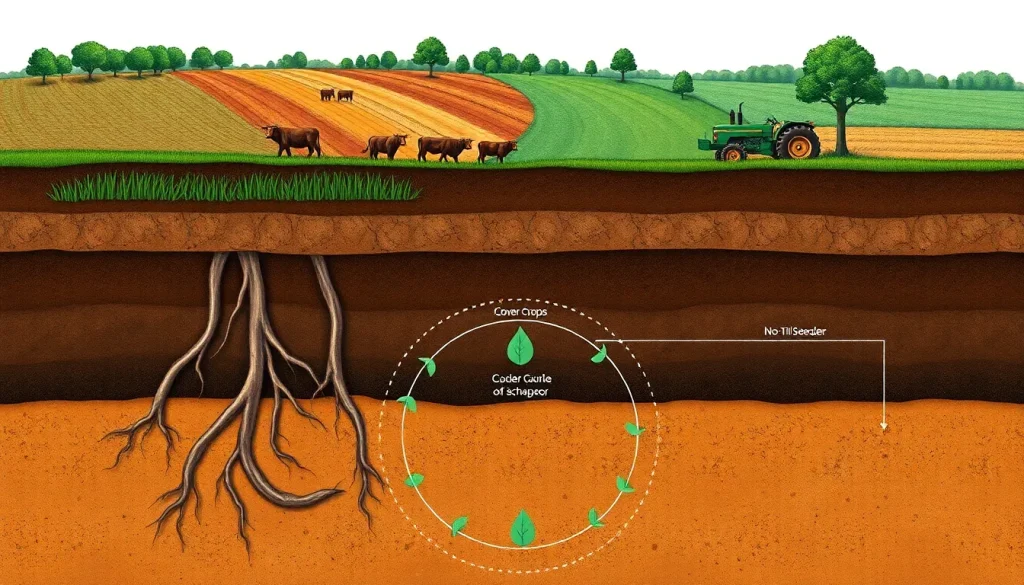
Regenerative agriculture operates through a set of core practices that enhance soil biology and ecosystem function. These include:
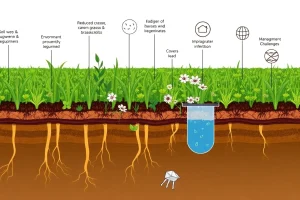
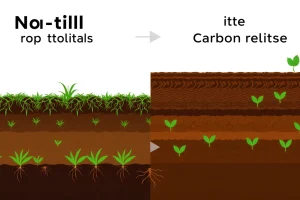
- No-till or reduced tillage: Minimizing soil disturbance preserves soil structure, reduces erosion, and protects microbial communities that are essential for nutrient cycling.
- Cover cropping: Planting non-cash crops between main crops keeps the soil covered, adds organic matter, fixes nitrogen (in the case of legumes), and suppresses weeds.
- Crop rotation and diversification: Rotating different plant species breaks pest and disease cycles, improves soil fertility, and supports a wider range of soil organisms.
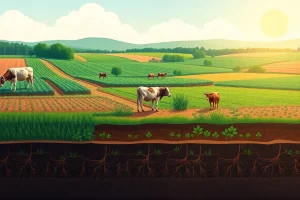
- Rotational grazing: Moving livestock frequently mimics natural herd movements, preventing overgrazing, distributing manure evenly, and stimulating plant regrowth.
- Compost and organic amendments: Adding compost, manure, or biochar increases soil organic matter and microbial activity, enhancing nutrient availability and water retention.
- Agroforestry and perennial integration: Incorporating trees and deep-rooted perennials stabilizes soil, sequesters carbon deeper in the profile, and provides habitat for beneficial species.
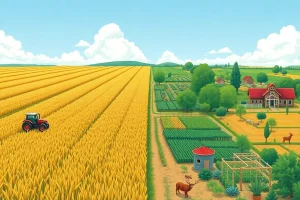
These practices are often combined in a systems approach, where the interactions between components generate synergistic benefits. For example, cover crops can provide forage for livestock, whose manure then fertilizes the soil, reducing the need for synthetic inputs. The underlying principle is to foster a self-sustaining, resilient agroecosystem.
What the Evidence Shows
Scientific evidence on regenerative agriculture is growing but remains incomplete. On soil carbon sequestration, meta-analyses indicate that practices like no-till and cover cropping can increase soil organic carbon, but the rates are highly variable. A global review found that conversion to no-till sequesters an average of 0.3–0.5 tonnes of carbon per hectare per year, but gains often plateau after a decade or two and can be reversed if tillage resumes. The potential for climate mitigation is real but may be more limited than some advocates claim, especially when considering the entire soil profile and the need for permanent land-use change.
Biodiversity benefits are more consistently documented. Studies show that regenerative farms host greater microbial diversity, more earthworms, and higher populations of pollinators and beneficial insects compared to conventional monocultures. However, landscape-level biodiversity gains depend on the extent of adoption and connectivity between habitats. On yields, the evidence is mixed: some long-term trials show that organic and regenerative systems can match or exceed conventional yields after a transition period, particularly in drought years, but meta-analyses often find average yield reductions of 5–10% for certain crops. Economic outcomes similarly vary, with reduced input costs sometimes offsetting lower yields, but transition costs and labor requirements can be barriers.
Benefits, Limitations and Trade-offs
The benefits of regenerative agriculture extend beyond carbon. Improved soil structure enhances water infiltration and retention, reducing runoff and erosion while increasing resilience to droughts and floods. Healthier soils can also support more nutrient-dense crops, though direct links to human health are still being studied. On-farm biodiversity can provide natural pest control, reducing reliance on pesticides. Socially, regenerative systems often emphasize farmer knowledge and community engagement, potentially revitalizing rural areas.
However, limitations and trade-offs exist. The transition period can be financially challenging, with initial yield declines and the need for new equipment or knowledge. Not all practices work everywhere; no-till in cold, wet climates can delay planting and reduce yields, and cover crops may compete for water in arid regions. The carbon sequestration potential is finite and reversible, and some studies suggest that increased nitrous oxide emissions from legume cover crops or manure could offset climate gains. Scaling up regenerative agriculture globally would require significant changes in policy, markets, and farmer training, and there is a risk that corporate co-option could dilute its principles.
Data Limitations and Uncertainties
Despite promising results, significant data gaps and uncertainties remain. Soil carbon measurement is challenging: gains are slow, spatially variable, and often concentrated in the topsoil, while deeper layers may lose carbon. Many studies are short-term or conducted on research stations, making it difficult to predict long-term, real-world outcomes. The lack of a standardized definition for “regenerative” complicates comparisons across studies. Additionally, lifecycle assessments that account for all greenhouse gas emissions—including those from livestock, fertilizer production, and land-use change—are rare, leading to overly optimistic carbon accounting in some cases.
Economic data is also limited, particularly for diverse farming systems in developing countries. The scalability of regenerative practices depends on local contexts, and what works on a small, diversified farm may not translate to large-scale commodity production. More long-term, interdisciplinary research is needed to quantify the true potential and limitations of regenerative agriculture, and to identify the conditions under which it can contribute meaningfully to climate and food security goals.
FAQ
What is regenerative agriculture?
Regenerative agriculture is a system of farming and grazing practices that aims to restore soil health, increase biodiversity, and sequester carbon. It includes methods like no-till, cover cropping, and rotational grazing, and focuses on improving ecosystem function rather than just maximizing yields.
How does regenerative agriculture work?
It works by mimicking natural ecosystems: keeping soil covered, minimizing disturbance, diversifying plant and animal species, and integrating livestock. These practices build soil organic matter, enhance water retention, and support beneficial organisms, creating a self-sustaining and resilient farm system.
Why does regenerative agriculture matter?
It matters because conventional agriculture has contributed to widespread soil degradation, biodiversity loss, and greenhouse gas emissions. Regenerative practices offer a potential pathway to produce food while restoring ecosystems, mitigating climate change, and improving long-term food security, though the evidence for some claims is still evolving.
References
- Powlson, D.S., et al. (2014). Limited potential of no-till agriculture for climate change mitigation. Nature Climate Change.
- Lal, R. (2004). Soil carbon sequestration impacts on global climate change and food security. Science.
- Giller, K.E., et al. (2009). Conservation agriculture and smallholder farming in Africa: The heretics' view. Field Crops Research.
- IPCC Special Report on Climate Change and Land (2019). Chapter 2: Land–Climate interactions.
- Rodale Institute. Regenerative Organic Agriculture and Climate Change: A Down-to-Earth Solution to Global Warming.