In brief
At a glance
Quick Facts
- Keystone species concept introduced
- By Robert T. Paine in 1969 based on intertidal starfish experiments.
- Indicator species can be
- Plants, animals, or microorganisms that signal environmental conditions.
- Classic keystone example
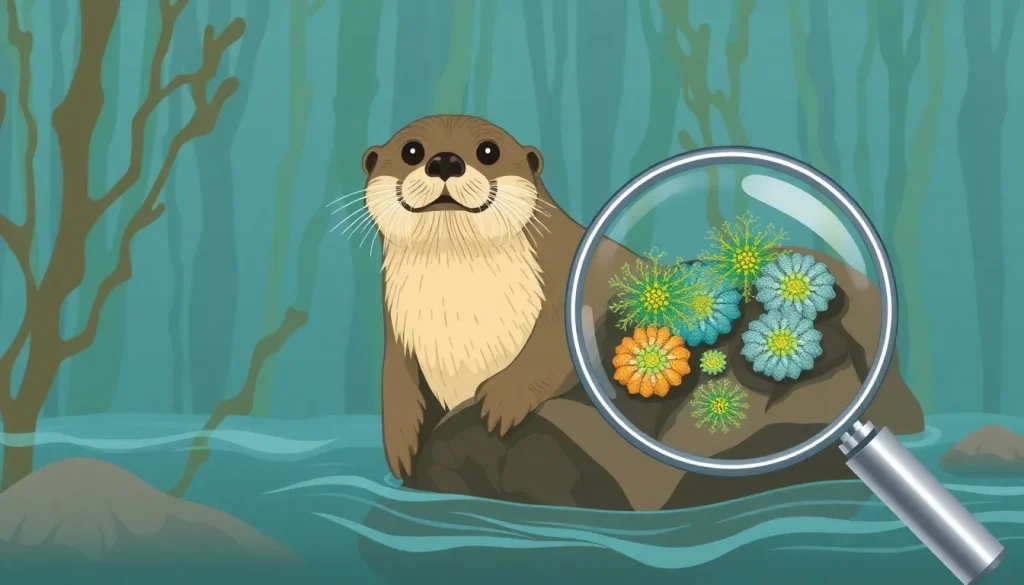
- Sea otters control sea urchin populations, protecting kelp forests.
- Common indicator example
- Lichens are sensitive to air pollution, especially sulfur dioxide.
- Trophic cascade
- Removal of a keystone predator can cause ripple effects through the food web.
- Bioaccumulators
- Some indicator species concentrate pollutants, providing a record of contamination.
- Not all dominants are keystones
- A keystone species' effect is disproportionately large relative to its biomass.
- Amphibians as indicators
- Their permeable skin makes them sensitive to pollutants and climate change.
- Ecosystem engineers
- Beavers are keystone species that create wetlands by building dams.
- Policy application
- Indicator species are used in water quality standards and environmental impact assessments.
Key Takeaways
- Keystone species have a disproportionately large effect on their ecosystem relative to their abundance, while indicator species signal the health or condition of an environment.
- The removal of a keystone species can trigger a trophic cascade and ecosystem collapse, whereas changes in indicator species populations provide early warnings of environmental stress.
- Keystone species are defined by their ecological role (e.g., predator, engineer, mutualist), while indicator species are defined by their sensitivity to specific environmental conditions.
- Both concepts are essential for conservation: protecting keystone species helps maintain ecosystem structure, and monitoring indicator species helps assess ecosystem health and guide management decisions.
What Is Keystone Species vs Indicator Species?
A keystone species is an organism that has a disproportionately large effect on its ecosystem relative to its abundance, while an indicator species is an organism whose presence, absence, or abundance reflects a specific environmental condition, often used to monitor ecosystem health. The keystone species concept was introduced by ecologist Robert T. Paine in 1969, who observed that removing a single predatory starfish species from a rocky intertidal zone led to a dramatic decline in species diversity. In contrast, the use of indicator species has roots in practical observations, such as miners using canaries to detect toxic gases, and has since been formalized in ecology to assess pollution, habitat quality, and climate change impacts.
These two concepts serve fundamentally different purposes in ecology. A keystone species is defined by its functional role in maintaining the structure and stability of an ecosystem; its removal causes significant changes that ripple through the food web. An indicator species, on the other hand, acts as a biological signal, providing information about the state of the environment. While a species can sometimes fulfill both roles—for example, a keystone predator might also be sensitive to pollution—the concepts are distinct and are applied differently in research and conservation. Understanding the difference helps ecologists and land managers prioritize actions: protecting keystone species to preserve ecosystem integrity, and monitoring indicator species to detect and diagnose environmental problems.
Overview
In ecology, species are often categorized by their functional roles or their utility in environmental assessment. Keystone species and indicator species represent two such categories that have become central to conservation biology and ecosystem management. The keystone species concept emphasizes that not all species are equal in their influence on community structure; some, despite low biomass or numbers, exert a controlling influence. Indicator species, meanwhile, are practical tools for biomonitoring—using living organisms to assess environmental quality. Both concepts have evolved over decades of research and are now integrated into environmental policy, such as the use of indicator species in water quality assessments and the protection of keystone species in protected area design.
The distinction is not merely academic. Confusing a keystone species with an indicator species can lead to misguided conservation efforts. For instance, focusing solely on an indicator species might overlook the functional importance of a keystone species that maintains the habitat the indicator depends on. Conversely, protecting a keystone species does not automatically provide information about pollution levels. Thus, a clear understanding of each concept, its mechanisms, and its applications is essential for anyone involved in ecology, conservation, or environmental management.
How It Works
Keystone species influence ecosystems through several mechanisms. Predatory keystone species, like the sea otter, control herbivore populations; without them, herbivores can overgraze vegetation, leading to habitat loss. Ecosystem engineers, such as beavers, physically modify the environment by building dams that create wetlands, benefiting numerous other species. Mutualistic keystone species, like certain pollinators or seed dispersers, facilitate reproduction and maintain plant diversity. The common thread is that the removal of a keystone species triggers a trophic cascade—a series of indirect effects that alter the abundance of multiple species across different trophic levels—often resulting in reduced biodiversity and ecosystem simplification.
Indicator species work by exhibiting measurable responses to environmental changes. They are selected based on specific traits: sensitivity to particular pollutants, narrow habitat requirements, or the ability to accumulate toxins. For example, lichens are highly sensitive to sulfur dioxide in the air; their absence from an area indicates poor air quality. Aquatic macroinvertebrates like mayflies require high dissolved oxygen levels, so their presence signals clean water. Some indicator species, known as bioaccumulators, concentrate pollutants in their tissues, providing a historical record of contamination. Scientists establish baseline data on indicator species populations and then monitor changes over time to detect environmental degradation or recovery. The key is that the response of the indicator species is reliably linked to a specific environmental variable, allowing managers to infer conditions without direct chemical or physical measurements.
Examples
Classic examples of keystone species include:
- Sea otter (Enhydra lutris): In Pacific kelp forests, sea otters prey on sea urchins. Without otters, urchin populations explode and decimate kelp, destroying the habitat for fish and other marine life.
- Gray wolf (Canis lupus): Reintroduced to Yellowstone National Park, wolves control elk populations, which allows overbrowsed willow and aspen to recover, benefiting beavers and songbirds.
- Beaver (Castor canadensis): By building dams, beavers create ponds and wetlands that support diverse plant and animal communities, alter hydrology, and improve water quality.
- Pisaster ochraceus (ochre sea star): Paine’s original keystone species; this starfish preys on mussels, preventing them from monopolizing space on rocky shores and maintaining high intertidal diversity.
- African elephant (Loxodonta africana): As ecosystem engineers, elephants knock down trees, creating open grasslands that benefit grazing species and maintain savanna ecosystems.
Well-known indicator species include:
- Lichens: Widely used to monitor air quality; many species are intolerant of sulfur dioxide and heavy metals, so their diversity and abundance reflect pollution levels.
- Mayflies (Ephemeroptera), stoneflies (Plecoptera), and caddisflies (Trichoptera): Aquatic insect larvae that require clean, well-oxygenated water; their presence is a standard metric in stream bioassessment.
- Northern spotted owl (Strix occidentalis caurina): Dependent on old-growth forests in the Pacific Northwest; its population decline indicates loss and fragmentation of this habitat.
- Amphibians: With permeable skin and complex life cycles, frogs and salamanders are sensitive to pollutants, UV radiation, and climate change, making them indicators of overall environmental health.
- Corals: Coral bleaching and disease serve as indicators of rising sea temperatures and ocean acidification.
Importance and Impact
The concepts of keystone and indicator species have profound implications for conservation and environmental management. Protecting keystone species is often a cost-effective strategy because it helps maintain the entire ecosystem structure and the services it provides, such as clean water, carbon storage, and fisheries. For example, conserving sea otters indirectly preserves kelp forests, which support commercial fish species and sequester carbon. Similarly, reintroducing wolves can restore riparian habitats and increase biodiversity. The loss of a keystone species can lead to ecosystem collapse, with cascading economic and ecological consequences.
Indicator species are invaluable for early warning and long-term monitoring. They allow scientists and policymakers to detect pollution, habitat degradation, or climate shifts before they become catastrophic. Water quality assessments using macroinvertebrates are standard practice in many countries, guiding regulatory actions and restoration efforts. Indicator species also help in setting conservation priorities; for instance, the decline of the northern spotted owl led to the protection of vast tracts of old-growth forest, benefiting countless other species. In environmental impact assessments, indicator species provide a baseline and a means to measure the effects of development projects. Together, these two concepts form a dual approach: keystone species focus on preserving function, while indicator species focus on diagnosing problems.
Common Misconceptions
One common misconception is that keystone species are always top predators. While many classic examples are predators, keystone species can also be herbivores (e.g., beavers), mutualists (e.g., fig wasps), or even plants (e.g., certain nitrogen-fixing trees). The defining feature is not trophic level but the disproportionate impact on the ecosystem. Another misunderstanding is that indicator species are the most sensitive organisms in an environment. In reality, indicator species are chosen because their response is well-understood, easily measurable, and reliably linked to a specific stressor, not necessarily because they are the most sensitive. Some highly sensitive species might be too rare or difficult to monitor to serve as practical indicators.
It is also incorrectly assumed that a species can be either a keystone or an indicator species, but not both. A species can simultaneously play a keystone role and serve as an indicator. For example, corals are keystone species that build reef ecosystems, and they are also indicators of ocean temperature and acidity. However, the two roles are conceptually distinct and should not be conflated. Finally, not all abundant or dominant species are keystone species. A species that is numerically dominant may have a large effect simply because of its biomass, but a true keystone species has an effect far greater than its abundance would suggest.
Benefits, Limitations and Trade-offs
Using keystone and indicator species in conservation offers several benefits. Focusing on keystone species can be an efficient way to protect entire ecosystems, as their conservation often has umbrella effects that benefit many other species. Indicator species provide a cost-effective and integrative measure of environmental quality, reducing the need for expensive chemical monitoring. Both concepts help communicate complex ecological ideas to the public and policymakers, fostering support for conservation initiatives.
However, there are limitations. Identifying a true keystone species requires experimental evidence, which is often difficult or unethical to obtain in large ecosystems. Some species may be context-dependent keystones, meaning their role changes under different environmental conditions. Indicator species may not capture all aspects of ecosystem health; a single species might indicate one type of pollution but miss others. There is also a trade-off between focusing on individual species and managing for whole-ecosystem integrity. Overreliance on a few indicator species can lead to neglect of other important ecological components. Additionally, climate change is altering the baseline conditions for many indicator species, complicating their use. Despite these challenges, when applied with careful scientific rigor, both concepts remain powerful tools for understanding and protecting the natural world.
FAQ
What is a keystone species?
A keystone species is an organism that has a disproportionately large effect on its ecosystem relative to its abundance. Its removal can cause significant changes in community structure and biodiversity.
What is an indicator species?
An indicator species is an organism whose presence, absence, or abundance reflects a specific environmental condition, such as pollution levels, habitat quality, or climate change. It serves as a biological signal for ecosystem health.
How do keystone and indicator species differ?
Keystone species are defined by their functional role in maintaining ecosystem structure, while indicator species are defined by their sensitivity to environmental conditions and their use in monitoring. A species can be both, but the concepts serve different purposes in ecology and conservation.
References
- Paine, R. T. (1969). A Note on Trophic Complexity and Community Stability. The American Naturalist, 103(929), 91–93.
- Molles, M. C. (2015). Ecology: Concepts and Applications. McGraw-Hill Education.
- U.S. Environmental Protection Agency. (n.d.). Biological Indicators of Watershed Health. Retrieved from EPA website.
- Caro, T. M., & O'Doherty, G. (1999). On the Use of Surrogate Species in Conservation Biology. Conservation Biology, 13(4), 805–814.