In brief
At a glance
Quick Facts
- Verdict
- Promising but context-dependent
- Problem addressed
- Urban heat island effect
- Evidence strength
- Moderate to strong
- Potential scale
- Local to regional
- Relative cost
- Moderate
- Time to impact
- Years to decades
Quick verdict
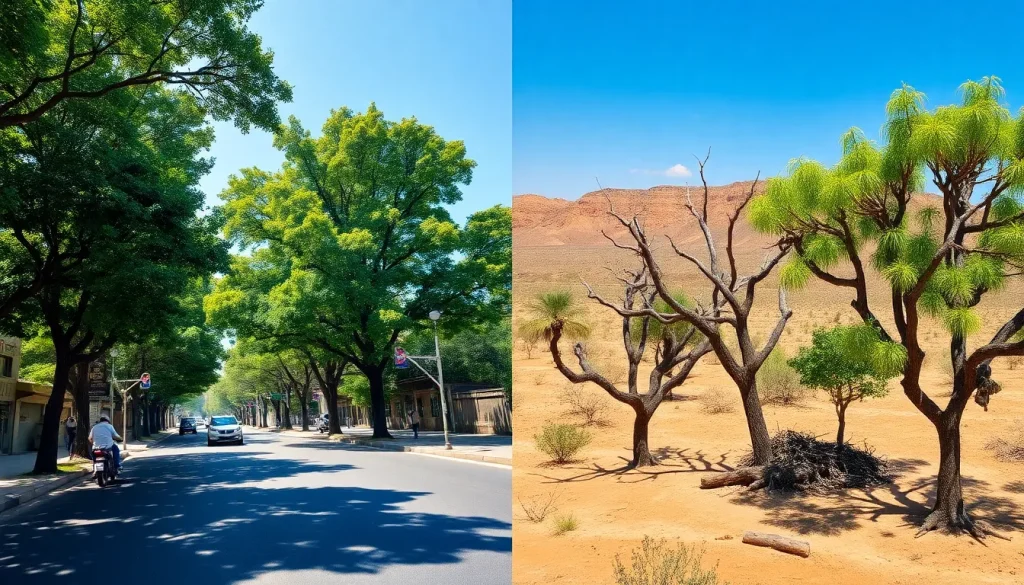
Urban trees are a proven, multi-benefit strategy for reducing urban heat, but their water demands create a critical trade-off that limits applicability in water-scarce regions. When appropriately sited with drought-tolerant species and efficient irrigation, they offer substantial cooling and co-benefits; otherwise, they can strain water resources and even fail to thrive. The solution is promising but not universally applicable—context is everything.
Problem addressed
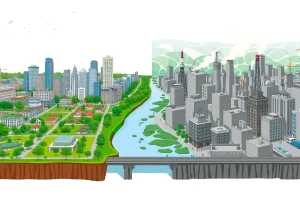
Urban areas experience elevated temperatures compared to surrounding rural areas—a phenomenon known as the urban heat island (UHI) effect. This is caused by heat-absorbing surfaces like asphalt and concrete, waste heat from buildings and vehicles, and reduced vegetation. UHIs intensify energy demand for cooling, worsen air quality, increase heat-related illnesses and mortality, and degrade urban livability. Urban trees directly address the root cause by restoring vegetative cover that provides shade and evaporative cooling.
How the solution works
Trees cool the environment through two primary mechanisms. Shading: tree canopies intercept solar radiation, preventing it from heating surfaces such as pavement and building walls. This reduces surface temperatures and, consequently, the heat re-radiated into the air. Evapotranspiration: trees draw water from the soil and release it as vapor through leaf pores (stomata). The phase change from liquid to vapor consumes energy, cooling the surrounding air—similar to how sweating cools the human body. Together, these processes can lower local air temperatures by several degrees Celsius. The cooling effect is most pronounced directly under and near the canopy, but aggregated over a neighborhood, it can reduce the overall UHI intensity.
Evidence strength
The cooling effect of urban trees is well-documented through observational studies, remote sensing, and modeling. Meta-analyses report that tree canopies can reduce peak daytime air temperatures by 2–8°C at the micro-scale, and city-wide canopy cover of 30–40% can lower ambient temperatures by 1–4°C. However, the magnitude varies significantly with climate, tree species, soil moisture, and urban geometry. Evidence on the water trade-off is more fragmented: studies show that urban trees can use 200–1,000 liters of water per tree per week in hot, dry conditions, but city-scale water balance assessments are rare. The net cooling benefit per unit of water used (water-use efficiency) is an active research area, with some species providing more cooling per liter than others. Overall, the evidence for cooling is strong; for water trade-offs, it is moderate and highly context-specific.
Potential scale
Urban trees can cool at the micro-scale (individual streets, parks) and, with sufficient canopy cover, influence neighborhood and city-scale temperatures. The maximum potential scale is limited by available planting space, competing land uses, and climate. In dense city centers, space constraints may cap canopy cover at 20–30%, while suburban areas can achieve 40% or more. Global urban tree canopy cover averages around 20%, but varies widely. Scaling up would require millions of trees in large cities, with corresponding water demands. Thus, the cooling benefit can be significant locally, but the global impact on urban heat is limited by the extent of urban areas and the feasibility of widespread planting.
Cost considerations
Initial costs include tree purchase, site preparation, and planting, typically ranging from $100 to $1,000 per tree depending on size and species. Long-term maintenance—watering, pruning, pest management, and eventual removal—can add $20–$100 per tree annually. In water-scarce regions, irrigation costs can dominate. Compared to engineered solutions like cool roofs ($1–$3 per square foot) or reflective pavements, trees are often more expensive per unit of cooling, but they provide multiple co-benefits (air quality, stormwater management, aesthetics) that may justify the investment. Cost-effectiveness analyses are limited and yield mixed results, with trees being more favorable when co-benefits are monetized.
Implementation time
Immediate cooling from shading can occur as soon as a tree is planted, but meaningful temperature reductions require canopy development. Fast-growing species can provide noticeable shade within 5–10 years, while slower-growing species may take 20–30 years to reach maturity. Full city-wide canopy cover targets often require decades of sustained planting and maintenance. Thus, urban tree programs are a long-term investment with gradual returns.
Environmental benefits
Beyond cooling, urban trees improve air quality by filtering particulate matter and absorbing gaseous pollutants. They sequester carbon dioxide—a mature tree can store hundreds of kilograms of carbon over its lifetime. Trees reduce stormwater runoff by intercepting rainfall and promoting infiltration, which can lower flood risk and reduce pollution in waterways. They also provide habitat for urban wildlife, supporting biodiversity. Quantified benefits vary by location and tree species, but studies consistently show positive environmental impacts.
Social and economic co-benefits
Urban trees are associated with improved mental health, reduced stress, and increased physical activity. They enhance property values—studies suggest a 5–15% increase for homes near green spaces. Shaded buildings require less air conditioning, lowering energy bills. Tree planting and maintenance create green jobs. Aesthetically, trees improve streetscapes and can foster community pride. These co-benefits often outweigh the direct cooling value in economic assessments.
Risks and unintended consequences
The primary risk is high water consumption, which can exacerbate water scarcity in arid regions and conflict with other water uses. Poorly chosen species may become invasive or produce allergens. Trees can damage infrastructure (sidewalks, underground utilities) through root growth, leading to costly repairs. In some climates, increased humidity from evapotranspiration may reduce thermal comfort, especially in already humid areas. Trees also emit biogenic volatile organic compounds (BVOCs) that can contribute to ground-level ozone formation, though the net air quality effect is generally positive. Maintenance neglect can lead to safety hazards from falling limbs. Finally, if trees are not adapted to local conditions, they may die, wasting resources and reducing public support for future planting.
Where it works best
Urban trees are most effective in temperate and tropical climates with adequate rainfall or reliable irrigation. They excel in areas with high UHI intensity, low existing canopy cover, and sufficient space for root and canopy growth. Communities with strong support for green infrastructure and the capacity for long-term maintenance see the best outcomes. Examples include cities in the northeastern US, northwestern Europe, and parts of Southeast Asia.
Where it may not work
Arid and semi-arid regions (e.g., Phoenix, Dubai) face severe water constraints that make large-scale tree planting unsustainable without alternative water sources like treated wastewater. Areas with compacted, contaminated, or shallow soils may not support healthy tree growth. High-density urban cores with limited planting space and heavy shade from buildings may see minimal additional benefit. Regions prone to wildfires or with high pest pressure also pose challenges.
Comparison with alternatives
Alternatives for urban cooling include cool roofs (reflective surfaces), green roofs, reflective pavements, and shade structures. Cool roofs and reflective pavements are cheaper to install and maintain, require no water, and provide immediate cooling, but they lack co-benefits like air purification or habitat. Green roofs offer some evapotranspiration cooling and stormwater benefits but are limited to building tops. Trees provide the most comprehensive set of co-benefits but demand more space, water, and maintenance. A hybrid approach—combining trees with reflective surfaces and water-efficient landscaping—often yields the best overall outcome.
Case studies
Melbourne, Australia: The Urban Forest Strategy aimed to double canopy cover by 2040. Monitoring showed localized cooling of 2–4°C under tree canopies, but prolonged droughts stressed many trees, requiring increased irrigation and leading to some mortality. The city now prioritizes drought-tolerant species and stormwater harvesting for irrigation.
Los Angeles, USA: The Million Trees LA initiative planted over 400,000 trees, but survival rates were lower than expected due to water limitations and maintenance gaps. Studies found that well-irrigated trees provided significant cooling, but the program highlighted the need for long-term watering commitments.
Singapore: Extensive greening, including street trees and park connectors, has helped moderate urban temperatures. High rainfall reduces water trade-offs, but the city-state still uses efficient irrigation and selects species adapted to tropical conditions. The cooling benefit is estimated at 1–3°C in heavily greened areas.
Final assessment
Urban trees are a valuable, multi-functional solution for urban cooling, but they are not a panacea. In water-rich regions, they should be a cornerstone of heat mitigation strategies. In water-scarce areas, they must be deployed judiciously, with drought-tolerant species, efficient irrigation, and integration into broader water management plans. The trade-off between cooling and water use is real and must be weighed against local priorities. When done right, urban trees deliver substantial environmental, social, and economic returns that justify the investment. Decision-makers should adopt a context-sensitive approach, using trees where they thrive and complementing them with other cooling measures elsewhere.
FAQ
How much can urban trees reduce temperatures?
Under optimal conditions, tree canopies can lower peak daytime air temperatures by 2–8°C at the micro-scale. City-wide canopy cover of 30–40% can reduce ambient temperatures by 1–4°C, though the effect varies with climate, species, and urban layout.
Do all trees provide the same cooling?
No. Cooling effectiveness depends on species characteristics such as leaf area, canopy density, growth rate, and water use. Broadleaf deciduous trees often provide more shade in summer, while evergreens offer year-round cooling but may use more water. Native, drought-tolerant species are often better suited for water-limited areas.
What are the main water trade-offs?
Trees require regular watering, especially during establishment and in dry periods. In water-scarce regions, this can compete with drinking water supplies, agriculture, or ecosystem needs. Over-irrigation can also lead to runoff and water waste. The trade-off is managed by selecting low-water-use species, using efficient irrigation, and harvesting stormwater or recycled water.
References
- EPA Heat Island Effect: Basic Information
- Nowak, D.J. et al. (2006) 'Air pollution removal by urban trees and shrubs in the United States'
- Rahman, M.A. et al. (2017) 'Tree cooling effects and human thermal comfort'
- Pataki, D.E. et al. (2011) 'Water use by urban trees'
- City of Melbourne Urban Forest Strategy