In brief
At a glance
Quick Facts
- Verdict
- Promising
- Problem addressed
- Climate change, water security, biodiversity loss, disaster risk
- Evidence strength
- Moderate to Strong (varies by type)
- Potential scale
- Global
- Relative cost
- Moderate (varies widely)
- Time to impact
- Years to Decades
Quick verdict
Nature-based solutions (NbS) are a promising and increasingly adopted approach to addressing societal challenges by working with nature. They offer a pragmatic, often cost-effective way to tackle issues like climate change, water security, and disaster risk while providing substantial co-benefits for biodiversity and human well-being. However, the evidence base is uneven: some NbS (e.g., mangrove restoration for coastal protection) are well-proven, while others (e.g., large-scale reforestation for carbon removal) carry significant uncertainties and risks. Success depends heavily on context, design, and long-term management. NbS are not a substitute for rapid decarbonisation but a vital complementary strategy.
Problem addressed
Nature-based solutions target a cluster of interconnected societal challenges. These include climate change mitigation (reducing greenhouse gas emissions) and adaptation (reducing vulnerability to climate impacts), disaster risk reduction (e.g., flooding, storm surges, landslides), water security (water quality and availability), food security, human health, and biodiversity loss. The core premise is that healthy, functioning ecosystems provide essential services that can be harnessed to address these problems, often more sustainably and cost-effectively than purely technological or engineered approaches.
How the solution works
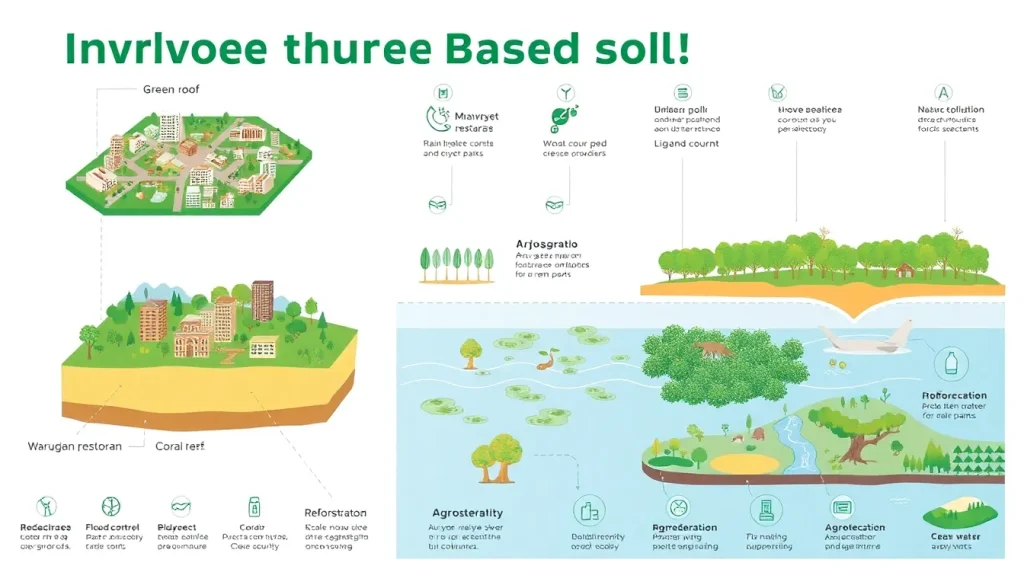
NbS work by protecting, restoring, or sustainably managing natural or modified ecosystems to deliver specific services. The mechanisms vary by intervention type:
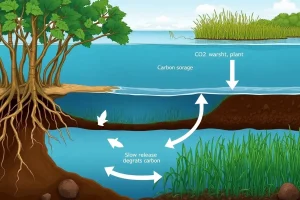
- Protection: Conserving existing ecosystems (e.g., forests, wetlands, coral reefs) maintains their ongoing provision of services such as carbon storage, water filtration, and coastal defence.
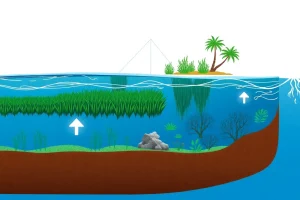
- Restoration: Rehabilitating degraded ecosystems (e.g., reforesting hillslopes, rewetting drained peatlands, restoring mangroves) recovers lost functionality and enhances service delivery.
- Sustainable management: Using ecosystems in ways that maintain their health and service provision (e.g., agroforestry, sustainable fisheries) ensures long-term benefits.
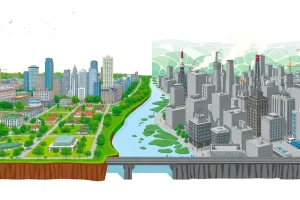
- Creation of new ecosystems: Establishing green infrastructure in urban areas (e.g., green roofs, rain gardens, constructed wetlands) mimics natural processes to manage stormwater, reduce heat, and improve air quality.
These interventions leverage natural processes such as photosynthesis, water infiltration, pollination, and nutrient cycling to produce desired outcomes. For example, a restored mangrove forest attenuates wave energy and traps sediment, reducing coastal erosion and storm surge impacts, while also sequestering carbon and providing nursery habitat for fish.
Evidence strength
The evidence base for NbS is broad but heterogeneous. Some types of NbS have been studied for decades and are supported by robust empirical data. For instance, the role of mangroves and salt marshes in coastal protection is well-documented through field measurements and modelling. Similarly, the water purification benefits of wetlands and riparian buffers are established in hydrological science. Urban NbS, such as green roofs for stormwater management and urban cooling, have a growing body of evidence from pilot projects and monitoring studies.
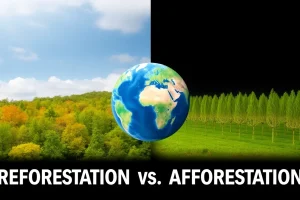
However, evidence is weaker for other applications. The carbon sequestration potential of large-scale afforestation is often overstated and highly dependent on species selection, site conditions, and management. The effectiveness of NbS for climate adaptation (e.g., reducing flood risk at the catchment scale) is harder to quantify due to complex system dynamics and long time horizons. Many studies rely on modelling rather than empirical data, and there is a lack of standardised monitoring protocols. Systematic reviews by the IPCC and IPBES note that NbS can be effective but require careful design and are not a substitute for deep emissions cuts. Overall, evidence strength ranges from strong (for specific, well-studied interventions) to emerging (for integrated, multi-objective projects).
Potential scale
The theoretical potential of NbS is global. The IUCN estimates that NbS could provide around 30% of the cost-effective climate mitigation needed by 2030. For adaptation, NbS can enhance resilience for hundreds of millions of people in coastal zones, cities, and drylands. However, the practical scale is limited by land availability, competing land uses (agriculture, urban expansion), governance challenges, and the need for long-term investment. Scaling up requires mainstreaming NbS into national policies, spatial planning, and infrastructure development. There are also biophysical limits: not all degraded land can be restored, and climate change itself may reduce the effectiveness of some NbS (e.g., forests in fire-prone regions).
Cost considerations
Costs of NbS vary enormously by type, location, and scale. Generally, they are perceived as cost-effective compared to traditional grey infrastructure, especially when co-benefits are monetised. For example, New York City’s watershed protection programme, which uses forest conservation and riparian buffers to purify water, avoided an estimated $6–10 billion in capital costs for a new filtration plant. Mangrove restoration for coastal defence can be 2–5 times cheaper than building and maintaining seawalls. However, upfront costs for some NbS (e.g., urban green roofs) can be higher than conventional alternatives, though lifecycle costs may be lower due to energy savings and extended roof life. A major challenge is that many benefits are public goods not easily captured in market transactions, making financing difficult. Payment for ecosystem services (PES) schemes and green bonds are emerging mechanisms to address this.
Implementation time
Timeframes range from immediate to multi-decadal. Simple interventions like tree planting or installing rain gardens can be implemented in months and yield some benefits (e.g., shade, infiltration) within a few years. Ecosystem restoration, such as reforesting a watershed or restoring a peatland, may take 5–20 years to achieve full functionality. Large-scale, complex NbS (e.g., restoring a river delta) can require decades of planning, stakeholder engagement, and adaptive management. The time to impact also depends on the target: carbon sequestration is slow, while flood risk reduction can be realised more quickly once vegetation is established. This temporal lag can be a barrier when urgent solutions are needed.
Environmental benefits
NbS inherently aim to enhance or maintain biodiversity and ecosystem health. Documented environmental benefits include:
- Increased species richness and habitat connectivity.
- Improved water quality through filtration and reduced runoff.
- Carbon sequestration in biomass and soils (though amounts vary widely).
- Enhanced soil fertility and reduced erosion.
- Pollinator support and natural pest control.
Quantification is site-specific. For example, restored wetlands can remove 40–90% of nitrogen from agricultural runoff. Urban green spaces can reduce local temperatures by 2–8°C. However, poorly designed NbS (e.g., monoculture plantations) can have negative environmental impacts, such as reduced biodiversity and high water consumption.
Social and economic co-benefits
Beyond primary environmental gains, NbS often deliver significant co-benefits:
- Health and well-being: Access to green spaces is linked to reduced stress, improved mental health, and increased physical activity.
- Economic opportunities: NbS can create jobs in restoration, ecotourism, and sustainable agriculture. They can also increase property values and reduce healthcare costs.
- Food and water security: Agroforestry and watershed management can enhance crop yields and ensure reliable water supplies.
- Disaster risk reduction: Communities protected by mangroves or wetlands experience lower damages from storms and floods.
- Cultural and recreational value: Natural areas provide spaces for recreation, education, and cultural practices.
These co-benefits are often what make NbS politically and socially attractive, but they are not automatic; equitable access and benefit-sharing must be ensured.
Risks and unintended consequences
NbS are not without risks:
- Greenwashing: The term can be misused to label activities that have negligible environmental benefits, such as monoculture tree plantations that harm biodiversity and local communities.
- Maladaptation: Poorly designed NbS can increase vulnerability, e.g., introducing invasive species that disrupt ecosystems or planting trees in water-scarce regions.
- Land-use conflicts: Large-scale NbS may compete with agriculture or displace local people, leading to social tensions.
- Permanence: Carbon stored in ecosystems can be released back into the atmosphere due to fires, pests, or land-use change.
- Over-reliance: Treating NbS as a panacea may delay necessary emissions reductions or hard infrastructure investments.
- Uncertain effectiveness under climate change: Changing conditions may reduce the ability of ecosystems to provide expected services.
Mitigating these risks requires robust safeguards, inclusive governance, and adaptive management.
Where it works best
NbS are most effective in contexts where:
- Ecosystems are relatively intact or can be feasibly restored.
- Land tenure and governance are clear and supportive.
- There is strong community engagement and local knowledge.
- Multiple objectives (e.g., biodiversity, climate, livelihoods) can be aligned.
- Long-term funding and monitoring are secured.
- The scale of the intervention matches the scale of the problem (e.g., catchment-level flood management).
Examples include coastal zones where mangroves provide protection, urban areas where green infrastructure manages stormwater, and agricultural landscapes where agroforestry improves productivity and resilience.
Where it may not work
NbS are less suitable or likely to fail in situations where:
- Ecosystems are severely degraded beyond recovery or require prohibitively expensive restoration.
- Land is extremely scarce or highly contested, making large-scale interventions impossible.
- Immediate, high-reliability protection is needed (e.g., flood defences for a major city where a seawall is non-negotiable).
- Governance is weak, leading to poor implementation and maintenance.
- Climate change impacts are so severe that ecosystems cannot survive (e.g., coral reefs in rapidly warming waters).
- There is a lack of local buy-in or benefits are not equitably shared.
In such cases, hybrid approaches combining NbS with engineered solutions may be more appropriate.
Comparison with alternatives
NbS are often compared to grey infrastructure (e.g., seawalls, water treatment plants, air conditioning) and technological solutions (e.g., direct air capture). Key differences:
- Cost: NbS can be cheaper over the lifecycle, especially when co-benefits are counted, but upfront costs can be higher or comparable.
- Co-benefits: NbS provide multiple ecosystem services, while grey solutions typically have a single purpose.
- Flexibility: NbS can adapt to changing conditions if designed with diversity, but they may be less predictable than engineered systems.
- Time: NbS often take longer to become fully effective.
- Reliability: Engineered solutions offer more certain performance standards, which can be critical for public safety.
NbS are not a replacement for all grey infrastructure but a complementary tool. The most effective strategies often integrate both (e.g., a seawall fronted by a restored mangrove belt).
Case studies
New York City Watershed Protection: Since the 1990s, NYC has invested in protecting the Catskill/Delaware watershed through land acquisition, conservation easements, and partnerships with farmers to reduce pollution. This NbS approach avoided the need for a costly filtration plant, saving billions of dollars while preserving water quality and providing recreational and ecological benefits. It is widely cited as a successful example of payment for ecosystem services.
Mangrove Restoration in Vietnam: The Vietnamese government, with support from NGOs, has restored thousands of hectares of mangroves along its coastline. These mangroves act as natural barriers against typhoons and storm surges, protecting communities and reducing dyke maintenance costs. Studies have shown that areas with restored mangroves suffered significantly less damage during major storms compared to areas without. The programme also enhanced fisheries and carbon storage.
Green Roofs in Copenhagen: Copenhagen’s mandatory green roof policy for new buildings with suitable roofs has increased urban green cover. These roofs manage stormwater, reduce the urban heat island effect, and provide habitat. Monitoring indicates they can retain 50–80% of annual rainfall, reducing pressure on the sewer system. The policy has been emulated by other cities, though challenges include higher installation costs and maintenance requirements.
Final assessment
Nature-based solutions represent a paradigm shift in how societies address environmental and social challenges. The evidence shows they can be effective, cost-efficient, and deliver multiple co-benefits when well-designed and implemented. However, they are not a silver bullet. Their success is highly context-dependent, and they require careful planning, robust governance, and long-term commitment. The risk of greenwashing and maladaptation is real and must be guarded against. NbS should be seen as a critical component of a broader strategy that includes rapid decarbonisation, sustainable consumption, and, where necessary, conventional engineering. For policymakers and practitioners, the IUCN Global Standard provides a useful framework to ensure NbS are credible and effective. Ultimately, NbS offer a way to align human development with ecological health, but only if implemented with humility and rigour.
FAQ
What exactly qualifies as a nature-based solution?
According to the IUCN Global Standard, a nature-based solution is an action to protect, sustainably manage, or restore an ecosystem that addresses societal challenges effectively and adaptively, while simultaneously providing human well-being and biodiversity benefits. It must involve a clear societal challenge, be designed with the scale of the problem in mind, and result in a net gain for biodiversity and ecosystem integrity. Not every green action qualifies; the term is reserved for interventions that meet these criteria.
Are nature-based solutions always cheaper than traditional engineering?
Not always. While many NbS have lower lifecycle costs due to reduced maintenance and multiple co-benefits, upfront costs can be comparable or even higher. For example, installing a green roof is often more expensive initially than a conventional roof, but it can save money over time through energy savings and extended roof life. Cost-effectiveness depends on the specific context, the value placed on co-benefits, and the availability of land. In some cases, hybrid solutions combining NbS with grey infrastructure are the most cost-effective.
Can nature-based solutions replace the need for cutting carbon emissions?
No. NbS can contribute to climate mitigation by sequestering carbon, but their potential is limited compared to the scale of emissions reductions needed. The IPCC and other scientific bodies stress that NbS are a complement to, not a substitute for, rapid and deep decarbonisation of the global economy. Relying too heavily on NbS for carbon removal could delay necessary transitions in energy, industry, and transport, and the carbon stored in ecosystems is vulnerable to reversal from fires, pests, or land-use change.
References
- IUCN (2020). Global Standard for Nature-based Solutions. International Union for Conservation of Nature.
- IPCC (2022). Climate Change 2022: Impacts, Adaptation and Vulnerability. Contribution of Working Group II to the Sixth Assessment Report.
- Seddon, N. et al. (2020). Understanding the value and limits of nature-based solutions to climate change and other global challenges. Philosophical Transactions of the Royal Society B, 375(1794).
- Cohen-Shacham, E. et al. (2016). Nature-based solutions to address global societal challenges. IUCN.
- European Commission (2015). Towards an EU Research and Innovation policy agenda for Nature-Based Solutions & Re-Naturing Cities.