In brief
At a glance
Quick Facts
- Definition of resistance
- The ability of an ecosystem to remain unchanged when subjected to a disturbance.
- Definition of recovery
- The speed at which an ecosystem returns to its original state after a disturbance.
- Relationship to resilience
- Resilience often encompasses both resistance and recovery, but can also refer to the amount of disturbance a system can absorb before shifting states.
- Trade-off
- Ecosystems with high resistance may have low recovery, and vice versa, depending on species traits and environmental conditions.
- Role of biodiversity
- Higher biodiversity can enhance both resistance and recovery by providing functional redundancy and a wider range of responses.
- Human impact
- Activities like habitat fragmentation, pollution, and climate change can reduce both resistance and recovery, increasing ecosystem vulnerability.
- Coral reef example
- Coral reefs often exhibit low resistance to bleaching but can recover if stressors are removed and larval supply is sufficient.
- Grassland example
- Grasslands can be highly resistant to fire but slow to recover from overgrazing due to soil degradation.
- Management application
- Conservation strategies can target either resistance (e.g., firebreaks) or recovery (e.g., replanting native species) depending on goals.
- Climate change context
- Increasing frequency and intensity of disturbances are testing the resistance and recovery capacities of many ecosystems globally.
Key Takeaways
- Resistance is the ability of an ecosystem to remain unchanged when subjected to a disturbance, while recovery is the ability to return to its original state after being altered.
- Both concepts are components of ecological stability and are often inversely related; high resistance can mean low recovery, and vice versa.
- Factors such as biodiversity, species traits, and environmental conditions influence an ecosystem’s resistance and recovery.
- Understanding these dynamics is crucial for predicting ecosystem responses to climate change, land-use change, and natural disasters.
- Management strategies can enhance either resistance or recovery, but trade-offs must be carefully considered to maintain overall ecosystem health.
What Is Resistance vs Recovery in Ecosystems?
Resistance and recovery are two distinct but interrelated properties that describe how ecosystems respond to disturbances. Resistance refers to the capacity of an ecosystem to withstand a disturbance without undergoing significant change in its structure, composition, or function. A highly resistant ecosystem can absorb a stressor—such as a drought, fire, or pest outbreak—and maintain its original state. Recovery, on the other hand, is the ability of an ecosystem to return to its pre-disturbance condition after it has been altered. This process involves the regeneration of species, restoration of nutrient cycles, and re-establishment of ecological interactions.
These concepts are central to the broader framework of ecological stability, which also includes resilience (often used interchangeably with recovery) and persistence. While resistance and recovery are sometimes treated as separate axes of stability, they are often inversely related: an ecosystem that is highly resistant may recover slowly if it is eventually overwhelmed, whereas an ecosystem with low resistance may recover quickly after a disturbance. Understanding this trade-off is essential for predicting how ecosystems will respond to increasing anthropogenic pressures and for designing effective conservation strategies.
Overview
The study of resistance and recovery in ecosystems emerged from mid-20th-century ecology, particularly through the work of C. S. Holling, who distinguished between engineering resilience (recovery speed) and ecological resilience (the amount of disturbance a system can absorb before shifting to a different state). This distinction highlighted that ecosystems can exist in multiple stable states and that resistance and recovery are not merely two sides of the same coin but can operate independently. For example, a grassland may resist invasion by woody plants for decades (high resistance) but, once trees establish, it may take centuries to recover to its original grassy state (low recovery). Conversely, a coral reef may bleach quickly during a heatwave (low resistance) but recover within a decade if conditions improve (high recovery).
These properties are not fixed; they can change over time due to evolutionary processes, species invasions, or human management. The concepts are now applied widely in conservation biology, restoration ecology, and natural resource management to assess ecosystem vulnerability and guide interventions. They also underpin the idea of “resilience thinking,” which emphasizes the capacity of social-ecological systems to adapt and transform in the face of change.
How It Works
Resistance and recovery are driven by a combination of biological, physical, and chemical mechanisms. Resistance often depends on the presence of tolerant species, structural complexity, and buffering capacity. For instance, a diverse forest with deep-rooted trees may resist drought better than a monoculture because different species access water at different soil depths. Physical barriers, such as thick bark, can protect trees from fire, while chemical defenses in plants can deter herbivores. At the ecosystem level, resistance can also arise from functional redundancy—multiple species performing similar roles—so that if one species is affected, others can compensate.
Recovery, in contrast, relies on processes such as seed dispersal, recolonization by mobile species, and nutrient cycling. Fast-growing pioneer species often initiate recovery by stabilizing soils and creating microclimates that facilitate the return of later-successional species. The availability of propagules (seeds, spores, larvae) from nearby undisturbed areas is critical. Recovery rates are influenced by the severity and spatial extent of the disturbance, as well as the life-history traits of the organisms involved. Ecosystems with short generation times and high dispersal ability tend to recover more quickly. Feedback loops—such as the accumulation of organic matter improving soil moisture—can accelerate or hinder recovery depending on the context.
Importance and Impact
Resistance and recovery are fundamental to the persistence of ecosystems and the services they provide. High resistance can prevent the loss of biodiversity, soil erosion, and the release of stored carbon during disturbances. For example, old-growth forests with high resistance to pests maintain timber resources and habitat continuity. High recovery ensures that ecosystems can bounce back after events like hurricanes or wildfires, restoring services such as water purification, pollination, and recreation. In agricultural systems, soil resistance to erosion and rapid recovery of beneficial insect populations after pesticide use are critical for long-term productivity.
On a global scale, these properties influence the Earth’s climate regulation and carbon cycle. Ecosystems with low resistance to drought or fire may become net carbon sources, exacerbating climate change. Conversely, ecosystems that recover quickly can sequester carbon and mitigate climate impacts. The loss of resistance and recovery in many ecosystems due to human activities—such as deforestation, pollution, and introduction of invasive species—has led to increased vulnerability and, in some cases, regime shifts to alternative, less desirable states (e.g., coral reefs turning into algae-dominated systems). Understanding and managing these properties is therefore essential for achieving sustainability goals.
Examples
Real-world ecosystems illustrate the interplay between resistance and recovery:
- Temperate grasslands: These ecosystems often exhibit high resistance to fire because many grass species have underground meristems that survive burning. However, recovery from overgrazing can be slow if soil compaction and loss of native seed banks occur.
- Coral reefs: Corals have low resistance to thermal stress, leading to widespread bleaching during marine heatwaves. Yet, if water temperatures return to normal and local stressors are reduced, reefs can recover within 10–20 years through larval recruitment and regrowth of surviving colonies.
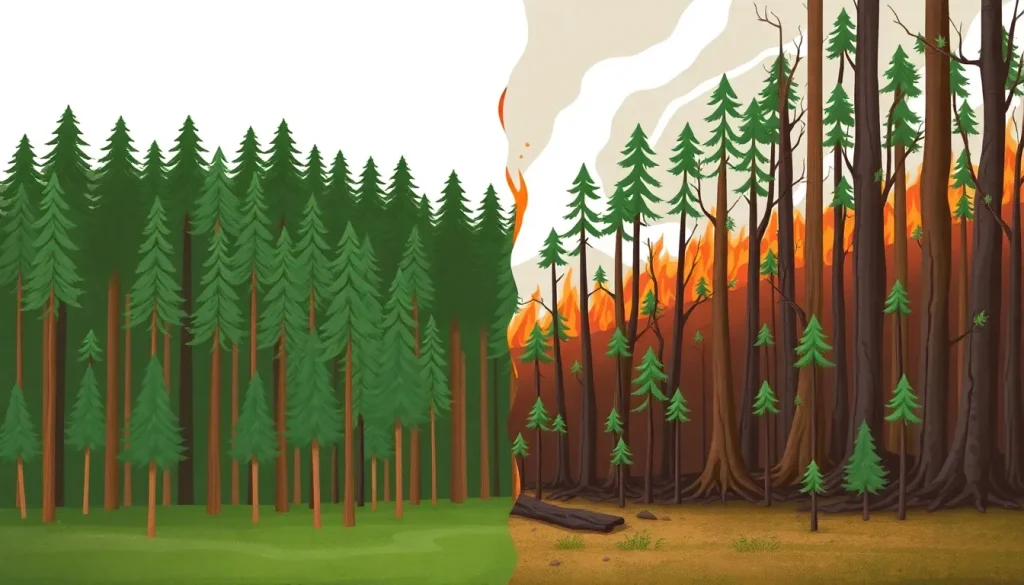
- Boreal forests: These forests are adapted to periodic wildfires, with tree species like jack pine having serotinous cones that release seeds after fire, promoting rapid recovery. However, they have low resistance to insect outbreaks, such as spruce budworm, which can defoliate vast areas.
- Freshwater lakes: Eutrophication from nutrient runoff reduces resistance to algal blooms. Recovery can be slow due to nutrient recycling from sediments, even after external inputs are reduced, demonstrating hysteresis.
- Mangrove forests: Mangroves show high resistance to storm surges because their dense root systems dissipate wave energy. Recovery after severe hurricanes depends on sediment stability and the availability of propagules, which can be hindered by coastal development.
Common Misconceptions
Several misunderstandings surround the terms resistance and recovery in ecology:
- Resilience equals recovery: In everyday language, resilience often means bouncing back quickly, but in ecology, resilience can refer to either recovery speed or the amount of disturbance a system can absorb (ecological resilience). It is important to specify which definition is being used.
- High resistance always means a healthy ecosystem: An ecosystem can be resistant to a particular disturbance but may be in an undesirable state, such as a monoculture plantation that resists pest outbreaks but lacks biodiversity. Resistance does not inherently indicate ecological integrity.
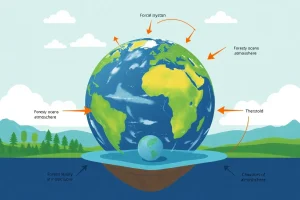
- Recovery is always possible: Some disturbances can push an ecosystem past a threshold, leading to a permanent state change. For example, overfishing and pollution can cause a coral reef to shift to an algal-dominated state with little chance of recovery.
- Resistance and recovery are fixed properties: They can change over time due to evolution, species invasions, or management interventions. Restoration efforts can enhance recovery, while chronic stress can erode resistance.
- Only natural disturbances matter: Human activities often reduce both resistance and recovery, making ecosystems more vulnerable to natural events. Climate change is altering disturbance regimes, challenging the adaptive capacity of many ecosystems.
Connections to Other Systems
The concepts of resistance and recovery extend beyond ecology into social-ecological systems, engineering, and economics. In social-ecological systems, resistance might refer to a community’s ability to maintain its cultural practices and livelihoods in the face of environmental change, while recovery involves rebuilding after a disaster. The framework of resilience thinking integrates these ideas, emphasizing the capacity to adapt and transform. For instance, a coastal community may resist storm damage through mangrove conservation (ecological resistance) and recover more quickly with social safety nets and diversified livelihoods (social recovery).
In ecosystem management, understanding the connections between resistance, recovery, and other system properties—such as vulnerability, adaptive capacity, and transformability—helps in designing holistic strategies. For example, managing for recovery in a fire-prone forest might involve controlled burns to reduce fuel loads, which also enhances resistance to catastrophic wildfires. These interconnections highlight that resistance and recovery are not isolated traits but part of a dynamic interplay that determines the long-term trajectory of ecosystems and the human communities that depend on them.
FAQ
What is the difference between resistance and recovery in ecosystems?
Resistance is the ability to withstand a disturbance without changing, while recovery is the ability to return to the original state after being altered. They are two distinct components of ecological stability.
How do resistance and recovery relate to ecological resilience?
Ecological resilience is a broader concept that can include both resistance and recovery. In one definition, resilience is the speed of recovery; in another, it is the amount of disturbance a system can absorb before shifting to a different state, which relates to resistance.
Why does understanding resistance and recovery matter?
It helps predict how ecosystems will respond to disturbances like climate change, fires, and pollution. This knowledge guides conservation, restoration, and land management to maintain biodiversity and ecosystem services.
References
- Holling, C. S. (1973). Resilience and stability of ecological systems. Annual Review of Ecology and Systematics.
- Walker, B., & Salt, D. (2006). Resilience thinking: Sustaining ecosystems and people in a changing world. Island Press.
- Millennium Ecosystem Assessment (2005). Ecosystems and Human Well-being: Synthesis. Island Press.