In brief
At a glance
Quick Facts
- Definition of trophic cascade
- An ecological phenomenon triggered by the addition or removal of top predators, causing reciprocal changes in the relative populations of predator and prey through a food chain.
- Classic example
- Sea otter decline led to sea urchin overpopulation, which destroyed kelp forests along the Pacific coast of North America.
- Mesopredator release
- When top predators are removed, smaller predators increase in number and can decimate prey species, as seen with coyotes and cats in fragmented habitats.
- Yellowstone wolf reintroduction
- Wolves returned in 1995, reducing elk overbrowsing, allowing willow and aspen recovery, and increasing beaver and songbird populations.
- Global threat status
- More than 60% of the world’s large carnivore species are classified as threatened with extinction.
- Ecosystem services at risk
- Predator loss can reduce carbon storage, water quality, and fisheries productivity, with economic costs running into billions of dollars annually.
Key Takeaways
- Removing top predators can trigger a trophic cascade, where effects ripple down the food web and drastically alter ecosystem structure and function.
- Predator loss often leads to mesopredator release and herbivore overpopulation, causing overgrazing, habitat destruction, and declines in biodiversity.
- Ecosystem services such as carbon storage, water purification, and disease regulation can be compromised when predators are lost.
- Reintroducing apex predators has been shown to restore ecosystem balance, but such efforts face social, economic, and ecological challenges.
What Is How Predator Loss Changes Entire Ecosystems?
Predator loss refers to the decline or local extinction of carnivores that occupy the top levels of a food web, particularly apex predators such as wolves, sharks, and large cats. When these predators are removed, the effects cascade through the ecosystem in a phenomenon known as a trophic cascade. This process fundamentally alters species abundance, community structure, and ecosystem functions, often leading to a less diverse and less resilient environment.
The concept is rooted in food web ecology: predators control the population and behavior of their prey, which in turn affects the next lower trophic level. Without top-down regulation, herbivore populations can explode, overgraze vegetation, and degrade habitats. The loss of predators can also release smaller “mesopredators” from competition and predation, causing unexpected declines in their prey. These changes ripple outward, affecting nutrient cycles, water quality, and even the physical landscape.
Overview
Predator loss is a global phenomenon driven by habitat destruction, hunting, and human-wildlife conflict. Large carnivores have experienced dramatic range contractions; for example, wolves have been extirpated from much of their historical range in North America and Europe, and shark populations have declined by over 70% in many ocean regions. The removal of these top predators often leads to a series of indirect effects that can transform entire ecosystems, a process known as a trophic cascade.
In a classic trophic cascade, the disappearance of an apex predator allows herbivore populations to grow unchecked. The resulting overgrazing can strip vegetation, alter soil composition, and reduce habitat for other species. In some cases, the loss of a single predator species can cause a chain reaction that affects dozens of other species, from plants to insects to birds. These cascades demonstrate the disproportionate ecological role that predators play, classifying many as keystone species whose impact is far greater than their abundance would suggest.
How It Works
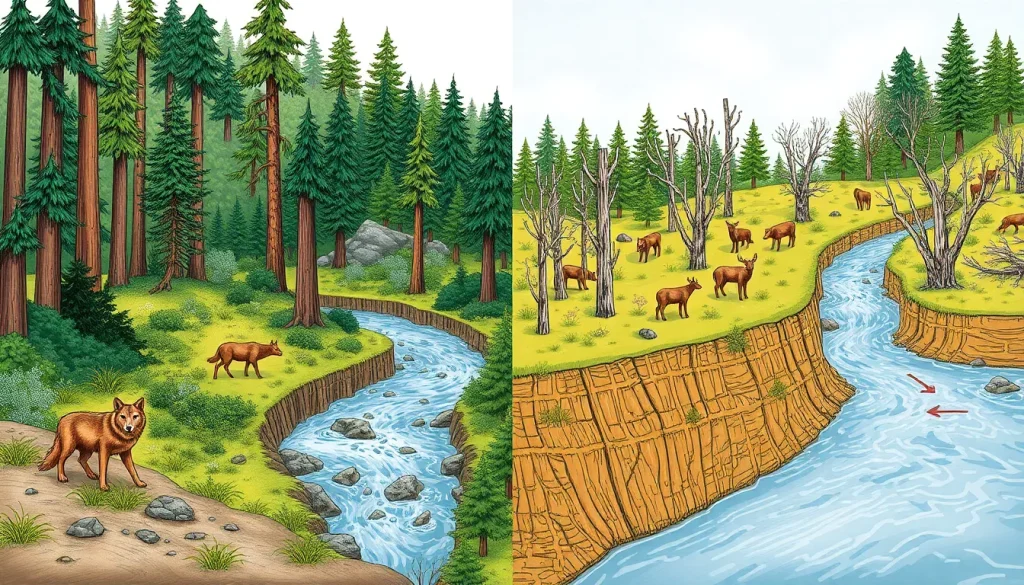
Trophic cascades operate through both density-mediated and behavior-mediated pathways. Density-mediated effects occur when predator removal directly increases the number of prey animals, leading to overconsumption of primary producers. For example, the extirpation of wolves in Yellowstone National Park allowed elk populations to rise, resulting in severe overbrowsing of willow and aspen trees. This, in turn, reduced habitat for beavers and songbirds and altered stream courses due to increased erosion.
Behavior-mediated effects involve changes in prey behavior when predators are absent. Without the fear of predation, herbivores may forage in areas they previously avoided, such as open grasslands or stream banks, causing localized but intense vegetation loss. This “landscape of fear” concept explains why even non-lethal predator presence can maintain ecosystem structure. When predators are lost, both pathways combine to produce dramatic shifts in species composition and physical habitat.
Importance and Impact
The consequences of predator loss extend beyond ecology to affect human well-being. Overgrazing by unchecked herbivores can reduce agricultural productivity, increase soil erosion, and diminish water quality. In marine systems, the decline of sharks has been linked to the collapse of shellfish fisheries because mesopredators like rays proliferate and decimate scallop and clam populations. These cascading effects can undermine food security and local economies.
Predator loss also disrupts ecosystem services such as carbon sequestration. For instance, when wolves were absent from boreal forests, moose populations increased and overbrowsed vegetation, reducing the forest’s capacity to store carbon. Similarly, the loss of sea otters in kelp forest ecosystems leads to urchin barrens that no longer sequester carbon at the same rate. Thus, conserving predators is not only a biodiversity issue but also a climate and economic concern.
Environmental and Human Impacts
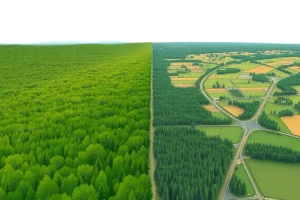
Environmentally, predator loss can trigger a domino effect that degrades entire landscapes. In terrestrial systems, the removal of large carnivores often leads to increased herbivore numbers, which overgraze vegetation and cause soil compaction and erosion. This can transform grasslands into deserts and forests into shrublands, reducing habitat for countless other species. In aquatic systems, the loss of predatory fish can lead to algal blooms and dead zones as smaller fish and zooplankton populations shift.
Human communities are not immune. Overgrazing by deer and other ungulates in predator-free areas can increase crop damage and vehicle collisions. The loss of predators can also elevate disease risk; for example, in parts of North America, the absence of wolves and cougars has been linked to higher deer populations and increased incidence of Lyme disease. Additionally, the decline of large carnivores often leads to more human-wildlife conflict as mesopredators like coyotes and baboons become bolder and more numerous in suburban and agricultural areas.
Regional Differences
The effects of predator loss vary by ecosystem type and region. In North American forests, the extirpation of wolves and cougars has led to deer overpopulation and subsequent declines in forest understory plants. In African savannas, the loss of lions and leopards can cause baboon populations to surge, increasing crop raiding and disease transmission. In Australia, the absence of large native mammalian predators has made introduced red foxes and feral cats devastating to small marsupials and ground-nesting birds.
Marine ecosystems show similar regional patterns. The decline of sharks on coral reefs in the Caribbean has been linked to increases in smaller predatory fish that reduce herbivorous fish populations, allowing algae to overgrow corals. In the North Pacific, sea otter extirpation led to urchin barrens and kelp forest collapse, while in the Southern Ocean, the removal of great whales altered nutrient cycling and reduced primary productivity. Each region’s unique food web structure determines the specific cascade, but the common thread is that predator loss destabilizes the system.
Solutions
Reversing the effects of predator loss often requires active restoration, including reintroduction programs and habitat protection. The reintroduction of gray wolves to Yellowstone National Park in 1995 is a landmark example: within years, elk behavior changed, riparian vegetation recovered, and beaver populations rebounded, demonstrating that ecosystems can heal when top predators return. Similar efforts are underway for lynx in Europe, sea otters in the Pacific, and vultures in South Asia.
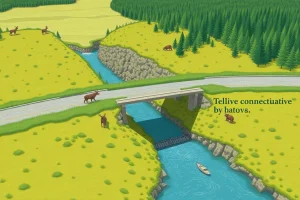
Preventing further predator loss is equally critical. This involves establishing protected areas that encompass large carnivore ranges, implementing wildlife corridors to connect fragmented habitats, and reducing human-wildlife conflict through compensation schemes and non-lethal deterrents. Policy measures such as banning predator persecution and regulating hunting are essential. Public education and community-based conservation programs can foster coexistence, ensuring that both predators and people thrive.
FAQ
What is predator loss?
Predator loss is the decline or local extinction of carnivorous species, especially large apex predators, due to human activities such as hunting, habitat destruction, and persecution.
How does predator loss change ecosystems?
It triggers trophic cascades: without top-down control, prey populations explode, overgraze vegetation, and degrade habitats. This can also release smaller predators, alter nutrient cycles, and reduce biodiversity.
Why does predator loss matter?
It matters because predators maintain ecosystem balance, support biodiversity, and provide essential services like carbon storage, water purification, and disease regulation. Their loss can lead to economic costs and environmental degradation that affect human well-being.
References
- Estes, J. A., et al. (2011). Trophic Downgrading of Planet Earth. Science, 333(6040), 301–306.
- Ripple, W. J., et al. (2014). Status and Ecological Effects of the World’s Largest Carnivores. Science, 343(6167), 1241484.
- Beschta, R. L., & Ripple, W. J. (2009). Large predators and trophic cascades in terrestrial ecosystems of the western United States. Biological Conservation, 142(11), 2401–2414.