In brief
At a glance
Quick Facts
- Definition
- Lab-grown meat is produced by culturing animal cells in a nutrient-rich medium, without raising and slaughtering animals.
- Potential land use reduction
- Up to 95% less land than conventional beef production, according to some prospective life-cycle assessments.
- Energy use uncertainty
- Depending on production methods and energy sources, the carbon footprint could be lower than poultry or higher than beef.
- Commercial status
- As of the mid-2020s, only a few countries have approved lab-grown meat for sale, and production remains limited to small-scale facilities.
- Key environmental variables
- Energy source, type of growth medium, bioreactor efficiency, and supply chain logistics.
- Water use
- Some models show significant water savings, but others indicate comparable or higher water consumption due to energy-related water use.
- Life-cycle assessment range
- Published studies show a wide range of results, from 80% lower emissions than beef to several times higher, depending on assumptions.
Key Takeaways
- Lab-grown meat has the potential to use significantly less land and water than conventional beef production, but its carbon footprint is highly dependent on the energy sources used in the cultivation process.
- Current life-cycle assessments show a wide range of possible environmental impacts, from lower than poultry to higher than beef, due to uncertainties in production methods and scale.
- The technology is still in development, and commercial-scale data is limited, making it difficult to draw definitive conclusions about its overall environmental performance.
- Lab-grown meat is not a standalone solution; achieving sustainable food systems will require a combination of dietary shifts, improved agricultural practices, and alternative protein innovations.
What Is Lab-Grown Meat: Environmental Potential and Uncertainty?
Lab-grown meat, also known as cultivated meat or cell-cultured meat, is animal meat produced by growing animal cells in a controlled environment, such as a bioreactor, rather than by raising and slaughtering animals. The environmental potential of this technology is substantial: it could drastically reduce the land, water, and greenhouse gas emissions associated with conventional livestock farming, while also eliminating the need for antibiotics and reducing the risk of zoonotic diseases. However, the actual environmental benefits are uncertain because they depend on factors like the source of energy used in production, the efficiency of the cell culture process, and the scalability of the technology. Early life-cycle assessments have produced conflicting results, with some showing significant reductions in environmental impacts and others suggesting that, under certain conditions, lab-grown meat could be more energy-intensive than some conventional meats.
This topic is central to discussions about the future of food and sustainability. As global demand for meat continues to rise, the environmental pressures of conventional animal agriculture—including deforestation, water depletion, and greenhouse gas emissions—are intensifying. Lab-grown meat is often presented as a potential solution, but the uncertainty surrounding its true environmental footprint makes it a subject of ongoing scientific inquiry and debate. Understanding both the promise and the unknowns is essential for policymakers, investors, and consumers evaluating the role of cultivated meat in a sustainable food system.
Overview
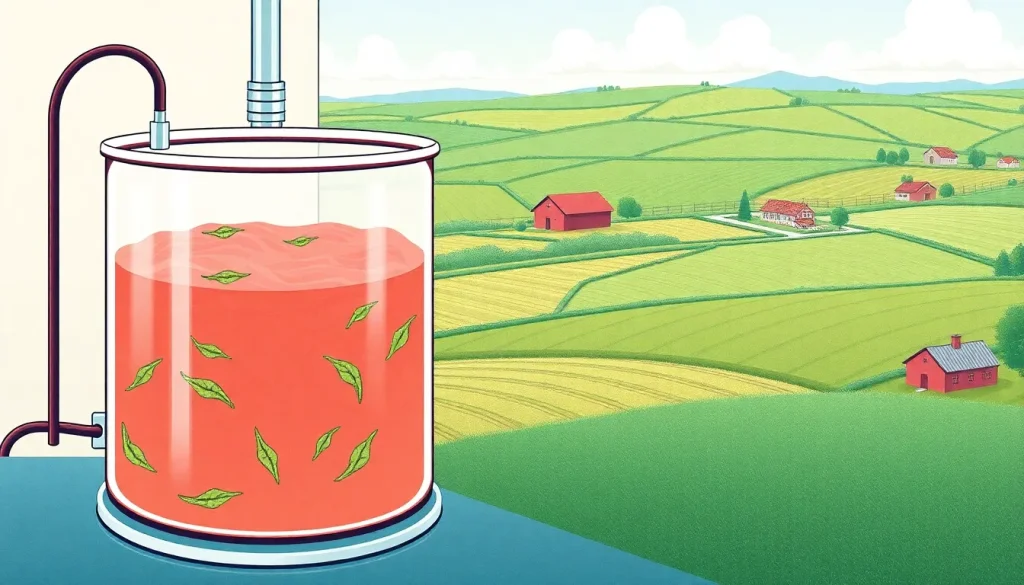
Lab-grown meat is produced through cellular agriculture, a field that applies tissue engineering techniques to food production. The process begins with a small sample of animal cells, which are then multiplied in a nutrient-rich medium inside a bioreactor. The resulting biomass can be structured into products resembling ground meat, steaks, or other cuts. The environmental promise of this approach is rooted in the inefficiencies of conventional animal agriculture: livestock require large amounts of feed, land, and water, and they produce methane and other emissions. By growing only the edible parts, lab-grown meat could theoretically bypass many of these inefficiencies.
However, the environmental profile of lab-grown meat is not inherently superior. The energy required to maintain sterile conditions, heat and operate bioreactors, and produce growth media can be substantial. If that energy comes from fossil fuels, the carbon footprint could rival or exceed that of some conventional meats. Additionally, the production of growth factors and other inputs has its own environmental costs. Thus, the net impact depends on a complex interplay of factors, many of which are still being optimized.
How It Works
The production of lab-grown meat involves several key steps. First, a small biopsy of animal cells—often muscle stem cells—is taken from a living animal. These cells are placed in a culture medium that provides the necessary nutrients, including amino acids, sugars, and growth factors, to promote cell division. The cells multiply in a bioreactor, which controls temperature, pH, and oxygen levels. Once enough cells are produced, they can be harvested and processed into meat products. For structured meats, cells may be grown on scaffolds that guide tissue formation.
The environmental implications of each step are significant. The culture medium is a major contributor to both cost and environmental impact. Traditional media often contain fetal bovine serum, which is derived from animal blood and carries its own environmental and ethical concerns. Many companies are developing serum-free, plant-based alternatives. The energy used to run bioreactors and purification systems is another critical factor. As the technology scales, the efficiency of these processes will largely determine the overall environmental footprint.
Environmental and Human Impacts
The environmental impacts of lab-grown meat are typically assessed through life-cycle assessment (LCA), which considers all stages from raw material extraction to production, distribution, and disposal. Key impact categories include global warming potential, land use, water use, and eutrophication. Early studies suggested that lab-grown meat could reduce land use by up to 99% and water use by up to 90% compared to conventional beef, while also lowering greenhouse gas emissions. However, these studies often assumed idealized production conditions and renewable energy sources.
More recent and comprehensive LCAs have highlighted the uncertainty. For example, a 2019 study by Lynch and Pierrehumbert found that the climate impact of lab-grown meat could be worse than beef in the long term if production relies on carbon-intensive energy, because the warming effect of CO2 from energy use persists longer than methane from cattle. Conversely, with decarbonized energy, lab-grown meat could offer substantial climate benefits. The human health impacts are also mixed: lab-grown meat could reduce antibiotic use and foodborne pathogens, but the nutritional profile and long-term health effects are still being studied.
Benefits, Limitations and Trade-offs
Benefits: Lab-grown meat offers several potential advantages. It could dramatically reduce the land required for food production, freeing up space for reforestation or biodiversity conservation. Water use could be significantly lower, especially in regions where livestock farming strains water resources. Animal welfare would improve by eliminating the need for slaughter. Additionally, controlled production could reduce the risk of foodborne illnesses and the need for antibiotics, addressing antimicrobial resistance concerns.
Limitations: The technology faces substantial hurdles. Production costs remain high, though they have fallen significantly since the first lab-grown burger in 2013. Scaling up to meet global demand requires solving engineering challenges related to large-scale bioreactors and affordable growth media. Consumer acceptance is uncertain, with some people expressing skepticism about “artificial” meat. From an environmental perspective, the energy intensity of production is a major limitation unless renewable energy is used.
Trade-offs: Lab-grown meat is not a direct substitute for all types of meat. It may be more suitable for ground products than whole cuts. There is also a risk that it could divert attention and resources from other sustainable solutions, such as plant-based diets or regenerative agriculture. A balanced approach that includes multiple strategies is likely necessary to achieve meaningful environmental improvements in the food system.
Data Limitations and Uncertainties
Most environmental assessments of lab-grown meat are based on prospective, or ex-ante, LCAs that model hypothetical production systems. These models rely on assumptions about future technological developments, energy mixes, and supply chains. As a result, published results vary widely. For instance, some studies estimate that lab-grown meat could have a carbon footprint 80% lower than beef, while others suggest it could be several times higher. The lack of commercial-scale data is a fundamental source of uncertainty.
Key data gaps include the actual energy consumption of large-scale bioreactors, the environmental impact of producing growth factors at scale, and the life-cycle impacts of scaffolding materials. Additionally, the geographic location of production facilities matters: a facility powered by coal will have a very different footprint than one powered by renewables. Until multiple commercial facilities are operational and their data is independently verified, the true environmental performance of lab-grown meat will remain uncertain.
Common Misconceptions
FAQ
What is lab-grown meat?
Lab-grown meat is genuine animal meat produced by cultivating animal cells in a controlled environment, such as a bioreactor, instead of raising and slaughtering animals.
How does lab-grown meat affect the environment?
Its environmental impact varies widely. It has the potential to reduce land and water use, but its carbon footprint depends heavily on the energy sources used. Current data is limited and uncertain.
Is lab-grown meat better for the climate than conventional meat?
It can be, but it is not guaranteed. With renewable energy, it could have a lower climate impact than beef. With fossil-fuel-based energy, its long-term warming effect could be higher than beef due to CO2 persistence.
References
- Tuomisto, H. L., & Teixeira de Mattos, M. J. (2011). Environmental impacts of cultured meat production. Environmental Science & Technology.
- Lynch, J., & Pierrehumbert, R. (2019). Climate impacts of cultured meat and beef cattle. Frontiers in Sustainable Food Systems.
- Sinke, P., et al. (2023). Ex-ante life cycle assessment of commercial-scale cultivated meat production in 2030. The International Journal of Life Cycle Assessment.