In brief
At a glance
Quick Facts
- Definition
- The rebound effect is the reduction in expected savings from an efficiency improvement due to behavioral or systemic responses.
- First described
- William Stanley Jevons in 1865, observing that more efficient steam engines increased coal consumption.
- Direct rebound example
- Driving more miles after buying a fuel-efficient car because each mile is cheaper.
- Indirect rebound example
- Using money saved on fuel to purchase a flight, which consumes additional energy.
- Economy-wide rebound
- Efficiency gains lower production costs, spurring economic growth and increasing total resource use.
- Backfire (Jevons paradox)
- When rebound exceeds 100%, leading to higher total consumption than before the efficiency gain.
- Typical direct rebound for heating
- 10–30% in developed countries, meaning 70–90% of expected savings are realized.
- Typical direct rebound for lighting
- 5–15%, relatively low due to saturation of lighting needs.
- Policy implication
- Efficiency standards alone may not achieve environmental goals; complementary measures like carbon pricing are needed.
Key Takeaways
- Efficiency improvements can trigger a rebound effect, where behavioral or systemic responses erode expected resource savings.
- The rebound effect can be direct (using more of the same service), indirect (spending savings on other goods), or economy-wide (macroeconomic feedbacks).
- While rebound effects rarely cancel out all savings, they can significantly reduce the net environmental benefit of efficiency measures.
- Understanding rebound effects is essential for designing effective policies that combine efficiency with conservation incentives.
What Is Why Efficiency Gains Do Not Always Reduce Consumption?
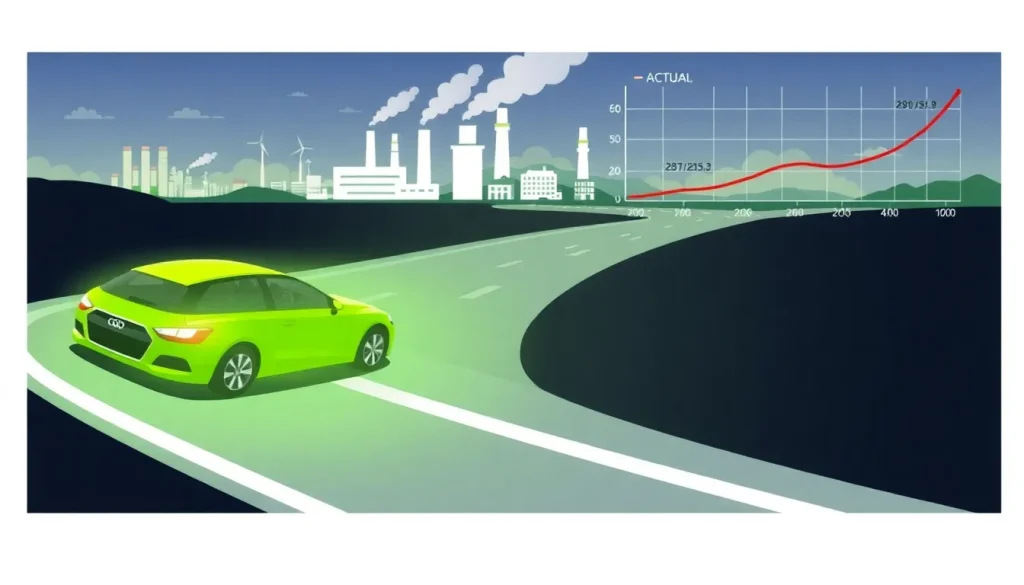
Efficiency gains do not always reduce consumption because of a well-documented economic phenomenon known as the rebound effect. When a technology or process becomes more efficient, it effectively lowers the cost of using that service, which can lead to increased demand. This increased demand may partially or fully offset the initial resource savings, and in extreme cases, can even lead to higher overall consumption than before the efficiency improvement—a scenario known as backfire or the Jevons paradox.
This concept is most commonly discussed in the context of energy efficiency, but it applies to any resource, including water, materials, and land. The rebound effect challenges the intuitive assumption that making things more efficient automatically reduces total resource use. Instead, it highlights the complex interplay between technology, human behavior, and economic systems. Recognizing this dynamic is crucial for policymakers, businesses, and individuals aiming to achieve genuine sustainability gains.
Overview
The rebound effect describes the difference between the expected savings from an efficiency improvement and the actual savings realized after accounting for behavioral and systemic responses. It is typically expressed as a percentage: a 0% rebound means all expected savings are achieved, while 100% rebound means the efficiency gain is entirely offset by increased consumption. If the rebound exceeds 100%, it is termed backfire, where consumption actually rises above the original level.
Rebound effects are categorized into three main types. Direct rebound occurs when the lower cost of a service leads to greater use of that same service—for example, driving more miles after buying a fuel-efficient car. Indirect rebound happens when money saved from efficiency is spent on other goods and services that also consume resources, such as using fuel savings to book a flight. Economy-wide rebound refers to macroeconomic adjustments: efficiency improvements can lower production costs, stimulate economic growth, and increase overall resource consumption across the entire economy. These categories are interconnected and can compound each other.
History
The idea that efficiency can increase consumption dates back to the 19th century. In his 1865 book The Coal Question, British economist William Stanley Jevons observed that improvements in steam engine efficiency led to greater coal consumption, not less. He argued that as steam engines became more efficient, they became cheaper to run, which expanded their use across industries and transportation, ultimately driving up total coal demand. This counterintuitive outcome became known as the Jevons paradox.
The modern concept of the rebound effect was formalized in the 1980s by energy economists such as Daniel Khazzoom and Leonard Brookes. Khazzoom studied the impact of mandatory appliance efficiency standards and found that consumers often used efficient appliances more intensively. Brookes extended the argument to the macroeconomic level, suggesting that energy efficiency improvements could fuel economic growth and thus increase overall energy consumption. Their work sparked a long-running debate about the magnitude of rebound effects and their implications for energy policy.
How It Works
The rebound effect operates through several interconnected mechanisms. At its core, an efficiency improvement reduces the implicit price of a service. For instance, if a car uses less fuel per mile, the cost per mile driven decreases. This price drop triggers two main responses: a substitution effect (driving becomes relatively cheaper compared to other activities, so people drive more) and an income effect (the consumer effectively has more disposable income, which can be spent on driving or other goods).
On a larger scale, efficiency gains can ripple through supply chains. When industries adopt more efficient processes, production costs fall, leading to lower prices for intermediate and final goods. This can increase demand across multiple sectors, boosting economic output and resource use. Additionally, efficiency improvements can make previously uneconomical activities viable—for example, more efficient irrigation can expand agriculture into arid regions, increasing total water use. The magnitude of the rebound depends on factors such as the price elasticity of demand, the maturity of the market, and the availability of substitutes.
What the Evidence Shows
Empirical studies find that rebound effects vary widely by sector, region, and time period. For household energy services like heating and lighting, direct rebound effects in developed countries are often modest—typically 10–30% for heating and 5–15% for lighting—meaning that most of the efficiency gain translates into net savings. However, for personal transportation, direct rebound can be higher, sometimes reaching 20–40%, especially when fuel costs are a small share of total driving expenses.
At the economy-wide level, evidence is more mixed and harder to quantify. Some macroeconomic models suggest that energy efficiency improvements can lead to long-run rebound effects of 50% or more, though backfire (over 100%) is considered unlikely in mature economies. In developing countries, where energy services are far from saturated, rebound effects tend to be larger because unmet demand is high. For example, more efficient cookstoves may lead to longer cooking times or additional uses, offsetting fuel savings. Overall, the evidence confirms that rebound effects are real and often significant, but their size is context-dependent.
Importance and Impact
Understanding the rebound effect is critical for climate and resource policy. If rebound effects are ignored, efficiency mandates and incentives may deliver less environmental benefit than projected, undermining goals such as greenhouse gas reduction. For instance, fuel economy standards for vehicles can reduce per-mile emissions but may increase total miles driven, partially negating the climate gains. Similarly, energy-efficient lighting can lead to more illuminated spaces and longer operating hours.
The rebound effect also has implications for economic growth and resource scarcity. While efficiency can boost productivity and living standards, it may accelerate the depletion of natural resources if not paired with conservation measures. This tension is central to debates on sustainable development: efficiency alone is insufficient; it must be complemented by policies that cap resource use, shift consumption patterns, or internalize environmental costs. Recognizing the rebound effect thus helps policymakers design more robust strategies that achieve genuine reductions in resource consumption.
Solutions
Addressing the rebound effect requires a multi-pronged approach that goes beyond promoting efficiency. One key strategy is to combine efficiency standards with absolute caps on resource use, such as carbon pricing or tradable permits, which limit the total amount of emissions or resource extraction. This ensures that efficiency gains lead to lower overall consumption rather than increased demand. For example, a carbon tax can offset the cost savings from fuel efficiency, discouraging additional driving.
Another solution is to encourage sufficiency-oriented behaviors and lifestyles. Public campaigns, urban planning that reduces the need for travel, and product design that emphasizes durability over disposability can all help dampen rebound effects. Additionally, policies can target the indirect rebound by promoting spending on low-impact goods and services. Finally, continuous monitoring and adaptive policy frameworks are essential, as rebound effects can evolve with technology and market conditions. By anticipating and mitigating rebound effects, societies can better harness efficiency gains for sustainable outcomes.
FAQ
What is the rebound effect?
The rebound effect is the reduction in expected savings from an efficiency improvement due to increased consumption. It occurs because efficiency lowers the effective cost of a service, leading people to use more of it or spend the savings on other resource-consuming activities.
How does the rebound effect work?
It works through price effects: efficiency makes a service cheaper, so demand increases (direct rebound). Savings may also be spent on other goods and services that require resources (indirect rebound). At a macro level, efficiency can stimulate economic growth, further increasing resource use (economy-wide rebound).
Why does the rebound effect matter?
It matters because it can undermine environmental policies that rely solely on efficiency improvements. If rebound effects are large, expected reductions in energy use or emissions may not materialize, making it harder to achieve climate and sustainability goals.
References
- Jevons, W. S. (1865). The Coal Question. Macmillan.
- Sorrell, S. (2007). The Rebound Effect: an assessment of the evidence for economy-wide energy savings from improved energy efficiency. UK Energy Research Centre.
- International Energy Agency (IEA). (2020). Energy Efficiency 2020. IEA Publications.