In brief
At a glance
Quick Facts
- Definition
- Planned obsolescence is a business strategy of designing products with a limited useful life to encourage repeat purchases.
- Main types
- Functional, systemic, style, and contractual obsolescence are the four primary forms.
- E-waste growth
- Electronic waste is one of the fastest-growing waste streams globally, driven by short product lifespans.
- Resource depletion
- Manufacturing new products consumes finite resources like rare earth metals, often extracted through environmentally damaging mining.
- Carbon footprint
- Frequent replacement of goods increases energy use in production and transportation, contributing to greenhouse gas emissions.
- Right to repair
- Legislation promoting repairability and access to spare parts can counteract planned obsolescence.
- Circular economy
- A circular economy model aims to keep products and materials in use longer, reducing waste and resource extraction.
Key Takeaways
- Planned obsolescence is a business strategy of designing products with a limited useful life, compelling consumers to replace them more frequently and significantly increasing resource consumption and waste generation.
- The environmental impact includes accelerated depletion of finite raw materials, higher energy use in manufacturing, and growing mountains of electronic and other waste, often containing hazardous substances.
- While planned obsolescence can drive economic growth and innovation, its environmental costs are typically externalized, contributing to climate change, pollution, and ecosystem degradation.
- Addressing the issue requires a combination of consumer awareness, right-to-repair legislation, circular economy principles, and corporate responsibility to design durable, repairable, and recyclable products.
What Is Planned Obsolescence and Environmental Impact?
Planned obsolescence is a business strategy in which a product is deliberately designed to have a limited useful life or to become unfashionable, prompting consumers to replace it sooner than necessary. The environmental impact of planned obsolescence refers to the negative consequences this practice has on the natural world, including increased resource extraction, energy consumption, waste generation, and pollution. This concept is central to understanding the tension between modern consumer economies and ecological sustainability.
Planned obsolescence can take several forms, from physical components that fail after a certain number of uses to software updates that render older devices incompatible, or even aesthetic trends that make products seem outdated. The environmental toll is cumulative: each replacement product requires raw materials, manufacturing energy, and transportation, while the discarded item contributes to the growing global waste stream. As a result, planned obsolescence is a key driver of the linear “take-make-dispose” economy, which is increasingly recognized as unsustainable in a world of finite resources.
How It Works
Planned obsolescence operates through several distinct mechanisms, often used in combination to shorten the effective lifespan of a product:
- Functional obsolescence: A product is designed to fail or wear out after a certain period. This can involve using lower-quality materials in critical components, such as plastic gears in appliances that strip after limited use, or batteries that cannot be replaced and degrade over time.
- Systemic obsolescence: Software updates or changes in the product ecosystem make the original item incompatible or less functional. For example, a smartphone may no longer support the latest operating system, forcing users to upgrade even if the hardware is still functional.
- Style obsolescence: Fashion and aesthetic trends are manipulated to make products appear outdated, encouraging consumers to purchase new versions for social or psychological reasons. This is common in clothing, furniture, and consumer electronics.
- Contractual obsolescence: The product is intentionally limited by a business model, such as inkjet printers that use cartridges with smart chips to prevent refilling or third-party replacements, or subscription-based services that lock users into regular upgrades.
These strategies ensure a steady demand for new products, but they also lock consumers into a cycle of frequent replacement, with each iteration consuming additional resources and generating waste.
Main Causes or Drivers
Several interconnected factors drive the widespread adoption of planned obsolescence:
- Economic incentives: For manufacturers, repeat sales are more profitable than selling a single durable product. A shorter replacement cycle boosts revenue and can support higher production volumes, which may lower per-unit costs.
- Consumer demand for novelty: Marketing and social pressures create a desire for the latest features, designs, or status symbols. This “perceived obsolescence” is often cultivated through advertising and product cycles.
- Lack of repairability: Many products are designed with glued-in batteries, proprietary screws, or sealed components that make repair difficult or impossible. This discourages maintenance and pushes consumers toward replacement.
- Corporate profit models: In competitive markets, companies may prioritize short-term financial performance over long-term durability. Planned obsolescence can be a deliberate strategy to maintain market share and shareholder returns.
- Globalized supply chains: The availability of cheap labor and materials in some regions can make replacement products less expensive than repair, further entrenching the throwaway culture.
Environmental and Human Impacts
The environmental consequences of planned obsolescence are far-reaching and severe. By artificially shortening product lifespans, the practice accelerates the consumption of natural resources, including metals, minerals, water, and fossil fuels. Mining and extraction activities often lead to habitat destruction, soil erosion, and water contamination. Manufacturing new products requires significant energy, much of it from carbon-intensive sources, contributing to greenhouse gas emissions and climate change.
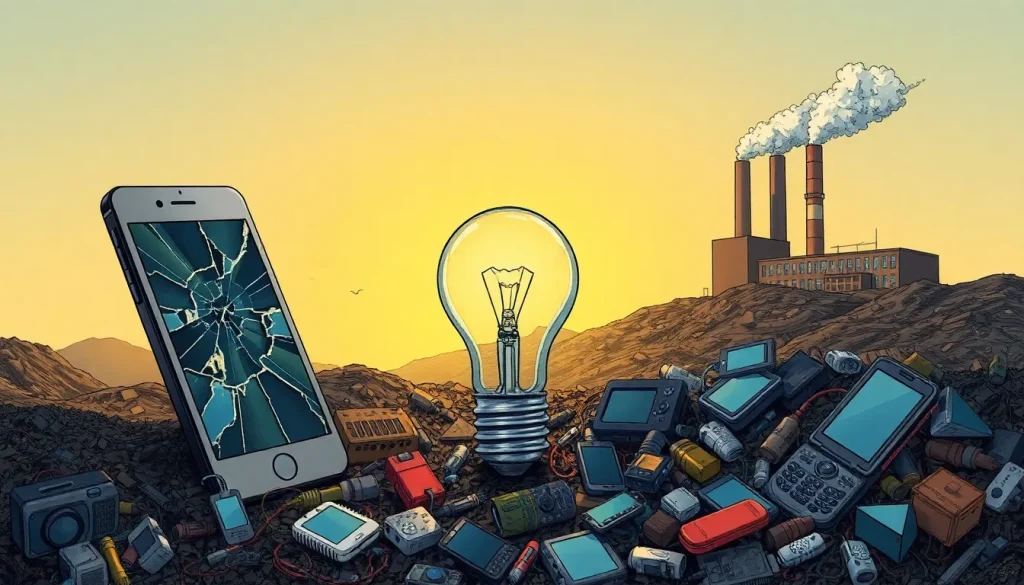
Waste generation is another critical impact. Electronic waste (e-waste) is one of the fastest-growing waste streams globally, containing hazardous substances such as lead, mercury, and cadmium. When improperly disposed of, these toxins can leach into soil and groundwater, posing risks to ecosystems and human health. Informal recycling operations in some regions expose workers and communities to dangerous chemicals. Beyond electronics, planned obsolescence in textiles, plastics, and appliances adds to landfills and incinerators, releasing pollutants and microplastics into the environment.
The human toll includes health problems from pollution, resource conflicts, and the social costs of a disposable culture. Workers in manufacturing and waste processing may face unsafe conditions, while communities near extraction sites or landfills bear disproportionate environmental burdens.
Examples
Historical and contemporary examples illustrate the prevalence of planned obsolescence:
- The Phoebus cartel (1920s–1930s): A group of light bulb manufacturers, including Osram and Philips, colluded to reduce the lifespan of incandescent bulbs from around 2,500 hours to 1,000 hours, forcing more frequent replacements. This is one of the earliest documented cases of planned obsolescence.
- Smartphones: Many modern smartphones have non-removable batteries, fragile glass backs, and software updates that slow down older models. Repair is often costly or restricted, pushing users toward new devices every two to three years.
- Printers and ink cartridges: Inkjet printers frequently use microchips in cartridges to prevent refilling, and some models display “empty” warnings even when ink remains. This contractual obsolescence drives recurring sales of expensive consumables.
- Fast fashion: Clothing is designed to follow short-lived trends and is often made from low-quality materials that quickly lose shape or wear out, encouraging frequent purchases and generating massive textile waste.
- Software obsolescence: Operating systems and applications may drop support for older hardware, forcing users to upgrade devices even if the hardware is still functional. This is common in computers, tablets, and smart home devices.
Solutions
Addressing planned obsolescence and its environmental impact requires a multi-faceted approach involving consumers, businesses, and policymakers:
- Circular economy models: Shifting from a linear “take-make-dispose” system to a circular one where products are designed for durability, repairability, and recyclability can drastically reduce waste. This includes modular design, product-as-a-service models, and extended producer responsibility.
- Right-to-repair legislation: Laws that require manufacturers to provide spare parts, repair manuals, and diagnostic tools empower consumers and independent repair shops. Such policies have been enacted or proposed in several regions to combat premature disposal.
- Eco-design standards: Governments can set minimum durability and repairability requirements for products, such as mandating replaceable batteries or standardizing components. The European Union’s ecodesign directive is one example of regulatory action.
- Consumer education and awareness: Informing the public about the environmental costs of planned obsolescence can shift purchasing habits toward more durable goods and encourage repair and reuse.
- Corporate responsibility: Companies can adopt voluntary commitments to design longer-lasting products, offer repair services, and take back end-of-life items for recycling. Transparency about product lifespans and environmental footprints can also build trust and drive change.
What Individuals Can Do
While systemic change is essential, individual actions can collectively reduce the demand for planned obsolescence and its environmental harm:
- Choose durable, repairable products: Research brands that prioritize longevity, offer warranties, and provide spare parts. Look for modular designs and user-replaceable components.
- Repair and maintain items: Fix broken products instead of discarding them. Use online repair guides, community repair cafés, or professional services. Support right-to-repair initiatives to keep repair accessible.
- Buy second-hand and refurbished: Purchasing used electronics, clothing, and appliances extends their life and reduces demand for new production. Refurbished items often come with warranties and are more affordable.
- Recycle responsibly: When a product truly reaches the end of its life, dispose of it through certified e-waste recyclers to prevent hazardous materials from entering landfills and to recover valuable materials.
- Reduce consumption: Question the need for upgrades and avoid impulse purchases driven by trends. Adopting a minimalist mindset can lessen personal environmental impact and challenge the throwaway culture.
FAQ
What is planned obsolescence?
Planned obsolescence is a business strategy where products are intentionally designed to have a limited lifespan or to become outdated quickly, encouraging consumers to buy replacements more frequently.
How does planned obsolescence affect the environment?
It leads to increased resource extraction, higher energy consumption, and more waste. Manufacturing replacement products depletes raw materials and emits greenhouse gases, while discarded items contribute to landfills and pollution, often releasing hazardous substances.
Why does planned obsolescence matter?
It matters because it drives unsustainable consumption patterns that harm the planet. Addressing planned obsolescence is crucial for reducing environmental degradation, combating climate change, and moving toward a more sustainable, circular economy.
References
- European Environment Agency, 'Environmental Impact of Planned Obsolescence'
- United Nations University, 'Global E-waste Monitor'
- iFixit, 'Right to Repair' advocacy resources