In brief
At a glance
Quick Facts
- Definition
- The global shift from fossil fuel-based energy systems to low-carbon and renewable sources.
- Primary Driver
- Climate change mitigation, supported by international agreements like the Paris Agreement.
- Key Technologies
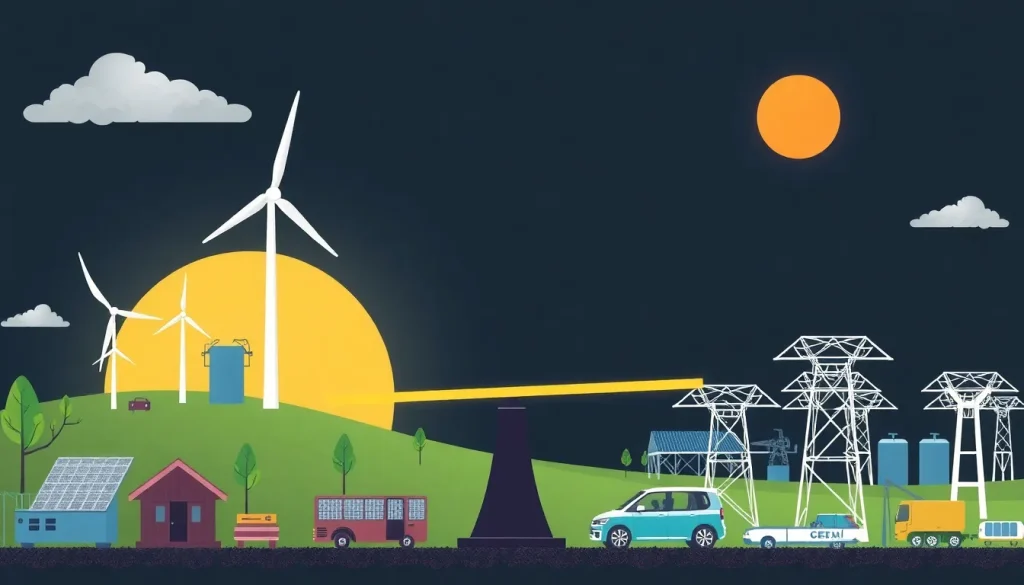
- Solar photovoltaics, wind turbines, lithium-ion batteries, electric vehicles, and green hydrogen.
- Policy Instruments
- Carbon pricing, feed-in tariffs, renewable portfolio standards, and energy efficiency mandates.
- Major Trade-off
- Increased demand for critical minerals (lithium, cobalt) and land use conflicts.
- Economic Impact
- Creates new jobs in clean energy but may displace workers in fossil fuel industries.
- Historical Context
- Previous energy transitions took decades; the current one is more urgent and policy-driven.
Key Takeaways
- Energy transition refers to the global shift from fossil fuel-based energy systems to low-carbon and renewable sources, driven by climate change concerns and technological advancements.
- Key technologies include solar photovoltaics, wind power, energy storage, electric vehicles, and green hydrogen, each with distinct roles and challenges.
- Effective policies such as carbon pricing, subsidies, and regulatory standards are essential to accelerate the transition, but they must balance economic, social, and environmental trade-offs.
- The transition involves complex trade-offs, including land use conflicts, mineral resource demands, grid stability issues, and socio-economic impacts on fossil fuel-dependent communities.
What Is Energy Transition?
The energy transition is the global shift from energy systems dominated by fossil fuels—coal, oil, and natural gas—to systems based on low-carbon and renewable energy sources. This transformation encompasses not only the replacement of energy generation technologies but also changes in infrastructure, consumption patterns, and regulatory frameworks. The primary goal is to reduce greenhouse gas emissions and mitigate climate change while ensuring energy security, affordability, and access.
Historically, energy transitions have occurred over centuries, such as the shift from wood to coal in the 19th century and from coal to oil and gas in the 20th century. The current transition is distinct in its urgency, global scale, and the need to be achieved within decades to meet international climate targets. It involves a systemic change across electricity, heating, transportation, and industrial sectors, integrating digitalization and new business models.
History
Energy transitions are not new phenomena. The first major transition occurred when societies moved from reliance on biomass (wood, charcoal) to coal during the Industrial Revolution, enabling unprecedented economic growth. The second transition saw oil and natural gas supplement coal, driven by the rise of the internal combustion engine and the expansion of electricity grids. These transitions were gradual, taking many decades, and were primarily motivated by economic efficiency and new technological capabilities rather than environmental concerns.
The current energy transition is unique because it is largely policy-driven, motivated by the need to address climate change and environmental degradation. The 1992 United Nations Framework Convention on Climate Change (UNFCCC) and subsequent agreements, including the Kyoto Protocol and the Paris Agreement, have set international targets for emission reductions. These commitments, combined with rapid cost declines in renewable energy technologies, have accelerated the shift away from fossil fuels since the early 21st century.
How It Works
The energy transition operates through a combination of technological innovation, market mechanisms, and policy interventions. On the technology side, renewable energy sources like solar and wind are deployed to generate electricity with minimal carbon emissions. Energy storage systems, such as batteries and pumped hydro, address the intermittency of these sources. Electrification of transport and heating sectors reduces reliance on oil and gas, while green hydrogen produced via electrolysis using renewable energy offers a solution for hard-to-decarbonize industries like steel and chemicals.
Policies play a critical role in enabling the transition. Carbon pricing, including carbon taxes and emissions trading systems, internalizes the environmental cost of fossil fuels, making renewables more competitive. Feed-in tariffs and renewable portfolio standards guarantee market access and revenue for clean energy producers. Energy efficiency standards for buildings, vehicles, and appliances reduce overall demand. Additionally, government investments in research, development, and grid infrastructure help overcome technical and economic barriers.
Importance and Impact
The energy transition is central to achieving global climate goals, particularly the Paris Agreement’s aim to limit warming to well below 2°C. By reducing greenhouse gas emissions, it helps mitigate the risks of extreme weather, sea-level rise, and ecosystem disruption. Beyond climate, the transition can improve air quality, reducing health problems associated with fossil fuel combustion, such as respiratory diseases and premature deaths.
Economically, the transition is reshaping global energy markets. It creates new industries and jobs in renewable energy manufacturing, installation, and maintenance, while potentially displacing workers in fossil fuel sectors. Energy security is enhanced as countries reduce dependence on imported fuels and diversify their energy mix. However, the transition also poses challenges for regions heavily reliant on fossil fuel extraction and processing, requiring just transition policies to support affected communities.
Benefits, Limitations and Trade-offs
The energy transition offers significant benefits, including reduced air pollution, lower greenhouse gas emissions, and enhanced energy independence. Renewable energy sources like wind and solar have near-zero marginal costs and can provide long-term price stability. However, the transition also involves trade-offs. The manufacturing of solar panels, wind turbines, and batteries requires critical minerals such as lithium, cobalt, and rare earth elements, which can lead to environmental degradation and geopolitical dependencies if not managed responsibly.
Land use is another trade-off: large-scale solar farms and wind installations require substantial land, potentially competing with agriculture or natural habitats. Grid integration of variable renewables demands significant investment in transmission infrastructure and storage. Additionally, the transition may increase energy costs in the short term as new infrastructure is built and fossil fuel subsidies are phased out, raising concerns about energy affordability and equity.
Common Misconceptions
One common misconception is that the energy transition can be achieved solely through renewable energy without any role for nuclear power or carbon capture technologies. In reality, many scenarios for deep decarbonization include a mix of renewables, nuclear, and carbon capture to ensure reliability and meet industrial energy demands. Another misconception is that electric vehicles (EVs) have zero environmental impact; while they produce no tailpipe emissions, their overall footprint depends on the electricity mix and battery production processes.
Some believe that the transition will lead to immediate and universal cost savings. However, upfront investments in new technologies and infrastructure can be high, and the economic benefits may take time to materialize. Additionally, the idea that individual actions alone can drive the transition overlooks the necessity of systemic changes in policy, infrastructure, and corporate practices.
What Businesses and Governments Can Do
Governments can accelerate the energy transition by implementing comprehensive policy frameworks. This includes setting ambitious renewable energy targets, phasing out fossil fuel subsidies, and establishing carbon pricing mechanisms. Public investment in grid modernization, energy storage, and research and development is crucial. Governments can also use regulatory tools to mandate energy efficiency standards and support the deployment of clean technologies through incentives and public procurement.
Businesses play a key role by adopting renewable energy, improving energy efficiency, and investing in low-carbon technologies. Corporate power purchase agreements (PPAs) for renewable electricity can drive new capacity. Companies can also innovate in product design and supply chain management to reduce carbon footprints. Collaboration between governments and businesses, such as public-private partnerships, can de-risk investments and scale up clean energy solutions. Additionally, both sectors must address the social dimensions of the transition, ensuring that workers and communities are supported through retraining programs and economic diversification.
FAQ
What is the energy transition?
The energy transition is the global shift from fossil fuel-based energy systems to low-carbon and renewable sources, driven by the need to reduce greenhouse gas emissions and combat climate change.
How does the energy transition work?
It works by deploying renewable energy technologies, electrifying transport and heating, improving energy efficiency, and implementing policies like carbon pricing and subsidies to make clean energy competitive.
Why does the energy transition matter?
It matters because it is essential to limit global warming, reduce air pollution, enhance energy security, and create sustainable economic opportunities, though it also requires managing significant trade-offs.
References
- Intergovernmental Panel on Climate Change (IPCC) – Special Report on Global Warming of 1.5°C
- International Energy Agency (IEA) – World Energy Outlook series
- International Renewable Energy Agency (IRENA) – Global Energy Transformation: A Roadmap to 2050