In brief
At a glance
Quick Facts
- Verdict
- Mixed
- Problem addressed
- Unpriced greenhouse gas emissions
- Evidence strength
- Moderate
- Potential scale
- Global
- Relative cost
- Moderate
- Time to impact
- Years
Quick verdict
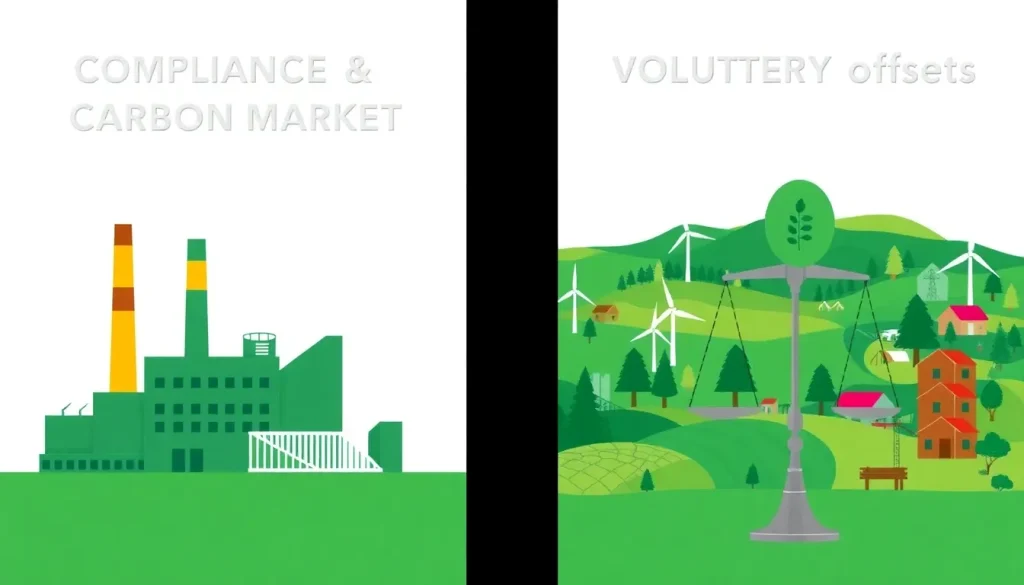
Compliance carbon markets, such as the European Union Emissions Trading System (EU ETS), have a stronger track record of delivering verifiable emission reductions within regulated sectors, though their overall climate impact depends on the stringency of caps and political will. Voluntary carbon markets offer flexibility and can fund projects that compliance markets exclude, but they are plagued by inconsistent quality, weak oversight, and doubts about whether many offsets represent real, additional, and permanent reductions. Both mechanisms are tools, not panaceas; their effectiveness hinges on robust design, rigorous standards, and integration with broader climate policies.
Problem addressed
Both compliance and voluntary carbon markets aim to mitigate climate change by putting a price on greenhouse gas (GHG) emissions and incentivizing reductions. The core problem is the market failure of unpriced externalities: emitters do not bear the full social cost of their pollution, leading to excessive emissions. Carbon markets create a financial value for emission reductions, enabling entities to trade emission allowances or offset credits. Compliance markets target legally mandated emission caps for specific sectors, while voluntary markets allow non-regulated actors to compensate for their emissions by purchasing credits from projects that reduce or remove GHGs elsewhere.
How the solution works
Compliance carbon markets operate under a “cap-and-trade” principle. A government or regulatory body sets a cap on total emissions for covered sectors (e.g., power generation, heavy industry) and issues a corresponding number of emission allowances, each typically representing one tonne of CO2 equivalent. These allowances are either allocated for free or auctioned. Entities must surrender allowances equal to their emissions at the end of a compliance period; those that reduce emissions below their allocation can sell surplus allowances, while those exceeding their limit must buy allowances or face penalties. The cap declines over time, driving overall emission reductions. The largest example is the EU ETS, covering around 40% of EU emissions. Other systems include California’s Cap-and-Trade Program, China’s national ETS, and the Regional Greenhouse Gas Initiative (RGGI) in the northeastern US.

Voluntary carbon markets (VCMs) function outside legal mandates. Companies, organizations, and individuals purchase carbon credits—each representing one tonne of CO2 reduced or removed—to offset their own emissions. Credits are generated by projects such as reforestation, renewable energy, methane capture, or improved cookstoves. These projects are certified by independent standards (e.g., Verra’s Verified Carbon Standard, Gold Standard, American Carbon Registry) that set methodologies for quantifying emission reductions and require third-party verification. Buyers use credits to meet voluntary climate targets, enhance brand image, or anticipate future regulation. The market is decentralized, with credits traded bilaterally or on exchanges.
Evidence strength
Evidence for compliance markets is relatively strong, particularly for the EU ETS. Multiple peer-reviewed studies have found that the EU ETS caused statistically significant emission reductions in regulated sectors—estimates range from 8% to 12% below business-as-usual during Phase II (2008–2012) and further reductions in Phase III (2013–2020). However, the system’s early phases suffered from over-allocation of free allowances, leading to low prices and limited abatement. Reforms, including the Market Stability Reserve and tighter caps, have strengthened its performance. The California cap-and-trade program has also been associated with emission declines, though attributing causality is complicated by overlapping policies. China’s national ETS, launched in 2021, is still too new for robust impact assessment.
Evidence for voluntary carbon markets is more contested. A 2023 investigation by The Guardian and others alleged that over 90% of rainforest offset credits from Verra, the largest certifier, were “phantom credits” that did not represent real emission reductions. Verra disputed the methodology but acknowledged the need for improvement. Academic meta-analyses have found that many offset project types, especially renewable energy and forest conservation, suffer from low additionality—meaning the projects would have happened anyway without carbon finance. A 2016 study in Science estimated that only 2% of Kyoto Protocol Clean Development Mechanism (CDM) projects had high likelihood of being additional. However, newer methodologies and standards (e.g., for REDD+ and improved forest management) are evolving, and some project types like landfill gas capture have stronger additionality evidence. Overall, the quality of voluntary credits is highly variable, and buyers must exercise due diligence.
Potential scale
Compliance markets currently cover about 23% of global GHG emissions, according to the World Bank’s 2023 “State and Trends of Carbon Pricing” report. The EU ETS alone covers around 1.8 billion tonnes of CO2 annually. As more jurisdictions adopt carbon pricing, coverage could expand significantly; China’s national ETS, once fully implemented, will become the world’s largest by covered emissions. However, compliance markets are limited to sectors that are politically and technically feasible to regulate, often excluding agriculture, land use, and small-scale emitters. The voluntary market is much smaller in value—around $2 billion in 2022—but has grown rapidly, with transaction volumes reaching approximately 500 million tonnes of CO2 equivalent in 2021. Its theoretical scale is vast because any emission reduction or removal project anywhere can generate credits, but demand is constrained by corporate net-zero pledges and reputational risks. The voluntary market could potentially channel billions of dollars annually to nature-based solutions and carbon removal technologies, but only if quality concerns are resolved.
Cost considerations
Compliance market costs are reflected in allowance prices, which have varied widely. EU ETS allowance prices rose from below €10/tCO2 in 2017 to over €100/tCO2 in 2023, driven by policy reforms and market expectations. These costs are passed through to consumers in energy and product prices, creating a direct economic incentive to decarbonize. Auctioning allowances also generates government revenue that can be recycled into climate programs or used to offset regressive impacts. The cost-effectiveness of compliance markets depends on the cap trajectory and the availability of low-cost abatement options; well-designed systems can achieve reductions at lower societal cost than command-and-control regulations.
Voluntary carbon credit prices are generally lower, ranging from less than $1 to over $20 per tonne depending on project type, co-benefits, and vintage. Nature-based credits (e.g., forestry) often trade at a premium. The low price reflects both the abundance of cheap credits and the market’s credibility discount. For buyers, voluntary offsets can be a cost-effective way to claim carbon neutrality, but if credits do not represent real reductions, the actual cost per tonne of genuine climate benefit may be much higher. Transaction costs for project development, validation, and verification can be significant, especially for small-scale projects, potentially limiting supply from the most vulnerable communities.
Implementation time
Compliance markets require years to design, legislate, and operationalize. The EU ETS took about five years from policy proposal (2001) to launch (2005), and subsequent reforms have been incremental. Newer systems can learn from existing models, but political negotiation over caps, allocation, and sector coverage often delays implementation. Once running, compliance markets can deliver immediate price signals, but actual emission reductions may take several years as firms invest in abatement technologies. Voluntary carbon markets can be implemented more quickly: project development and credit issuance can occur within 1–3 years for many project types, and buyers can purchase credits immediately. However, the time to achieve real, verified emission reductions varies; afforestation projects may take decades to sequester the promised carbon, while renewable energy projects may displace emissions more rapidly but face additionality questions.
Environmental benefits
When well-designed, compliance markets deliver absolute emission reductions within capped sectors, contributing directly to national climate targets. The EU ETS has been credited with helping the EU reduce its emissions by 31% from 1990 to 2020, though other policies also played a role. Compliance markets can also drive innovation in low-carbon technologies by increasing the cost of emitting. Voluntary markets, at their best, can fund projects that protect forests, restore ecosystems, and deploy clean energy in regions where such activities would not otherwise occur. They can also support carbon removal technologies like direct air capture, which are not yet covered by compliance markets. However, the environmental integrity of voluntary credits is often questionable; if offsets are not additional, they allow buyers to claim reductions while global emissions continue to rise, effectively greenwashing. Poorly designed projects can also cause local environmental harm, such as monoculture tree plantations that reduce biodiversity.
Social and economic co-benefits
Compliance markets can generate significant government revenue through allowance auctions. For example, the EU ETS has raised over €100 billion since 2013, much of which is directed to climate and energy funds. California’s program directs auction proceeds to disadvantaged communities. These revenues can be used to mitigate regressive impacts on low-income households. Voluntary carbon projects often emphasize sustainable development co-benefits, such as job creation, improved air quality, and biodiversity conservation. Standards like the Gold Standard require projects to demonstrate contributions to at least three UN Sustainable Development Goals. However, evidence on the actual delivery of co-benefits is mixed; some projects have been associated with land grabbing, displacement of local communities, or failure to deliver promised social benefits. Robust safeguards and community engagement are essential but not always enforced.
Risks and unintended consequences
Both market types face risks of carbon leakage, where emission reductions in one location are offset by increases elsewhere. Compliance markets address this through border adjustments or free allowance allocation, but leakage remains a concern. Voluntary markets have minimal leakage controls. Another risk is market manipulation and fraud; compliance markets have seen VAT fraud and allowance theft, while voluntary markets have faced scandals over fake credits. Over-reliance on offsets can delay direct emission reductions, a moral hazard known as “mitigation deterrence.” In voluntary markets, the low price of credits may undermine the incentive for companies to invest in their own decarbonization. Additionally, the permanence of nature-based credits is uncertain due to risks of fire, disease, or policy reversal; buffer pools and insurance mechanisms exist but may be insufficient for systemic risks like climate change itself.
Where it works best
Compliance markets are most effective in jurisdictions with strong governance, transparent monitoring, and political commitment to climate targets. They work well for large, stationary emission sources like power plants and industrial facilities, where emissions can be accurately measured and verified. The EU ETS and California’s program demonstrate that cap-and-trade can drive decarbonization when caps are ambitious and steadily tightened. Voluntary markets are best suited for sectors and regions not covered by compliance obligations, such as forestry, agriculture, and small-scale renewable energy in developing countries. They can also serve as a testing ground for innovative methodologies and carbon removal technologies that may later be integrated into compliance systems. High-quality voluntary credits with strong co-benefits can attract premium prices from corporate buyers with net-zero commitments.
Where it may not work
Compliance markets may fail in contexts with weak regulatory capacity, corruption, or political instability, where monitoring and enforcement are unreliable. They are also less suitable for diffuse emission sources like agriculture or land-use change, where measurement is challenging. Voluntary markets are particularly problematic when used as a substitute for deep decarbonization by fossil fuel companies or high-emitting industries, as this can perpetuate business-as-usual. They are also ill-suited for offsetting emissions that are hard to abate in the near term if the credits lack permanence or additionality. In regions with unclear land tenure or weak governance, voluntary projects can exacerbate social conflicts.
Comparison with alternatives
Carbon markets are one of several policy instruments for climate mitigation. Carbon taxes are a direct price on emissions, simpler to administer and less prone to price volatility, but they do not guarantee a specific emission reduction quantity. Regulations and standards (e.g., renewable portfolio standards, vehicle efficiency standards) can achieve targeted outcomes but may be less cost-effective. Subsidies for clean energy and technology can accelerate deployment but require public funds. Voluntary corporate action without offsets, such as internal carbon pricing or direct investment in emission reductions, avoids the credibility issues of offsets but may be slower. A hybrid approach—using compliance markets for major sectors, carbon taxes for others, and high-quality voluntary credits for residual emissions—may offer the most comprehensive solution. The voluntary market could also evolve into a compliance market under Article 6 of the Paris Agreement, which allows international trading of emission reductions, but rules are still being finalized.
Case studies
EU ETS: Launched in 2005, it has undergone several reforms. After an initial period of over-allocation and low prices, the system now has a Market Stability Reserve and a linear reduction factor that cuts the cap by 2.2% annually. Emissions from stationary installations fell by about 35% between 2005 and 2019. The carbon price signal has driven fuel switching from coal to gas and investments in renewables. However, free allocation to industry has blunted incentives in some sectors, and aviation and maritime were only recently included.
California Cap-and-Trade: Started in 2013, covering electricity, industry, and transportation fuels. It has helped California meet its 2020 emission target four years early, though the role of cap-and-trade versus complementary policies is debated. Auction revenues fund projects in disadvantaged communities. The program links with Quebec’s system, demonstrating cross-border cooperation.
Voluntary market – Rimba Raya Biodiversity Reserve, Indonesia: A REDD+ project protecting 64,000 hectares of peat swamp forest, generating credits sold to companies like Shell and Microsoft. It claims to have avoided over 100 million tonnes of CO2 emissions and supports local communities. However, it has faced legal disputes over land rights and questions about baseline scenarios, illustrating the challenges of forest carbon projects.
Voluntary market – Microsoft’s carbon removal portfolio: Microsoft has committed to being carbon negative by 2030 and purchases a range of credits, including direct air capture, bioenergy with carbon capture and storage (BECCS), and soil carbon sequestration. This approach uses the voluntary market to fund innovative technologies, but the company acknowledges the need for rigorous standards and has published lessons learned about credit quality.
Final assessment
Compliance and voluntary carbon markets are complementary but distinct tools. Compliance markets, when politically supported and well-designed, can deliver real, measurable emission reductions in key sectors and generate revenue for climate action. Their success depends on ambitious caps, robust monitoring, and adaptive management. Voluntary markets can mobilize private finance for projects that compliance markets miss, but their environmental integrity is often weak. Without significant reforms—stronger additionality tests, permanence guarantees, and transparent accounting—voluntary offsets risk undermining climate goals by enabling greenwashing. The most promising path forward is to strengthen both systems: tighten compliance caps and expand coverage, while raising the bar for voluntary credit quality and integrating high-integrity credits into compliance frameworks under Article 6. For buyers, the priority should be direct emission reductions; offsets should only be used for residual emissions and must be of demonstrably high quality. Ultimately, carbon markets are a means to an end, not an end in themselves, and their role must be carefully calibrated within a broader portfolio of climate policies.
FAQ
What is the main difference between compliance and voluntary carbon markets?
Compliance markets are created by government regulation and require certain emitters to hold allowances equal to their emissions; participation is mandatory. Voluntary markets allow any entity to purchase carbon credits on a non-mandatory basis to offset their emissions, often for corporate social responsibility or reputational reasons.
Are carbon offsets from voluntary markets effective in reducing emissions?
The effectiveness varies widely. Some offsets represent real, additional, and permanent emission reductions, but many have been found to lack additionality or overstate their climate benefits. Rigorous standards and independent verification can improve quality, but the market remains largely unregulated, and buyers must exercise caution.
Can voluntary carbon markets replace compliance markets?
No, they serve different purposes. Compliance markets create a legal obligation and a hard cap on emissions, driving systemic change in regulated sectors. Voluntary markets are supplementary and cannot substitute for mandatory emission reductions. Over-reliance on voluntary offsets can delay necessary direct decarbonization.
References
- World Bank. (2023). State and Trends of Carbon Pricing 2023. Washington, DC: World Bank.
- Bayer, P., & Aklin, M. (2020). The European Union Emissions Trading System reduced CO2 emissions despite low prices. Proceedings of the National Academy of Sciences, 117(16), 8808-8814.
- Cames, M., et al. (2016). How additional is the Clean Development Mechanism? Analysis of the application of current tools and proposed alternatives. Öko-Institut e.V.
- West, T. A. P., et al. (2023). Action needed to make carbon offsets from tropical forest conservation work for climate change mitigation. Science, 381(6660), 873-877.
- Ecosystem Marketplace. (2022). State of the Voluntary Carbon Markets 2022. Forest Trends.