In brief
At a glance
Quick Facts
- Primary SLCPs
- Methane, black carbon, tropospheric ozone, and some hydrofluorocarbons (HFCs).
- Atmospheric Lifetime of Methane
- About 12 years.
- Global Warming Potential of Black Carbon
- Up to 900–3,200 times that of CO₂ over 20 years.
- Health Impact
- SLCPs contribute to over 7 million premature deaths annually from air pollution.
- Cooling Potential
- Fast action on SLCPs could avoid up to 0.6°C of warming by 2050.
- Main Source of Methane
- Agriculture (livestock, rice paddies), fossil fuel extraction, and waste.
Key Takeaways
- Short-lived climate pollutants (SLCPs) are substances with atmospheric lifetimes of days to a few decades, yet they have a potent warming effect, often many times stronger than carbon dioxide per unit of mass.
- Reducing SLCP emissions is one of the fastest ways to slow the rate of near-term global warming, potentially avoiding up to 0.6°C of warming by mid-century.
- SLCPs are also major contributors to air pollution, causing millions of premature deaths annually and damaging crops, so cutting them yields immediate health and food security benefits.
- Unlike long-lived greenhouse gases, SLCP reductions can have a rapid climate response, but sustained climate protection still requires deep cuts in carbon dioxide emissions.
What Is What Are Short-Lived Climate Pollutants??
Short-lived climate pollutants (SLCPs) are a group of greenhouse gases and aerosols that have a relatively short residence time in the atmosphere—ranging from a few days to about 15 years—but exert a powerful warming influence on the climate. Unlike carbon dioxide (CO₂), which can persist in the atmosphere for centuries, SLCPs are removed quickly through natural processes such as chemical reactions, oxidation, or deposition. However, their high global warming potential (GWP) means that, per unit of mass, they can trap far more heat than CO₂ over their short lifetimes. The most significant SLCPs include methane (CH₄), black carbon (a component of fine particulate matter), tropospheric ozone (O₃), and some hydrofluorocarbons (HFCs).
These pollutants are distinct from long-lived greenhouse gases not only in their atmospheric lifetimes but also in the nature of their impacts. While CO₂ accumulates and drives long-term warming, SLCPs influence the climate system on much shorter timescales. This characteristic makes them a critical lever for slowing the rate of warming in the near term, buying time for the transition to a low-carbon economy. Moreover, many SLCPs are also hazardous air pollutants, so reducing them yields immediate co-benefits for public health, ecosystems, and food security. The concept of SLCPs emerged from scientific recognition that addressing these substances could complement CO₂ mitigation and help avoid dangerous climate tipping points.
Overview
SLCPs are responsible for a substantial share of current global warming. While carbon dioxide is the dominant driver of long-term climate change, SLCPs contribute as much as 40–45% of the net warming effect to date. Their short atmospheric lifetimes mean that their concentrations respond quickly to changes in emissions. This creates a unique opportunity: reducing SLCP emissions can slow the rate of warming almost immediately, whereas the climate response to CO₂ reductions takes decades to manifest due to the long lifetime of CO₂ in the atmosphere.

The main SLCPs and their characteristics are:
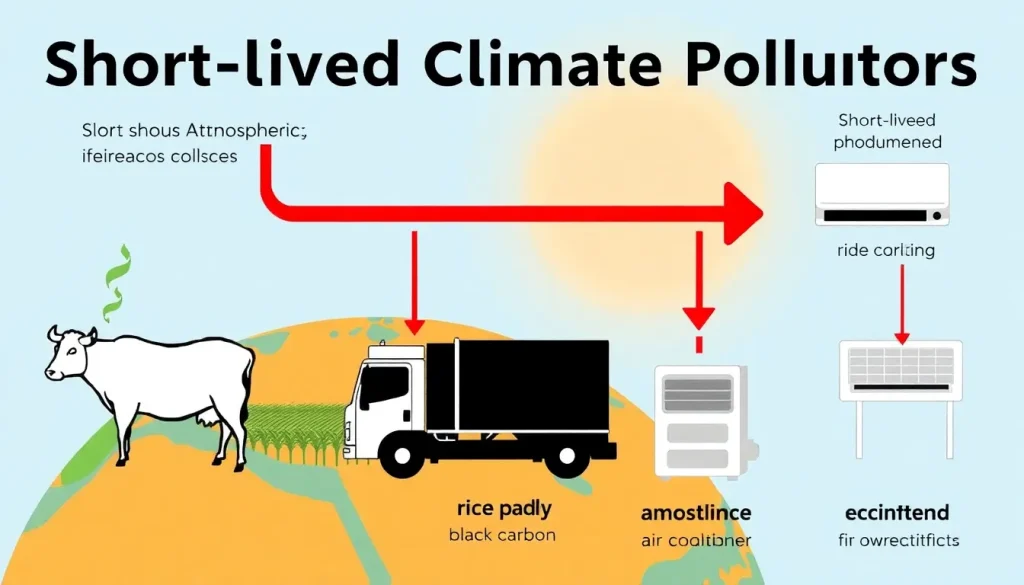
- Methane (CH₄): A potent greenhouse gas with an atmospheric lifetime of about 12 years. It has a global warming potential (GWP) of 84–87 over 20 years (compared to CO₂). Major sources include agriculture (livestock, rice paddies), fossil fuel extraction, and waste decomposition.
- Black carbon (BC): A component of fine particulate matter (PM₂.₅) formed by incomplete combustion of fossil fuels, biofuels, and biomass. It has a very short atmospheric lifetime (days to weeks) but a strong warming effect, with a 20-year GWP of 900–3,200. It also darkens snow and ice, accelerating melting.
- Tropospheric ozone (O₃): A greenhouse gas and air pollutant formed by chemical reactions of precursor gases (methane, carbon monoxide, nitrogen oxides, volatile organic compounds) in sunlight. It has a lifetime of weeks and contributes to warming and smog.
- Hydrofluorocarbons (HFCs): Synthetic gases used as refrigerants, with lifetimes of years to decades. Some HFCs have GWPs thousands of times that of CO₂. They are being phased down under the Kigali Amendment to the Montreal Protocol.
How It Works
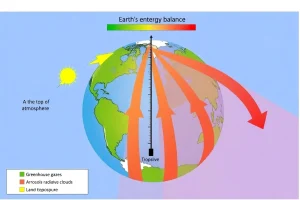
SLCPs warm the climate by absorbing outgoing infrared radiation (the greenhouse effect) and, in the case of black carbon, by absorbing incoming solar radiation. Methane, tropospheric ozone, and HFCs are greenhouse gases that trap heat in the atmosphere. Black carbon particles absorb sunlight and heat the surrounding air; when deposited on snow and ice, they reduce the surface reflectivity (albedo), causing more solar energy to be absorbed and accelerating melting. Tropospheric ozone also damages plant tissues, reducing crop yields and the ability of forests to sequester carbon.
The short atmospheric lifetimes of these pollutants mean that their concentrations are tightly linked to emission rates. If emissions are reduced, atmospheric levels drop quickly, and the associated warming effect diminishes within years. This is in stark contrast to CO₂, which accumulates over centuries and commits the planet to long-term warming even if emissions are halted. The rapid response of SLCPs makes them a powerful tool for near-term climate mitigation, but it also means that sustained reductions are needed to maintain the benefit.
Importance and Impact
Addressing SLCPs is crucial for slowing the pace of global warming in the coming decades. Integrated assessment models suggest that aggressive SLCP mitigation could avoid up to 0.6°C of warming by 2050, helping to keep the global temperature increase below 1.5°C or 2°C targets. This near-term cooling is vital for reducing the risk of crossing climate tipping points, such as the collapse of ice sheets or the dieback of the Amazon rainforest.
Beyond climate, SLCP reductions deliver substantial co-benefits. Because many SLCPs are also air pollutants, cutting them prevents millions of premature deaths each year from respiratory and cardiovascular diseases. Reducing tropospheric ozone can increase crop yields by tens of millions of tonnes annually, enhancing food security. Black carbon reductions improve visibility and reduce the melting of glaciers and Arctic ice, protecting water resources and ecosystems. These multiple benefits make SLCP mitigation a highly cost-effective strategy.
Main Causes or Drivers
SLCP emissions arise from a wide range of human activities. The primary sources include:
- Agriculture: Livestock enteric fermentation and manure management produce methane; rice cultivation in flooded paddies generates methane; agricultural burning releases black carbon and ozone precursors.
- Fossil fuel extraction and distribution: Leaks from oil and gas wells, pipelines, and coal mines vent methane into the atmosphere.
- Energy and industry: Incomplete combustion in diesel engines, residential cookstoves, and industrial boilers emits black carbon. HFCs are used in refrigeration, air conditioning, and foam-blowing.
- Waste management: Landfills and wastewater treatment produce methane as organic waste decomposes anaerobically.
- Biomass burning: Forest fires, agricultural residue burning, and use of solid fuels for cooking and heating release black carbon and ozone precursors.
Environmental and Human Impacts
SLCPs have far-reaching effects on both the environment and human well-being. Black carbon and tropospheric ozone are major components of air pollution, linked to an estimated 7 million premature deaths annually from heart disease, stroke, lung cancer, and respiratory infections. Children and the elderly are particularly vulnerable. Ozone also damages crops like wheat, soy, and rice, reducing global yields by 3–16% depending on the region, which threatens food supplies.
In the Arctic and mountainous regions, black carbon deposition on snow and ice accelerates melting, contributing to sea-level rise and disrupting water availability for millions of people. Methane contributes to the formation of background tropospheric ozone, extending the reach of air pollution far from emission sources. HFCs, while not directly toxic, have a strong warming effect that can indirectly exacerbate heatwaves and extreme weather events. The combined impact of SLCPs on climate, health, and ecosystems underscores the urgency of integrated mitigation strategies.
Solutions
Reducing SLCP emissions relies on a mix of existing technologies, policy measures, and behavioral changes. Key solutions include:
- Methane: Improved livestock management, anaerobic digestion of manure, alternate wetting and drying in rice paddies, leak detection and repair in oil and gas infrastructure, and landfill gas capture.
- Black carbon: Adoption of clean cookstoves, diesel particulate filters for vehicles, bans on open-field burning, and transition to cleaner fuels and renewable energy.
- Tropospheric ozone: Reducing methane emissions is the most effective way to lower background ozone; additionally, controlling nitrogen oxides and volatile organic compounds from vehicles and industry cuts local ozone formation.
- HFCs: Phasing down HFCs under the Kigali Amendment by switching to low-GWP alternatives in refrigeration and air conditioning.
International initiatives like the Climate and Clean Air Coalition (CCAC) and the Global Methane Pledge support countries in implementing these measures. Many solutions are cost-effective and can be deployed rapidly, offering a triple win for climate, health, and development.
FAQ
What is a short-lived climate pollutant?
A short-lived climate pollutant (SLCP) is a substance that warms the climate but has a relatively short atmospheric lifetime, from days to about 15 years. Examples include methane, black carbon, tropospheric ozone, and some HFCs.
How does reducing SLCPs help climate change?
Because SLCPs have short lifetimes, cutting their emissions leads to a rapid decrease in their atmospheric concentrations and a quick reduction in their warming effect. This can slow the rate of near-term warming and help avoid climate tipping points.
Why does reducing SLCPs matter for health?
Many SLCPs are also air pollutants that cause respiratory and cardiovascular diseases. Reducing them improves air quality, preventing millions of premature deaths each year and reducing crop damage.
References
- Intergovernmental Panel on Climate Change (IPCC) Special Report on Global Warming of 1.5°C
- Climate and Clean Air Coalition (CCAC) Scientific Advisory Panel
- United Nations Environment Programme (UNEP) and World Meteorological Organization (WMO) Integrated Assessment of Black Carbon and Tropospheric Ozone