In brief
At a glance
Quick Facts
- Verdict
- Important but manageable
- Problem addressed
- Incentives that undermine climate action
- Evidence strength
- Moderate (strong theory, mixed empirics)
- Potential scale
- Global
- Relative cost
- Low to moderate (policy design)
- Time to impact
- Years
Quick verdict
Moral hazard is a genuine but manageable concern in climate policy. While theoretical models predict that shielding actors from the full consequences of their actions can reduce mitigation and adaptation efforts, empirical evidence is mixed and often context-specific. The most significant risks appear in areas like carbon offset markets, geoengineering governance, and disaster relief. Policy design—such as conditional support, liability rules, and transparency—can substantially reduce moral hazard without sacrificing necessary climate action.
Problem addressed
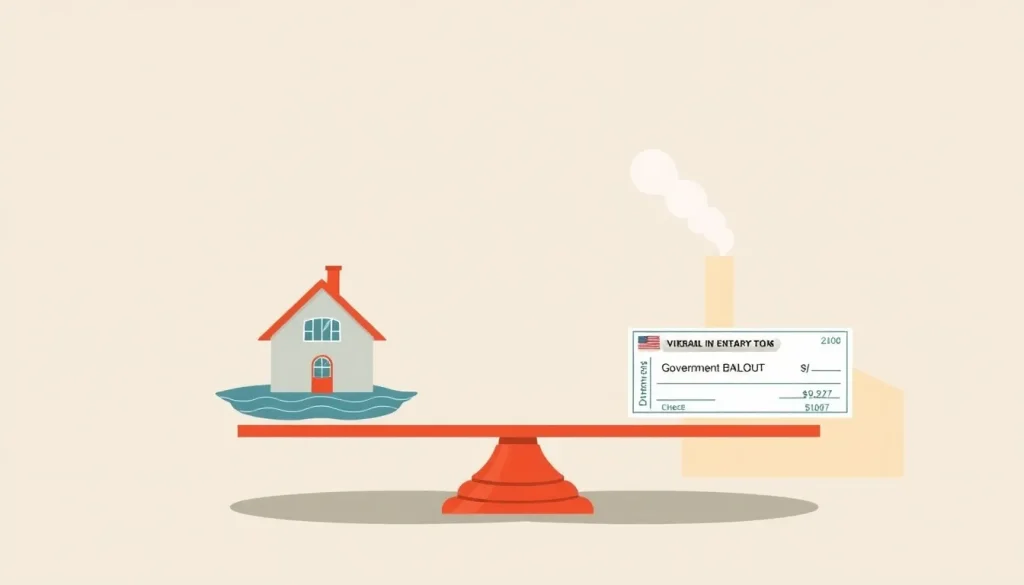
Moral hazard in climate policy refers to the risk that measures intended to protect against climate impacts or to provide financial safety nets may inadvertently encourage riskier behavior, reduce incentives for emissions reductions, or delay necessary adaptation. For example, if governments or insurers fully compensate losses from climate-related disasters, property owners may continue building in high-risk areas. Similarly, if carbon removal technologies are seen as a future backstop, firms and governments might slow current mitigation efforts. This problem matters because it can undermine the effectiveness of climate policies, lock in carbon-intensive infrastructure, and increase long-term costs and damages.
How the solution works
Addressing moral hazard in climate policy involves designing interventions that maintain incentives for risk reduction while providing necessary protection. Key mechanisms include:
- Conditional support: Linking financial assistance or insurance payouts to risk-reducing behaviors, such as requiring flood insurance only if communities adopt stricter building codes or retreat from high-risk zones.
- Risk-based pricing: Charging premiums or setting carbon prices that reflect the true social cost of emissions, so that polluters internalize the risk they create.
- Liability frameworks: Holding emitters legally responsible for climate damages, which can deter excessive risk-taking and fund adaptation.
- Transparency and monitoring: Ensuring that offset projects, geoengineering experiments, and adaptation funding are subject to independent verification to prevent free-riding.
- Regulatory guardrails: For technologies like solar radiation management, establishing clear governance that prohibits deployment unless paired with deep emissions cuts.
These approaches aim to align private incentives with societal goals, reducing the gap between who takes risks and who bears the consequences.
Evidence strength
The evidence on moral hazard in climate policy is largely theoretical, drawing from well-established economic models of insurance and finance. Empirical studies are limited and often yield mixed results. For instance, research on flood insurance in the United States suggests that subsidized premiums have encouraged development in flood-prone areas, but the effect size varies. Studies on carbon offsets show that some projects fail to deliver additional emissions reductions, indicating a moral hazard where offset buyers claim credit without real climate benefit. Evidence on geoengineering moral hazard is mostly from laboratory experiments and surveys, which find that mentioning solar geoengineering can reduce individuals’ willingness to support mitigation, though real-world policy impacts remain unproven. Overall, the evidence base is moderate: strong in theory, but with only emerging empirical validation in climate-specific contexts.
Potential scale
Moral hazard could affect climate policy at all levels—from individual behavior to international agreements. If unchecked, it could undermine global mitigation efforts, leading to higher cumulative emissions and greater climate damages. For example, widespread reliance on carbon dioxide removal (CDR) in national climate strategies, without near-term emission cuts, could lock in a high-warming trajectory. The scale of impact is potentially global, but the actual magnitude depends on policy design and enforcement. In well-regulated systems, moral hazard can be minimized, limiting its scale.
Cost considerations
Addressing moral hazard often involves upfront policy design costs, such as developing monitoring systems, setting risk-based premiums, or establishing liability rules. These costs are generally low to moderate relative to the potential damages from unchecked moral hazard. For instance, requiring flood insurance premiums to reflect actual risk may increase costs for some property owners but reduces long-term public liabilities. In carbon markets, robust verification adds transaction costs but preserves environmental integrity. The cost of not addressing moral hazard—through maladaptation, stranded assets, or failed climate goals—is likely far higher.
Implementation time
Policy adjustments to reduce moral hazard can be implemented relatively quickly, often within a few years, as they primarily involve regulatory changes or market design. For example, reforming disaster insurance programs or tightening offset standards can be done through legislative or administrative action. However, some measures, like shifting liability rules or establishing international governance for geoengineering, may take longer due to political and legal complexities. The effects of these changes on behavior may also take years to materialize as incentives realign.
Environmental benefits
Mitigating moral hazard directly supports environmental goals by ensuring that climate policies lead to genuine emissions reductions and resilient adaptation. For instance, eliminating perverse incentives in insurance can reduce development in vulnerable ecosystems, preserving natural flood barriers. Preventing overreliance on unproven carbon removal technologies keeps the focus on immediate decarbonization, which is critical to meeting Paris Agreement targets. The environmental benefit is the avoided additional warming and ecosystem degradation that would result from unchecked moral hazard.
Social and economic co-benefits
Addressing moral hazard can improve equity and fiscal sustainability. Risk-based pricing ensures that those who benefit from risky activities bear the costs, rather than shifting them to taxpayers or vulnerable populations. Conditional assistance can promote community resilience and reduce long-term disaster recovery costs. Transparent carbon markets build trust and can channel finance to high-quality mitigation projects. These measures can also reduce the likelihood of costly bailouts for carbon-intensive industries, freeing public funds for other priorities.
Risks and unintended consequences
Overly aggressive anti-moral hazard measures could have negative side effects. Strict conditionality on disaster aid might leave poor communities without resources to recover, exacerbating inequality. Risk-based pricing for insurance could make coverage unaffordable for low-income households in high-risk areas, forcing them to bear the full brunt of climate impacts. In carbon markets, excessive verification costs could stifle participation and limit the flow of finance to developing countries. There is also a risk that focusing on moral hazard could be used as an argument to delay necessary climate policies, such as public investment in adaptation or support for carbon removal research.
Where it works best
Moral hazard mitigation is most effective in contexts with strong institutional capacity, clear property rights, and enforceable regulations. For example, in developed countries with robust insurance markets, risk-based pricing and building codes can align incentives. In carbon markets, independent verification bodies and liability for non-delivery can ensure offset quality. For geoengineering research, international scientific oversight with clear red lines can reduce the risk of moral hazard while allowing knowledge development.
Where it may not work
In settings with weak governance, corruption, or limited enforcement capacity, moral hazard safeguards may be ineffective or counterproductive. For instance, in countries where building codes are not enforced, requiring insurance as a condition for reconstruction may simply exclude the most vulnerable. In international climate finance, imposing stringent conditions on adaptation funding could delay critical projects in least-developed countries. Similarly, in the absence of a global carbon price, moral hazard from offsets is harder to control because of leakage and baseline manipulation.
Comparison with alternatives
Alternatives to directly addressing moral hazard include accepting some level of it in exchange for faster deployment of climate solutions, or relying on ex-post corrections such as disaster recovery funding without preconditions. The former risks locking in high-emission pathways; the latter can be more expensive and less equitable. Compared to these, a proactive approach that embeds incentives for risk reduction is generally more cost-effective and sustainable, though it requires greater institutional capacity. Another alternative is to focus solely on mitigation and ignore moral hazard in adaptation—but this leaves communities exposed and can increase overall damages.
Case studies
- U.S. National Flood Insurance Program (NFIP): The NFIP has been criticized for creating moral hazard by offering below-market premiums in flood-prone areas, encouraging development in risky zones. Reforms in 2012 and 2014 aimed to phase in risk-based pricing, but political pushback led to delays and grandfathering, illustrating the difficulty of removing implicit subsidies.
- Carbon Offsets under the Kyoto Protocol: The Clean Development Mechanism (CDM) allowed industrialized countries to meet emission targets by funding projects in developing nations. Studies found that a significant share of CDM credits did not represent real, additional reductions, partly due to moral hazard: project developers had incentives to inflate baselines. This led to stricter rules under the Paris Agreement’s Article 6.
- Geoengineering Research Governance: The 2010 moratorium on large-scale geoengineering under the Convention on Biological Diversity reflected concerns about moral hazard. Some experiments, like the Stratospheric Controlled Perturbation Experiment (SCoPEx), have faced delays due to governance debates, highlighting the tension between research and the risk of reducing mitigation ambition.
Final assessment
Moral hazard is an important lens for evaluating climate policies, but it should not be used as a blanket argument against protective measures. The evidence suggests that moral hazard is real in specific contexts, yet its magnitude is often overstated or can be managed through careful design. Policymakers should prioritize transparency, conditionality, and risk-based pricing where feasible, while ensuring that vulnerable populations are not left behind. For technologies like carbon removal and solar geoengineering, governance frameworks must explicitly link deployment to deep emissions cuts. Overall, moral hazard is a manageable challenge, not an insurmountable barrier to effective climate action.
FAQ
Is moral hazard the same as free-riding?
Not exactly. Free-riding occurs when someone benefits from a public good without contributing to its cost. Moral hazard specifically involves a change in behavior due to protection from risk. In climate policy, a country might free-ride on others' emissions cuts, while moral hazard would be if that country increased its emissions because it expects a future bailout or technology fix.
Does climate insurance always create moral hazard?
Not necessarily. Insurance can create moral hazard if it fully shields the insured from losses, but well-designed insurance with deductibles, risk-based premiums, and incentives for risk reduction can minimize this effect. In climate contexts, parametric insurance that pays out based on predefined triggers (e.g., wind speed) rather than actual losses can reduce moral hazard because the payout is not tied to the insured's behavior.
How can carbon markets avoid moral hazard?
Carbon markets can reduce moral hazard by requiring rigorous additionality tests, independent verification, and liability for non-permanence or reversal of credits. Discounting or buffering credits can also account for uncertainty. The Paris Agreement's Article 6 aims to establish such safeguards, though implementation remains a challenge.
References
- Intergovernmental Panel on Climate Change (IPCC) reports on risk management and policy instruments.
- Kunreuther, H., & Michel-Kerjan, E. (2009). At War with the Weather: Managing Large-Scale Risks in a New Era of Catastrophes.
- Cullenward, D., & Victor, D. G. (2020). Making Climate Policy Work.
- National Academies of Sciences, Engineering, and Medicine. (2021). Reflecting Sunlight: Recommendations for Solar Geoengineering Research and Research Governance.
- World Bank. (2017). Sovereign Climate and Disaster Risk Pooling: World Bank Technical Contribution to the G20.