In brief
At a glance
Quick Facts
- Status
- Six of nine boundaries transgressed as of 2023
- Control variable
- Multiple control variables per boundary (e.g., atmospheric CO2, biodiversity intactness, nitrogen flows)
- Proposed boundary
- Safe operating space defined for each boundary (e.g., 350 ppm CO2, 90% BII)
- Current value
- Climate change: ~420 ppm CO2; biosphere integrity: <90% BII in many regions; land-system change: ~40% of ice-free land altered
- Pre-industrial baseline
- Holocene conditions (e.g., CO2 ~280 ppm, high biodiversity intactness, minimal chemical pollution)
Current status
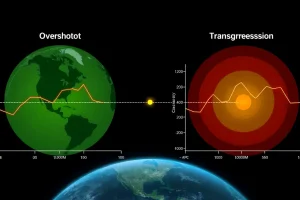
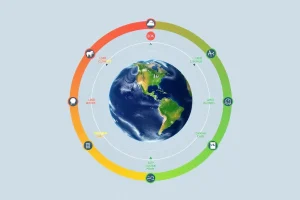
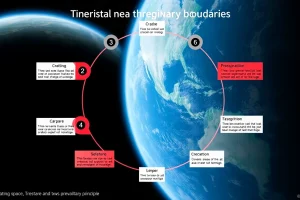
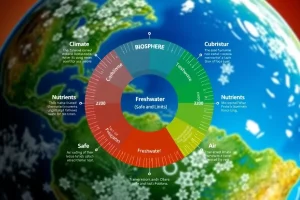
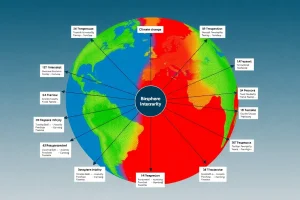
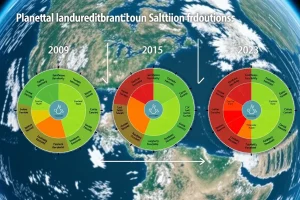
The planetary boundaries framework, first published in 2009 and updated in 2015 and 2023, identifies nine Earth-system processes that regulate the stability and resilience of the planet. As of the 2023 assessment, six of these nine boundaries are transgressed: climate change, biosphere integrity (genetic diversity and functional integrity), land-system change, freshwater change, biogeochemical flows (nitrogen and phosphorus), and novel entities (including plastics and synthetic chemicals). Ocean acidification is approaching its boundary, while stratospheric ozone depletion and atmospheric aerosol loading remain within safe limits. The Sustainable Development Goals (SDGs), adopted by the United Nations in 2015, are a set of 17 global goals to be achieved by 2030. Progress on the SDGs is alarmingly off track: only 15% of targets are on course, and many are stagnating or reversing. The transgression of planetary boundaries directly threatens SDG achievement, as environmental degradation undermines poverty reduction, food security, health, and economic growth. Conversely, the pursuit of certain SDGs without regard for planetary boundaries can exacerbate environmental pressures.
Control variable
The planetary boundaries framework uses specific control variables for each Earth-system process to define a safe operating space. For example, climate change is tracked by atmospheric CO2 concentration (ppm) and radiative forcing (W/m2); biosphere integrity by genetic diversity (extinction rate) and functional integrity (Biodiversity Intactness Index, BII); land-system change by the area of forested land remaining; freshwater change by human water consumption and environmental flow requirements; and biogeochemical flows by global nitrogen and phosphorus application rates. The SDGs, in contrast, rely on a set of 231 indicators to measure progress across 169 targets. While the SDG indicators are primarily socio-economic, many are directly linked to planetary boundary control variables—for instance, SDG 13 (Climate Action) uses CO2 emissions, and SDG 15 (Life on Land) uses forest area and biodiversity indices. The choice of control variables in the planetary boundaries framework is based on their ability to capture the stability of the Earth system at a global or sub-global scale, often using metrics that reflect the risk of triggering tipping points.
Proposed boundary or threshold
Each planetary boundary has a proposed safe limit, often with a zone of uncertainty and a high-risk threshold. Key boundaries include: climate change—350 ppm CO2 (boundary) with 450 ppm as the high-risk zone; biosphere integrity—extinction rate 90% for functional integrity; land-system change—at least 75% of original forest cover remaining in each biome; freshwater change—blue water consumption <4000 km3/yr and environmental flow requirements met; biogeochemical flows—industrial nitrogen fixation <62 Tg N/yr and phosphorus flow to oceans <11 Tg P/yr; novel entities—no quantitative boundary yet, but the precautionary principle applies. The SDGs do not have equivalent biophysical thresholds; instead, they set aspirational targets (e.g., net-zero emissions by 2050, halt biodiversity loss). The planetary boundaries framework provides a science-based environmental ceiling that should inform the ambition of SDG targets.
Current measured value
As of 2023, atmospheric CO2 concentration is approximately 420 ppm, well above the 350 ppm boundary and in the high-risk zone. The extinction rate is estimated at 100–1000 E/MSY, far exceeding the boundary. The Biodiversity Intactness Index has fallen below 90% across many terrestrial biomes. Global forest cover has declined to about 60% of original extent, with some biomes (e.g., tropical forests) below the 75% threshold. Human water consumption is around 2600 km3/yr, but regional deficits in environmental flows are widespread. Industrial nitrogen fixation is about 150 Tg N/yr, more than double the boundary, and phosphorus flow to oceans is roughly 22 Tg P/yr. Novel entities: over 350,000 synthetic chemicals are in commerce, with plastic production exceeding 400 million tonnes annually. These values indicate that multiple boundaries are deeply transgressed, posing systemic risks to SDG progress.
How the boundary is calculated
The planetary boundaries are calculated using Earth-system models, paleoclimate data, and contemporary observations. For each boundary, scientists identify a control variable and a threshold based on the Holocene baseline—the relatively stable 11,700-year period during which human civilization developed. The safe boundary is set at a level that avoids crossing critical tipping points or causing irreversible change. For example, the climate boundary is derived from ice-core records showing that CO2 levels during the Holocene averaged 280 ppm, and models suggest that exceeding 350 ppm risks destabilizing ice sheets and triggering feedbacks. The biosphere integrity boundary uses fossil records and modern extinction data to estimate background rates. The SDG indicators are calculated by national statistical offices using standardized methodologies, often compiled by the UN. The two frameworks use different calculation approaches: planetary boundaries are based on biophysical thresholds, while SDG indicators track progress toward policy targets.
Historical trend
Since the Industrial Revolution, human activities have pushed Earth-system processes beyond Holocene variability. Atmospheric CO2 has risen from ~280 ppm to over 420 ppm, with half of the increase occurring since 1980. Biodiversity loss has accelerated: extinction rates are now tens to hundreds of times higher than background levels. Land conversion has reduced global forest area by about one-third, with most loss in the tropics. Nitrogen and phosphorus cycles have been massively altered by synthetic fertilizer use, which increased exponentially after the 1950s. Freshwater use has grown sixfold over the past century. Novel entities, such as plastics and synthetic chemicals, have proliferated since the mid-20th century. SDG progress, tracked since 2015, shows initial gains in some areas (e.g., poverty reduction, access to electricity) but stagnation or reversal in environmental goals. The historical trend reveals a tight coupling between economic growth, resource consumption, and boundary transgression.
What is driving the change
The primary drivers of planetary boundary transgression are human activities linked to population growth, consumption patterns, and technological systems. The burning of fossil fuels for energy and industry is the main driver of climate change and ocean acidification. Agricultural expansion and intensification drive land-system change, freshwater use, and biogeochemical flows through fertilizer application. Industrial production and waste management practices release novel entities. These drivers are deeply embedded in the global economic system, which prioritizes GDP growth. The same drivers also hinder SDG progress: for example, climate change exacerbates poverty (SDG 1) and hunger (SDG 2), while biodiversity loss undermines life on land (SDG 15) and water quality (SDG 6). The pursuit of certain SDGs, such as economic growth (SDG 8) and industrialization (SDG 9), can increase pressure on boundaries if not decoupled from resource use and emissions.
What crossing the boundary means
Transgressing a planetary boundary increases the risk of triggering non-linear, abrupt, or irreversible changes in the Earth system. For climate change, crossing the boundary raises the likelihood of ice-sheet collapse, permafrost thaw, and shifts in ocean circulation. Biosphere integrity loss can lead to ecosystem collapse and reduced resilience to other pressures. Excess nitrogen and phosphorus cause eutrophication and dead zones in aquatic systems. Crossing multiple boundaries simultaneously can create cascading effects: for instance, climate change and land-use change together can accelerate biodiversity loss and reduce carbon sinks. For the SDGs, boundary transgression means that environmental foundations for development are eroded. Food production becomes more vulnerable, water scarcity intensifies, and health risks from pollution and extreme events increase. The poorest populations, who contributed least to the problem, are often the most affected, widening inequalities (SDG 10).
Regional variations
Planetary boundaries are global in scope, but their transgression and impacts vary regionally. Climate change is driven primarily by emissions from industrialized and emerging economies, but its impacts are disproportionately felt in low-income countries and small island states. Biosphere integrity loss is most severe in tropical regions, where deforestation and habitat conversion are concentrated. Freshwater boundaries are transgressed at the river-basin scale, with severe deficits in South Asia, the Middle East, and parts of Africa. Biogeochemical flows are highest in regions with intensive agriculture, such as North America, Europe, and East Asia. Novel entities are produced and consumed globally, but waste and pollution often affect developing countries with weaker regulations. SDG progress also shows stark regional disparities: sub-Saharan Africa and South Asia lag behind on most goals. Addressing planetary boundaries requires differentiated responsibilities, as recognized in the principle of common but differentiated responsibilities in climate negotiations.
Interaction with other boundaries
The nine planetary boundaries are interconnected, and transgressing one can amplify pressures on others. Climate change exacerbates biosphere integrity loss by shifting habitats and increasing extinction risks. Land-system change contributes to climate change through deforestation and soil carbon loss. Freshwater change and biogeochemical flows interact: excessive fertilizer use pollutes water bodies, while irrigation depletes freshwater sources. Novel entities, such as microplastics, can affect biosphere integrity and potentially climate regulation. These interactions mean that a holistic approach is needed to stay within the safe operating space. Similarly, the SDGs are interdependent: progress on one goal can support or hinder others. For example, clean energy (SDG 7) can reduce climate change (SDG 13) and improve health (SDG 3), but bioenergy expansion may increase land-system change (SDG 15) and freshwater use (SDG 6). Integrated policy design is essential to manage trade-offs and synergies.
Impacts on people and ecosystems
The transgression of planetary boundaries has direct and indirect impacts on human well-being and ecosystems. Climate change leads to more frequent and intense heatwaves, floods, and droughts, affecting health, agriculture, and infrastructure. Biodiversity loss reduces ecosystem services such as pollination, pest control, and water purification. Freshwater scarcity threatens drinking water supplies and irrigation. Excess nutrients cause harmful algal blooms and fish kills. Novel entities pose unknown long-term health risks. These impacts undermine progress on multiple SDGs, including no poverty (SDG 1), zero hunger (SDG 2), good health and well-being (SDG 3), clean water and sanitation (SDG 6), and life below water and on land (SDGs 14 and 15). The economic costs are substantial: the World Bank estimates that climate change could push an additional 100 million people into poverty by 2030. Ecosystems, already stressed, may lose their ability to provide essential services, creating feedback loops that further harm human societies.
Possible pathways back toward the safe zone
Returning to a safe operating space requires transformative changes across multiple sectors. Key pathways include: rapid decarbonization of the energy system to meet the Paris Agreement goals; sustainable food systems that reduce land conversion, water use, and nutrient pollution; circular economy models to minimize waste and novel entities; conservation and restoration of ecosystems to enhance biosphere integrity; and improved water management to meet environmental flows. These actions align with many SDG targets, such as renewable energy (SDG 7), sustainable agriculture (SDG 2), and responsible consumption and production (SDG 12). Policy instruments like carbon pricing, ecosystem service payments, and stricter pollution regulations can help. International cooperation is critical, as many boundaries are global commons. The concept of “doughnut economics,” which combines planetary boundaries with social foundations, offers a framework for achieving the SDGs within a safe and just space. However, the scale and speed of change required are unprecedented, and current commitments are insufficient.
Scientific uncertainty
The planetary boundaries framework involves significant scientific uncertainties. The exact position of thresholds is often poorly constrained due to incomplete understanding of Earth-system dynamics and feedbacks. For example, the climate boundary of 350 ppm CO2 is based on paleoclimate evidence and models, but the precise level at which irreversible ice-sheet loss occurs is uncertain. The biosphere integrity boundary is debated because extinction rates are hard to measure and functional integrity metrics are still evolving. The novel entities boundary lacks a quantitative limit due to the vast number of chemicals and their unknown interactions. Regional boundaries, such as freshwater and land-system change, are particularly uncertain because they depend on local conditions. The SDGs also face measurement challenges: data gaps, inconsistent methodologies, and political influences on indicator selection. Despite these uncertainties, the precautionary principle supports early action to avoid crossing boundaries, as the consequences of inaction could be catastrophic.
Criticism and alternative frameworks
The planetary boundaries framework has been criticized for its global, top-down approach, which may oversimplify regional complexities and ignore social dimensions. Some argue that the boundaries are arbitrary or too conservative, while others contend they are not precautionary enough. The concept of a single safe operating space may not account for diverse values and development pathways. Alternative frameworks include “doughnut economics,” which integrates social boundaries with planetary boundaries, and “safe and just Earth system boundaries,” which incorporate justice considerations. The SDGs themselves have been criticized for being too numerous, lacking prioritization, and containing trade-offs between goals. Some researchers propose a “nexus” approach that focuses on interactions among a few critical goals and boundaries. Others advocate for stronger integration of planetary boundaries into SDG monitoring and target-setting, such as through “planetary boundary guardrails.” Despite these debates, the planetary boundaries framework remains influential in science and policy as a tool for understanding global environmental limits.
FAQ
How do planetary boundaries relate to the Sustainable Development Goals?
The planetary boundaries define the environmental ceiling for human development, while the SDGs set social and economic targets. The two frameworks are complementary: staying within planetary boundaries is a prerequisite for achieving many SDGs, especially those related to poverty, health, water, and climate. Conversely, pursuing SDGs without respecting boundaries can lead to further environmental degradation and undermine long-term development.
Which planetary boundaries have been crossed?
As of the 2023 update by Richardson et al., six boundaries are transgressed: climate change, biosphere integrity (genetic diversity and functional integrity), land-system change, freshwater change, biogeochemical flows (nitrogen and phosphorus), and novel entities. Ocean acidification is approaching its boundary, while stratospheric ozone depletion and atmospheric aerosol loading remain within safe limits.
Can the SDGs be achieved if planetary boundaries are crossed?
Achieving the SDGs becomes increasingly difficult and costly when planetary boundaries are crossed, because environmental degradation undermines food security, water availability, health, and economic stability. Some studies suggest that many SDGs cannot be fully met without returning to a safe operating space, highlighting the need for integrated policies that address both social and environmental dimensions simultaneously.
References
- Rockström, J., Steffen, W., Noone, K., et al. (2009). A safe operating space for humanity. Nature, 461, 472–475.
- Steffen, W., Richardson, K., Rockström, J., et al. (2015). Planetary boundaries: Guiding human development on a changing planet. Science, 347(6223), 1259855.
- Richardson, K., Steffen, W., Lucht, W., et al. (2023). Earth beyond six of nine planetary boundaries. Science Advances, 9(37), eadh2458.
- United Nations. (2015). Transforming our world: the 2030 Agenda for Sustainable Development. A/RES/70/1.
- Independent Group of Scientists appointed by the Secretary-General. (2023). Global Sustainable Development Report 2023. United Nations.