In brief
At a glance
Quick Facts
- Definition
- Biodegradation is the breakdown of organic matter by microorganisms into water, carbon dioxide, and biomass.
- Key condition
- Most biodegradable plastics require industrial composting facilities (high heat, moisture, microbes) to degrade within a reasonable timeframe.
- Landfill reality
- In a typical landfill, even organic materials may not biodegrade due to lack of oxygen and moisture.
- Certification standards
- Look for ASTM D6400 (US) or EN 13432 (EU) for compostable plastics; these ensure complete biodegradation in industrial composting.
- Oxo-degradable plastics
- These are conventional plastics with additives that cause fragmentation, not full biodegradation, and are banned in the EU for most applications.
- Home vs. industrial compost
- Home compostable products (e.g., OK Compost HOME) break down at lower temperatures, while industrial compostable ones need higher heat.
- Microplastics risk
- If biodegradable plastics do not fully degrade, they can fragment into microplastics, posing similar environmental risks to conventional plastics.
- Recycling contamination
- Biodegradable plastics can contaminate conventional plastic recycling streams, reducing the quality of recycled material.
Key Takeaways
- “Biodegradable” is not a magic word; it describes a process that requires specific environmental conditions, not just any natural breakdown.
- Many products labeled biodegradable only break down in industrial composting facilities, not in home compost, soil, or landfills.
- Timeframe matters: a product that takes decades to degrade offers little practical benefit and may still cause harm.
- Consumers should look for specific certifications (e.g., ASTM D6400, EN 13432) and ask what the product breaks down into, to avoid toxic residues.
What Is Biodegradable Product Claims: Questions Consumers Should Ask?
“Biodegradable product claims” refer to marketing statements that a product or its packaging can be broken down by microorganisms into natural elements like water, carbon dioxide, and biomass. However, the term “biodegradable” is often used loosely, without specifying the conditions, timeline, or end substances involved. For consumers, the critical task is to move beyond the label and ask targeted questions that reveal whether a product will truly degrade in a reasonable timeframe under real-world disposal conditions. This inquiry is essential because unqualified claims can mislead, contributing to plastic pollution and undermining trust in environmental marketing.
The concept sits at the intersection of materials science, waste management, and consumer protection. It matters because the global shift toward sustainability has led to a proliferation of products touted as “green,” yet many lack the infrastructure or inherent properties to deliver on their promises. By learning which questions to ask—about certification, composition, required environment, and degradation byproducts—consumers can make informed decisions, support genuinely sustainable innovations, and pressure manufacturers to provide transparent, verifiable information.
Overview
Biodegradability is a property of a material, not a universal guarantee. In scientific terms, biodegradation is the breakdown of organic matter by microorganisms such as bacteria and fungi. The process yields carbon dioxide, water, and biomass under aerobic conditions, or methane under anaerobic conditions. However, the rate and completeness of this process depend heavily on the environment: temperature, humidity, oxygen levels, and the presence of specific microbes. A product that biodegrades rapidly in a hot, moist industrial composting facility may persist for decades in a cold, dry landfill or the ocean.

Consumer confusion arises because many products carry vague “biodegradable” claims without clarifying these conditions. Regulatory bodies like the U.S. Federal Trade Commission (FTC) and the European Commission have issued guidelines to curb deceptive marketing. For example, the FTC’s Green Guides state that unqualified biodegradable claims should be substantiated by evidence that the entire product will completely break down within a reasonably short period of time after disposal. Yet enforcement is inconsistent, and many products still bear ambiguous labels. Thus, the onus often falls on consumers to scrutinize claims and seek out specific certifications.
How It Works
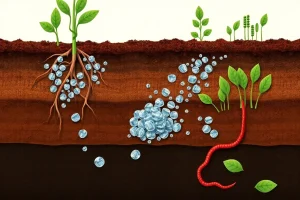
Biodegradation is a natural process driven by microorganisms that consume organic material as a food source. The process involves enzymes breaking down complex polymers into simpler molecules, which are then metabolized. In aerobic conditions, the end products are carbon dioxide, water, and biomass; in anaerobic conditions, methane may also be produced. The speed of degradation depends on the material’s chemical structure, surface area, and the surrounding environment. For example, cellulose—a natural polymer found in plants—biodegrades relatively quickly in moist soil, while synthetic polymers like polylactic acid (PLA) require the high temperatures and specific microbes found only in industrial composting facilities.
When a product is labeled “biodegradable,” it often means the material has passed a standard test, such as ASTM D6400 (for compostable plastics) or ASTM D5988 (for biodegradation in soil). These tests measure the percentage of carbon converted to CO2 over a set period under controlled conditions. However, a product that meets an industrial composting standard will not necessarily biodegrade in a home compost pile or a marine environment. Therefore, understanding the specific standard and the intended disposal pathway is crucial. Consumers should ask: “What standard does this product meet, and what environment is required for it to biodegrade?”
Common Misconceptions
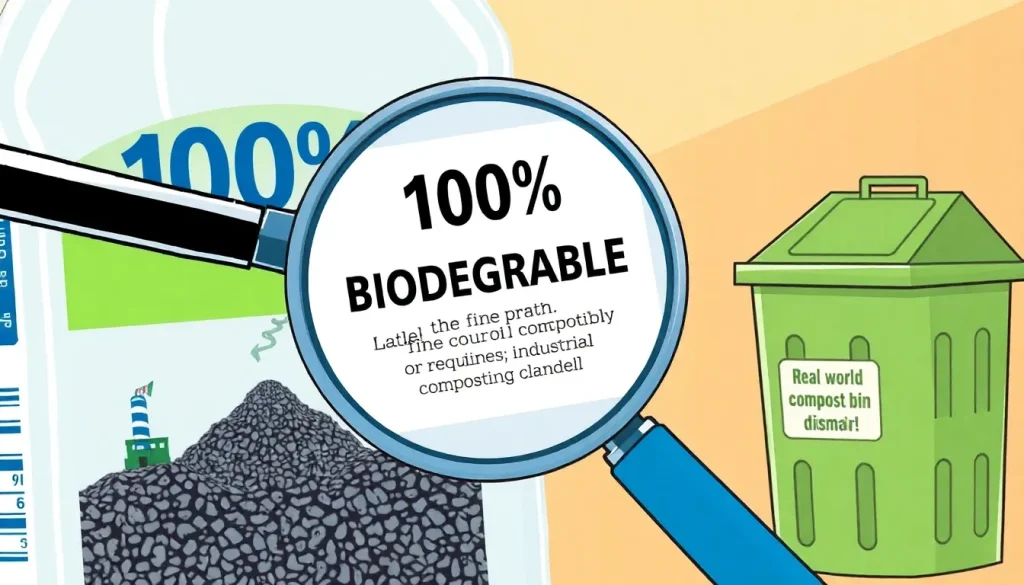
One of the most pervasive misconceptions is that “biodegradable” means a product will disappear quickly in any environment, including a landfill. In reality, modern landfills are designed to minimize oxygen and moisture, which inhibits biodegradation. Even organic matter like food scraps can remain intact for decades in such conditions. Another myth is that biodegradable plastics are always better for the environment. While they may break down under ideal conditions, they can still fragment into microplastics if those conditions are not met, and they may not be recyclable, potentially contaminating recycling streams.
Many consumers also confuse “biodegradable” with “compostable.” Compostable products are a subset of biodegradable products that break down in a composting environment, leaving no toxic residue and producing humus. However, not all biodegradable products are compostable, and some may leave behind harmful chemicals or heavy metals. Additionally, the term “oxo-biodegradable” is often used for conventional plastics with additives that accelerate fragmentation, but these merely break into smaller pieces of plastic rather than fully biodegrading, leading to microplastic pollution. Such products are increasingly banned or restricted in several jurisdictions.
Benefits, Limitations and Trade-offs
Biodegradable products offer potential benefits: they can reduce the accumulation of persistent waste, lower the carbon footprint if derived from renewable resources, and support a circular economy when properly composted. For example, compostable food packaging can be processed along with food scraps, diverting organic waste from landfills and creating valuable compost. In agricultural settings, biodegradable mulch films eliminate the need for removal and disposal of conventional plastic films.
However, significant limitations exist. The infrastructure for industrial composting is not universally available; many communities lack access to facilities that accept compostable plastics. If these products end up in conventional recycling, they can contaminate the stream and degrade the quality of recycled plastics. Moreover, some biodegradable materials require specific conditions that are rarely met in natural environments, leading to persistence similar to conventional plastics. There are also trade-offs in performance: biodegradable packaging may have shorter shelf life, lower barrier properties, or higher cost. Consumers must weigh these factors and consider the entire lifecycle, including raw material sourcing and manufacturing impacts.
What Individuals Can Do
Consumers can become more discerning by asking a set of key questions whenever they encounter a biodegradable claim. First, “What is the product made of?” Look for materials like paper, wood, or certified compostable bioplastics, and be wary of vague terms like “biodegradable plastic” without further detail. Second, “What certification does it carry?” Trustworthy labels include the Biodegradable Products Institute (BPI) certification, TÜV Austria’s OK compost HOME or INDUSTRIAL, and European standard EN 13432. These indicate that the product has been tested under specific conditions.
Third, “How long does it take to biodegrade, and in what environment?” A product that biodegrades in 180 days in an industrial composter is very different from one that takes five years in soil. Fourth, “What does it break down into?” The ideal answer is harmless biomass, water, and CO2, with no toxic residues or microplastics. Fifth, “Can I dispose of it properly where I live?” Check if your community has industrial composting that accepts such items, or if the product is suitable for home composting. Finally, “Is the claim verified by a third party?” Independent certification adds credibility. By asking these questions, consumers can avoid misleading claims and support products that align with real waste management systems.
Data Limitations and Uncertainties
Despite growing research, significant data gaps remain in assessing the real-world fate of biodegradable products. Laboratory tests often use idealized conditions that do not reflect the variability of natural environments. For instance, biodegradation rates in marine settings are poorly understood for many materials, and there is no universal standard for “marine biodegradable” claims. The long-term ecological effects of biodegradable plastic fragments, including their impact on soil health and aquatic life, are still being studied.
Additionally, the global patchwork of regulations and certifications creates uncertainty. A product certified in one country may not meet the standards of another, and enforcement of green marketing rules is uneven. Lifecycle assessment data for novel biobased materials is often limited, making it difficult to compare their overall environmental footprint with conventional alternatives. Consumers should be aware that even well-intentioned claims may rest on incomplete science, and that the most reliable approach is to prioritize reduction and reuse before relying on biodegradability as a solution.
FAQ
What does 'biodegradable' actually mean?
It means a material can be broken down by microorganisms into natural elements like water, carbon dioxide, and biomass. However, the speed and completeness depend on the environment, and the term alone does not guarantee quick or safe degradation.
How can I tell if a biodegradable claim is legitimate?
Look for third-party certifications such as BPI (Biodegradable Products Institute), TÜV Austria OK compost, or compliance with ASTM D6400 or EN 13432. Also check if the product specifies the required disposal environment and timeframe.
Why can't I just throw biodegradable plastic in my recycling bin?
Biodegradable plastics are chemically different from conventional plastics and can contaminate the recycling stream, making recycled material weaker or unusable. They should be disposed of according to their specific instructions, often in industrial composting facilities.
References
- U.S. Federal Trade Commission, 'Green Guides' (16 CFR Part 260), guidance on environmental marketing claims.
- ASTM International, 'ASTM D6400-23 Standard Specification for Labeling of Plastics Designed to be Aerobically Composted in Municipal or Industrial Facilities'.
- European Committee for Standardization, 'EN 13432:2000 Packaging - Requirements for packaging recoverable through composting and biodegradation'.