In brief
At a glance
Quick Facts
- Verdict
- Proven
- Problem addressed
- Urban heat island effect
- Evidence strength
- Strong
- Potential scale
- Local to regional
- Relative cost
- Moderate
- Time to impact
- Years
Quick verdict
Nature-based solutions (NbS) for urban heat — such as urban forests, green roofs, parks, and water bodies — are a proven and practical approach to reducing the urban heat island effect. They can lower local air and surface temperatures by several degrees Celsius, but their effectiveness depends heavily on design, scale, climate, and maintenance. While not a replacement for broader climate adaptation and mitigation strategies, NbS offer significant co-benefits for health, biodiversity, and stormwater management, making them a high-value component of urban resilience planning.
Problem addressed
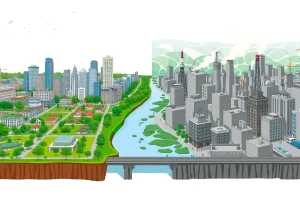
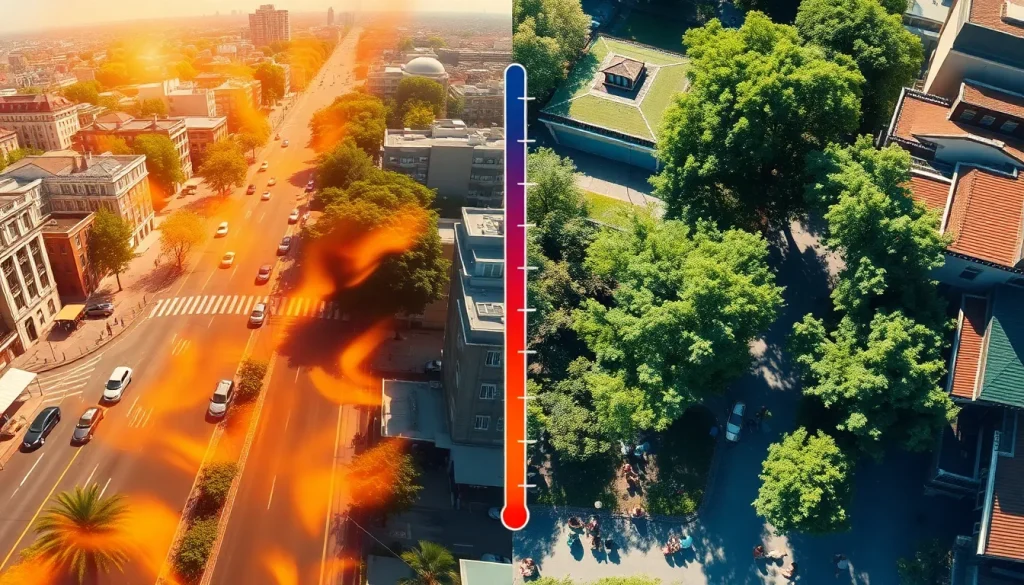
Urban areas experience higher temperatures than surrounding rural areas — a phenomenon known as the urban heat island (UHI) effect. This occurs because buildings, roads, and other infrastructure absorb and re-emit more heat than natural landscapes, and because human activities generate waste heat. UHI intensifies heatwaves, increases energy demand for cooling, worsens air quality, and poses health risks, particularly for vulnerable populations. Nature-based solutions aim to mitigate UHI by reintroducing vegetation and water into the built environment, leveraging natural processes like shading and evapotranspiration to cool the air and surfaces.
How the solution works
Nature-based solutions for urban heat work primarily through two mechanisms: shading and evapotranspiration. Trees and other vegetation intercept solar radiation, reducing the amount of heat absorbed by buildings and paved surfaces. Additionally, plants release water vapor through their leaves, which cools the surrounding air as the water evaporates. Green roofs and walls insulate buildings, reducing heat transfer into interiors and lowering the need for air conditioning. Urban water bodies like ponds, fountains, and wetlands also provide cooling through evaporation. The combined effect can reduce local air temperatures by 1–5°C, with surface temperature reductions often larger. The magnitude depends on factors such as vegetation type, soil moisture, and the spatial arrangement of green spaces.

Evidence strength
The evidence base for NbS cooling effects is robust, with hundreds of peer-reviewed studies, field measurements, and remote sensing analyses. Meta-analyses consistently show that urban parks are cooler than built-up areas, with an average park cool island effect of 0.5–2.5°C, and that green roofs can reduce roof surface temperatures by 15–45°C and indoor temperatures by 2–5°C. However, most studies are from temperate climates; evidence from arid and tropical cities is more limited. The cooling effect of individual street trees is well-documented, but the impact of large-scale networks is harder to quantify due to complex urban microclimates. Some claims about NbS reducing city-wide temperatures by several degrees are based on modeling rather than direct measurement. Overall, the evidence is strong for local cooling but moderate for city-scale effects.
Potential scale
Nature-based solutions can be applied at multiple scales: from individual buildings (green roofs, walls) to streets (tree planting, bioswales) to neighborhoods (parks, community gardens) and entire cities (green corridors, urban forests). The maximum cooling potential is limited by available space, water resources, and climate. In dense city centers, retrofitting with NbS is challenging but possible. Scaling up requires integrating NbS into urban planning, zoning, and infrastructure policies. While NbS alone cannot offset regional warming or extreme heatwaves, widespread adoption could reduce urban temperatures by 1–3°C on average, with localized cooling of up to 10°C in well-designed green spaces. The global potential is significant, as over two-thirds of the world’s population is projected to live in urban areas by 2050.
Cost considerations
Costs vary widely depending on the type and scale of intervention. Street tree planting can cost $100–$1,000 per tree, including planting and early maintenance. Green roofs cost $10–$30 per square foot installed, more than conventional roofs, but they can extend roof lifespan and reduce energy bills. Parks and green corridors involve land acquisition and ongoing maintenance. However, NbS often have lower life-cycle costs than grey infrastructure alternatives like air conditioning or reflective pavements, and they provide multiple benefits. Cost-effectiveness analyses show positive returns when co-benefits (health, stormwater, property values) are included. Funding can be a barrier, especially in low-income areas, but innovative financing mechanisms like green bonds and public-private partnerships are emerging.
Implementation time
Small-scale NbS like tree planting or green walls can be implemented in weeks to months. Larger projects like parks or restored waterways may take years from planning to completion. Cooling benefits from trees are gradual, increasing as canopies grow; significant shade can be achieved in 5–10 years for fast-growing species. Green roofs provide immediate insulation benefits upon installation. Policy and planning changes to mainstream NbS can take longer due to institutional inertia. Overall, NbS can deliver short-term local cooling while building long-term resilience.
Environmental benefits
Beyond cooling, NbS provide multiple environmental benefits: improved air quality through pollutant filtration, carbon sequestration (urban trees can store 0.5–2.0 kg C/m²/year), stormwater management by reducing runoff and filtering pollutants, habitat creation for urban wildlife, and noise reduction. They also mitigate the urban heat island effect, which can lower energy demand for cooling and reduce greenhouse gas emissions from power plants. However, the carbon sequestration potential of urban vegetation is modest compared to total urban emissions, and some NbS (like irrigated green roofs) may have a water footprint that needs consideration in water-scarce regions.
Social and economic co-benefits
NbS enhance urban livability: green spaces improve mental and physical health, increase property values (by 5–15% near parks), and provide recreational opportunities. They can reduce energy bills through shading and insulation. Urban greening can also create jobs in landscaping and maintenance. Socially, green spaces foster community interaction and can reduce crime. However, there is a risk of “green gentrification,” where greening projects increase property values and displace lower-income residents. Equitable planning and community engagement are essential to ensure benefits are shared.
Risks and unintended consequences
Poorly planned NbS can have negative effects: trees can damage infrastructure, produce allergens, or increase humidity in already humid climates. Green roofs may require structural reinforcement and leak management. In water-scarce areas, irrigation demands can strain resources. There is also a risk of “maladaptation” if NbS are used to justify continued high-emission development. Additionally, if not maintained, vegetation can die, negating benefits. The cooling effect of trees is localized; relying solely on NbS without addressing building materials and waste heat may yield limited results. Finally, the evidence for NbS reducing mortality during extreme heat events is still emerging and context-dependent.
Where it works best
NbS are most effective in temperate and tropical climates with sufficient rainfall or irrigation capacity. They work well in low- to medium-density urban areas where space for trees and green spaces is available. Cities with strong policy support, community engagement, and integrated urban planning see the best outcomes. Examples include Singapore (a “City in a Garden”), Melbourne’s urban forest strategy, and Copenhagen’s green roofs policy. NbS are also highly suitable for retrofitting existing neighborhoods, especially in areas with high heat vulnerability and low tree canopy cover.
Where it may not work
NbS may be less effective in arid or water-limited regions without sustainable irrigation. In very dense, high-rise urban cores, space constraints limit the scale of interventions, and the cooling effect may be minimal at street level. In cities with heavily polluted soils or air, vegetation may struggle to thrive. Also, in areas with strong winds or extreme weather, green roofs and trees may be damaged. NbS alone cannot counteract extreme heatwaves in cities with high humidity, where evaporative cooling is less efficient. In such contexts, NbS should be combined with other measures like reflective materials and shading structures.
Comparison with alternatives
Alternatives to NbS for urban heat mitigation include cool roofs (high-albedo materials), cool pavements, increased ventilation, and air conditioning. Cool roofs and pavements reflect more sunlight, reducing surface temperatures, but they do not provide the same co-benefits (e.g., stormwater management, biodiversity). Air conditioning provides immediate relief but increases energy consumption and outdoor heat. NbS are often more cost-effective over the long term and provide multiple ecosystem services. However, NbS require ongoing maintenance and may be slower to implement. A combination of NbS and reflective surfaces is often recommended for optimal urban cooling.
Case studies
1. Melbourne, Australia: The Urban Forest Strategy aims to increase tree canopy cover from 22% to 40% by 2040. Monitoring shows that streets with 30% canopy cover can be 2–4°C cooler than those with 10% cover. The program includes tree planting, water-sensitive urban design, and community engagement.
2. New York City, USA: The CoolRoofs program coats rooftops with reflective materials, but the city also invests in green infrastructure. The MillionTreesNYC initiative planted over one million trees, with studies showing local cooling of 0.5–2°C in shaded areas. Green roofs on buildings like the Javits Center have reduced roof temperatures by up to 30°C.
3. Medellín, Colombia: The Green Corridors project created 30 green corridors along roads and waterways, planting over 8,800 trees. Monitoring reported temperature reductions of 2–3°C along the corridors, and the project has been credited with improving air quality and biodiversity.
4. Singapore: The city-state integrates NbS at all scales, from green roofs and vertical gardens to large parks and water bodies. The Park Connector Network links green spaces, and the “City in a Garden” vision has helped moderate urban temperatures despite high density. Studies show green spaces can be 2–4°C cooler than built-up areas.
Final assessment
Nature-based solutions are a proven, cost-effective, and multifunctional approach to reducing urban heat. They are not a panacea: their effectiveness depends on climate, design, and scale, and they must be integrated with other strategies for maximum impact. For cities with adequate water and space, NbS should be a core component of heat adaptation plans, prioritized in vulnerable neighborhoods. The evidence strongly supports their local cooling benefits and co-benefits, though more research is needed on city-scale effects and performance in diverse climates. Policymakers should invest in NbS as part of a broader resilience strategy, ensuring equitable distribution and long-term maintenance.
FAQ
How much can urban trees reduce temperatures?
Urban trees can reduce local air temperatures by 1–5°C through shading and evapotranspiration. The exact reduction depends on tree species, canopy cover, soil moisture, and the surrounding built environment. Surface temperatures in shaded areas can be 10–25°C cooler than unshaded pavement.
Are green roofs worth the cost?
Green roofs have higher upfront costs than conventional roofs, but they can extend roof lifespan, reduce energy bills by 10–30%, and provide stormwater management and aesthetic benefits. Over their lifetime, they can be cost-effective, especially when multiple benefits are valued. Incentives and grants can improve the financial case.
Can nature-based solutions replace air conditioning?
No, nature-based solutions cannot fully replace air conditioning, especially during extreme heatwaves. They reduce the need for cooling and make outdoor spaces more comfortable, but mechanical cooling may still be necessary for indoor safety. NbS are best used in combination with energy-efficient cooling and building design.
References
- IPCC Sixth Assessment Report, Working Group II, Chapter 6: Cities, Settlements and Key Infrastructure
- U.S. Environmental Protection Agency, 'Heat Island Effect'
- Bowler, D. E., et al. (2010). 'Urban greening to cool towns and cities: A systematic review of the empirical evidence.' Landscape and Urban Planning.
- Santamouris, M. (2014). 'Cooling the cities – A review of reflective and green roof mitigation technologies to fight heat island and improve comfort in urban environments.' Solar Energy.
- World Bank (2021). 'Nature-Based Solutions for Urban Resilience.'