In brief
At a glance
Quick Facts
- Chemical class
- Per- and polyfluoroalkyl substances (PFAS)
- Number of compounds
- Estimated 5,000 to over 12,000
- Key property
- Extremely strong carbon-fluorine bonds resist degradation
- Common uses
- Non-stick coatings, waterproof textiles, firefighting foams, food packaging
- Environmental persistence
- Do not break down naturally; can remain for decades or longer
- Human exposure routes
- Drinking water, food, consumer products, dust
- Health effects (PFOA/PFOS)
- Linked to increased cholesterol, immune effects, some cancers
- Regulatory status
- PFOA and PFOS phased out in many countries; broader PFAS restrictions under consideration
Key Takeaways
- PFAS are a group of thousands of man-made chemicals valued for their resistance to heat, water, oil, and stains.
- The carbon-fluorine bond is one of the strongest in organic chemistry, making PFAS extremely persistent in the environment and in the human body.
- PFAS are found in a vast range of consumer products, industrial processes, and firefighting foams, leading to widespread contamination of water, soil, and food.
- Human exposure to certain PFAS has been linked to adverse health effects, including increased cholesterol, immune system suppression, and some cancers.
What Is PFAS Explained: Uses, Persistence and Environmental Risk?
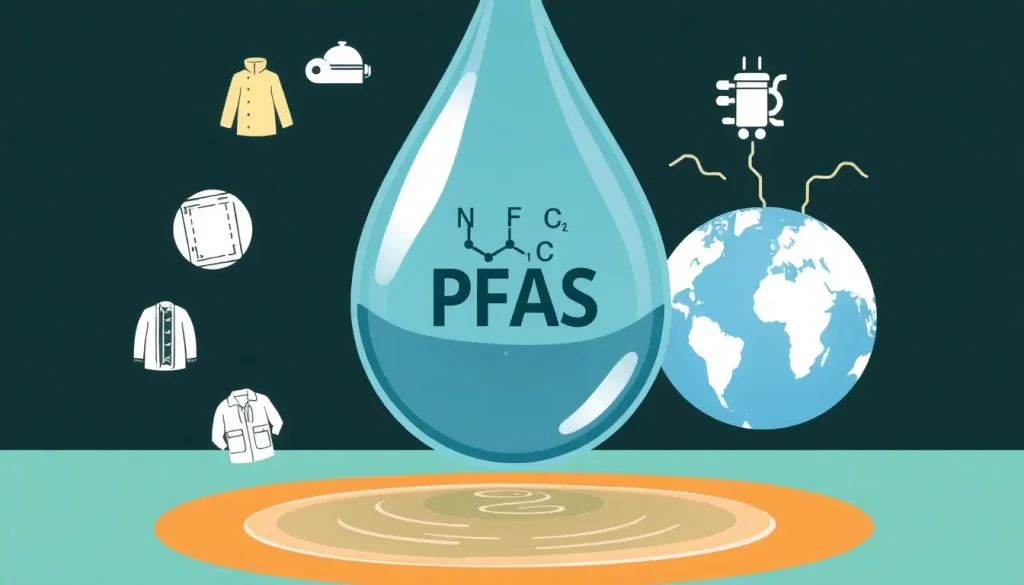
PFAS, or per- and polyfluoroalkyl substances, are a diverse family of thousands of synthetic chemicals that have been manufactured and used globally since the 1940s. Their defining feature is a chain of carbon atoms where most or all of the hydrogen atoms have been replaced by fluorine. This carbon-fluorine bond is one of the strongest in organic chemistry, giving PFAS their remarkable ability to repel water, oil, and stains, as well as to withstand high temperatures and chemical reactions. These properties have made PFAS indispensable in a wide range of industrial and consumer applications, from non-stick cookware and waterproof clothing to firefighting foams and semiconductor manufacturing.
However, the same chemical stability that makes PFAS so useful also makes them extraordinarily persistent in the environment. They do not break down under natural conditions, leading to their accumulation in soil, water, and living organisms over time. This persistence, combined with their mobility and potential for bioaccumulation, has raised serious concerns about long-term environmental contamination and human health risks. PFAS are now detected in the blood of people and animals worldwide, and in ecosystems from the Arctic to remote oceans, underscoring their global reach and the challenges of managing their legacy.
Overview
PFAS encompass a vast and growing list of compounds, with estimates ranging from 5,000 to over 12,000 individual substances. They are broadly categorized into two groups: perfluoroalkyl substances, where all carbon-hydrogen bonds on the alkyl chain are replaced by carbon-fluorine bonds, and polyfluoroalkyl substances, where at least one carbon-hydrogen bond remains. The most studied and historically most produced PFAS are perfluorooctanoic acid (PFOA) and perfluorooctane sulfonic acid (PFOS). These long-chain compounds are particularly persistent and bioaccumulative, leading to their phase-out in many countries. However, they have been replaced by a new generation of shorter-chain PFAS and other fluorinated alternatives, which, while less bioaccumulative, are still highly persistent and may pose their own risks.
PFAS are not a single chemical but a class with varying properties. Their common feature is the fluorinated carbon tail, which can be of different lengths and attached to various functional groups (e.g., carboxylic acid, sulfonic acid, alcohol). This structural diversity means that PFAS can be found as polymers (like PTFE, better known as Teflon), as side-chain fluorinated polymers used in textile treatments, or as non-polymeric surfactants in firefighting foams. The sheer number and variety of PFAS make comprehensive assessment and regulation extremely challenging.
How PFAS Work
The exceptional performance of PFAS stems from the unique properties of the carbon-fluorine bond. Fluorine is the most electronegative element, and when bonded to carbon, it creates a very short, strong bond with high bond dissociation energy. This bond is resistant to heat, acids, bases, oxidation, and microbial degradation. The fluorine atoms also create a dense, non-stick sheath around the carbon backbone, lowering the surface energy of the molecule. This is why PFAS coatings repel water and oil so effectively: liquids cannot spread or adhere to the treated surface.
In firefighting foams, PFAS surfactants reduce the surface tension of water, allowing the foam to spread rapidly and form a film that smothers flammable liquid fires. In industrial applications, PFAS serve as processing aids, emulsifiers, and surface treatments. Their thermal stability makes them suitable for high-temperature manufacturing. However, these same properties mean that once released into the environment, PFAS resist natural breakdown processes. They can travel long distances through water and air, and some can accumulate in the bodies of animals and humans, binding to proteins in blood and tissues rather than partitioning into fat like many other persistent organic pollutants.
Environmental and Human Impacts
PFAS contamination is widespread in water sources near industrial sites, military bases, airports, and areas where firefighting foams have been used. They leach from landfills, enter wastewater treatment plants (which are not designed to remove them), and can contaminate agricultural land through the application of biosolids. Once in groundwater, PFAS can persist for decades and migrate long distances. In the environment, PFAS can be taken up by plants and accumulate in animals, leading to biomagnification in food chains for some compounds, particularly PFOS.
Human exposure occurs primarily through ingestion of contaminated drinking water and food, as well as through use of consumer products containing PFAS. Certain PFAS can accumulate in the human body, with half-lives of several years. Epidemiological studies have associated exposure to PFOA and PFOS with a range of health effects, including increased cholesterol levels, changes in liver enzymes, decreased vaccine response in children, increased risk of high blood pressure or pre-eclampsia in pregnant women, and increased risk of kidney and testicular cancer. The full health implications of the many other PFAS compounds remain largely unknown, but concern is growing that the entire class may pose similar risks.
What the Evidence Shows
Scientific understanding of PFAS has evolved significantly since the early 2000s, when biomonitoring studies first revealed their global presence in human blood. The evidence for health effects is strongest for PFOA and PFOS, based on large epidemiological studies of exposed communities, such as those living near manufacturing plants in the Ohio River Valley. These studies have consistently found associations with increased cholesterol, thyroid disease, and certain cancers. Animal toxicology studies support these findings and have also shown effects on the liver, immune system, and development.
For newer, shorter-chain PFAS, the evidence base is less developed. While they are generally less bioaccumulative and have shorter half-lives in humans, they are still extremely persistent in the environment. Some studies suggest they may have similar toxicological profiles to the legacy long-chain compounds, but at different exposure levels. Regulatory agencies around the world are grappling with how to assess the risks of PFAS as a class, given the impracticality of evaluating thousands of individual substances one by one. The European Chemicals Agency and the U.S. Environmental Protection Agency have both moved toward regulating PFAS as a group, reflecting a precautionary approach based on their persistence and potential for harm.
Solutions and Mitigation
Addressing PFAS contamination requires a multi-pronged approach: source reduction, remediation of contaminated sites, and development of safer alternatives. Source reduction involves phasing out the use of PFAS in non-essential applications and controlling industrial releases. Many manufacturers have voluntarily phased out long-chain PFAS, but the shift to short-chain and other fluorinated alternatives has not eliminated environmental persistence. True solutions require moving away from fluorinated chemistry altogether for most uses, which is technically feasible for many consumer products but challenging for some industrial applications.
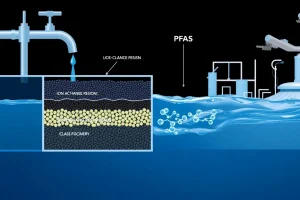
Remediation of contaminated water and soil is complex and costly. Technologies such as granular activated carbon, ion exchange, and high-pressure membrane filtration can remove PFAS from drinking water, but they generate PFAS-laden waste that must be treated or disposed of safely. Destruction of PFAS requires high-temperature incineration or advanced chemical processes, which are energy-intensive and not yet widely deployed. For individuals, point-of-use water filters certified for PFAS reduction can provide a measure of protection, but they are not a substitute for systemic solutions.
Common Misconceptions
Misconception: PFAS are only found in non-stick cookware. While PTFE (Teflon) is a well-known PFAS, the chemicals are used in hundreds of products, including waterproof clothing, food packaging, cosmetics, dental floss, and firefighting foams. The most significant exposure for most people is through contaminated drinking water, not cookware.
Misconception: PFAS-free labels mean a product is completely free of all PFAS. There is no universal definition of ‘PFAS-free,’ and some products labeled as such may still contain other fluorinated compounds not covered by the specific certification. Additionally, PFAS can be present as unintended contaminants in raw materials or manufacturing processes.
Misconception: Short-chain PFAS are safe because they don’t accumulate in the body. While short-chain PFAS are less bioaccumulative, they are still highly persistent in the environment and can contaminate water sources. Their health effects are less studied, but some evidence suggests they may have similar toxicities. Persistence alone is a concern because it leads to long-term, widespread exposure.
FAQ
What are PFAS?
PFAS are a large group of man-made chemicals that have been used since the 1940s in a wide variety of consumer and industrial products for their water-, grease-, and stain-resistant properties.
Why are PFAS called 'forever chemicals'?
They are called 'forever chemicals' because their strong carbon-fluorine bonds make them extremely resistant to breaking down in the environment, leading to long-term persistence and accumulation.
How can I reduce my exposure to PFAS?
You can reduce exposure by using a water filter certified to remove PFAS, avoiding non-stick cookware and stain-resistant treatments, and checking product labels for PFAS-free certifications, though no method eliminates all exposure.
References
- U.S. Environmental Protection Agency. PFAS Explained. https://www.epa.gov/pfas/pfas-explained
- Agency for Toxic Substances and Disease Registry (ATSDR). Toxicological Profile for Perfluoroalkyls. https://www.atsdr.cdc.gov/toxprofiles/tp200.pdf
- European Chemicals Agency (ECHA). Per- and polyfluoroalkyl substances (PFAS). https://echa.europa.eu/hot-topics/perfluoroalkyl-chemicals-pfas