In brief
At a glance
Quick Facts
- Mangrove storm surge reduction
- Mangroves can reduce storm surge height by 10–50% per kilometer of forest width.
- Blue carbon storage rate
- Seagrass meadows can store carbon up to 35 times faster than tropical rainforests.
- Coral reef wave energy dissipation
- Healthy coral reefs can dissipate up to 97% of wave energy before it reaches the shore.
- Global mangrove carbon stock
- Mangroves store an estimated 6.4 billion metric tons of carbon in their biomass and soils globally.
- Salt marsh vertical accretion
- Salt marshes can accrete vertically at rates of 2–10 mm per year, potentially keeping pace with moderate sea-level rise.
- Economic value of coastal protection
- Coral reefs provide an estimated $6 billion annually in flood protection benefits worldwide.
- Area coverage vs. carbon significance
- Coastal ecosystems cover less than 2% of ocean area but account for approximately 50% of carbon burial in marine sediments.
- Restoration cost-effectiveness
- Mangrove restoration for coastal defense can be 2–5 times cheaper than building and maintaining breakwaters.
Key Takeaways
- Coastal ecosystems—mangroves, salt marshes, seagrass beds, and coral reefs—provide natural protection against storm surges, waves, and coastal erosion, reducing risks to lives and property.
- These habitats sequester and store large amounts of carbon (blue carbon) in their soils and biomass, helping to mitigate climate change.
- Natural coastal defenses are often more cost-effective and self-sustaining than hard infrastructure, while delivering additional benefits such as fisheries support, water purification, and biodiversity conservation.
- Their effectiveness depends on ecosystem health, local conditions, and the magnitude of hazards; they are not a standalone solution but a critical part of integrated coastal zone management.
What Is Coastal Ecosystems as Natural Climate Defenses?
Coastal ecosystems as natural climate defenses refer to the use of existing or restored coastal habitats to reduce the impacts of climate-related hazards and enhance resilience. These ecosystems—including mangrove forests, tidal salt marshes, seagrass meadows, and coral reefs—function as living barriers that absorb wave energy, stabilize sediments, and buffer shorelines against erosion and flooding. Unlike hard engineered structures such as seawalls or breakwaters, these natural systems are dynamic, self-repairing, and provide a wide range of ecological and social co-benefits.
The concept integrates two key climate roles: adaptation and mitigation. As adaptation measures, coastal ecosystems shield communities from sea-level rise, storm surges, and extreme weather events. As mitigation tools, they capture and store atmospheric carbon dioxide in their biomass and sediments, often at rates far exceeding those of terrestrial forests. This dual function makes them a cornerstone of nature-based solutions for climate change, recognized in international frameworks such as the Paris Agreement and the Sendai Framework for Disaster Risk Reduction.
Overview
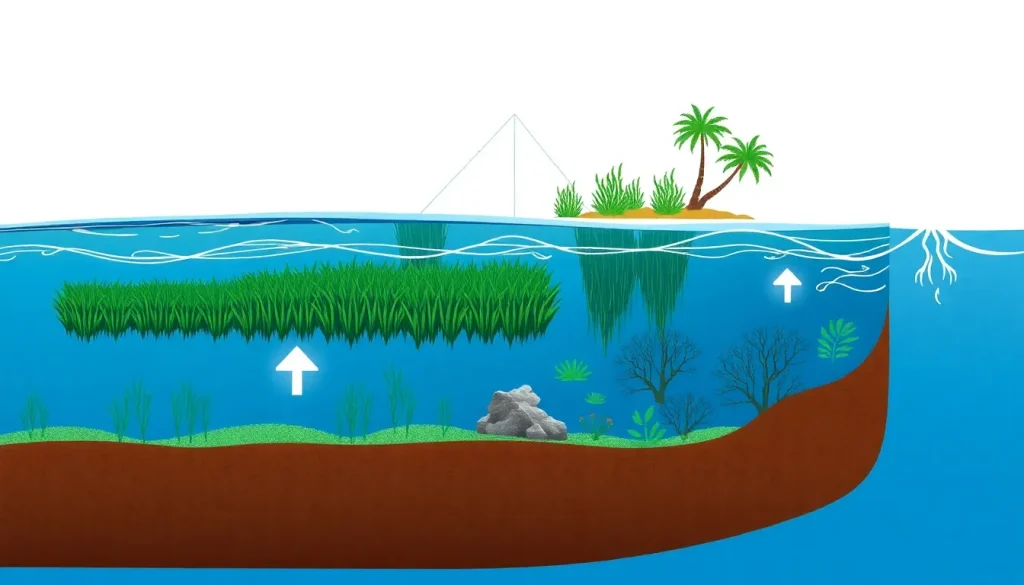
Coastal ecosystems occupy the interface between land and sea, covering less than 2% of the ocean area yet providing disproportionately high ecological and economic value. Mangroves thrive in tropical and subtropical intertidal zones, characterized by dense root systems that trap sediment and dissipate wave energy. Salt marshes, found in temperate and high-latitude estuaries, are dominated by grasses and herbs that bind soil and attenuate waves. Seagrass meadows grow in shallow, sheltered coastal waters, stabilizing seabeds and filtering water. Coral reefs, built by calcium-carbonate-secreting organisms, form massive structures that break waves offshore, protecting coastlines from erosion and storm damage.
These ecosystems are increasingly threatened by human activities such as coastal development, pollution, and overfishing, as well as by climate change itself. Their degradation not only releases stored carbon but also diminishes their protective capacity, leaving coastlines more vulnerable. Recognizing their value has spurred global efforts to conserve, restore, and sustainably manage these natural defenses as part of broader climate adaptation and mitigation strategies.
How It Works
Coastal ecosystems provide climate defense through several physical and biological processes. Vegetated habitats like mangroves and salt marshes reduce wave height and energy by creating drag; their dense stems, leaves, and aerial roots act as a porous barrier that dissipates wave force before it reaches the shore. During storm surges, these ecosystems can lower water levels and reduce inland flooding by slowing the flow of water and storing it temporarily within their complex structure. Coral reefs function as submerged breakwaters, breaking waves offshore and reducing the energy that reaches the coastline by up to 97% in some settings.
Sediment stabilization is another key mechanism. The roots of mangroves and salt marsh plants bind soil and promote sediment accretion, allowing these ecosystems to build elevation over time. This vertical growth can help keep pace with moderate sea-level rise, maintaining the ecosystem’s protective function. Seagrass meadows trap and stabilize sediments with their rhizomes, reducing turbidity and preventing coastal erosion. Together, these processes create a resilient, living buffer that adapts to changing conditions, unlike static hard infrastructure.
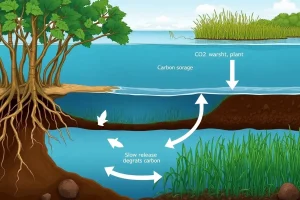
In terms of climate mitigation, coastal ecosystems sequester carbon through photosynthesis and store it in their biomass and, more importantly, in their waterlogged, oxygen-poor soils. In these anaerobic conditions, organic matter decomposes very slowly, leading to carbon accumulation over millennia. This “blue carbon” can be stored for centuries to millennia, making these ecosystems among the most efficient natural carbon sinks on Earth.
Importance and Impact
The protective services of coastal ecosystems have direct and measurable impacts on human safety and economic well-being. Studies indicate that mangroves can reduce storm surge heights by 10–50% per kilometer of forest width, significantly lowering flood risk for coastal communities. Salt marshes and seagrass beds similarly attenuate waves and stabilize shorelines, reducing erosion and the need for costly beach nourishment or infrastructure repair. Coral reefs dissipate wave energy, protecting tropical coastlines from erosion and inundation; the loss of just one meter of reef height can substantially increase wave energy reaching the shore.
Beyond physical protection, these ecosystems support fisheries, tourism, and recreation, contributing billions of dollars annually to local and national economies. They also improve water quality by filtering pollutants and trapping sediments, and provide critical habitat for numerous species, including commercially important fish and endangered wildlife. The carbon stored in coastal ecosystems—often referred to as blue carbon—represents a globally significant carbon pool. Degradation of these habitats releases stored carbon back into the atmosphere, contributing to greenhouse gas emissions. Thus, conserving and restoring them is both an adaptation and a mitigation priority.
Benefits, Limitations and Trade-offs
Coastal ecosystems offer multiple advantages over traditional hard infrastructure. They are self-maintaining, can adapt to changing conditions, and provide a range of co-benefits such as biodiversity support, water purification, and recreational opportunities. They are often more cost-effective in the long term, especially when considering the additional ecosystem services they deliver. Restoration projects can also create jobs and enhance local livelihoods, particularly in developing regions where communities depend heavily on coastal resources.
However, natural defenses have limitations. Their protective capacity is finite; extreme events can overwhelm even healthy ecosystems. For example, a very powerful storm surge may exceed the wave attenuation capacity of a mangrove belt, or a severe bleaching event can kill a coral reef, eliminating its protective function. These ecosystems also require space—often in areas with competing land uses such as agriculture, aquaculture, or urban development. Restoration success is not guaranteed and depends on site conditions, species selection, and ongoing management. Additionally, the carbon sequestration potential of coastal ecosystems, while significant, is not sufficient alone to offset global emissions; it must be part of a broader mitigation portfolio.
Examples
Mangroves in the Sundarbans, Bangladesh and India: The Sundarbans, the world’s largest mangrove forest, provides a natural barrier against cyclones and storm surges for millions of people in the Bay of Bengal. During Cyclone Sidr in 2007, areas with intact mangroves experienced less damage than those where mangroves had been cleared. The dense root systems reduce wave energy and trap sediment, helping the coastline keep pace with sea-level rise.
Salt Marshes in the Chesapeake Bay, USA: Extensive salt marsh restoration projects in the Chesapeake Bay have demonstrated how these habitats reduce erosion and improve water quality. Living shorelines that combine marsh plantings with low-profile structures have proven effective in stabilizing banks while providing habitat for fish and crabs.
Coral Reefs in the Caribbean and Pacific: Healthy coral reefs across the Caribbean and Indo-Pacific act as natural breakwaters, protecting low-lying islands and coastal communities. In places like Belize, the Mesoamerican Reef reduces wave energy and supports tourism and fisheries. Reef restoration efforts, including coral gardening and artificial structures, aim to restore this protective function after bleaching events.
Seagrass Meadows in the Mediterranean: Posidonia oceanica meadows in the Mediterranean Sea stabilize sediments, reduce coastal erosion, and store significant amounts of carbon in their matte (root and sediment structure). These meadows also support fisheries and maintain water clarity, benefiting tourism. Their decline due to anchoring, pollution, and warming waters has prompted conservation and restoration initiatives.
FAQ
What are coastal ecosystems as natural climate defenses?
They are habitats like mangroves, salt marshes, seagrass meadows, and coral reefs that protect coastlines from storms, erosion, and sea-level rise while also storing carbon. They act as living barriers that reduce wave energy and stabilize shorelines.
How do coastal ecosystems protect against climate change?
They reduce the physical impacts of climate hazards by absorbing wave energy, trapping sediments, and buffering storm surges. At the same time, they capture and store carbon dioxide from the atmosphere in their biomass and soils, helping to slow global warming.
Why do coastal ecosystems matter for climate adaptation?
They provide cost-effective, self-sustaining protection for millions of people living in coastal areas, reduce disaster risk, and support livelihoods. Their conservation and restoration are essential strategies for building resilience to climate change, especially in low-lying regions.
References
- IPCC Special Report on the Ocean and Cryosphere in a Changing Climate (2019), Chapter 5: Changing Ocean, Marine Ecosystems, and Dependent Communities.
- UNEP (2020). Blue Carbon: The Role of Healthy Oceans in Binding Carbon. United Nations Environment Programme.
- NOAA Coastal Blue Carbon. National Oceanic and Atmospheric Administration, U.S. Department of Commerce.