In brief
At a glance
Quick Facts
- Definition
- A global goal to halt and reverse nature loss by 2030, measured from a 2020 baseline, with full recovery by 2050.
- Baseline Year
- 2020 is used as the reference point for measuring net positive outcomes.
- Key Components
- Zero net loss of nature from 2020, net positive by 2030, and full recovery by 2050.
- Analogous Concept
- Similar to 'net zero' for climate, but focused on biodiversity and ecosystems.
- Mitigation Hierarchy
- Avoid, reduce, restore, and transform are the core steps to achieve nature-positive outcomes.
- Global Framework
- Aligned with the Kunming-Montreal Global Biodiversity Framework (GBF) adopted in 2022.
- Business Relevance
- Companies are increasingly expected to assess and disclose nature-related risks and impacts, e.g., through the Taskforce on Nature-related Financial Disclosures (TNFD).
- Measurement
- Progress is tracked using indicators like species population trends, ecosystem extent and condition, and extinction risk.
Key Takeaways
- Nature positive is a measurable global goal to halt and reverse biodiversity loss by 2030, using 2020 as a baseline, and achieve full ecosystem recovery by 2050.
- It functions as the nature equivalent of the “net zero” climate target, providing a clear, time-bound framework for action across all sectors of society.
- The core strategy follows a mitigation hierarchy: avoid negative impacts, reduce unavoidable harm, restore degraded ecosystems, and transform underlying systems to be nature-positive.
- Success requires standardized metrics, robust monitoring, and collective effort from governments, businesses, and individuals to integrate nature into decision-making and economic models.
What Is Nature Positive?
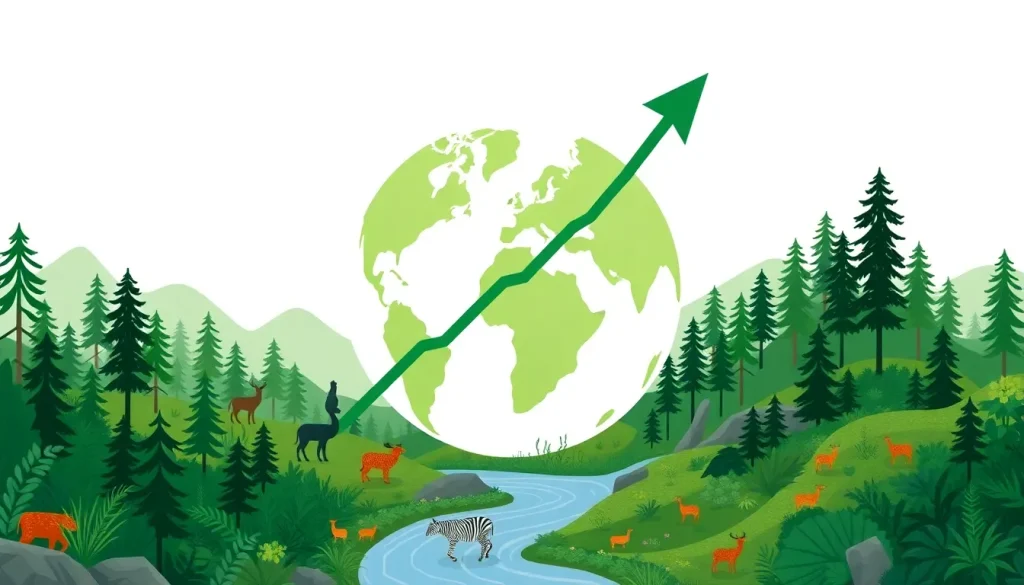
Nature positive is a global societal goal to halt and reverse the loss of biodiversity and ecosystem health by 2030, measured against a 2020 baseline, and to achieve full recovery of nature by 2050. It means ensuring that the overall state of nature—encompassing the variety of life, the extent and condition of ecosystems, and the functioning of natural processes—is better in 2030 than it was in 2020, and continues to improve thereafter. The concept was developed to provide a clear, measurable, and time-bound target for nature, analogous to the “net zero” goal for climate change, which aims to balance greenhouse gas emissions with removals. By setting a definitive direction, nature positive moves beyond simply slowing degradation and instead demands a net gain in the health and abundance of the natural world.
The term is not merely a scientific metric but a rallying call for transformative change. It is championed by a coalition of organizations under the Nature Positive Initiative and aligns with the Kunming-Montreal Global Biodiversity Framework (GBF) adopted under the United Nations Convention on Biological Diversity. The GBF sets out 23 action-oriented targets for 2030, including protecting 30% of land and sea, restoring 30% of degraded ecosystems, and halving the introduction of invasive species. Nature positive synthesizes these ambitions into a single, overarching outcome: a world where nature is visibly and measurably on the path to recovery. It applies to all sectors—governments, businesses, financial institutions, and civil society—and emphasizes that human well-being and economic prosperity depend on a thriving natural foundation.
Overview
The nature positive goal is structured around three measurable temporal milestones. The first is zero net loss of nature from 2020, meaning that any further decline in biodiversity or ecosystem integrity must be halted immediately. The second is net positive by 2030, requiring that actions taken result in a measurable improvement in the state of nature compared to the 2020 baseline. The third is full recovery by 2050, where ecosystems are restored to a healthy, resilient state capable of supporting future generations. These milestones are designed to be tracked using a suite of indicators, such as the Living Planet Index, the Red List Index, and metrics for ecosystem extent and condition, ensuring accountability and transparency.

Unlike previous conservation targets that often focused on protected areas or single species, nature positive is holistic. It encompasses all components of nature—from genes and species to entire landscapes and seascapes—and recognizes the interconnectedness of biodiversity, climate, and human development. The goal is not to return to a pristine, pre-human state but to achieve a resilient, functioning natural system that can sustain both wildlife and human societies. This requires integrating nature into economic and financial decision-making, transforming production and consumption patterns, and mobilizing resources at an unprecedented scale. The concept has rapidly gained traction as a guiding principle for policy, corporate strategy, and investment, reflecting a growing consensus that nature loss poses systemic risks to global stability.
How It Works
Achieving a nature-positive outcome relies on applying the mitigation hierarchy, a sequential framework that prioritizes actions to address impacts on nature. The steps are:
- Avoid: Prevent negative impacts on biodiversity and ecosystems entirely, for example by siting infrastructure away from critical habitats.
- Reduce: Minimize the duration, intensity, and extent of any unavoidable impacts, such as by using less harmful construction methods or reducing pollution.
- Restore: Rehabilitate degraded ecosystems on-site or nearby to compensate for residual damage, like replanting native vegetation or restoring wetlands.
- Transform: Address the root causes of nature loss by changing underlying systems—shifting to sustainable agriculture, circular economies, and nature-inclusive urban planning.
This hierarchy ensures that offsetting or compensation is a last resort, used only after all reasonable efforts to avoid and reduce harm have been exhausted. The goal is to achieve a net gain in biodiversity and ecosystem health, not merely to trade off losses in one place for gains elsewhere. Measurement is critical: organizations and countries must establish a 2020 baseline for key indicators, set science-based targets, and regularly report on progress. Standardized metrics are being developed by initiatives such as the Science Based Targets Network (SBTN) and the Taskforce on Nature-related Financial Disclosures (TNFD) to enable consistent, comparable assessments. The process also requires landscape-level planning to ensure that local actions contribute to global outcomes, avoiding fragmented or counterproductive efforts.
Importance and Impact
Nature positive matters because the decline of biodiversity and ecosystem services poses a direct threat to human survival and prosperity. Over half of global GDP—an estimated $44 trillion—is moderately or highly dependent on nature, according to the World Economic Forum. Pollination, water purification, climate regulation, soil fertility, and disease control are all services provided by healthy ecosystems. When nature degrades, these services falter, leading to food insecurity, water scarcity, increased disaster risk, and economic instability. The nature positive goal provides a unifying framework to reverse this trajectory, aligning global efforts behind a common, measurable outcome.
Beyond risk mitigation, nature positive offers significant opportunities. Restoring ecosystems can create jobs, enhance resilience to climate change, and open new markets for sustainable products and services. It also supports the achievement of the United Nations Sustainable Development Goals (SDGs), particularly those related to poverty, health, water, and climate. By making nature’s value visible in economic and policy decisions, the nature positive concept helps shift the global economy toward a model that regenerates rather than depletes natural capital. Its impact is already being felt in the financial sector, where investors and lenders are increasingly screening for nature-related risks and seeking nature-positive investment opportunities.
Common Misconceptions
One frequent misunderstanding is that nature positive is solely about conservation—setting aside land and protecting species. In reality, it encompasses restoration, sustainable use, and the transformation of economic systems. It is not a call to halt all development but to redesign it so that human activities contribute to nature’s recovery. Another misconception is that nature positive can be achieved through offsetting alone. While restoration and compensation play a role, the mitigation hierarchy demands that avoidance and reduction come first; offsetting is only acceptable for residual, unavoidable impacts and must deliver genuine, additional, and lasting gains.
Some also confuse nature positive with net zero, assuming that achieving one automatically delivers the other. Although climate and nature are deeply intertwined, they are distinct goals. A net-zero pathway that relies heavily on monoculture tree plantations, for example, could harm biodiversity. Nature positive requires explicit attention to species, ecosystems, and genetic diversity. Finally, there is a misconception that nature positive is a single, simple metric. In practice, it is a multidimensional goal tracked through a dashboard of indicators, reflecting the complexity of nature itself. No single number can capture the state of all biodiversity, so a suite of metrics is necessary to assess progress.
What Businesses and Governments Can Do
For businesses, the journey toward nature positive begins with assessing and disclosing their dependencies and impacts on nature. Frameworks like the TNFD provide guidance on identifying nature-related risks and opportunities across operations and supply chains. Companies can then set science-based targets for nature, using the SBTN’s methods to align with the global goal. Practical actions include adopting sustainable sourcing practices, investing in regenerative agriculture, reducing pollution and waste, and restoring habitats on corporate land. Integrating nature into corporate governance and strategy—for example, by linking executive compensation to nature-related metrics—can drive meaningful change. Collaboration across sectors and value chains is essential, as no single organization can achieve nature positive alone.
Governments play a foundational role by establishing the policy and regulatory environment that enables nature-positive outcomes. This includes implementing the Kunming-Montreal Global Biodiversity Framework through national biodiversity strategies and action plans, expanding protected area networks, and enforcing environmental laws. Fiscal policies, such as reforming harmful subsidies and creating incentives for nature-based solutions, can redirect financial flows away from activities that degrade nature. Governments can also invest in natural capital accounting, spatial planning, and monitoring systems to track progress. International cooperation and financing are critical to support developing countries in meeting their targets. By embedding nature positive into national development plans, governments can ensure that economic growth and nature recovery go hand in hand.
Connections to Other Systems
Nature positive is intrinsically linked to climate action. Healthy ecosystems such as forests, peatlands, and oceans are vital carbon sinks, absorbing roughly half of human-caused carbon dioxide emissions annually. Conversely, climate change accelerates biodiversity loss through rising temperatures, extreme weather, and habitat shifts. Nature-based solutions—actions that protect, manage, and restore ecosystems—address both crises simultaneously, offering cost-effective ways to mitigate climate change while enhancing biodiversity. The nature positive and net zero agendas are therefore complementary; neither can succeed without the other.
The concept also connects to the circular economy, which aims to eliminate waste and keep materials in use. By reducing resource extraction and pollution, circular models lessen pressure on ecosystems. Similarly, nature positive aligns with human health objectives: access to green spaces improves mental and physical well-being, while intact ecosystems reduce the risk of zoonotic disease emergence. In agriculture, nature-positive practices such as agroecology and regenerative farming enhance soil health, water retention, and crop resilience, supporting food security. These interconnections underscore that nature positive is not a standalone environmental target but a cross-cutting principle that underpins sustainable development across all sectors.
FAQ
What is nature positive?
Nature positive is a global goal to halt and reverse nature loss by 2030, ensuring that the state of nature is better in 2030 than it was in 2020, with full recovery by 2050.
How does nature positive work?
It works by setting a measurable target for nature, similar to net zero for climate. Governments, businesses, and organizations use the mitigation hierarchy—avoid, reduce, restore, and transform—to minimize negative impacts and increase positive actions, with progress tracked through biodiversity indicators.
Why does nature positive matter?
Nature positive matters because biodiversity loss threatens ecosystem services essential for human survival, such as food, water, and climate regulation. Achieving nature positive is critical for sustainable development, economic stability, and the health of the planet.
References
- Locke, H., et al. (2021). A Nature-Positive World: The Global Goal for Nature.
- Nature Positive Initiative. The Nature Positive Goal. https://www.naturepositive.org/
- Convention on Biological Diversity. Kunming-Montreal Global Biodiversity Framework. 2022.
- Taskforce on Nature-related Financial Disclosures (TNFD). Final Recommendations. 2023.