In brief
At a glance
Quick Facts
- Composition
- Soil organic carbon makes up about 58% of soil organic matter by weight.
- Global carbon pool
- Soils store more carbon than the atmosphere and all terrestrial vegetation combined.
- Key functions
- SOC improves soil structure, water retention, nutrient cycling, and supports biodiversity.
- Depletion risk
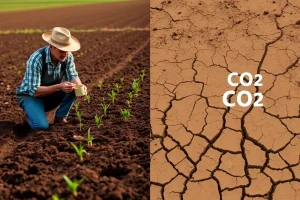
- Intensive agriculture and deforestation can deplete SOC, releasing CO2 into the atmosphere.
- Sequestration potential
- Sustainable land management can sequester significant amounts of atmospheric carbon in soils.
- Stabilization
- Mineral-associated organic carbon can persist in soils for centuries to millennia.
- Measurement
- SOC is typically measured as a concentration (g/kg) or stock (tons per hectare) in the topsoil.
- Climate feedback
- Warming can accelerate SOC decomposition, creating a positive feedback loop that exacerbates climate change.
Key Takeaways
- Soil organic carbon (SOC) is the carbon stored in soil organic matter, derived from decomposed plant and animal materials and microbial byproducts.
- SOC is a critical indicator of soil health, influencing water retention, nutrient cycling, and soil structure.
- Soils are the largest terrestrial carbon pool, and managing SOC can help mitigate climate change by sequestering atmospheric carbon dioxide.
- Human activities such as agriculture and deforestation can deplete SOC, but sustainable practices can restore and enhance it.
What Is Soil Organic Carbon?
Soil organic carbon (SOC) is the carbon component of soil organic matter (SOM). SOM encompasses all organic materials in the soil, including living organisms (microbes, earthworms), fresh plant and animal residues at various stages of decomposition, and highly decomposed, stable organic compounds known as humus. SOC typically makes up about 58% of SOM by weight, with the remainder consisting of other elements such as hydrogen, oxygen, nitrogen, and phosphorus. In essence, SOC is the measurable carbon that drives many of the biological, chemical, and physical processes in soil.
SOC exists in several forms that differ in their stability and function. Particulate organic carbon (POC) consists of relatively fresh, undecomposed fragments of plant and animal tissue; it is readily broken down by microorganisms and serves as a short-term nutrient source. Mineral-associated organic carbon (MAOC) is chemically bound to clay and silt particles, making it more resistant to decomposition and capable of persisting for centuries to millennia. Dissolved organic carbon (DOC) is the water-soluble fraction that moves through the soil profile and can be leached into groundwater or surface waters. The balance among these forms determines a soil’s capacity to store carbon, supply nutrients, and support plant growth. SOC is a key component of the global carbon cycle, linking the atmosphere, biosphere, and geosphere through the continuous exchange of carbon dioxide (CO2) and organic compounds.
How It Works
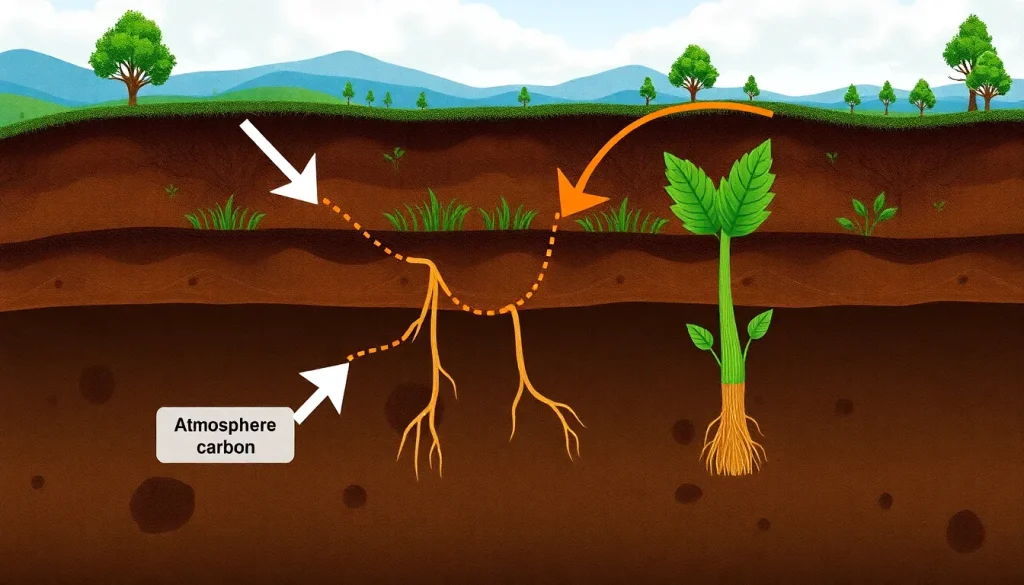
The dynamics of soil organic carbon are governed by a balance between inputs and outputs. Inputs originate primarily from photosynthesis: plants fix atmospheric CO2 into biomass, which enters the soil as leaf litter, dead roots, root exudates, and crop residues. Soil organisms—bacteria, fungi, protozoa, nematodes, and earthworms—decompose this organic material, breaking down complex molecules and releasing CO2 back to the atmosphere through respiration. A portion of the carbon is assimilated into microbial biomass, while the rest is either mineralized or transformed into more stable organic compounds.
Stabilization mechanisms protect SOC from rapid decomposition. Physical protection occurs when organic matter is trapped inside soil aggregates—clusters of soil particles bound together by fungal hyphae, roots, and microbial secretions—limiting microbial access. Chemical stabilization involves the adsorption of organic molecules onto mineral surfaces, particularly clay and iron oxides, forming MAOC. These processes can keep carbon locked in the soil for decades to millennia. The rate of decomposition and stabilization depends on factors such as temperature, moisture, soil texture, and land management. When inputs exceed outputs, SOC accumulates; when outputs exceed inputs, SOC declines. This dynamic equilibrium means that SOC levels can be managed through practices that either increase organic inputs or reduce decomposition rates.
Importance and Impact
SOC is a master variable for soil health. It improves soil structure by promoting the formation of stable aggregates, which enhance porosity and aeration. This, in turn, increases water infiltration and retention, reducing runoff and erosion while making more water available to plants. SOC also serves as a reservoir of nutrients: as organic matter decomposes, nitrogen, phosphorus, and sulfur are slowly released in plant-available forms, reducing the need for synthetic fertilizers. The dark color of organic-rich soils absorbs more solar radiation, warming the soil in spring and extending the growing season in temperate regions.
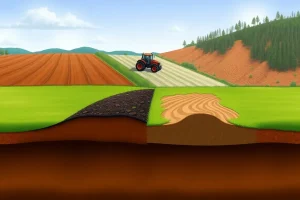
Beyond the field, SOC has profound implications for the global climate. Soils hold an estimated 1,500–2,400 gigatons of carbon in the top meter, more than the atmosphere and terrestrial vegetation combined. Small changes in this vast pool can significantly affect atmospheric CO2 concentrations. When SOC is lost through deforestation, intensive tillage, or erosion, the carbon oxidizes and enters the atmosphere as CO2, contributing to climate change. Conversely, building SOC through regenerative practices can sequester carbon, offsetting a portion of anthropogenic emissions. Thus, SOC management is a key strategy in climate change mitigation and adaptation.
Environmental and Human Impacts
The environmental benefits of SOC extend to water quality and biodiversity. Soils rich in organic carbon act as a sponge, filtering pollutants and reducing the leaching of nitrates and pesticides into groundwater. By stabilizing soil aggregates, SOC minimizes erosion, which protects waterways from sedimentation and preserves fertile topsoil. Below ground, SOC fuels a complex food web: a single gram of healthy soil can contain billions of bacteria, kilometers of fungal hyphae, and countless other organisms that drive nutrient cycling and suppress plant diseases.
For human societies, SOC is directly linked to food security. Degraded soils with low SOC have reduced water-holding capacity and nutrient availability, leading to lower crop yields and greater vulnerability to drought. In many regions, soil degradation exacerbates poverty and malnutrition. Climate change amplifies these risks: rising temperatures can accelerate SOC decomposition, creating a positive feedback loop that releases more CO2 and further warms the planet. Maintaining and restoring SOC is therefore not only an environmental imperative but also a foundation for resilient food systems and human well-being.
Benefits, Limitations and Trade-offs
Increasing SOC offers multiple benefits: enhanced soil fertility, improved water management, reduced erosion, and carbon sequestration. These improvements can lower input costs for farmers and increase yields over time. SOC-rich soils also support greater biodiversity above and below ground, contributing to ecosystem stability. From a climate perspective, soil carbon sequestration is a cost-effective, nature-based solution that can be implemented on existing agricultural lands without requiring new technology.
However, SOC sequestration has limitations. Soils have a finite capacity to store carbon, known as carbon saturation; once the mineral surfaces are fully occupied, additional inputs will not increase MAOC. The process is also reversible: if management practices revert to intensive tillage or monocropping, stored carbon can be rapidly lost. Building SOC is slow, often taking years to decades to achieve measurable gains, and the rates depend on climate and soil type. Trade-offs may arise when land is converted from food production to carbon-focused uses, or when practices like cover cropping compete with cash crops for water and nutrients. Additionally, some SOC-building practices, such as legume cultivation, can increase emissions of nitrous oxide, a potent greenhouse gas. A balanced approach considers both the potential and the constraints of SOC management.
Common Misconceptions
What Individuals Can Do
Individuals can contribute to SOC conservation and enhancement through everyday actions. Gardeners and homeowners can apply compost or mulch to their soil, avoid excessive tilling, and plant cover crops or perennial vegetation to keep the soil covered year-round. Reducing or eliminating the use of synthetic fertilizers and pesticides helps maintain a healthy soil microbial community that drives carbon cycling. Even small-scale practices like leaving grass clippings on the lawn or creating a backyard compost pile can build SOC over time.
Consumers can support SOC-friendly agriculture by purchasing food from farms that use regenerative practices, such as no-till farming, crop rotation, and agroforestry. Reducing food waste also lessens the pressure on agricultural land, allowing more acres to be managed for soil health. Advocacy for policies that incentivize carbon farming, protect natural ecosystems, and fund soil research can amplify individual efforts. Education and awareness about the importance of soil carbon help build a broader constituency for sustainable land management.
FAQ
What is soil organic carbon?
Soil organic carbon (SOC) is the carbon stored in soil organic matter, including decomposed plant and animal residues, microbial biomass, and humus. It is a key component of soil health and the global carbon cycle.
How does soil organic carbon work?
SOC works through a balance of inputs (plant residues, root exudates) and outputs (microbial respiration, erosion). Microorganisms decompose organic matter, releasing CO2, while some carbon is stabilized by binding to minerals or being trapped in soil aggregates, where it can remain for long periods.
Why does soil organic carbon matter?
SOC matters because it improves soil fertility, water retention, and structure, supporting agricultural productivity and food security. It also plays a critical role in climate regulation by sequestering carbon dioxide, and its loss contributes to greenhouse gas emissions.
References
- Food and Agriculture Organization of the United Nations (FAO). 2017. Soil Organic Carbon: The Hidden Potential.
- Intergovernmental Panel on Climate Change (IPCC). 2019. Climate Change and Land: An IPCC Special Report.
- United States Department of Agriculture (USDA) Natural Resources Conservation Service. Soil Health Fact Sheets.