In brief
At a glance
Quick Facts
- Land use
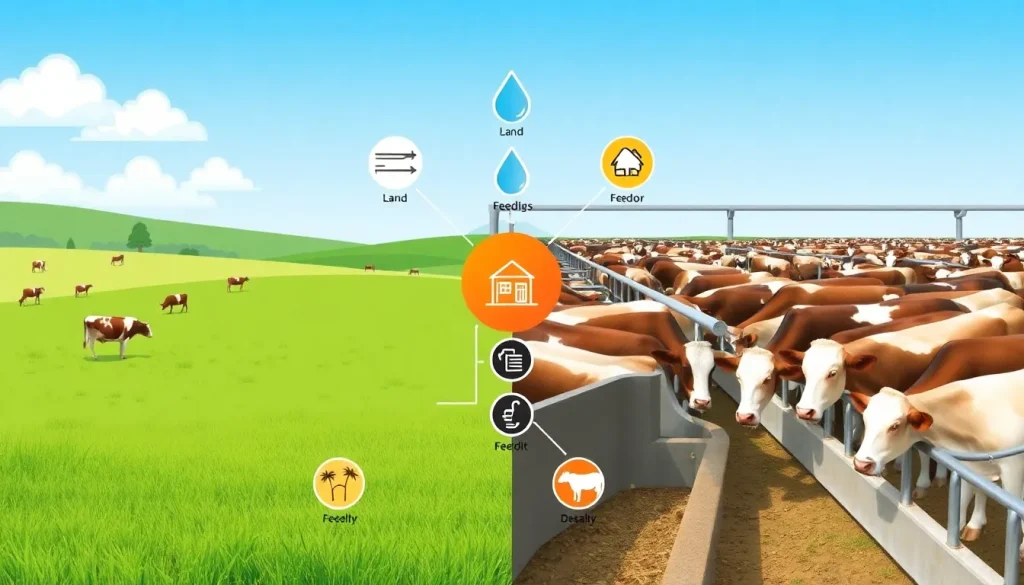
- Grass-fed beef typically requires 2–3 times more land per kilogram of meat than grain-fed beef.
- Methane emissions
- Grass-fed cattle produce more methane per unit of meat due to longer lifespans and lower digestibility of grass.
- Carbon sequestration
- Well-managed rotational grazing can sequester carbon in soils, potentially offsetting some greenhouse gas emissions.
- Water consumption
- Grain-fed systems often have a higher water footprint because of irrigation for feed crops.
- Growth efficiency
- Grain-fed cattle reach slaughter weight in 14–18 months, while grass-fed cattle may take 20–26 months or longer.
- Biodiversity
- Pasture-based systems can support greater biodiversity when managed with diverse plant species and low stocking rates.
- Energy use
- Grain-fed beef generally uses more fossil fuel energy for feed production, fertilizer, and transport.
Key Takeaways
- Grass-fed beef typically requires more land and produces more methane per kilogram of meat than grain-fed beef, but can support soil carbon sequestration and biodiversity when well managed.
- Grain-fed systems are more efficient in converting feed to meat, resulting in lower land use and often lower total greenhouse gas emissions per unit of beef, but depend on intensive crop production with its own environmental costs.
- The environmental comparison is highly context-dependent; regional climate, farming practices, and the metrics chosen (e.g., per kilogram of meat vs. per hectare) can lead to different conclusions.
- Both production methods have trade-offs, and neither is universally superior; sustainable beef production requires considering the full lifecycle and local conditions.
What Is Grass-Fed vs Grain-Fed Beef: Environmental Comparison?
Grass-fed beef refers to meat from cattle that spend their entire lives grazing on pasture, consuming grasses and other forages. Grain-fed beef, in contrast, typically comes from cattle that are raised on pasture for a portion of their lives and then moved to feedlots where they are fed a grain-based diet, often including corn and soy, to accelerate growth. The environmental comparison between these two production systems examines their respective impacts on land use, water consumption, greenhouse gas emissions, biodiversity, and other ecological factors.
This comparison is a subset of broader discussions about sustainable food systems and the environmental footprint of livestock. Beef production, regardless of the system, is resource-intensive compared to plant-based foods. However, the specific practices used in grass-fed and grain-fed operations lead to different environmental profiles. Understanding these differences helps consumers, policymakers, and producers make informed decisions about trade-offs between efficiency, animal welfare, and ecosystem services.
Overview
Beef production systems vary widely across the globe, but they can be broadly categorized into grass-fed (pasture-based) and grain-fed (feedlot) systems. Grass-fed cattle spend their entire lives on pasture, consuming grasses and legumes. Grain-fed cattle are typically raised on pasture for the first 6–12 months of life and then finished in confined feeding operations where they are fed a high-energy grain diet for 3–6 months before slaughter. The environmental impacts of these systems differ due to variations in feed production, land use, manure management, and animal growth rates.

Grass-fed systems are often associated with more natural animal behaviors and potential benefits for soil health, but they require more land and time to produce the same amount of beef. Grain-fed systems are more intensive, using concentrated feeds to achieve faster growth and higher yields per animal, but they depend on large-scale crop production that can involve significant inputs of water, fertilizers, and pesticides. The environmental comparison is not straightforward, as it involves trade-offs across multiple dimensions.
How It Works
In grass-fed systems, cattle graze on pasture throughout their lives. The land used may be permanent grassland or rotated with crops. The animals harvest their own feed, which reduces the need for mechanized harvesting and feed transport. However, grass-fed cattle grow more slowly and reach slaughter weight at an older age, meaning they emit methane—a potent greenhouse gas—over a longer period. Manure is deposited directly on the pasture, where it can improve soil fertility and organic matter, but it can also contribute to nutrient runoff if not managed properly.
In grain-fed systems, calves are typically raised on pasture until weaning and then moved to feedlots. The grain-based diet, often consisting of corn, soy, and other concentrates, is formulated for rapid weight gain. This diet is more digestible than grass, resulting in lower methane emissions per animal per day. However, the production of feed grains requires significant inputs: land for crop cultivation, water for irrigation, and energy for fertilizers, pesticides, and transportation. Manure in feedlots is collected and may be used as fertilizer, but it can also lead to water and air pollution if not managed correctly.
What the Evidence Shows
Scientific studies comparing the environmental impacts of grass-fed and grain-fed beef have produced mixed results, largely due to differences in methodology and system boundaries. Most life cycle assessments (LCAs) indicate that grain-fed beef has a lower carbon footprint per kilogram of meat produced, primarily because grain-fed cattle reach slaughter weight faster and emit less methane over their shorter lifespans. Grass-fed systems, on the other hand, often have higher land-use requirements—sometimes two to three times more than grain-fed systems—because of lower productivity per hectare.
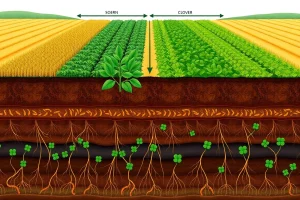
However, when carbon sequestration in pasture soils is accounted for, some grass-fed systems can achieve net greenhouse gas emissions comparable to or even lower than grain-fed systems. The ability of pastures to sequester carbon depends heavily on management practices such as rotational grazing, soil type, and climate. Evidence also suggests that grass-fed beef can have a more favorable profile for certain other environmental indicators, such as reduced water pollution from synthetic fertilizers and lower fossil fuel energy use, though these benefits are not universal.
Environmental and Human Impacts
The environmental impacts of beef production extend beyond greenhouse gases. Land use is a critical factor: grass-fed systems require more land per unit of meat, which can contribute to deforestation and habitat loss if pastureland is expanded into natural ecosystems. Conversely, well-managed grasslands can support high levels of biodiversity and provide ecosystem services like water filtration and pollination. Grain-fed systems, by relying on concentrated feeds, reduce direct land use for cattle but increase pressure on cropland, which can also drive habitat conversion.
Water use is another key difference. Grain-fed beef often has a higher water footprint due to irrigation of feed crops, while grass-fed cattle primarily consume rainwater on pastures. However, in arid regions, grazing can deplete water resources. Air and water quality are affected by both systems: feedlots can produce localized air pollution from ammonia and dust, while pasture-based systems may contribute to nutrient runoff into waterways. Human health implications are also relevant, as the nutritional profile of the meat differs slightly, but the environmental comparison focuses on ecological impacts.
Benefits, Limitations and Trade-offs
Grass-fed beef offers several potential environmental benefits: it can promote soil carbon sequestration, support biodiversity, and reduce reliance on synthetic inputs. Pasture-based systems can also improve animal welfare, which is an ethical consideration often linked to environmental sustainability. However, the limitations are significant: lower productivity per animal and per hectare means that meeting global beef demand exclusively with grass-fed systems would require substantially more land, potentially exacerbating deforestation and food security challenges.
Grain-fed beef benefits from high efficiency: faster growth, lower land use per kilogram of meat, and often lower total greenhouse gas emissions. The limitations include heavy dependence on monoculture crop production, which can degrade soil health, deplete water resources, and contribute to nutrient pollution. Trade-offs exist in every dimension; for example, while grain-fed systems may emit less methane per unit of meat, they often have higher energy use and greater impacts from fertilizer production. The optimal choice depends on local environmental priorities and the ability to implement best management practices in either system.
Common Misconceptions
One common misconception is that grass-fed beef is always better for the environment. While it can have advantages in certain contexts, the higher land use and methane emissions often make it less efficient per kilogram of meat. Another misconception is that grain-fed beef is inherently unsustainable; in reality, feedlot systems can be part of a sustainable food system if they use byproducts from crop production and manage manure effectively. A third misconception is that the comparison is simple—in truth, it depends on whether impacts are measured per animal, per kilogram of meat, or per hectare of land, and on which environmental indicators are prioritized.
Additionally, some believe that all grass-fed systems are extensive and low-input, but intensive rotational grazing can be highly managed and productive. Conversely, not all grain-fed systems are identical; some use more sustainable feed sources and better waste management. The environmental outcome is shaped more by specific practices than by the broad category alone.
FAQ
What is the environmental difference between grass-fed and grain-fed beef?
Grass-fed beef generally uses more land and produces more methane per kilogram of meat, but can improve soil health and biodiversity. Grain-fed beef is more efficient in land and feed use, often with lower total greenhouse gas emissions per unit, but relies on intensive crop production.
Which is better for the environment: grass-fed or grain-fed beef?
There is no simple answer. It depends on factors like land availability, management practices, and which environmental metrics are prioritized. Both systems have trade-offs, and the most sustainable choice varies by region.
Why does the grass-fed vs grain-fed comparison matter?
Beef production has significant environmental impacts, and consumer demand influences farming practices. Understanding the differences helps individuals, policymakers, and producers make informed decisions to reduce the ecological footprint of food systems.
References
- Food and Agriculture Organization of the United Nations (FAO). 'Livestock's Long Shadow: Environmental Issues and Options.' 2006.
- Intergovernmental Panel on Climate Change (IPCC). 'Climate Change and Land: An IPCC Special Report.' 2019.
- Journal of Animal Science. 'Comparative life cycle environmental impacts of beef production systems.' Various years.