Precision Agriculture: Environmental Benefits and Risks
Precision agriculture (PA) is a farming management approach that uses information technology to tailor crop inputs to specific field conditions, aiming to increase efficiency…
Topic archive
Covers sustainable farming practices and crop management techniques
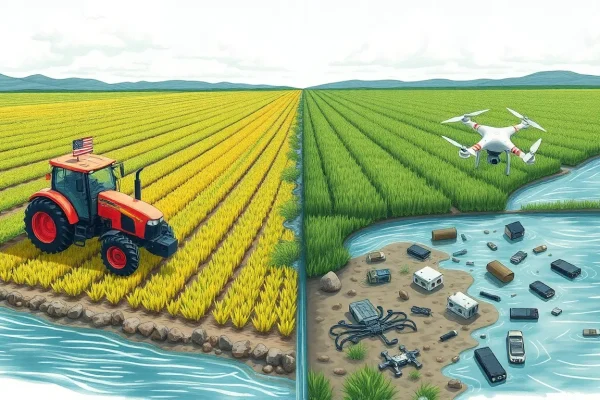
Precision agriculture (PA) is a farming management approach that uses information technology to tailor crop inputs to specific field conditions, aiming to increase efficiency…
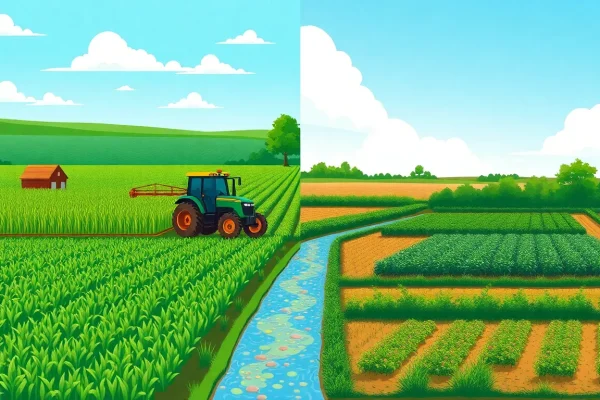
Conventional and organic agriculture each present distinct environmental trade-offs. Organic systems reduce synthetic pesticide use and enhance soil biodiversity, but typically require more land…
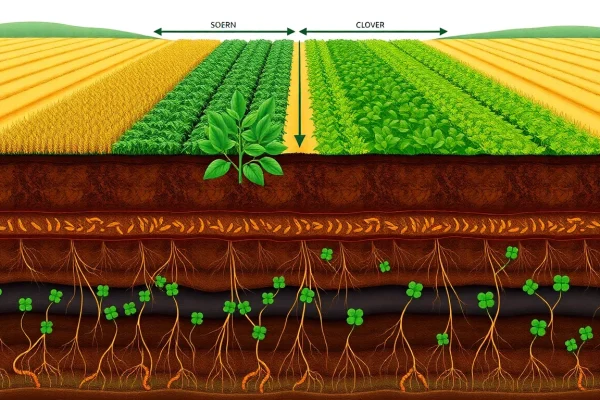
Crop rotation is the planned sequence of different crops on the same land over time, a foundational agricultural practice that improves soil health, reduces…
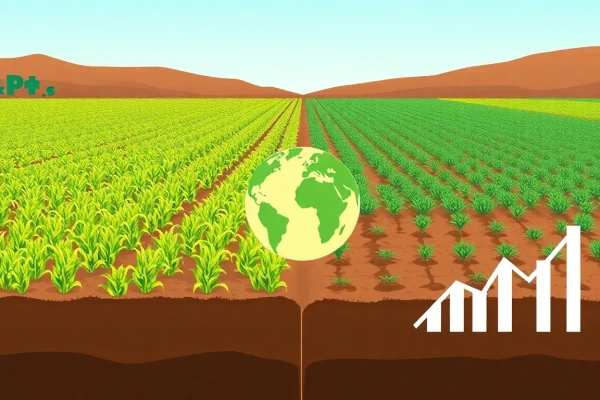
The agricultural yield gap is the difference between the potential yield of a crop under ideal conditions and the actual yield achieved by farmers.…
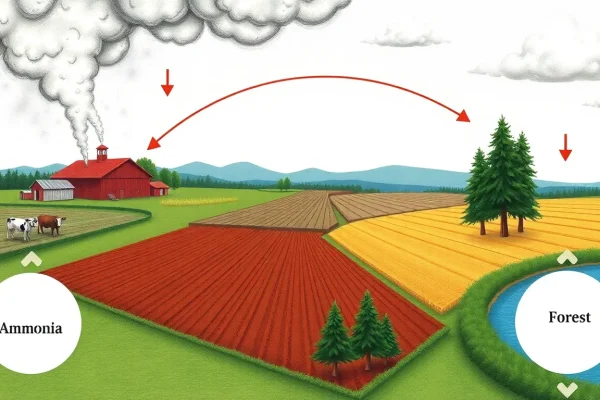
Ammonia pollution from agriculture is the release of gaseous ammonia (NH₃) into the air from livestock manure and nitrogen fertilizers. Once airborne, ammonia reacts…
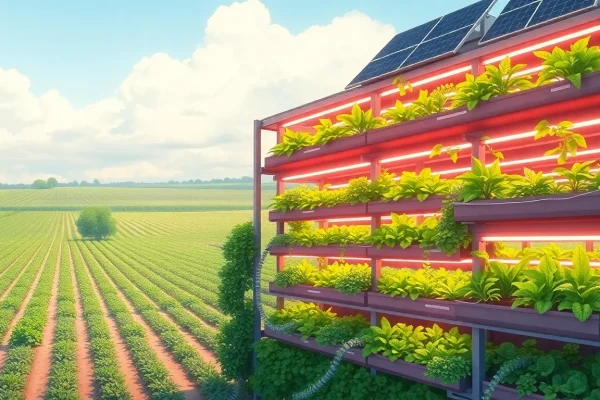
Vertical farming is the practice of growing crops in vertically stacked layers within controlled indoor environments, using technologies like hydroponics and LED lighting. It…
The environmental trade-offs between conventional and organic agriculture involve balancing factors such as land use, chemical inputs, biodiversity, and greenhouse gas emissions. Organic farming…
Agriculture profoundly alters the global water cycle by withdrawing massive amounts of freshwater for irrigation, modifying land surfaces, and releasing pollutants. These changes affect…