In brief
At a glance
Quick Facts
- Planetary boundary status
- Biosphere integrity is one of two core planetary boundaries; it is currently assessed as transgressed.
- Two main dimensions
- Genetic diversity (extinction rate) and functional integrity (Biodiversity Intactness Index).
- Current extinction rate
- Estimated at 10–100 times the natural background rate, indicating a sixth mass extinction.
- Biodiversity Intactness Index (BII)
- Global BII has fallen below the proposed safe limit of 90% in many regions.
- Primary driver
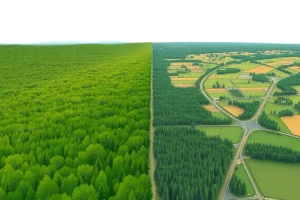
- Land-use change, especially conversion to agriculture, is the largest direct cause of biosphere integrity loss.
- Ecosystem services at risk
- Declining integrity threatens pollination, water purification, climate regulation, and soil fertility.
- Conservation target
- Protecting at least 30% of land and ocean areas is a widely endorsed goal to halt biodiversity loss.
- Indigenous lands
- Indigenous-managed territories often show higher levels of biosphere integrity than surrounding areas.
Key Takeaways
- Biosphere integrity refers to the health and completeness of Earth’s living fabric, encompassing genetic diversity, species richness, and the functional roles that organisms play in ecosystems.
- It is one of the nine planetary boundaries that define a safe operating space for humanity; the boundary for biosphere integrity is considered to be transgressed, largely due to human activities.
- Loss of biosphere integrity undermines ecosystem services such as pollination, water purification, and climate regulation, directly affecting food security, health, and economic stability.
- Maintaining biosphere integrity requires halting habitat destruction, reducing pollution, mitigating climate change, and restoring degraded ecosystems at a global scale.
What Is Biosphere Integrity?
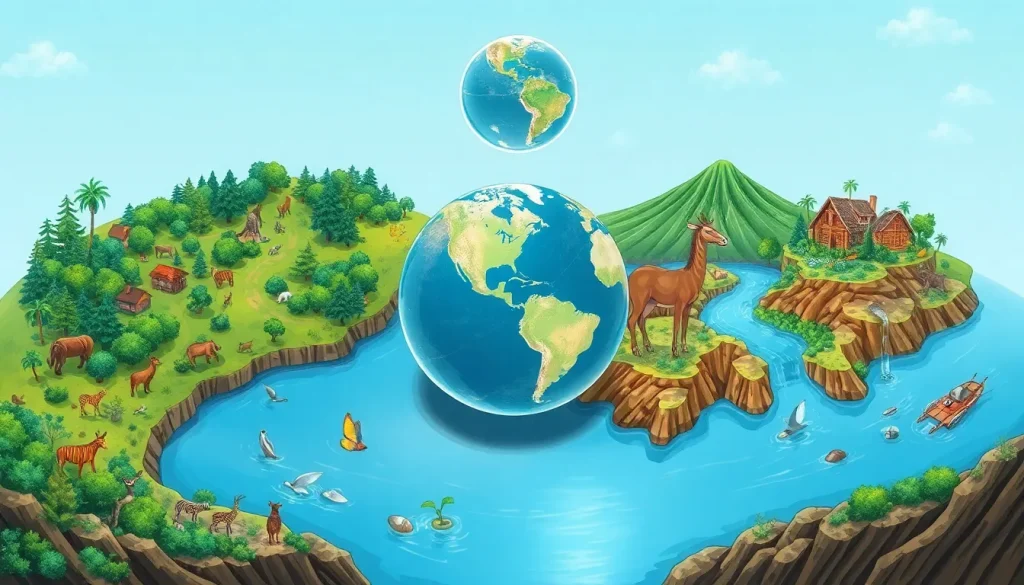
Biosphere integrity is a measure of the wholeness and robustness of the Earth’s living systems—the sum of all ecosystems and organisms—and their ability to persist, adapt, and function in a state similar to that of the Holocene epoch. The concept was formalized within the planetary boundaries framework, where it is identified as a core boundary that regulates the stability of the entire Earth system. Biosphere integrity is not simply about the number of species; it encompasses two dimensions: genetic diversity, which reflects the variety of life and its evolutionary potential, and functional integrity, which captures the extent to which ecosystems retain their natural composition, structure, and processes.
In a state of high biosphere integrity, ecosystems are resilient to disturbances, nutrient cycles operate efficiently, and the web of life supports a predictable and hospitable environment. When integrity is eroded—through species extinctions, population declines, or the simplification of habitats—the biosphere’s capacity to buffer against shocks diminishes, increasing the risk of abrupt and irreversible changes. Thus, biosphere integrity is a foundational concept for understanding how human actions are reshaping the planet and for guiding efforts to safeguard the life-support systems on which civilization depends.
Overview
The planetary boundaries framework, first proposed in 2009 and refined in subsequent years, identifies nine critical Earth system processes that together maintain a stable environment. Biosphere integrity is one of two “core” boundaries (alongside climate change) because it has the potential to drive the Earth system into a new state on its own if severely disrupted. The boundary is assessed using two control variables: the rate of species extinctions (genetic diversity) and the Biodiversity Intactness Index (BII), which measures the average abundance of originally present species across terrestrial ecosystems. Both indicators show that human pressures have pushed biosphere integrity well beyond the safe zone. The current extinction rate is estimated to be tens to hundreds of times higher than the natural background rate, and the BII has fallen below the proposed safe limit of 90% across large parts of the world, particularly in biodiversity hotspots and heavily managed landscapes.
Biosphere integrity is not a single number but a multidimensional property. It includes the diversity of genes, species, and ecosystems, as well as the functional roles organisms play—such as pollination, seed dispersal, and nutrient cycling. A loss in one dimension can cascade through the system, weakening overall resilience. The concept is closely linked to the idea of “ecological integrity” used in conservation biology, but it is scaled up to the entire biosphere, emphasizing that local and regional changes can aggregate into global tipping points.
How It Works
Biosphere integrity is maintained through complex interactions among organisms and their physical environment. Genetic diversity provides the raw material for adaptation and evolution, allowing species to cope with environmental changes. Functional integrity ensures that ecosystems continue to perform essential processes, such as primary production, decomposition, and water cycling. These processes are often carried out by a wide range of species, creating redundancy that buffers the system against the loss of any single component. When integrity is high, the biosphere can absorb disturbances—like fires, floods, or disease outbreaks—and return to its original state.
Scientists assess biosphere integrity by tracking two main types of indicators. The first is the extinction rate, typically measured in extinctions per million species-years (E/MSY). The background rate, derived from the fossil record, is around 0.1–1 E/MSY; current rates are estimated at 10–100 E/MSY or higher, indicating a mass extinction event. The second indicator is functional integrity, often quantified using the Biodiversity Intactness Index (BII). The BII estimates the average proportion of natural biodiversity remaining in a given area, with 100% representing an intact ecosystem. A global BII below 90% is considered a high-risk zone, and many regions have already fallen below this threshold. Other metrics, such as the Living Planet Index and the Red List Index, provide complementary views of population trends and extinction risk.
These indicators are linked to Earth system models that show how declining biosphere integrity can amplify other planetary pressures. For example, deforestation not only reduces local biodiversity but also releases carbon dioxide, alters rainfall patterns, and increases the likelihood of regional tipping points like the dieback of the Amazon rainforest. Thus, biosphere integrity acts as both a driver and a responder in the Earth system, making its monitoring essential for understanding global environmental change.
Why It Matters
Biosphere integrity is fundamental to human survival and well-being because it underpins the ecosystem services that societies rely on. These include provisioning services (food, fresh water, timber), regulating services (climate moderation, flood control, disease regulation), supporting services (soil formation, nutrient cycling), and cultural services (recreation, spiritual value). When biosphere integrity declines, these services become less reliable, leading to reduced agricultural productivity, water shortages, and increased vulnerability to natural disasters. The economic cost of biodiversity loss is substantial, with estimates suggesting that ecosystem services contribute trillions of dollars annually to the global economy.
Beyond immediate human needs, biosphere integrity is critical for maintaining the Earth system in a state that has allowed human civilizations to flourish. The Holocene epoch, which began about 11,700 years ago, provided a remarkably stable climate and environment. Transgressing the biosphere integrity boundary increases the risk of pushing the Earth system into a new, less predictable state—sometimes called the Anthropocene—where conditions may be far less hospitable. Protecting biosphere integrity is therefore not just about saving species; it is about preserving the global life-support system that makes a prosperous human future possible.
Main Causes or Drivers
The erosion of biosphere integrity is driven by a combination of direct and indirect human pressures. The most significant direct drivers are:
- Land-use change: Conversion of natural habitats to agriculture, urban areas, and infrastructure is the primary cause of biodiversity loss. Deforestation, wetland drainage, and grassland conversion fragment ecosystems and reduce available habitat for countless species.
- Overexploitation: Unsustainable hunting, fishing, and logging deplete populations faster than they can recover, leading to local extinctions and disrupting food webs.
- Climate change: Rising temperatures, altered precipitation patterns, and ocean acidification force species to shift their ranges or face extinction. Climate change is projected to become the dominant driver of biodiversity loss in the coming decades.
- Pollution: Nutrient runoff from agriculture causes eutrophication in water bodies, while pesticides, plastics, and industrial chemicals harm wildlife directly and indirectly.
- Invasive species: Non-native species introduced by human activities can outcompete, prey on, or bring diseases to native species, often causing irreversible ecosystem changes.
Indirect drivers include human population growth, consumption patterns, economic systems that undervalue nature, and governance failures. These underlying factors amplify the direct pressures, making it challenging to halt the decline in biosphere integrity without systemic changes.
Solutions
Protecting and restoring biosphere integrity requires a combination of conservation, sustainable management, and transformative societal changes. Key approaches include:
- Protected areas and conservation: Expanding and effectively managing protected areas on land and in the ocean can safeguard critical habitats and species. Global targets, such as protecting 30% of the planet by 2030, aim to halt biodiversity loss.
- Ecosystem restoration: Restoring degraded forests, wetlands, grasslands, and coastal ecosystems can recover biodiversity and ecosystem functions. Large-scale initiatives like the UN Decade on Ecosystem Restoration promote such efforts.
- Sustainable agriculture and forestry: Practices such as agroecology, reduced-impact logging, and certification schemes can maintain productivity while minimizing harm to biodiversity.
- Climate action: Mitigating climate change by reducing greenhouse gas emissions is essential to prevent further stress on ecosystems and to avoid crossing tipping points.
- Reducing pollution and waste: Stricter regulations on chemicals, improved waste management, and circular economy models can lessen the toxic burden on ecosystems.
- Integrating nature into economic decision-making: Valuing ecosystem services and incorporating natural capital into national accounts can shift incentives away from destructive practices.
Success depends on international cooperation, strong policy frameworks, and the engagement of local communities and Indigenous peoples, who often manage lands with high biosphere integrity.
Data Limitations and Uncertainties
While the concept of biosphere integrity is well-established, its measurement involves significant uncertainties. The extinction rate is difficult to quantify precisely because many species remain undescribed, and background rates are inferred from an incomplete fossil record. The Biodiversity Intactness Index relies on models and assumptions about species abundance in undisturbed habitats, which can vary regionally. Additionally, functional integrity is harder to measure than genetic diversity, and there is no single agreed-upon metric that captures all dimensions of biosphere health.
Another challenge is the spatial and temporal scale of data. Most biodiversity monitoring is concentrated in well-studied regions, leaving large gaps in the tropics and oceans. Long-term trends are often obscured by short-term variability. Furthermore, the interactions between biosphere integrity and other planetary boundaries are complex and not fully understood, making it difficult to predict exactly when and where tipping points might occur. Despite these limitations, the overall direction of change is clear, and the precautionary principle supports urgent action to halt further degradation.
FAQ
What is biosphere integrity?
Biosphere integrity is the wholeness and health of Earth’s living systems, including genetic diversity, species richness, and the functional roles that organisms play. It reflects the capacity of ecosystems to remain resilient and continue providing essential services.
How is biosphere integrity measured?
It is commonly measured using two indicators: the rate of species extinctions (genetic diversity) and the Biodiversity Intactness Index (functional integrity). The extinction rate compares current losses to the natural background rate, while the BII estimates the average proportion of native biodiversity remaining in an area.
Why does biosphere integrity matter?
It matters because it underpins all ecosystem services that humans depend on, such as food production, clean water, and climate regulation. A decline in biosphere integrity increases the risk of irreversible environmental changes that could threaten global stability and human well-being.
References
- Rockström, J., et al. (2009). A safe operating space for humanity. Nature, 461, 472–475.
- Steffen, W., et al. (2015). Planetary boundaries: Guiding human development on a changing planet. Science, 347(6223), 1259855.
- IPBES (2019). Global assessment report on biodiversity and ecosystem services. Intergovernmental Science-Policy Platform on Biodiversity and Ecosystem Services.