In brief
At a glance
Quick Facts
- PFAS definition
- Per- and polyfluoroalkyl substances, a group of man-made chemicals used since the 1940s for their water- and oil-repellent properties.
- Health concerns
- Linked to liver damage, thyroid disease, decreased fertility, developmental effects, and certain cancers.
- Most effective removal method
- Reverse osmosis can remove over 99% of PFAS, including short-chain compounds.
- Common treatment for municipalities
- Granular activated carbon and ion exchange resins are widely used due to lower cost and energy requirements.
- Short-chain vs. long-chain
- Long-chain PFAS (e.g., PFOA, PFOS) are easier to remove than short-chain PFAS (e.g., PFBS, GenX).
- Boiling water
- Boiling does not remove PFAS; it can concentrate them.
- Waste disposal
- Spent treatment media must be incinerated at high temperatures or landfilled to prevent recontamination.
- Regulatory status
- Many countries have set health advisory levels or maximum contaminant levels for PFAS in drinking water.
Key Takeaways
- PFAS can be significantly reduced in drinking water using granular activated carbon, ion exchange resins, and reverse osmosis, but no single method removes all PFAS compounds completely.
- Short-chain PFAS are generally more difficult to remove than long-chain PFAS, and treatment effectiveness varies based on water chemistry and system design.
- Point-of-use and point-of-entry treatment systems can provide effective PFAS removal for individual households, while centralized treatment is used for municipal supplies.
- Proper disposal of spent treatment media is critical to prevent reintroduction of PFAS into the environment, and ongoing research seeks to improve removal efficiency and cost-effectiveness.
What Is PFAS Removal From Drinking Water?
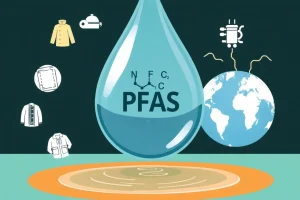
PFAS removal from drinking water refers to the processes and technologies used to reduce or eliminate per- and polyfluoroalkyl substances (PFAS) from water intended for human consumption. PFAS are a large group of synthetic chemicals that have been widely used in industrial and consumer products since the 1940s due to their resistance to heat, oil, stains, grease, and water. Their strong carbon-fluorine bonds make them extremely persistent in the environment, earning them the nickname “forever chemicals.” Because conventional water treatment methods such as chlorination, sedimentation, and basic filtration are ineffective against PFAS, specialized removal techniques are required to protect public health.
PFAS removal from drinking water is a complex challenge because these chemicals encompass thousands of different compounds with varying properties. The most studied PFAS, including perfluorooctanoic acid (PFOA) and perfluorooctanesulfonic acid (PFOS), have been linked to adverse health effects such as liver damage, immune system disruption, and certain cancers. As a result, regulatory agencies worldwide have established health advisory levels and maximum contaminant levels for PFAS in drinking water, driving the need for effective treatment solutions. The goal of PFAS removal is to reduce concentrations below these health-based thresholds, ensuring safe drinking water for communities.
Overview
PFAS contamination in drinking water is a global concern, with sources including firefighting foams, industrial discharges, and consumer product runoff. The chemicals are highly mobile in groundwater and surface water, and they do not break down under typical environmental conditions. Consequently, PFAS have been detected in public water systems and private wells across many countries. Addressing this contamination requires a combination of source control, monitoring, and treatment technologies tailored to the specific PFAS compounds present and the characteristics of the water supply.
Treatment technologies for PFAS removal can be broadly categorized into separation and destruction methods. Separation technologies, such as activated carbon adsorption, ion exchange, and reverse osmosis, physically remove PFAS from water by trapping them on a solid medium or rejecting them through a membrane. Destruction methods, including advanced oxidation and incineration, aim to break down PFAS molecules, but these are generally applied to concentrated waste streams rather than drinking water directly. For drinking water, separation technologies are the most established and widely used approaches.
How It Works
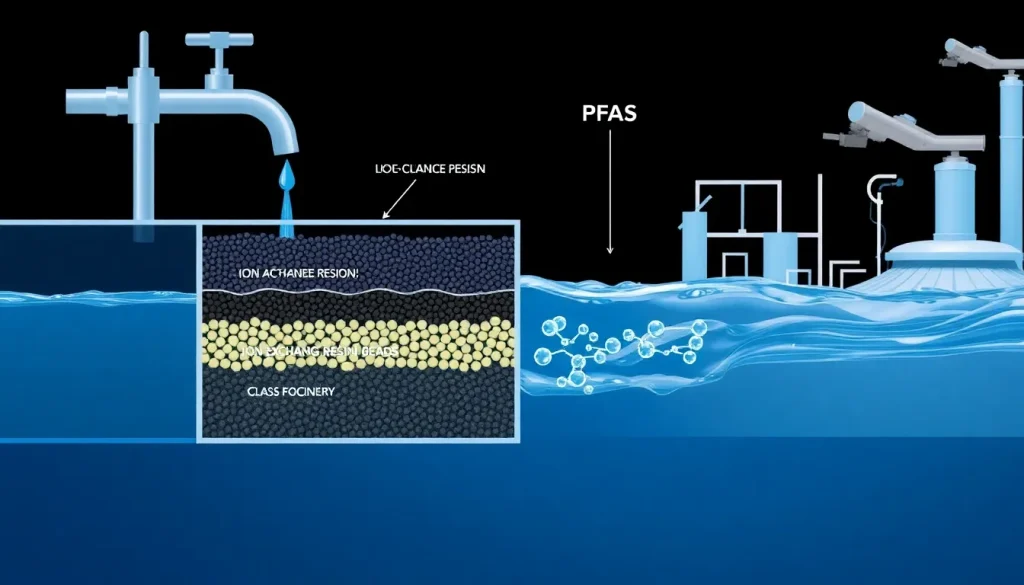
PFAS removal from drinking water relies on three primary separation technologies: granular activated carbon (GAC), ion exchange (IX) resins, and reverse osmosis (RO). Each method operates on different principles to capture or reject PFAS molecules from the water stream.
- Granular Activated Carbon (GAC): GAC is a porous material with a high surface area that adsorbs PFAS molecules as water passes through a bed of carbon. The hydrophobic tail of PFAS compounds attaches to the carbon surface, effectively removing them from the water. GAC is particularly effective for long-chain PFAS like PFOA and PFOS but has lower capacity for short-chain PFAS. The carbon must be periodically replaced or regenerated once its adsorption capacity is exhausted.
- Ion Exchange (IX) Resins: IX resins are small, charged beads that attract and bind PFAS molecules through electrostatic interactions. Anion exchange resins are most commonly used because many PFAS compounds exist as anions in water. IX resins can achieve high removal efficiencies for a wide range of PFAS, including some short-chain compounds, and can be regenerated using salt solutions, though the resulting brine requires proper disposal.
- Reverse Osmosis (RO): RO uses a semipermeable membrane to physically separate PFAS from water. Under high pressure, water molecules pass through the membrane while PFAS and other contaminants are rejected. RO can remove over 99% of PFAS, including short-chain compounds, but it produces a concentrated waste stream (reject water) that must be managed. RO systems are typically installed at the point of use due to their higher cost and energy requirements.
What the Evidence Shows
Numerous studies and real-world applications have demonstrated that GAC, IX, and RO can effectively reduce PFAS concentrations in drinking water. For example, research by the U.S. Environmental Protection Agency (EPA) and other bodies has shown that properly designed GAC systems can achieve greater than 90% removal of long-chain PFAS, while IX resins can remove both long- and short-chain compounds with high efficiency. RO membranes have been found to reject over 99% of PFAS, making them the most thorough option for point-of-use treatment.
However, the evidence also highlights limitations. Treatment performance varies depending on the specific PFAS compounds present, background water quality (e.g., organic matter, competing ions), and operational parameters. Short-chain PFAS and newer replacement compounds such as GenX chemicals are more challenging to remove with GAC and may break through earlier. Additionally, field studies show that PFAS can accumulate in treatment media over time, requiring careful monitoring and media replacement to prevent breakthrough. No single technology removes all PFAS equally, and a combination of methods may be necessary for comprehensive treatment.
Benefits, Limitations and Trade-offs
Each PFAS removal technology offers distinct advantages and drawbacks that must be weighed based on the specific water system and treatment goals.
Benefits: GAC is relatively low-cost, easy to operate, and effective for a broad range of organic contaminants beyond PFAS. IX resins provide high removal efficiency and can be regenerated, reducing solid waste. RO offers the highest removal rates and also eliminates other contaminants such as salts, metals, and pathogens. All three technologies are commercially available and can be scaled from household to municipal levels.
Limitations: GAC has a finite adsorption capacity and may require frequent replacement if PFAS concentrations are high. It is less effective for short-chain PFAS. IX resins can be more expensive and may release PFAS if not properly maintained. RO systems waste a significant portion of water (typically 20–50% of feed water) and require high energy input. Additionally, none of these methods destroy PFAS; they merely transfer the chemicals to a concentrated waste stream (spent carbon, resin, or brine) that must be disposed of safely, often through incineration or landfilling, which carries its own environmental risks.
Trade-offs: The choice of technology involves balancing removal efficiency, cost, operational complexity, and waste management. For small systems or private wells, point-of-use RO or under-sink GAC/IX filters may be practical. For large municipal systems, GAC or IX are more common due to lower energy and water waste, but they require robust monitoring and media replacement schedules. Emerging concerns about the formation of toxic byproducts during PFAS destruction further complicate the overall risk-benefit analysis.
Common Misconceptions
Misconception 1: Boiling water removes PFAS. Boiling water does not remove PFAS; in fact, it can concentrate these chemicals because water evaporates while PFAS remain. Boiling is only effective for killing pathogens, not for removing chemical contaminants like PFAS.
Misconception 2: All water filters remove PFAS. Standard pitcher filters, refrigerator filters, and many faucet-mounted filters are not designed to remove PFAS. Only filters certified for PFAS reduction (e.g., those meeting NSF/ANSI standards for PFOA/PFOS) should be relied upon. Consumers should check product certifications before purchasing.
Misconception 3: Once PFAS are removed from water, the problem is solved. Removing PFAS from drinking water addresses only the exposure pathway through ingestion. PFAS can still enter the body through food, dust, and consumer products. Moreover, the concentrated waste from treatment processes must be managed to avoid recontamination of the environment.
Misconception 4: All PFAS are equally removable. PFAS are a diverse class of chemicals, and removal efficiency varies significantly. Long-chain PFAS are generally easier to remove than short-chain PFAS, and some newer replacement PFAS may be more challenging to treat. A one-size-fits-all approach does not exist.
What Individuals Can Do
Individuals concerned about PFAS in their drinking water can take several steps to reduce exposure. First, they should determine whether PFAS contamination is present by reviewing local water quality reports or testing their private well through a certified laboratory. If PFAS are detected above health advisory levels, installing a point-of-use or point-of-entry treatment system is recommended.
For point-of-use treatment, under-sink reverse osmosis systems or activated carbon/ion exchange filters certified for PFAS reduction are effective options. It is important to maintain these systems according to manufacturer instructions, including timely filter replacement, to ensure continued performance. For whole-house treatment, larger GAC or IX systems can be installed, but professional consultation is advised. Additionally, individuals can reduce overall PFAS exposure by avoiding products known to contain PFAS, such as certain non-stick cookware, stain-resistant fabrics, and fast-food packaging.
What Businesses and Governments Can Do
Businesses, particularly those in manufacturing, waste management, and water treatment, play a critical role in reducing PFAS contamination at the source. They can adopt alternative chemicals, improve industrial wastewater treatment, and support research into safer substitutes. Water utilities can invest in advanced treatment infrastructure, conduct regular monitoring, and communicate transparently with the public about PFAS levels and remediation efforts.
Governments can establish and enforce drinking water standards for PFAS, fund cleanup of contaminated sites, and support research on health effects and treatment technologies. Regulatory frameworks such as the EPA’s PFAS Strategic Roadmap in the United States and the European Union’s Drinking Water Directive set maximum limits for PFAS and drive the adoption of treatment solutions. International cooperation is also essential, as PFAS pollution crosses borders through water and air. Policies that restrict non-essential uses of PFAS and promote the development of degradable alternatives are key to long-term risk reduction.
FAQ
Can PFAS be completely removed from drinking water?
While no single treatment removes 100% of all PFAS, technologies like reverse osmosis can reduce concentrations to near-undetectable levels. Complete removal is challenging due to the diversity of PFAS compounds.
How do I know if my water has PFAS?
Check your local water utility's annual water quality report or have your water tested by a certified laboratory using EPA Method 537.1 or 533. Private well owners should test regularly if they live near potential sources.
Is bottled water free of PFAS?
Not necessarily. Bottled water is not automatically PFAS-free; it depends on the source and treatment. Some bottled water may contain PFAS if the source water is contaminated and not adequately treated. Look for brands that use advanced purification methods.
References
- U.S. Environmental Protection Agency. (2020). Drinking Water Treatability Database: PFAS.
- World Health Organization. (2022). PFAS in Drinking-water: Background document for development of WHO Guidelines for Drinking-water Quality.
- Interstate Technology and Regulatory Council (ITRC). (2023). PFAS Technical and Regulatory Guidance Document.