In brief
At a glance
Quick Facts
- Planetary boundary
- Novel entities are one of nine planetary boundaries, but the boundary is not yet quantified.
- Definition
- New substances, forms of existing substances, or modified life forms introduced by humans with potential for unwanted effects.
- Examples
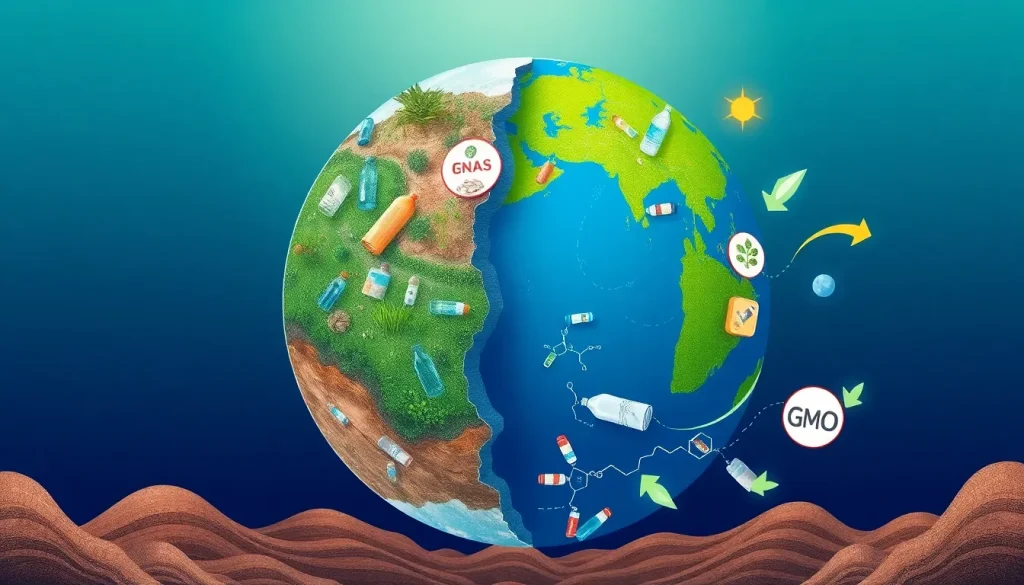
- Plastics, synthetic chemicals, engineered nanomaterials, GMOs, radioactive materials.
- Key concern
- Persistence, toxicity, bioaccumulation, and irreversible global impacts.
- Regulation
- Governed by treaties like the Stockholm Convention on POPs, but many substances remain unregulated.
- Global spread
- Novel entities are found in remote environments, including the deep ocean and polar regions.
- Risk assessment
- Only a small fraction of chemicals in commerce have been thoroughly assessed for safety.
Key Takeaways
- Novel entities are new substances, forms of existing substances, or modified life forms introduced by humans that can have unwanted geophysical or biological effects.
- They are one of the nine planetary boundaries, a framework that defines a safe operating space for humanity, but their boundary has not yet been quantified globally.
- Examples include synthetic chemicals like plastics and pesticides, engineered nanomaterials, and genetically modified organisms.
- Because novel entities can persist, accumulate, and interact in unpredictable ways, they pose long-term risks to ecosystems and human health, often with irreversible consequences.
What Is What Counts as a Novel Entity?
A novel entity is defined in Earth system science as a new substance, a new form of an existing substance, or a modified life form that is introduced by human activities and has the potential to cause unwanted geophysical or biological effects. The term is most prominently used in the planetary boundaries framework, where it represents one of the nine key processes that regulate the stability and resilience of the Earth system. Unlike boundaries such as climate change or ocean acidification, the novel entities boundary is not yet quantified, but it is recognized as a critical area where human actions are pushing the planet into a less stable state.
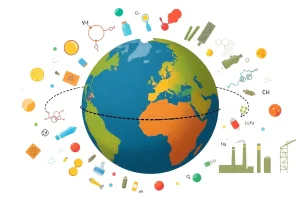
Novel entities encompass a wide range of anthropogenic introductions, including synthetic chemicals (e.g., chlorofluorocarbons, pesticides, industrial compounds), plastics, engineered nanomaterials, and genetically modified organisms. These entities are “novel” because they are either entirely new to the Earth system or are being introduced in forms and quantities that have no natural analogue. Their potential to cause harm arises from their persistence, toxicity, bioaccumulation, or capacity to disrupt biological and geochemical cycles. The concept emphasizes the need for precautionary approaches, as the full extent of their impacts may not be known until long after they are released.
Overview
The novel entities boundary was first proposed in 2009 as part of the planetary boundaries framework developed by a group of Earth system scientists led by Johan Rockström. It addresses the global-scale risks posed by the introduction of new substances and modified life forms. Unlike other boundaries that have clear global thresholds (e.g., atmospheric CO₂ concentration), the novel entities boundary is inherently difficult to quantify because it involves a vast and growing number of distinct entities, each with unique properties and potential for harm. The boundary is therefore considered a “risk-based” boundary, focusing on the capacity of the Earth system to absorb and neutralize these introductions without triggering disruptive changes.
In the 2015 update to the planetary boundaries framework, the novel entities boundary was retained but remained unquantified. Scientists highlighted that the production and release of novel entities have accelerated dramatically, with tens of thousands of chemicals in commerce and only a fraction assessed for safety. The boundary is considered to be transgressed regionally in many areas, and there is a high risk that the global boundary has already been crossed, given the pervasive presence of plastics, persistent organic pollutants, and other synthetic compounds in even the most remote environments.
History
The concept of novel entities as a planetary boundary emerged from growing awareness of the global spread and persistence of human-made chemicals and materials. In the mid-20th century, scientists began documenting the accumulation of persistent organic pollutants (POPs) in ecosystems far from their sources, leading to international agreements like the Stockholm Convention on Persistent Organic Pollutants in 2001. The planetary boundaries framework, introduced in 2009, formalized the idea that chemical pollution and the release of novel entities could destabilize the Earth system at a global scale.
Early discussions focused on chemical pollution as a boundary, but the term was broadened to “novel entities” to include not only synthetic chemicals but also engineered nanomaterials, plastics, and genetically modified organisms. The 2015 update to the framework emphasized that the boundary for novel entities is a “risk boundary” rather than a threshold for a single control variable. This shift reflected the recognition that the sheer number and diversity of novel entities, combined with their potential for long-range transport and unknown synergistic effects, make a simple global metric impractical. Instead, the boundary is defined by the rate of introduction of novel entities and the capacity of society to assess and manage their risks.
How Novel Entities Are Defined and Assessed
Defining what counts as a novel entity involves three key criteria: novelty, anthropogenic origin, and the potential for unwanted effects. An entity is considered novel if it is new to the Earth system or introduced in a form or quantity that has no natural precedent. This includes entirely synthetic chemicals, such as chlorofluorocarbons (CFCs), as well as naturally occurring elements like mercury or lead when mobilized in unprecedented amounts. The entity must be a product of human activity, whether intentional (e.g., industrial chemicals) or unintentional (e.g., byproducts of combustion). Finally, there must be a plausible mechanism by which the entity could cause harm at a regional or global scale, such as toxicity, persistence, bioaccumulation, or disruption of biogeochemical cycles.
Assessing the global impact of novel entities is challenging due to the vast number of substances involved. Scientists use a combination of chemical screening, environmental monitoring, and modeling to identify entities of concern. Key indicators include production volumes, release rates, environmental persistence, and evidence of adverse effects. The planetary boundary framework suggests that the safe operating space is defined by the rate of introduction of novel entities relative to the capacity of society to assess and manage their risks. Because many novel entities are poorly studied and regulations lag behind innovation, the current rate of introduction is considered unsustainable.
Examples of Novel Entities
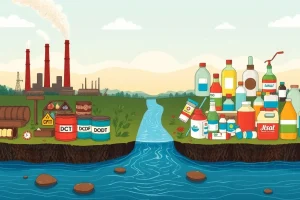
Novel entities span a wide range of human-made materials and organisms. Plastics are among the most visible, with microplastics now found in oceans, soils, and even the atmosphere. Synthetic chemicals such as chlorofluorocarbons (CFCs) caused stratospheric ozone depletion before being regulated under the Montreal Protocol. Persistent organic pollutants (POPs) like polychlorinated biphenyls (PCBs) and dioxins accumulate in food webs and pose long-term health risks. Engineered nanomaterials, used in electronics, cosmetics, and medicine, have novel properties that may lead to unforeseen environmental interactions.
Genetically modified organisms (GMOs) also fall under the novel entity umbrella when they are released into the environment. While many GMOs are designed for contained use, their potential to spread and interact with wild populations raises ecological concerns. Other examples include radioactive materials from nuclear accidents or weapons testing, and synthetic hormones or antibiotics that enter ecosystems through wastewater. Each of these entities shares the characteristic of being introduced by humans with the potential to cause large-scale, persistent changes.
Importance and Impact
Novel entities matter because they can alter fundamental Earth system processes in ways that are difficult to reverse. Many novel entities are persistent, meaning they do not break down easily in the environment, leading to long-term accumulation. Some are toxic to organisms, causing direct harm to wildlife and humans. Others can disrupt nutrient cycles, affect climate, or reduce biodiversity. The global nature of these impacts means that even substances released in one region can have far-reaching consequences, as seen with the long-range transport of mercury and persistent organic pollutants to the Arctic.
The introduction of novel entities also represents a permanent change to the Earth’s chemical landscape. Unlike other planetary boundaries where there may be a clear pathway to return to a safe state (e.g., reducing CO₂ emissions), the effects of novel entities can be irreversible. For example, plastic particles have been found in geological deposits, potentially leaving a permanent marker of human activity in the rock record. This irreversibility underscores the importance of precautionary approaches and the need to consider the full life cycle of new substances before they are widely used.
Common Misconceptions
One common misconception is that all novel entities are inherently dangerous. The planetary boundary concept does not claim that every new chemical or material is harmful; rather, it highlights the risk that the cumulative introduction of many novel entities, without adequate testing and regulation, can exceed the Earth’s capacity to absorb them safely. Another misunderstanding is that the boundary only applies to synthetic chemicals. In reality, it includes any human-introduced substance or organism that is novel in form or quantity, including naturally occurring elements mobilized by human activities.
Some also assume that the novel entities boundary has been crossed and that the situation is hopeless. While there is evidence of widespread contamination, the boundary is not yet quantified, and the framework is intended to guide precautionary action. The goal is to reduce the rate of introduction and improve risk assessment, not to eliminate all novel entities. Finally, the boundary is sometimes confused with chemical pollution alone, but it explicitly includes modified life forms and other novel materials, reflecting a broader Earth system perspective.
Data Limitations and Uncertainties
Assessing the global status of novel entities is hampered by significant data gaps. There is no comprehensive global inventory of all synthetic chemicals, materials, and modified organisms in production, nor is there a standardized system for tracking their environmental releases and fates. Many substances lack basic toxicity data, and the combined effects of multiple novel entities are poorly understood. The planetary boundary for novel entities remains unquantified precisely because of these uncertainties, making it a “risk boundary” rather than a threshold with a clear numerical value.
Additionally, monitoring is uneven across regions, with most data coming from industrialized countries. Emerging economies may have less stringent regulations, leading to higher releases of novel entities. The long time lags between exposure and effect, as well as the potential for unexpected interactions, further complicate risk assessments. These limitations highlight the need for improved global monitoring, data sharing, and precautionary policies to manage novel entities effectively.
FAQ
What is a novel entity?
A novel entity is a new substance, a new form of an existing substance, or a modified life form introduced by human activities that has the potential to cause unwanted geophysical or biological effects.
How does the novel entities planetary boundary work?
The boundary is based on the rate of introduction of novel entities relative to society's capacity to assess and manage their risks. It is not a single threshold but a risk boundary, emphasizing precaution.
Why do novel entities matter?
They can persist in the environment, accumulate in food chains, and cause irreversible harm to ecosystems and human health, potentially destabilizing Earth system processes at a global scale.
References
- Rockström, J., Steffen, W., Noone, K., et al. (2009). A safe operating space for humanity. Nature, 461, 472–475.
- Steffen, W., Richardson, K., Rockström, J., et al. (2015). Planetary boundaries: Guiding human development on a changing planet. Science, 347(6223), 1259855.
- Stockholm Convention on Persistent Organic Pollutants (2001). United Nations Environment Programme.