In brief
At a glance
Quick Facts
- Verdict
- Mixed
- Problem addressed
- Atmospheric CO2 accumulation
- Evidence strength
- Moderate
- Potential scale
- Global
- Relative cost
- High
- Time to impact
- Decades
Quick verdict
Carbon capture and carbon removal are complementary but distinct climate mitigation strategies. Carbon capture (point-source capture) is technically proven at industrial scale but does not address dispersed emissions and may extend fossil fuel dependence. Carbon removal (negative emissions technologies) can theoretically reverse atmospheric CO2 accumulation, but most methods remain expensive, energy-intensive, and unproven at scale. Neither is a substitute for rapid emissions reductions; both face significant economic and technical hurdles before they can contribute meaningfully to climate goals.
Problem addressed
Both approaches target the accumulation of carbon dioxide (CO2) in the atmosphere, the primary driver of anthropogenic climate change. Carbon capture focuses on preventing new emissions from entering the atmosphere by trapping CO2 at large stationary sources such as power plants, cement kilns, and steel mills. Carbon removal aims to extract legacy CO2 already present in the atmosphere, addressing historical emissions and hard-to-abate sectors like aviation and agriculture. The Intergovernmental Panel on Climate Change (IPCC) indicates that both strategies are likely necessary to limit warming to 1.5°C or 2°C, but their roles, readiness, and risks differ substantially.
How the solution works
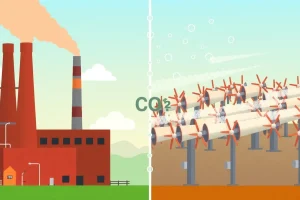
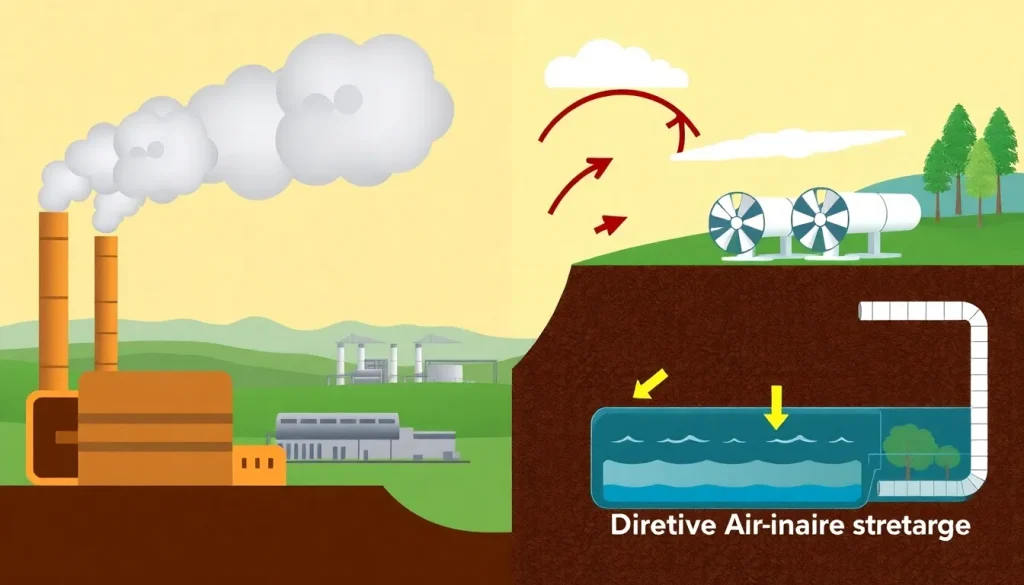
Carbon capture (point-source capture) typically uses chemical solvents (e.g., amines) to absorb CO2 from flue gases before they exit a smokestack. The captured CO2 is then compressed, transported, and either injected underground into geological formations (carbon capture and storage, or CCS) or used in products like concrete or synthetic fuels (carbon capture and utilization, or CCU). Post-combustion, pre-combustion, and oxy-fuel combustion are the main technological routes.

Carbon removal (carbon dioxide removal, CDR) encompasses a wide range of methods that extract CO2 directly from ambient air or enhance natural sinks. Direct air capture (DAC) uses chemical sorbents or solvents to filter CO2 from the atmosphere, after which it is stored or utilized. Other CDR approaches include afforestation/reforestation, soil carbon sequestration, bioenergy with carbon capture and storage (BECCS), enhanced weathering, and ocean-based methods like ocean alkalinity enhancement. These methods differ vastly in mechanism, maturity, and permanence of storage.
Evidence strength
Carbon capture has been demonstrated at commercial scale for decades in industrial processes like natural gas processing, and there are over 30 operational CCS facilities worldwide capturing around 40 MtCO2 per year. However, deployment in power generation has been limited and often plagued by cost overruns and technical underperformance. Carbon removal evidence is much weaker: DAC is operational only at a handful of small pilot plants (e.g., Climeworks’ Orca plant in Iceland captures ~4,000 tCO2/year). Nature-based removals like afforestation are well-understood but face monitoring and permanence challenges. BECCS remains largely theoretical at scale. Overall, the evidence base for capture is moderate; for removal, it is emerging and often reliant on modeling rather than field data.
Potential scale
Carbon capture could theoretically be applied to any large point source, covering up to about half of global CO2 emissions from energy and industry. However, it does not address dispersed sources (transport, buildings, agriculture). Carbon removal, particularly DAC and BECCS, could in principle scale to remove billions of tonnes of CO2 per year, but this would require enormous energy inputs, land, and infrastructure. For example, IPCC scenarios consistent with 1.5°C often assume BECCS removing 5–15 GtCO2/year by 2050, but this would require land area up to several times the size of India, raising serious sustainability concerns. DAC is limited by high energy demand and sorbent production. Natural removal methods like afforestation are constrained by available land and competition with food production. Realistically, both capture and removal will be limited to a few gigatonnes per year in the coming decades, far below what is needed to offset current emissions (~40 GtCO2/year).
Cost considerations
Current costs for carbon capture at point sources range from about $50 to $150 per tonne of CO2, depending on the industry and technology. For example, capture from ethanol production is relatively cheap ($20–30/tCO2), while cement and power generation are more expensive ($60–150/tCO2). These costs could decline with deployment but are unlikely to fall below $30–50/tCO2. Carbon removal costs are much higher: DAC estimates range from $250 to $600/tCO2 today, with long-term targets of $100–200/tCO2. BECCS costs are similarly high when including biomass supply and storage. Nature-based removals like afforestation can be cheaper ($10–50/tCO2) but offer less permanent storage and face saturation limits. All methods require significant upfront capital and ongoing operational expenses, and none are currently economically viable without strong policy support (e.g., carbon prices, tax credits).
Implementation time
Carbon capture can be retrofitted to existing facilities in 2–5 years, though new-build plants with integrated capture take longer. The bottleneck is often the development of CO2 transport and storage infrastructure, which can take a decade or more. Carbon removal technologies are mostly in pilot or demonstration phases; scaling to meaningful levels will require at least a decade of sustained investment and policy support. Nature-based removals like tree planting can begin immediately but take years to decades to sequester significant carbon and are vulnerable to reversal. Overall, neither approach can deliver rapid emissions reductions within the critical 2025–2030 window; they are mid- to long-term solutions.
Environmental benefits
Carbon capture reduces CO2 emissions from point sources by 85–95%, preventing them from entering the atmosphere. When combined with permanent storage, it can significantly lower the carbon footprint of essential industrial processes. Carbon removal can achieve net-negative emissions, actively reducing atmospheric CO2 concentrations. Some CDR methods offer co-benefits: afforestation enhances biodiversity and watershed health; soil carbon sequestration improves agricultural productivity; enhanced weathering can counteract ocean acidification. However, the net environmental benefit depends on life-cycle emissions, including energy penalties for capture and removal processes, which can be substantial.
Social and economic co-benefits
Carbon capture can preserve jobs in fossil-fuel-dependent regions and enable a transition for industries that are difficult to decarbonize. It may also create new employment in CO2 transport and storage infrastructure. Carbon removal, particularly nature-based solutions, can provide rural employment, improve air and water quality, and support indigenous land management practices. DAC and BECCS could spur new high-tech industries. However, these benefits are often localized and may not offset broader economic disruptions from the transition away from fossil fuels.
Risks and unintended consequences
Carbon capture risks perpetuating fossil fuel use by providing a “license to operate” for coal and gas plants, potentially delaying the phase-out of unabated emissions. CO2 leakage from storage sites could undermine climate benefits and pose local health risks. Carbon removal faces risks of impermanence (e.g., forest fires releasing stored carbon), high land and water requirements that could compete with food production and biodiversity, and energy penalties that could increase emissions if powered by fossil fuels. Large-scale BECCS could drive deforestation and food price spikes. DAC requires significant water and energy, and the sorbent materials may have their own environmental footprints. Both approaches may create moral hazard, reducing the perceived urgency of cutting emissions.
Where it works best
Carbon capture is most effective at large, stationary emission sources with high-purity CO2 streams, such as natural gas processing, ethanol production, and ammonia manufacturing. It is less suited for small or mobile sources. Geologically suitable storage sites (e.g., saline aquifers, depleted oil and gas fields) are needed nearby. Carbon removal via DAC can be deployed anywhere with access to low-carbon energy and suitable storage, making it location-flexible. Afforestation works best in tropical regions with high growth rates and available land. BECCS requires regions with sustainable biomass supply and geological storage. Enhanced weathering is most effective in warm, humid climates with abundant suitable rock formations.
Where it may not work
Carbon capture is economically unviable for facilities with low CO2 concentrations or short remaining lifetimes, and in regions lacking storage capacity or CO2 transport infrastructure. It is not a solution for diffuse emissions from transportation or buildings. Carbon removal methods like DAC are currently too expensive and energy-intensive for widespread deployment. Afforestation is unsuitable in areas with water scarcity, high fire risk, or competing land uses. BECCS is problematic in regions with insecure land tenure, biodiversity hotspots, or limited sustainable biomass potential. Both approaches face public acceptance challenges, particularly regarding CO2 storage and land-use conflicts.
Comparison with alternatives
The primary alternative to both carbon capture and removal is direct emission reduction through energy efficiency, renewable energy, electrification, and behavioral changes. These are generally cheaper, more mature, and have fewer side effects. Carbon capture is often compared to fuel switching (e.g., coal to gas or renewables) and process changes in industry; in many cases, these alternatives are more cost-effective. Carbon removal is sometimes compared to natural climate solutions like reforestation, which are cheaper but offer less permanent storage. Both capture and removal are seen as complements to, not replacements for, aggressive mitigation. Integrated assessment models suggest that without carbon removal, achieving net-zero will be extremely difficult, but over-reliance on these technologies in models has been criticized as “mitigation deterrence.”
Case studies
Boundary Dam CCS (Canada): The world’s first commercial-scale CCS project on a coal power plant, capturing ~1 MtCO2/year since 2014. It has faced technical issues and higher-than-expected costs, but demonstrates the feasibility of post-combustion capture. Climeworks Orca DAC (Iceland): The largest operating DAC plant, capturing 4,000 tCO2/year using geothermal energy and storing CO2 in basalt rock. It is a proof of concept but remains orders of magnitude below meaningful scale. BECCS at Drax (UK): A pilot project capturing CO2 from biomass combustion, aiming for negative emissions. It has been criticized for relying on imported wood pellets with questionable carbon neutrality. Afforestation in China: Large-scale tree planting programs have increased forest cover, but monoculture plantations have raised biodiversity and water concerns, and carbon sequestration rates are uncertain.
Final assessment
Carbon capture and carbon removal are both necessary components of a comprehensive climate strategy, but they are not interchangeable. Carbon capture can reduce emissions from essential industrial processes that lack alternatives, but it must be deployed alongside a rapid phase-out of unabated fossil fuels to avoid locking in high-carbon infrastructure. Carbon removal is critical for addressing residual emissions and eventually drawing down atmospheric CO2, but current technologies are immature, costly, and face significant sustainability constraints. Policymakers should prioritize direct emission reductions, invest in R&D for both capture and removal, and establish robust monitoring and governance frameworks to ensure these technologies deliver real climate benefits without unintended harm. The most prudent path is to treat them as insurance policies, not as primary solutions.
FAQ
What is the main difference between carbon capture and carbon removal?
Carbon capture traps CO2 at the source of emissions (e.g., a power plant chimney) before it enters the atmosphere, while carbon removal extracts CO2 that is already in the ambient air. Capture reduces new emissions; removal can achieve negative emissions.
Are carbon capture and carbon removal ready to solve climate change?
No. Both face significant challenges in cost, scale, and energy requirements. Carbon capture is more mature but still limited in deployment. Carbon removal is mostly at pilot stage and would need massive investment and policy support to make a meaningful impact. Rapid emissions reductions remain the priority.
Which is cheaper: carbon capture or carbon removal?
Carbon capture is generally cheaper, with costs ranging from $50 to $150 per tonne of CO2, while direct air capture (a form of carbon removal) costs $250–600 per tonne. However, capture only addresses point sources, whereas removal can address dispersed emissions. Nature-based removals like afforestation can be cheaper but offer less permanent storage.
References
- IPCC, 2022: Climate Change 2022: Mitigation of Climate Change. Working Group III Contribution to the Sixth Assessment Report.
- IEA, 2023: CCUS in Clean Energy Transitions. International Energy Agency.
- National Academies of Sciences, Engineering, and Medicine, 2019: Negative Emissions Technologies and Reliable Sequestration: A Research Agenda.
- Keith, D.W. et al., 2018: A Process for Capturing CO2 from the Atmosphere. Joule, 2(8), 1573-1594.
- Fuss, S. et al., 2018: Negative emissions—Part 2: Costs, potentials and side effects. Environmental Research Letters, 13(6), 063002.