In brief
At a glance
Quick Facts
- Global warming potential
- 265 times that of CO₂ over 100 years
- Atmospheric lifetime
- Approximately 114 years
- Share of anthropogenic N₂O from agriculture
- About 60%
- Main microbial processes
- Nitrification and denitrification
- Pre-industrial N₂O concentration
- ~270 ppb; current ~330 ppb
- Annual direct soil emissions
- ~2.1 million tonnes N₂O-N globally
- Ozone depletion potential
- Most significant ozone-depleting substance emitted today
- Key mitigation approach
- 4R nutrient stewardship (right rate, time, source, placement)
Key Takeaways
- Nitrous oxide (N₂O) from fertilized soil is a major greenhouse gas, with a warming potential about 265 times that of CO₂ over a century.
- Microbial processes—nitrification and denitrification—convert nitrogen from fertilizers into N₂O, especially when soil conditions are wet, warm, and nitrogen-rich.
- Agriculture accounts for roughly 60% of global anthropogenic N₂O emissions, primarily from synthetic and organic fertilizer use.
- Reducing N₂O emissions requires improved nitrogen management, such as matching fertilizer rates to crop needs, using nitrification inhibitors, and enhancing soil health.
What Is Nitrous Oxide Emissions From Fertilized Soil?
Nitrous oxide emissions from fertilized soil refer to the release of nitrous oxide (N₂O) gas from agricultural lands where nitrogen-containing fertilizers have been applied. N₂O is a long-lived greenhouse gas that traps heat in the atmosphere far more effectively than carbon dioxide, and it also plays a significant role in depleting the stratospheric ozone layer. These emissions are a natural consequence of the soil nitrogen cycle, but human activities—particularly the widespread use of synthetic nitrogen fertilizers and manure—have dramatically increased the amount of N₂O entering the atmosphere.
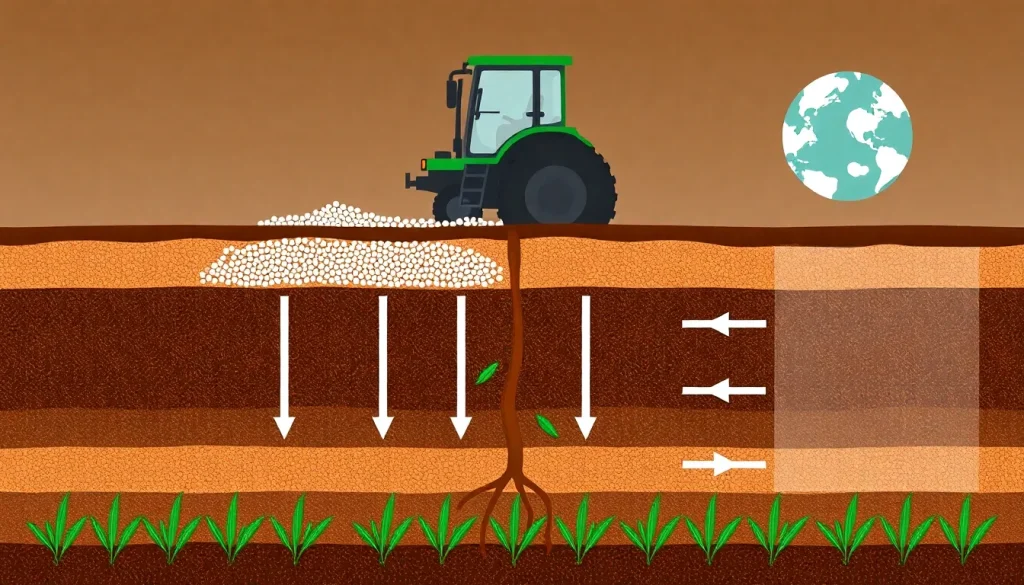
In essence, when farmers add nitrogen to the soil to boost crop yields, not all of that nitrogen is taken up by plants. A portion undergoes biological and chemical transformations mediated by soil microbes, leading to the production of N₂O as a byproduct. This process is influenced by soil temperature, moisture, oxygen availability, and the form and amount of nitrogen applied. Because nitrogen fertilizers are essential for modern agriculture, N₂O emissions from soils are an unintended but significant environmental cost of food production.
Overview
Nitrous oxide is one of the three primary greenhouse gases, alongside carbon dioxide (CO₂) and methane (CH₄). While it exists in much smaller atmospheric concentrations, its global warming potential is approximately 265 times greater than CO₂ over a 100-year time horizon, and it remains in the atmosphere for an average of 114 years. The Intergovernmental Panel on Climate Change (IPCC) identifies agriculture as the dominant source of anthropogenic N₂O, with fertilized soils contributing the largest share. Globally, direct emissions from agricultural soils are estimated at around 2.1 million tonnes of N₂O-N per year, with additional indirect emissions from nitrogen that leaches into waterways or volatilizes as ammonia and later converts to N₂O.
The issue is not limited to synthetic fertilizers; organic amendments such as manure, compost, and crop residues also release N₂O as they decompose. The rapid expansion of nitrogen fertilizer use since the mid-20th century, driven by the Green Revolution, has led to a sharp rise in atmospheric N₂O concentrations—from about 270 parts per billion (ppb) in pre-industrial times to over 330 ppb today. This increase is directly linked to human alteration of the global nitrogen cycle, which now exceeds planetary boundaries for nitrogen flows.
How It Works
N₂O emissions from fertilized soil are primarily the result of two microbial processes: nitrification and denitrification. Nitrification is an aerobic process carried out by bacteria and archaea that oxidize ammonium (NH₄⁺) from fertilizers into nitrate (NO₃⁻). During this conversion, a small fraction of the nitrogen is released as N₂O. Denitrification occurs under low-oxygen conditions, where facultative anaerobic bacteria reduce nitrate to nitrogen gas (N₂), with N₂O as an intermediate product. When denitrification is incomplete—often due to soil compaction, high moisture, or limited carbon availability—N₂O can escape to the atmosphere instead of being fully reduced to harmless N₂.
Several factors control the rate of these processes:
- Nitrogen availability: Higher application rates of fertilizer generally lead to greater N₂O emissions, especially when nitrogen exceeds crop demand.
- Soil moisture and aeration: Wet, poorly drained soils promote denitrification, while fluctuating wet-dry cycles can spike N₂O production from both nitrification and denitrification.
- Temperature: Microbial activity increases with temperature, so emissions tend to be higher in warm climates or during summer months.
- Soil organic carbon: Carbon provides energy for denitrifying microbes; soils rich in organic matter can emit more N₂O under anaerobic conditions.
- Fertilizer type and placement: Ammonium-based fertilizers, urea, and manure can all produce N₂O, but the timing and method of application influence emission rates.
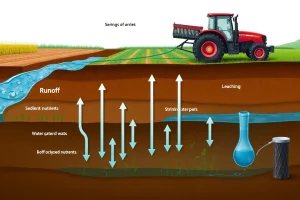
Additionally, a portion of applied nitrogen is lost through ammonia volatilization or nitrate leaching, leading to indirect N₂O emissions elsewhere—for example, when leached nitrate enters groundwater or surface waters and undergoes denitrification.
Main Causes or Drivers
The primary driver of N₂O emissions from fertilized soil is the over-application or inefficient use of nitrogen fertilizers. When nitrogen inputs exceed crop uptake, the surplus nitrogen becomes available for microbial processes that generate N₂O. This imbalance is common in intensive agricultural systems where maximizing yield often leads to excessive fertilizer use. Other key drivers include:
- Poor timing of fertilizer application: Applying nitrogen before heavy rainfall or outside the crop’s peak demand period increases the risk of N₂O loss.
- Soil compaction and poor drainage: These conditions create anaerobic microsites that favor denitrification and N₂O production.
- Monoculture and continuous cropping: Systems that rely heavily on nitrogen inputs without rotation or cover crops can deplete soil organic matter and disrupt the nitrogen cycle, potentially increasing emissions per unit of yield.
- Use of ammonium-based or urea fertilizers: These forms are particularly susceptible to nitrification and subsequent N₂O release, especially in warm, moist soils.
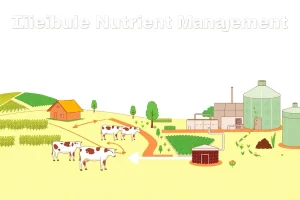
- Manure management: Storage and application of animal manure can lead to high N₂O emissions, both directly from the soil and indirectly from ammonia volatilization.
Climate and soil type also act as underlying drivers. For example, tropical and subtropical regions with high rainfall and warm temperatures tend to have higher baseline N₂O emissions, and the addition of nitrogen fertilizers can amplify these losses significantly.
Environmental and Human Impacts
Nitrous oxide is a powerful greenhouse gas that contributes to global warming and climate change. On a per-molecule basis, its radiative forcing is about 265 times that of CO₂, and it accounts for roughly 6% of total anthropogenic greenhouse gas emissions. Once emitted, N₂O can persist in the atmosphere for over a century, making its cumulative warming effect substantial. Additionally, N₂O is the most significant ozone-depleting substance emitted today, as it reaches the stratosphere and participates in reactions that destroy ozone molecules, potentially increasing human exposure to harmful ultraviolet radiation.
Beyond climate and ozone impacts, N₂O emissions from fertilized soil represent a loss of valuable nitrogen from agricultural systems, reducing nitrogen use efficiency and increasing costs for farmers. The nitrogen that is not converted to N₂O can also contribute to other environmental problems, such as nitrate contamination of drinking water, eutrophication of water bodies, and biodiversity loss through nitrogen deposition in natural ecosystems. These cascading effects make N₂O emissions a central concern in the broader context of sustainable nitrogen management.
Solutions
Mitigating N₂O emissions from fertilized soil involves a combination of agronomic practices, technological innovations, and policy measures. The core principle is to improve nitrogen use efficiency—ensuring that more of the applied nitrogen is taken up by crops and less is lost to the environment. Key strategies include:
- Right rate, right time, right source, right placement (4R nutrient stewardship): Applying fertilizer at the optimal rate, timing, and placement for crop uptake, and selecting the most appropriate fertilizer formulation.
- Nitrification inhibitors: Chemical compounds that slow the conversion of ammonium to nitrate, reducing N₂O production from both nitrification and subsequent denitrification. Examples include dicyandiamide (DCD) and nitrapyrin.
- Controlled-release fertilizers: Fertilizers coated or formulated to release nitrogen gradually, matching crop demand and reducing excess soil nitrogen.
- Improved water management: Avoiding over-irrigation and improving drainage can reduce anaerobic conditions that favor denitrification.
- Cover cropping and crop rotation: Using legumes or deep-rooted cover crops can scavenge residual nitrogen, improve soil structure, and reduce the need for synthetic fertilizers.
- Precision agriculture: Variable-rate application technologies and sensor-based monitoring can tailor nitrogen inputs to within-field variability, minimizing over-application.
- Organic farming practices: While not a guaranteed solution, organic systems often rely on slower-release nutrient sources and emphasize soil health, which can lower N₂O emissions per unit area, though yields may also be lower.
At the policy level, measures such as carbon pricing, subsidies for efficient fertilizer use, and regulations on manure management can incentivize adoption of these practices.
Benefits, Limitations and Trade-offs
Reducing N₂O emissions from fertilized soil offers clear benefits: slowing climate change, protecting the ozone layer, improving air and water quality, and increasing farm profitability through reduced fertilizer costs. However, implementing mitigation measures involves trade-offs. For instance, nitrification inhibitors can increase the cost of fertilizer and may not be effective in all soil types or climates. Controlled-release fertilizers are more expensive and may not always synchronize perfectly with crop demand. Cover crops require additional labor and management, and in some regions, they can compete with cash crops for water.
There is also a potential trade-off between N₂O mitigation and other environmental goals. Practices that reduce N₂O emissions, such as improved drainage, could increase nitrate leaching. Conversely, practices that reduce nitrate leaching, like constructed wetlands, might enhance N₂O emissions. Balancing these trade-offs requires a systems approach that considers the full nitrogen cycle and local conditions. Additionally, the focus on N₂O should not overshadow the need to reduce CO₂ and CH₄ emissions, as all greenhouse gases must be addressed to meet climate targets. Finally, the effectiveness of many mitigation practices varies with soil type, climate, and cropping system, so region-specific research and extension are essential.
FAQ
What is nitrous oxide emission from fertilized soil?
It is the release of nitrous oxide (N₂O) gas from agricultural soils where nitrogen-based fertilizers have been applied. Soil microbes convert fertilizer nitrogen into N₂O through nitrification and denitrification, contributing to climate change and ozone depletion.
How does fertilizer cause N₂O emissions?
Fertilizer adds nitrogen to the soil. When there is more nitrogen than plants can use, soil bacteria transform it. In aerobic conditions, nitrification produces some N₂O; in wet, low-oxygen conditions, denitrification converts nitrate to N₂O and N₂. Excess nitrogen, warm temperatures, and moisture increase emissions.
Why does N₂O from fertilized soil matter?
N₂O is a potent greenhouse gas with 265 times the warming effect of CO₂ and a long atmospheric lifetime. It also destroys stratospheric ozone. Agriculture is the largest human source, so reducing these emissions is essential for climate and environmental protection.
References
- IPCC (Intergovernmental Panel on Climate Change). 2019 Refinement to the 2006 IPCC Guidelines for National Greenhouse Gas Inventories, Volume 4: Agriculture, Forestry and Other Land Use.
- U.S. Environmental Protection Agency. Overview of Greenhouse Gases: Nitrous Oxide Emissions. https://www.epa.gov/ghgemissions/overview-greenhouse-gases
- Food and Agriculture Organization of the United Nations. Global Database on Greenhouse Gas Emissions from Agriculture. https://www.fao.org/faostat/en/#data/GT