In brief
At a glance
Quick Facts
- Four main categories
- Provisioning, regulating, supporting, and cultural services.
- Global economic value (2011 estimate)
- $125–145 trillion per year, exceeding global GDP at the time.
- Pollination value
- Insect pollination contributes an estimated $235–577 billion annually to global food production.
- Carbon storage
- Forests store about 45% of terrestrial carbon, helping regulate climate.
- Wetland services
- Wetlands cover about 6% of Earth's land surface but provide 40% of global ecosystem services.
- Millennium Ecosystem Assessment
- The 2005 MA found that 60% of ecosystem services were being degraded or used unsustainably.
Key Takeaways
- Ecosystem services are the many and varied benefits that humans freely gain from the natural environment and from properly-functioning ecosystems.
- They are commonly grouped into four categories: provisioning, regulating, supporting, and cultural services.
- Examples include food production, water purification, pollination, climate regulation, and recreational opportunities.
- These services are essential for human survival and economic prosperity, yet they are often undervalued or overlooked in policy and market decisions.
- Human activities such as deforestation, pollution, and overexploitation are degrading ecosystem services at an alarming rate, threatening long-term sustainability.
What Is an Ecosystem Service?
An ecosystem service is any positive benefit that wildlife or ecosystems provide to people. The concept frames the natural world as a provider of essential goods and services that sustain human life, health, and economic activity. These benefits can be direct, such as the provision of food, fresh water, and raw materials, or indirect, such as the regulation of climate, the purification of air and water, and the pollination of crops. The term emerged to help scientists, policymakers, and the public recognize the often invisible ways in which nature supports human well-being, and to integrate that value into decision-making.
The most widely accepted framework for understanding ecosystem services comes from the Millennium Ecosystem Assessment (MA), a major United Nations–backed study completed in 2005. The MA defined ecosystem services as “the benefits people obtain from ecosystems” and categorized them into four broad types: provisioning services, regulating services, supporting services, and cultural services. This classification has since been adopted and refined by international initiatives such as the Intergovernmental Science-Policy Platform on Biodiversity and Ecosystem Services (IPBES) and the System of Environmental-Economic Accounting (SEEA). By making the value of nature visible, the ecosystem services concept helps bridge the gap between ecology and economics, and supports more sustainable management of natural resources.
How It Works
Ecosystem services arise from the complex interactions between living organisms and their physical environment. These interactions are driven by ecosystem functions—the biological, geochemical, and physical processes that occur within an ecosystem. For example, plants convert sunlight into biomass through photosynthesis, a process that not only produces food but also generates oxygen and sequesters carbon. Soil organisms decompose organic matter, releasing nutrients that support plant growth and filtering pollutants from water. These functions become services when they contribute to human well-being, whether directly or indirectly.
The flow of services depends on the condition and extent of ecosystems, which are in turn influenced by biodiversity, climate, and human management. Biodiversity often acts as an insurance policy: a diverse ecosystem is more resilient and can maintain service provision even under stress. For instance, a forest with a variety of tree species is better able to resist pests and diseases, ensuring continued timber production and carbon storage. Human activities can enhance or degrade these services. Sustainable practices like agroforestry can boost soil fertility and water retention, while deforestation or overfishing can collapse the very services on which communities depend.
Importance and Impact
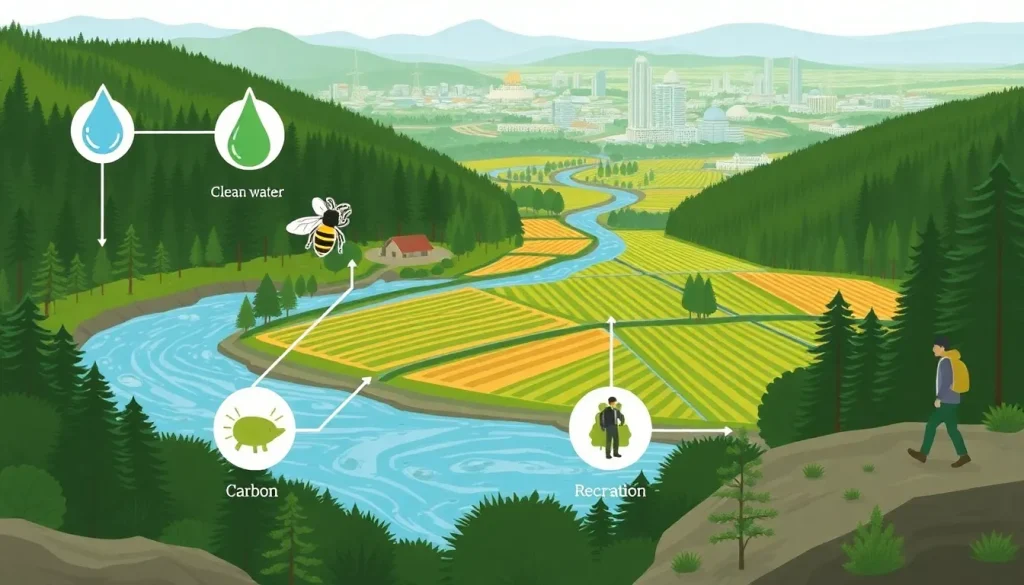
Ecosystem services are fundamental to human survival and quality of life. Provisioning services supply the food we eat, the water we drink, and the materials we use for shelter, clothing, and medicine. Regulating services maintain the environmental conditions that make life possible, such as a stable climate, clean air, and protection from natural hazards like floods and storms. Supporting services, including nutrient cycling and soil formation, underpin all other services. Cultural services contribute to mental and physical health, recreation, and spiritual fulfillment.
The economic value of ecosystem services is immense, though often not captured in traditional markets. A landmark study published in 1997 estimated the annual value of global ecosystem services at $33 trillion, later updated to $125–$145 trillion in 2011. For context, the latter figure exceeded the entire global gross domestic product at the time. Beyond monetary valuation, the loss of ecosystem services disproportionately affects the world’s poorest communities, who rely most directly on nature for their livelihoods. Recognizing this importance has led to the integration of ecosystem services into policy frameworks, such as payments for ecosystem services (PES) programs and natural capital accounting.
Examples
Ecosystem services are all around us, often taken for granted. Here are concrete examples from each category:
- Provisioning services: Forests provide timber, fuelwood, and medicinal plants; oceans and freshwater systems supply fish and shellfish; agricultural lands produce crops and livestock.
- Regulating services: Wetlands filter pollutants from water and buffer against floods; forests sequester carbon dioxide, mitigating climate change; mangroves and coral reefs protect coastlines from storm surges.
- Supporting services: Soil formation enables plant growth; nutrient cycling maintains soil fertility; photosynthesis produces oxygen and forms the base of food webs.
- Cultural services: National parks and scenic landscapes offer recreation, tourism, and inspiration; many indigenous cultures derive spiritual identity from their ancestral lands and waters.
In urban areas, green spaces provide multiple services: trees improve air quality, reduce heat island effects, and offer aesthetic and recreational benefits. Pollination by wild insects is a critical service for agriculture, with an estimated global value of hundreds of billions of dollars annually. These examples illustrate how ecosystem services are not confined to remote wilderness but are integral to both rural and urban life.
Main Causes or Drivers of Ecosystem Service Loss
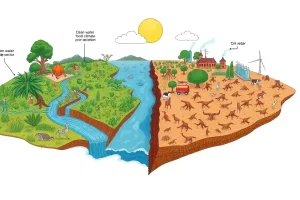
The degradation of ecosystem services is driven primarily by human activities that alter or destroy natural habitats. The most significant direct drivers include land-use change, overexploitation of resources, pollution, invasive species, and climate change. Deforestation for agriculture or urban expansion, for example, not only reduces timber supply but also diminishes carbon storage, disrupts water cycles, and leads to biodiversity loss. Overfishing depletes fish stocks and can cause cascading effects throughout marine food webs, impairing the ocean’s ability to provide food and regulate climate.
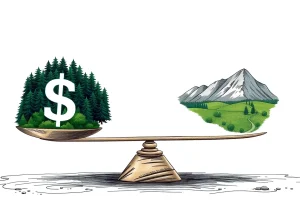
Indirect drivers, such as population growth, economic development, and governance failures, exacerbate these pressures. Market mechanisms often fail to account for the true value of ecosystem services, leading to their overuse and degradation. For instance, a forest may be cleared for short-term agricultural gain without considering the long-term loss of flood protection, water purification, and carbon sequestration. Climate change acts as a threat multiplier, altering the distribution and functioning of ecosystems and making them more vulnerable to other stressors. Addressing these drivers requires integrated approaches that consider the full range of services provided by ecosystems.
Benefits, Limitations and Trade-offs
The ecosystem services framework offers significant benefits for conservation and sustainable development. It provides a common language for ecologists, economists, and policymakers, facilitating interdisciplinary collaboration. By quantifying and valuing services, it can make the case for protecting nature in economic terms that resonate with decision-makers. This has led to innovative policy tools such as payments for ecosystem services, where landowners are compensated for maintaining forests that provide water purification or carbon storage.
However, the approach has limitations and potential trade-offs. Assigning monetary values to nature is controversial, as some argue it commodifies the intrinsic worth of biodiversity and may overlook cultural or spiritual values that are difficult to quantify. There is also a risk of focusing only on services that have immediate economic benefits, while neglecting supporting services that are harder to measure but essential for long-term ecosystem health. Trade-offs can occur when maximizing one service, such as agricultural production, reduces others, like water quality or biodiversity. Effective management requires recognizing these trade-offs and striving for a balance that sustains multiple services over time.
Common Misconceptions
One common misconception is that ecosystem services are only about putting a price tag on nature. While economic valuation is a tool used within the framework, the concept is broader and includes qualitative, social, and cultural values. Another misunderstanding is that ecosystem services are free and limitless. In reality, they depend on healthy, functioning ecosystems that can be degraded or exhausted if not managed sustainably. Some people also confuse ecosystem services with ecosystem functions; functions are the natural processes, while services are the benefits those processes provide to humans. Finally, there is a misconception that only pristine wilderness areas provide services. Even modified or urban ecosystems, such as city parks and agricultural lands, can deliver valuable services when managed appropriately.
FAQ
What are the four types of ecosystem services?
The four types are provisioning services (e.g., food, water), regulating services (e.g., climate control, flood regulation), supporting services (e.g., nutrient cycling, soil formation), and cultural services (e.g., recreation, spiritual enrichment).
How do ecosystem services benefit humans?
They provide essential resources like food and clean water, regulate environmental conditions such as air quality and climate, support processes that enable life, and offer cultural, recreational, and aesthetic value that enhances well-being.
Why are ecosystem services under threat?
They are threatened by habitat destruction, overexploitation, pollution, invasive species, and climate change. These pressures are often driven by economic activities that do not account for the true value of nature, leading to degradation and loss of services.
References
- Millennium Ecosystem Assessment. (2005). Ecosystems and Human Well-being: Synthesis. Island Press.
- Costanza, R., et al. (2014). Changes in the global value of ecosystem services. Global Environmental Change, 26, 152-158.
- Intergovernmental Science-Policy Platform on Biodiversity and Ecosystem Services (IPBES). (2019). Global Assessment Report on Biodiversity and Ecosystem Services.