In brief
At a glance
Quick Facts
- Definition
- The world's stock of natural resources, including geology, soil, air, water, and all living organisms, viewed as assets that provide ecosystem services.
- Key Proponents
- Organizations such as the World Bank, UN Environment Programme, and the Capitals Coalition promote natural capital accounting.
- Key Critics
- Environmental ethicists, some indigenous groups, and deep ecology advocates argue it commodifies nature and ignores intrinsic values.
- Valuation Methods
- Include market pricing, replacement cost, travel cost, and contingent valuation surveys to estimate monetary values of ecosystem services.
- Landmark Study
- Costanza et al. (1997) estimated global ecosystem services at $33 trillion per year, sparking widespread debate.
- Applications
- Used in natural capital accounting, corporate sustainability reporting, payments for ecosystem services, and biodiversity offsetting.
Key Takeaways
- Natural capital is a framework that treats ecosystems and natural resources as assets providing essential services to humanity.
- It aims to integrate environmental values into economic and policy decisions, highlighting the costs of environmental degradation.
- Critics argue that reducing nature to financial terms can oversimplify complex systems and lead to commodification, undermining intrinsic values.
- The framework’s effectiveness depends on careful application, complementing other conservation approaches and respecting ecological and cultural contexts.
What Is Natural Capital: Useful Framework or Dangerous Simplification?
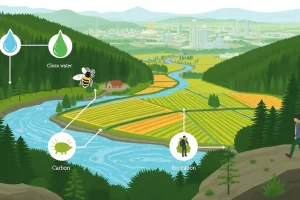
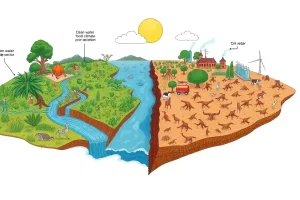
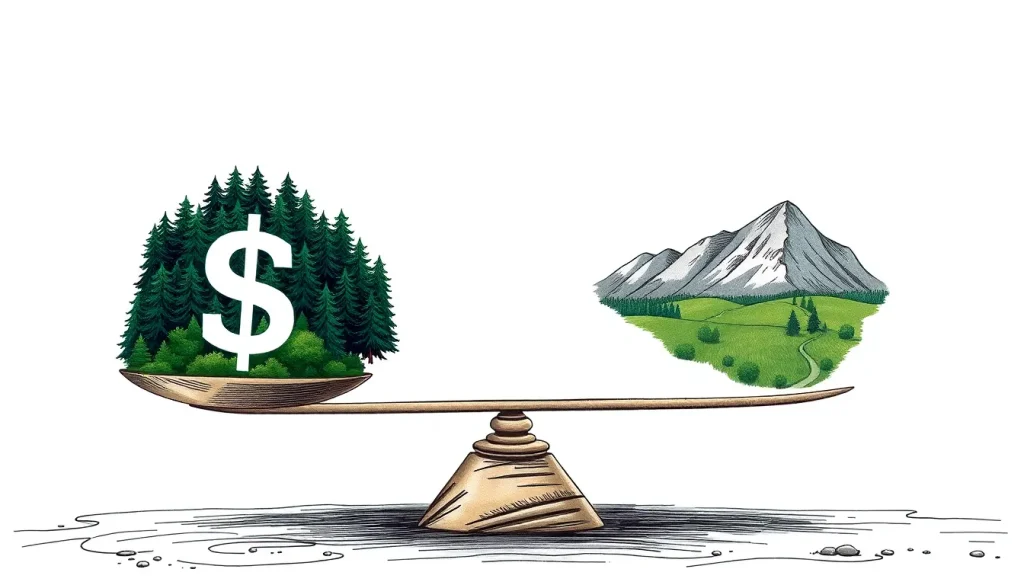
Natural capital is a concept that frames the Earth’s natural resources—such as forests, water, soil, and biodiversity—as a form of capital, analogous to financial or manufactured capital. The idea is that these natural assets provide a flow of benefits, or “ecosystem services,” to humanity, including clean air, water filtration, pollination, and climate regulation. By assigning value to these services, the natural capital framework aims to make the economic importance of nature visible in decision-making, encouraging conservation and sustainable use. However, the approach is not without controversy. Critics argue that reducing nature to a form of capital risks oversimplifying complex ecological systems and may lead to the commodification of nature, where everything is assigned a price and potentially traded in markets, undermining ethical, cultural, and intrinsic values.
The debate over natural capital is fundamentally about how societies value and interact with the natural world. Proponents see it as a pragmatic tool to bridge the gap between economics and ecology, enabling businesses and governments to account for environmental degradation in their balance sheets. Opponents warn that it could entrench a neoliberal worldview, where nature is only worth protecting if it can be monetized, and where market-based mechanisms like biodiversity offsets and payments for ecosystem services may have unintended negative consequences. This article explores the origins, mechanics, evidence, benefits, limitations, and common misconceptions surrounding the natural capital framework, providing a balanced overview of its role in contemporary environmental policy.
Overview
Natural capital is one of several forms of capital (alongside human, social, and manufactured capital) that underpin economic activity and human well-being. The framework categorizes natural assets into renewable resources (such as forests and fisheries), non-renewable resources (such as minerals and fossil fuels), and the broader life-support systems (such as the atmosphere and biodiversity). The concept is closely tied to ecosystem services, which are the benefits people derive from nature. These services are often grouped into provisioning services (e.g., food, water), regulating services (e.g., climate regulation, flood control), supporting services (e.g., nutrient cycling), and cultural services (e.g., recreation, spiritual value).
The natural capital approach has been adopted by international organizations, national governments, and corporations to inform policy, accounting, and investment decisions. For instance, the United Nations’ System of Environmental-Economic Accounting (SEEA) provides a standardized method for integrating natural capital into national accounts. However, the framework’s application varies widely, from comprehensive natural capital accounting to more targeted tools like cost-benefit analysis of specific projects. The debate centers on whether this economic framing ultimately serves or undermines the goal of long-term environmental sustainability.
History
The term “natural capital” has roots in the field of ecological economics, which emerged in the 1980s as a critique of traditional economics’ neglect of environmental limits. Early thinkers like E.F. Schumacher and Herman Daly argued that natural resources are not merely inputs to production but are fundamental to the economy’s functioning. The concept gained wider recognition with the 1997 publication of “The value of the world’s ecosystem services and natural capital” by Robert Costanza and colleagues, which estimated the annual value of global ecosystem services at $33 trillion (in 1997 dollars), nearly twice the global GNP at the time. This study, while controversial, sparked intense debate and brought the idea of valuing nature into mainstream discourse.
In the following decades, initiatives such as the Millennium Ecosystem Assessment (2005) and The Economics of Ecosystems and Biodiversity (TEEB) study further popularized the natural capital framework. The establishment of the Natural Capital Coalition (now Capitals Coalition) and the development of the Natural Capital Protocol provided businesses with guidance on measuring and valuing their impacts and dependencies on natural capital. Meanwhile, critics from environmental ethics, political ecology, and indigenous rights movements have consistently challenged the framework, arguing that it represents a dangerous shift toward treating nature as a commodity and ignoring the rights of nature and local communities.
How It Works
The natural capital framework operates by identifying, quantifying, and often monetizing the stocks of natural assets and the flows of ecosystem services they provide. The process typically involves several steps: first, defining the scope and boundaries of the natural capital assessment; second, measuring the extent and condition of natural assets (e.g., hectares of wetland, population of a species); third, quantifying the ecosystem services provided (e.g., cubic meters of water filtered, tons of carbon sequestered); and fourth, valuing these services in monetary or non-monetary terms. Valuation methods include market pricing (for goods like timber), revealed preference methods (such as travel cost for recreation), stated preference methods (like contingent valuation surveys), and cost-based approaches (e.g., replacement cost for water purification).
These valuations can then be integrated into decision-making tools such as natural capital accounts, environmental profit and loss statements, or extended cost-benefit analyses. For example, a government might use natural capital accounts to track whether its natural wealth is being depleted over time, while a company might assess how its supply chain depends on and impacts water resources. The framework also supports market-based instruments like payments for ecosystem services (PES), where beneficiaries pay landowners for maintaining services, and biodiversity offsets, where developers compensate for habitat loss by restoring or protecting equivalent habitats elsewhere. Critics point out that these mechanisms often commodify nature and can lead to perverse outcomes if not carefully regulated.
Benefits, Limitations and Trade-offs
Benefits: The natural capital framework can make the economic case for conservation more compelling to policymakers and businesses who primarily think in financial terms. It helps reveal hidden costs of environmental degradation and can justify investments in green infrastructure. For instance, New York City’s decision to protect the Catskill watershed to maintain water quality saved billions of dollars compared to building a filtration plant. Natural capital accounting can also improve national wealth measures by including natural assets, potentially shifting policy priorities toward sustainability. Additionally, the framework provides a common language for cross-sector collaboration and can mobilize private finance for conservation through mechanisms like green bonds.
Limitations: Monetizing nature is fraught with methodological challenges. Many ecosystem services are difficult to value accurately, and the results can vary widely depending on assumptions. There is a risk of “pricing the priceless,” where ethical and cultural values are reduced to monetary figures, potentially leading to decisions that trade off irreplaceable natural assets for short-term gains. The framework may also oversimplify complex ecological dynamics, ignoring tipping points, non-linear changes, and the intrinsic interconnectedness of ecosystems. Furthermore, critics argue that natural capital approaches can reinforce existing power imbalances, allowing wealthy actors to offset their environmental impacts in one area while continuing to degrade elsewhere, often at the expense of marginalized communities.
Trade-offs and controversies: The use of natural capital in policy involves trade-offs between economic efficiency and equity, and between anthropocentric and ecocentric values. While some argue that putting a price on nature is the only way to save it in a market-driven world, others contend that this logic ultimately legitimizes the very system that causes environmental destruction. The debate is not merely academic; it influences real-world policies on climate change, biodiversity, and land use. A balanced approach may involve using natural capital accounting as one tool among many, while also strengthening regulations, recognizing the rights of nature, and supporting community-based conservation that does not rely on market mechanisms.
Common Misconceptions
FAQ
What is natural capital?
Natural capital is the world's stock of natural resources—such as forests, water, soil, and biodiversity—viewed as assets that provide a flow of benefits or ecosystem services to people.
How does the natural capital framework work?
It works by identifying, measuring, and often valuing natural assets and the services they provide, then integrating that information into decision-making tools like natural capital accounts, cost-benefit analyses, or market-based instruments.
Why is the natural capital approach controversial?
It is controversial because while it can highlight nature's economic importance, critics argue it reduces complex ecosystems to monetary values, risks commodifying nature, and may undermine ethical, cultural, and intrinsic values.
References
- Costanza, R., et al. (1997). The value of the world's ecosystem services and natural capital. Nature, 387, 253-260.
- Natural Capital Coalition. (2016). Natural Capital Protocol.
- United Nations. (2014). System of Environmental-Economic Accounting 2012: Central Framework.