In brief
At a glance
Quick Facts
- Global electricity share
- Nuclear power provides about 10% of the world's electricity.
- Lifecycle carbon emissions
- Nuclear power has lifecycle emissions of around 12 g CO2-eq/kWh, comparable to wind and solar.
- Planetary boundaries defined
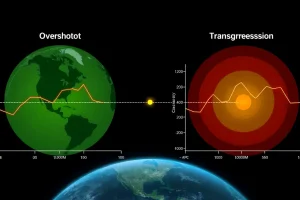
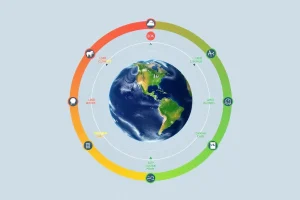
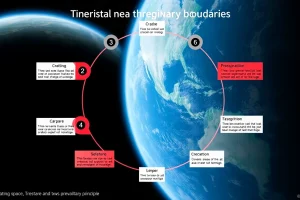
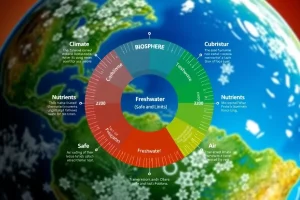
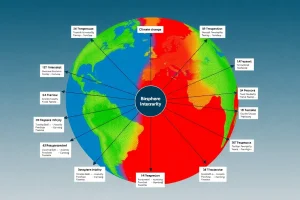
- The framework identifies nine Earth system processes, including climate change, freshwater use, and novel entities.
- Climate boundary status
- The climate change boundary (350 ppm CO2) has been exceeded; current levels are above 400 ppm.
- Water consumption
- Nuclear plants can consume 1,500–2,500 liters of water per megawatt-hour for cooling.
- Radioactive waste
- High-level waste remains hazardous for over 10,000 years and requires deep geological disposal.
- Novel entities boundary
- The novel entities boundary, which includes radioactive materials, is not yet quantified.
- Accident impacts
- Major accidents like Chernobyl and Fukushima have caused long-term environmental contamination and displacement.
Key Takeaways
- Nuclear power is a low-carbon energy source that can help mitigate climate change, a core planetary boundary currently in the high-risk zone.
- However, nuclear energy also places pressure on other planetary boundaries, particularly freshwater use, novel entities (radioactive waste), and biosphere integrity.
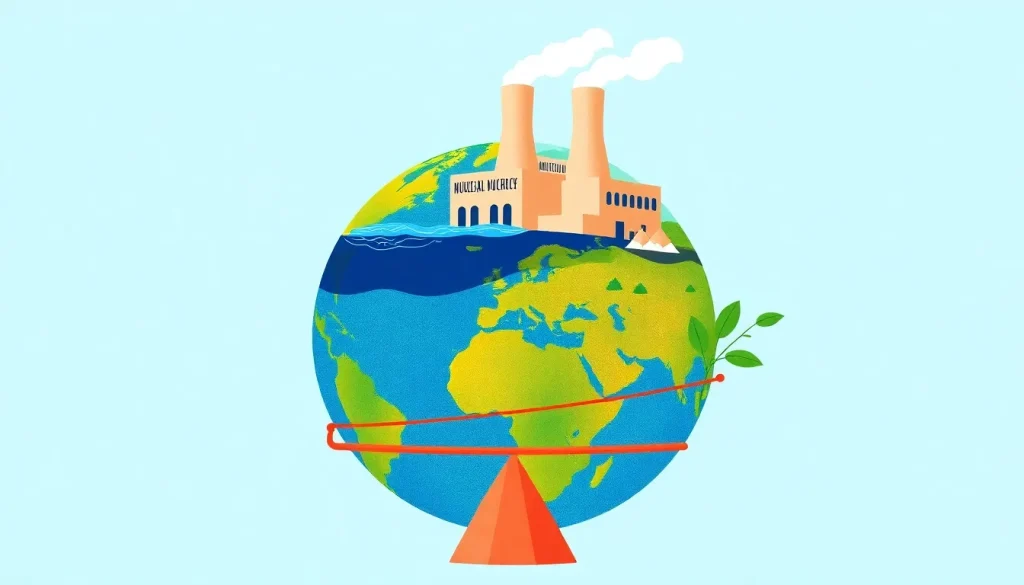
- The planetary boundaries framework provides a holistic lens to assess nuclear power’s overall environmental sustainability beyond just carbon emissions.
- Balancing nuclear power’s climate benefits against its environmental and safety trade-offs is critical for informed energy policy and sustainable development.
What Is Nuclear Power and Planetary Boundaries?
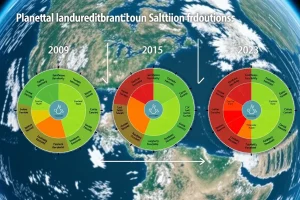
Nuclear power is the generation of electricity through controlled nuclear fission, in which the splitting of heavy atomic nuclei (typically uranium-235) releases heat. This heat produces steam that drives turbines connected to generators. The planetary boundaries framework, introduced in 2009 and updated subsequently, defines a safe operating space for humanity by identifying nine Earth system processes that regulate the stability and resilience of the planet. These boundaries include climate change, biosphere integrity, land-system change, freshwater use, biogeochemical flows, ocean acidification, atmospheric aerosol loading, stratospheric ozone depletion, and novel entities. Transgressing one or more boundaries increases the risk of large-scale, irreversible environmental change.
Nuclear power sits at the intersection of these two concepts. As a low-carbon energy source, it can help reduce greenhouse gas emissions and keep humanity within the climate change boundary. At the same time, nuclear power relies on resource extraction, water-intensive cooling, and produces long-lived radioactive waste, thereby interacting with boundaries such as freshwater use, novel entities, and biosphere integrity. Evaluating nuclear power through the planetary boundaries lens provides a more complete picture of its environmental sustainability.
Overview
Nuclear power provides about 10% of global electricity generation and is one of the largest sources of low-carbon baseload power. Its role in climate change mitigation is widely recognized by organizations such as the Intergovernmental Panel on Climate Change (IPCC). However, the planetary boundaries framework highlights that climate is only one of several critical Earth system processes. A narrow focus on decarbonization can lead to burden-shifting, where solving one environmental problem exacerbates others. Nuclear power exemplifies this tension: it offers a pathway to reduce carbon emissions but introduces challenges related to radioactive waste, water consumption, and potential catastrophic accidents. Understanding these trade-offs is vital for policymakers, industry, and the public as they navigate the transition to a sustainable energy system.
How It Works
Nuclear power plants use fission to split uranium-235 atoms, releasing energy in the form of heat. This heat is used to produce steam, which drives a turbine-generator to produce electricity. The process emits virtually no carbon dioxide during operation, and lifecycle emissions (including mining, construction, and decommissioning) are comparable to wind and solar power. The planetary boundaries framework, on the other hand, quantifies the safe limits for nine Earth system processes. Each boundary is defined by a control variable and a threshold value that humanity should not exceed. For example, the climate change boundary is based on atmospheric CO2 concentration (350 ppm) and radiative forcing. The novel entities boundary, which includes radioactive materials, is not yet quantified due to the complexity of assessing synthetic substances. Nuclear power’s interactions with these boundaries are assessed by examining its lifecycle impacts on each process.
Environmental and Human Impacts
Nuclear power’s most significant positive impact is on the climate change boundary. By displacing fossil fuels, it avoids large quantities of CO2 emissions. However, nuclear power also affects other boundaries. Freshwater use is a major concern: nuclear plants require substantial water for cooling, and in water-stressed regions, this can strain local resources. The novel entities boundary is directly relevant because nuclear power produces long-lived radioactive waste that must be isolated for thousands of years. Accidental releases, such as Chernobyl and Fukushima, have caused severe local and regional contamination, impacting biosphere integrity and human health. Mining and milling of uranium can lead to land-system change and chemical pollution. On the human side, radiation exposure poses cancer risks, and large-scale accidents can displace populations and cause long-term psychological effects.
Benefits, Limitations and Trade-offs
Nuclear power offers several benefits: it is a reliable, low-carbon baseload electricity source with a high energy density, meaning a small amount of fuel produces large amounts of energy. It can operate continuously, complementing intermittent renewables. However, limitations include high upfront capital costs, long construction times, and unresolved waste disposal. The risk of severe accidents, while low, carries catastrophic potential. Proliferation risks also exist, as civilian nuclear technology can be diverted to weapons programs. Trade-offs involve comparing these factors with other energy sources. For example, coal has higher lifecycle emissions and causes more air pollution deaths, but nuclear has unique waste and accident risks. Renewables like wind and solar have lower environmental risks but require large land areas and energy storage solutions. The planetary boundaries framework helps weigh these trade-offs systematically.
Connections to Other Systems
Nuclear power is deeply interconnected with global energy, climate, water, and waste systems. In the energy system, nuclear provides baseload stability that supports grid integration of variable renewables. In the climate system, it reduces cumulative carbon emissions, helping to stay within the climate boundary. However, its water demands link it to the freshwater boundary, especially in regions already experiencing scarcity. The nuclear fuel cycle connects to mining, processing, and waste management systems, each with their own environmental footprints. Geopolitically, nuclear energy ties into non-proliferation regimes and international cooperation. The novel entities boundary connects nuclear waste to broader chemical pollution issues, as both involve persistent, toxic substances. Understanding these interconnections is essential for holistic policy design.
Common Misconceptions
One common misconception is that nuclear power is completely emission-free. While operation produces no CO2, lifecycle emissions from construction, fuel processing, and decommissioning are non-zero, though very low. Another is that nuclear waste is unmanageable; deep geological repositories are technically feasible and have been implemented in some countries, though political and social acceptance remains a challenge. Some believe nuclear power is inherently unsafe, but modern reactor designs incorporate passive safety features that significantly reduce accident risks. Conversely, some argue that nuclear is indispensable for solving climate change, yet scenarios exist where 100% renewable energy systems can meet global demand with sufficient storage and grid upgrades. Finally, the idea that nuclear power has no impact on planetary boundaries beyond climate is false—it affects multiple boundaries, and these must be managed.
FAQ
What is nuclear power?
Nuclear power is electricity generated by controlled nuclear fission, where splitting atoms release heat to produce steam that drives turbines.
How does nuclear power affect planetary boundaries?
It helps reduce pressure on the climate change boundary by providing low-carbon energy, but it increases pressure on freshwater use, novel entities (radioactive waste), and biosphere integrity.
Why does nuclear power matter for sustainability?
It offers a reliable, low-carbon energy source that can support climate goals, but its environmental and safety trade-offs must be carefully managed to avoid undermining other planetary boundaries.
References
- Rockström, J., et al. (2009). A safe operating space for humanity. Nature, 461, 472–475.
- Steffen, W., et al. (2015). Planetary boundaries: Guiding human development on a changing planet. Science, 347(6223), 1259855.
- IPCC (2014). Climate Change 2014: Mitigation of Climate Change. Contribution of Working Group III to the Fifth Assessment Report.
- IAEA (2021). Nuclear Power and Sustainable Development. International Atomic Energy Agency.