In brief
At a glance
Quick Facts
- Core principle
- Rewilding focuses on restoring natural processes rather than maintaining a specific species composition.
- Classic example
- The reintroduction of wolves to Yellowstone National Park in 1995 triggered a trophic cascade that restored vegetation and altered river courses.
- Passive vs. active
- Rewilding can be passive (allowing natural regeneration) or active (reintroducing species and engineering habitats).
- Keystone species
- Large herbivores and apex predators are often key to rewilding because they shape ecosystems through grazing, predation, and seed dispersal.
- Global reach
- Rewilding projects exist on every continent except Antarctica, from the European Green Belt to the Yellowstone to Yukon initiative.
- Carbon benefits
- Rewilded ecosystems like forests and peatlands can sequester significant amounts of carbon, aiding climate change mitigation.
Key Takeaways
- Rewilding is a conservation approach that aims to restore self-sustaining ecosystems by reintroducing native species and allowing natural processes to dominate.
- It often focuses on keystone species, such as large herbivores and apex predators, which have a disproportionate impact on ecosystem structure.
- Evidence shows that rewilding can increase biodiversity, improve ecosystem services, and enhance resilience, but outcomes vary by project.
- Successful rewilding requires long-term commitment, community involvement, and adaptive management to address ecological and social challenges.
What Is Rewilding and Does It Work?
Rewilding is a progressive approach to conservation that seeks to restore the natural functioning of ecosystems by reintroducing missing species and allowing natural processes to shape the landscape. Unlike traditional conservation, which often focuses on preserving specific species or habitats in a static state, rewilding aims to re-establish dynamic, self-regulating ecological communities. The ultimate goal is to create ecosystems that are resilient, biodiverse, and require minimal ongoing human intervention. The question of whether rewilding works is complex: evidence from various projects indicates that it can successfully restore ecological processes and increase biodiversity, but its effectiveness depends on factors such as scale, species selection, and long-term management.
Rewilding is rooted in the understanding that many ecosystems have been degraded by human activities, including habitat destruction, overhunting, and the removal of keystone species. By reintroducing these species or allowing natural processes to resume, rewilding attempts to reverse these declines. It is not a one-size-fits-all solution; rather, it encompasses a spectrum of interventions, from passive rewilding (simply allowing land to return to a wild state) to active rewilding (reintroducing species and engineering habitats). The concept has gained traction as a hopeful and proactive conservation strategy, but it also raises debates about feasibility, ecological risks, and socio-economic impacts.
Overview
Rewilding is a conservation philosophy that emphasizes the restoration of ecosystem functions and processes rather than the preservation of a particular species composition. It is based on the idea that ecosystems are healthiest when they are complete, with all their native species present and interacting. The term “rewilding” was coined in the 1990s and has since evolved into a global movement with diverse interpretations. At its core, rewilding seeks to reverse the loss of biodiversity by giving nature the space and freedom to heal itself. This often involves reintroducing apex predators and large herbivores, which play critical roles in shaping ecosystems through processes like predation, grazing, and seed dispersal. Rewilding projects range from small-scale urban initiatives to vast landscape-level efforts, such as the European Green Belt or the Yellowstone to Yukon Conservation Initiative.
How It Works
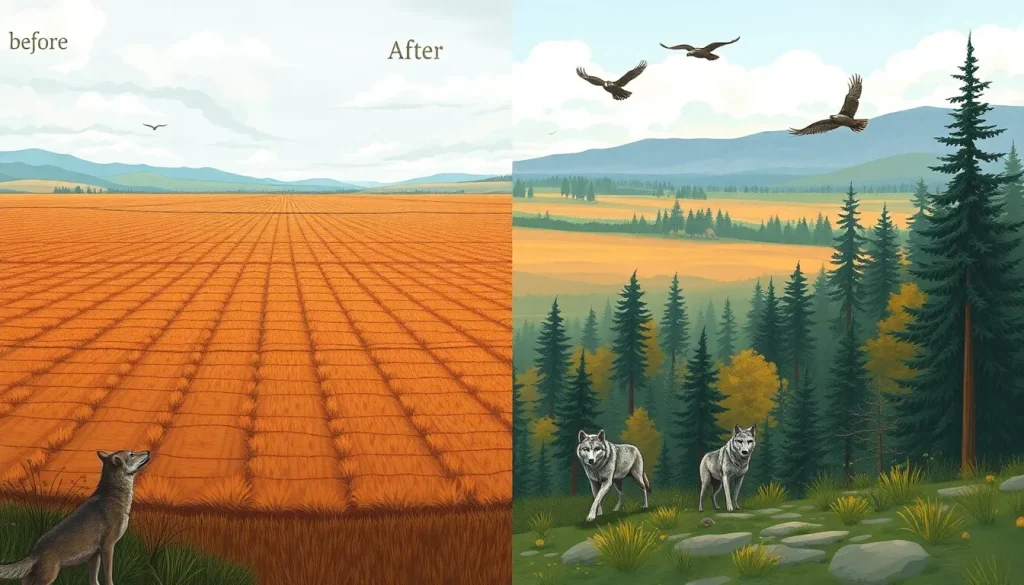
Rewilding operates on the principle that ecosystems are driven by “keystone species” and natural disturbances. The process typically involves several steps: first, identifying the missing ecological functions in a degraded landscape; second, reintroducing species that can restore those functions; and third, allowing natural processes like predation, herbivory, and succession to shape the ecosystem. For example, the reintroduction of wolves to Yellowstone National Park in 1995 triggered a trophic cascade: wolves reduced elk populations, which allowed overbrowsed willow and aspen to recover, benefiting beavers and songbirds. Similarly, the return of large herbivores like bison or wild horses can maintain open grasslands through grazing. Rewilding can also be passive, such as abandoning agricultural land and letting forests regenerate naturally. In marine environments, rewilding might involve restoring oyster reefs or protecting areas from fishing to allow fish populations to recover. The key is to restore natural processes rather than micromanage species.
What the Evidence Shows
Scientific studies on rewilding have demonstrated both successes and challenges. In Yellowstone, the reintroduction of wolves led to increased biodiversity and changes in river morphology due to recovering vegetation. In the Oostvaardersplassen reserve in the Netherlands, the introduction of large herbivores created a dynamic grassland ecosystem, though it also sparked controversy over animal welfare during harsh winters. A meta-analysis of rewilding projects found that they often increase species richness and abundance, particularly for plants and invertebrates. However, the evidence also shows that outcomes are highly context-dependent. Factors such as the size of the rewilded area, connectivity to other habitats, and the presence of keystone species influence success. Long-term monitoring is essential, as ecological changes can take decades to manifest. Overall, rewilding has a positive track record for restoring ecological processes, but it is not a guaranteed solution and requires careful planning.
Importance and Impact
Rewilding matters because it addresses the root causes of biodiversity loss and ecosystem degradation. By restoring natural processes, it can enhance ecosystem services such as pollination, water purification, and carbon sequestration. For instance, rewilded peatlands and forests can store significant amounts of carbon, helping to mitigate climate change. Rewilding also has cultural and economic benefits, including ecotourism and recreational opportunities. Moreover, it fosters a deeper connection between people and nature, promoting conservation ethics. On a global scale, rewilding contributes to international targets like the UN Decade on Ecosystem Restoration. However, its impact extends beyond ecology; it can also revitalize rural economies and inspire new models of coexistence between humans and wildlife.
Benefits, Limitations and Trade-offs
Rewilding offers numerous benefits: increased biodiversity, improved ecosystem resilience, and enhanced ecosystem services. It can also be more cost-effective than intensive habitat management in the long term. However, rewilding is not without limitations and trade-offs. One major challenge is land availability, especially in densely populated regions where rewilding may compete with agriculture or development. The reintroduction of large predators can lead to conflicts with livestock farmers and raise public safety concerns. There are also ecological risks, such as the potential for introduced species to become invasive or disrupt existing ecosystems. Additionally, rewilding often requires long-term commitment and funding, which can be difficult to secure. Social acceptance is crucial; without local community support, projects may fail. Thus, successful rewilding requires balancing ecological goals with socio-economic realities.
Common Misconceptions
A common misconception is that rewilding aims to return ecosystems to a pristine, pre-human state. In reality, rewilding focuses on restoring ecological functions rather than recreating a historical baseline. Another myth is that rewilding always involves reintroducing large, dangerous predators. While apex predators are often important, rewilding can also involve plants, insects, or ecosystem engineers like beavers. Some people believe rewilding means abandoning land and letting it become unmanaged wilderness, but many projects require active intervention, especially in the early stages. Finally, rewilding is sometimes seen as anti-human or a threat to livelihoods, but many initiatives integrate sustainable land uses and community benefits.
FAQ
What is rewilding?
Rewilding is a conservation approach that aims to restore ecosystems by reintroducing native species and allowing natural processes to shape the landscape, with the goal of creating self-sustaining, biodiverse environments.
How does rewilding work?
Rewilding works by identifying missing ecological functions, reintroducing keystone species (such as predators or large herbivores), and then letting natural processes like predation, grazing, and succession drive ecosystem recovery. It can also involve passive methods like land abandonment.
Why does rewilding matter?
Rewilding matters because it addresses biodiversity loss, restores ecosystem services like carbon sequestration and water purification, and can help mitigate climate change. It also provides cultural and economic benefits through ecotourism and reconnecting people with nature.
References
- Soulé, M. E., & Noss, R. F. (1998). Rewilding and biodiversity: complementary goals for continental conservation. Wild Earth, 8(3), 18-28.
- Svenning, J. C., et al. (2016). Science for a wilder Anthropocene: Synthesis and future directions for trophic rewilding research. Proceedings of the National Academy of Sciences, 113(4), 898-906.
- IUCN Commission on Ecosystem Management. (2021). Rewilding principles and guidance. International Union for Conservation of Nature.