In brief
At a glance
Quick Facts
- Definition
- Carbon neutral means that the net carbon emissions associated with a product are zero, achieved through a combination of emission reductions and carbon offsets.
- Offset unit
- A carbon offset represents one metric ton of CO2e reduced or removed from the atmosphere by a certified project.
- Emission scopes
- The Greenhouse Gas Protocol categorizes emissions into Scope 1 (direct), Scope 2 (energy), and Scope 3 (value chain).
- Key standard
- PAS 2060 is an internationally recognized standard for demonstrating carbon neutrality.
- Offset quality criterion
- Additionality is a key quality criterion for offsets, meaning the emission reduction would not have occurred without the offset project.
- Not net zero
- Carbon neutral claims are not the same as net zero; net zero requires deeper emission cuts across the entire value chain.
Key Takeaways
- Carbon neutral claims mean that a product’s carbon footprint has been calculated and balanced through emission reductions and carbon offsets.
- Not all carbon neutral claims are equal; the scope of emissions covered, the quality of offsets, and the verification process vary widely.
- Look for third-party certifications and transparent reporting to ensure the claim is credible and not just greenwashing.
- Prioritize products that focus on reducing their own emissions first, using offsets only as a complementary measure.
What Is Carbon Neutral Product Claims: What to Check?
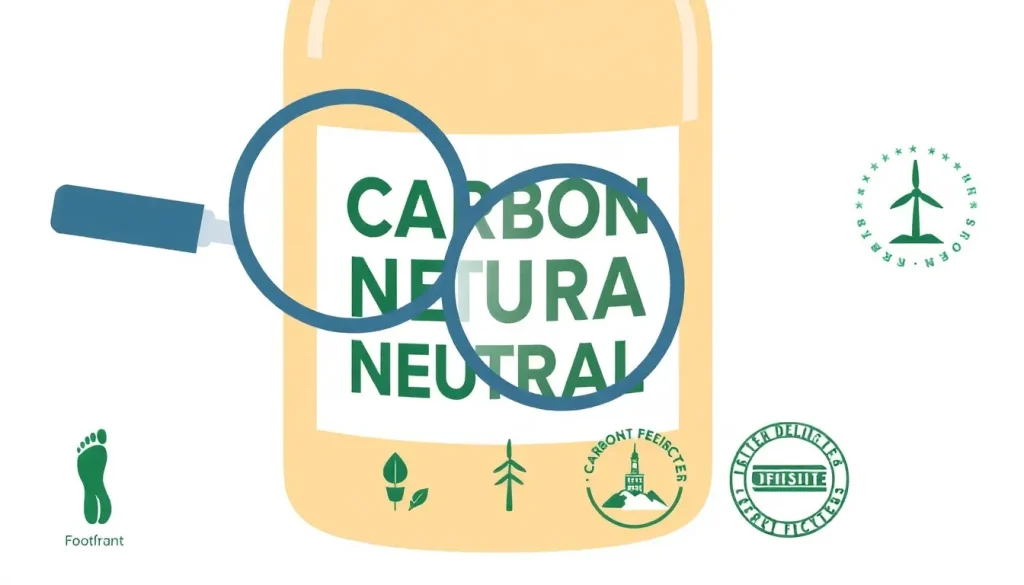
A carbon neutral product claim is a statement by a company that the net carbon emissions associated with a product are zero. This is typically achieved by first measuring the product’s carbon footprint across its life cycle, then reducing emissions where possible, and finally compensating for any remaining emissions through carbon offsets. However, the term “carbon neutral” is not uniformly regulated, so consumers and businesses must scrutinize these claims to ensure they are meaningful and not merely marketing tactics.
Checking carbon neutral claims involves evaluating the methodology, scope, and credibility of the claim. Key aspects include: whether the footprint covers the full life cycle (from raw material extraction to disposal), the quality and additionality of the carbon offsets used, and whether the claim is verified by an independent third party. Understanding these elements helps distinguish genuine climate action from greenwashing.
Overview
Carbon neutrality for products has become a common marketing claim as companies respond to consumer demand for environmentally friendly goods. The concept is rooted in the idea that a product’s carbon dioxide equivalent (CO2e) emissions can be measured, reduced, and then balanced through investments in projects that remove or avoid emissions elsewhere. However, the lack of a single global standard means that claims can vary significantly in rigor. Some companies may only offset a portion of emissions, use low-quality offsets, or fail to account for all life cycle stages. Therefore, understanding the components of a credible carbon neutral claim is essential for making informed purchasing decisions.
The landscape of carbon neutral claims is shaped by various standards and protocols. The Greenhouse Gas Protocol provides a widely used framework for corporate and product-level emission accounting, categorizing emissions into Scope 1 (direct), Scope 2 (indirect from purchased energy), and Scope 3 (all other indirect emissions in the value chain). For product-specific claims, standards such as PAS 2060, ISO 14067, and the CarbonNeutral Protocol offer guidelines on quantification, reduction, and offsetting. Despite these frameworks, the interpretation and implementation can differ, leading to a spectrum of claim quality.
How It Works
The process of making a product carbon neutral typically follows these steps:
- Carbon Footprint Assessment: The company calculates the total greenhouse gas (GHG) emissions associated with the product, often following standards like the GHG Protocol or ISO 14067. This includes Scope 1 (direct emissions from owned sources), Scope 2 (indirect emissions from purchased energy), and ideally Scope 3 (all other indirect emissions in the value chain, such as raw materials, transportation, and product use). A full life cycle assessment (LCA) is the most comprehensive approach, but some claims may only cover a portion of the life cycle, such as manufacturing or distribution.
- Emission Reduction: The company implements measures to reduce the product’s carbon footprint, such as improving energy efficiency, using renewable energy, or redesigning the product or packaging. Genuine carbon neutral claims prioritize reduction before offsetting, as offsetting alone does not address the source of emissions.
- Offsetting: For emissions that cannot be eliminated, the company purchases carbon credits from projects that reduce, avoid, or remove GHGs. Common project types include reforestation, renewable energy, and methane capture. Each credit represents one metric ton of CO2e reduced or removed. The quality of offsets is critical: they should be additional (the reduction would not have happened without the project), permanent (the carbon is stored for the long term), and verifiable.
- Verification and Certification: An independent third party may verify the footprint calculation and offset purchases, and certify the product as carbon neutral according to a recognized standard (e.g., PAS 2060, CarbonNeutral Protocol). Certification provides assurance that the claim has been independently reviewed and meets specific criteria.
Benefits, Limitations and Trade-offs
Carbon neutral claims can drive positive change by encouraging companies to measure and reduce their carbon footprints and by funding climate projects. For consumers, these labels provide a way to support lower-carbon products. However, there are significant limitations. Offsetting does not reduce the emissions directly associated with the product; it merely compensates for them elsewhere. This can create a “license to pollute” mentality if companies rely solely on offsets without making genuine reductions. Additionally, the quality of offsets varies: some projects may not deliver the promised emission reductions (lack of additionality), may not be permanent (e.g., forests that burn), or may cause social harm. There is also a risk of double counting if the same offset is claimed by multiple parties. Thus, carbon neutral claims should be seen as a step toward deeper decarbonization, not an end goal.
Another trade-off is the focus on carbon alone. A product labeled carbon neutral may still have other significant environmental impacts, such as water pollution, biodiversity loss, or resource depletion. The carbon neutral label does not address these issues, and consumers may mistakenly assume the product is environmentally benign overall. Furthermore, the cost of certification and offsets can be a barrier for smaller companies, potentially limiting the availability of certified products to larger corporations with more resources.
Common Misconceptions
What Individuals Can Do
When evaluating carbon neutral claims, individuals can take several steps to ensure they are supporting genuine efforts:
- Look for third-party certifications: Recognized labels include the Carbon Trust’s “Carbon Neutral” certification, PAS 2060, or the Climate Neutral Certified label. These indicate independent verification.
- Check the scope of emissions: A credible claim should cover the full product life cycle (Scope 1, 2, and 3). If only operational emissions are included, the claim is incomplete.
- Examine the offset projects: Reputable companies disclose which offset projects they support. Look for projects certified by Gold Standard or Verra’s VCS that ensure additionality, permanence, and co-benefits.
- Prioritize reduction over offsetting: Support companies that demonstrate a clear commitment to reducing their own emissions first, with offsets used as a last resort.
- Be skeptical of vague claims: Terms like “carbon neutral” without supporting details or certification should be treated with caution.
- Use available resources: Websites and apps that rate product sustainability can help identify credible claims. Additionally, consumer advocacy groups often publish guides on green claims.
Data Limitations and Uncertainties
Assessing carbon neutral claims is challenging due to several data limitations. Carbon footprint calculations rely on emission factors and assumptions that can vary significantly. For complex products with global supply chains, obtaining accurate Scope 3 data is particularly difficult. Offsetting projects also face uncertainties: measuring the actual carbon savings from a forestry project or a cookstove distribution involves modeling and baseline scenarios that may not reflect reality. Verification standards help, but they are not foolproof. Additionally, there is no universal registry for carbon credits, making it hard to track whether an offset has been retired or double-counted. As a result, even well-intentioned claims can be based on imperfect data, and consumers should be aware of these inherent limitations.
Another uncertainty lies in the permanence of carbon storage. For example, forest-based offsets can be reversed by wildfires, pests, or land-use changes. Some standards require buffer pools to account for such risks, but the long-term integrity of these buffers is not guaranteed. Technological solutions like direct air capture are still emerging and face scalability and cost challenges. These uncertainties do not invalidate carbon neutral claims, but they underscore the need for continuous improvement in measurement, reporting, and verification practices.
FAQ
What is a carbon neutral product claim?
A claim that a product's net carbon emissions are zero, typically achieved by measuring, reducing, and offsetting its carbon footprint.
How can I verify a carbon neutral claim?
Look for third-party certifications like Carbon Trust or PAS 2060, check that the full life cycle emissions are covered, and review the quality of the offset projects used.
Why does checking carbon neutral claims matter?
It helps consumers avoid greenwashing, supports companies that are genuinely reducing their climate impact, and encourages higher standards in carbon accounting and offsetting.
References
- Greenhouse Gas Protocol: A Corporate Accounting and Reporting Standard
- PAS 2060: Specification for the demonstration of carbon neutrality
- Gold Standard for the Global Goals