In brief
At a glance
Quick Facts
- Verdict
- Promising but context-dependent
- Problem addressed
- Greenhouse gas emissions and air pollution from road transport
- Evidence strength
- Strong (multiple LCA studies, some variability)
- Potential scale
- Global (with regional variations)
- Relative cost
- Moderate (higher upfront, lower operating; TCO increasingly competitive)
- Time to impact
- Decades (fleet turnover and grid decarbonization ongoing)
Quick verdict
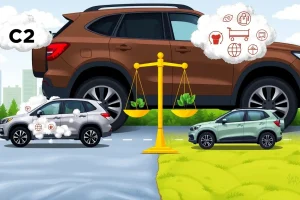
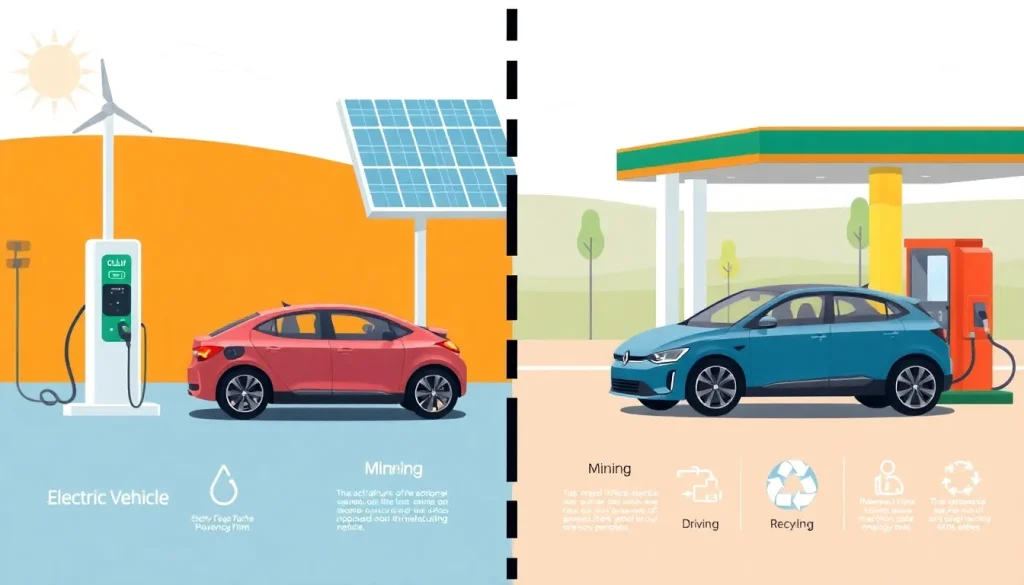
Electric vehicles (EVs) offer a proven pathway to reduce greenhouse gas emissions and local air pollution from road transport, but their net benefit depends heavily on the carbon intensity of the electricity used to charge them and on responsible management of battery supply chains. Life-cycle assessments consistently show that, over their entire lifespan, battery electric vehicles produce fewer CO₂-equivalent emissions than comparable gasoline cars in most regions—often 30–70% less in Europe and North America. However, the manufacturing phase of EVs, particularly battery production, is more carbon- and resource-intensive. The technology is commercially mature and scaling rapidly, yet a full transition will take decades and requires parallel investments in clean electricity, charging infrastructure, and sustainable mining practices. EVs are a necessary but not sufficient component of a sustainable transport system.
Problem addressed
Transportation accounts for roughly 15–20% of global greenhouse gas (GHG) emissions, with road vehicles—predominantly powered by internal combustion engines (ICEs)—being the largest contributor. Beyond climate change, gasoline and diesel cars emit nitrogen oxides (NOₓ), particulate matter (PM), and other pollutants that degrade urban air quality and harm public health. The sector’s near-total dependence on petroleum also raises concerns about energy security and price volatility. Shifting from fossil-fueled vehicles to electric propulsion is one of the most widely promoted strategies to decarbonize transport and reduce local air pollution.
How the solution works
Battery electric vehicles (BEVs) replace an internal combustion engine and fuel tank with an electric motor and a rechargeable battery pack, typically lithium-ion. The vehicle is charged from the electricity grid, and the motor converts stored electrical energy into motion with an efficiency of around 80–90%, compared to 20–30% for a gasoline engine. Because EVs have no tailpipe, they emit zero exhaust pollutants during operation. The life-cycle environmental impact, however, includes upstream emissions from electricity generation, vehicle and battery manufacturing, raw material extraction, and end-of-life disposal or recycling. A full life-cycle assessment (LCA) quantifies these impacts from “cradle to grave” (or “cradle to cradle” if recycling is considered).
Evidence strength
The evidence base comparing EVs and gasoline cars is robust, drawing on hundreds of peer-reviewed LCA studies, industry reports, and government analyses. Key sources include meta-analyses by the International Council on Clean Transportation (ICCT), the European Environment Agency, and research using the Argonne National Laboratory’s GREET model. While results vary by region, vehicle size, and assumptions about battery manufacturing and electricity mix, a clear consensus has emerged: over a typical vehicle lifetime, BEVs emit significantly fewer GHGs than equivalent gasoline cars in most parts of the world. The main uncertainties lie in projections of future grid decarbonization, battery degradation and replacement rates, and the environmental impacts of mining and processing critical minerals like lithium, cobalt, and nickel. Evidence on non-GHG impacts (e.g., freshwater ecotoxicity, resource depletion) is more mixed, with some studies showing higher burdens for EVs in certain categories.
Potential scale
EVs have the potential to replace a large share of the global light-duty vehicle fleet, which numbers over 1.3 billion. Sales are growing rapidly: in 2023, EVs accounted for about 18% of global car sales, up from 4% in 2020. The International Energy Agency projects that under current policies, EVs could reach 40–50% of global car sales by 2030. However, scaling is constrained by the availability of critical minerals, the expansion of charging infrastructure, and the pace of grid decarbonization. Heavy-duty long-haul trucks, aviation, and shipping are less amenable to battery electrification and will likely require other solutions. Even for light-duty vehicles, a complete transition will take decades due to the slow turnover of the existing fleet.
Cost considerations
EVs generally have a higher purchase price than comparable gasoline cars, largely due to battery costs. However, battery prices have fallen by over 90% since 2010, and many analysts expect upfront price parity for some segments by 2025–2030. Total cost of ownership (TCO) is already lower for many EV models in several markets when fuel and maintenance savings are included. Electricity is cheaper per mile than gasoline in most regions, and EVs have fewer moving parts, reducing maintenance costs. Government incentives, such as purchase subsidies and tax credits, have been critical in bridging the upfront cost gap. As production scales and battery technology improves, the cost advantage is expected to widen.
Implementation time
The transition to EVs is already underway, but a full fleet turnover takes 15–20 years given the average vehicle lifespan. Rapid deployment of charging infrastructure and upgrades to the electricity grid are needed in parallel. In leading markets like Norway, where EVs already dominate new sales, the benefits are visible within a decade. In other regions, the timeline will be longer, especially where policy support is weak or grid infrastructure is underdeveloped. The environmental benefits accrue gradually as the grid becomes cleaner and the manufacturing supply chain decarbonizes.
Environmental benefits
Life-cycle GHG emissions for a mid-size BEV in Europe are typically 30–50% lower than for a comparable gasoline car, and up to 70% lower in countries with very low-carbon electricity (e.g., Sweden, France). In the United States, the average reduction is around 40–60%, depending on the regional grid mix. EVs also eliminate tailpipe emissions of NOₓ, PM, and carbon monoxide, improving local air quality. Over time, as electricity grids incorporate more renewables, the operational emissions of EVs will continue to decline, whereas gasoline cars have a fixed, high carbon intensity. Battery recycling and second-life applications can further reduce the environmental footprint, though these industries are still nascent.
Social and economic co-benefits
Widespread EV adoption can enhance energy security by reducing oil dependence and diversifying energy sources. It can also create jobs in manufacturing, charging infrastructure, and renewable energy. Reduced air pollution leads to public health benefits, including lower rates of respiratory and cardiovascular diseases, and associated healthcare cost savings. In urban areas, EVs contribute to noise reduction. For consumers, lower operating costs can free up household income. However, these benefits are not evenly distributed and may require proactive policies to ensure equitable access.
Risks and unintended consequences
The production of EV batteries requires large quantities of lithium, cobalt, nickel, and other minerals. Mining can cause habitat destruction, water pollution, and human rights concerns, particularly in regions with weak governance. Cobalt mining in the Democratic Republic of Congo, for example, has been linked to child labor and unsafe conditions. Battery manufacturing is energy-intensive and currently concentrated in countries with carbon-heavy grids, which can offset some of the operational benefits. There is also a risk of increased electricity demand straining grids, especially if charging is not managed intelligently. Rebound effects, such as increased driving due to lower per-mile costs, could erode some of the emissions savings. Finally, the disposal of end-of-life batteries poses environmental risks if not properly recycled, though regulations and recycling technologies are improving.
Where it works best
EVs are most beneficial in regions with a low-carbon electricity mix (e.g., high shares of nuclear, hydro, wind, or solar). Urban and suburban areas with good charging infrastructure and moderate daily driving distances are ideal. Countries with strong policy support—such as purchase incentives, zero-emission vehicle mandates, and investments in charging networks—have seen the fastest adoption. Norway, the Netherlands, and California are leading examples. EVs also work well in fleet applications (taxis, delivery vans, buses) where predictable routes and central charging can maximize utilization and cost savings.
Where it may not work
In regions where the electricity grid is heavily reliant on coal, the life-cycle GHG benefit of EVs can be small or even negative compared to the most efficient gasoline hybrids, though this is increasingly rare. A 2021 study found that in a few coal-dependent countries, a hybrid vehicle could have lower lifetime emissions than a BEV, but as grids decarbonize, this gap closes. Rural areas with long driving distances and sparse charging infrastructure may find EVs impractical without significant investment. Extreme climates (very hot or cold) can reduce battery range and lifespan. For heavy long-haul trucking, battery weight and charging times remain challenges, making hydrogen fuel cells or biofuels potentially more suitable. Additionally, in countries with limited electricity access or unstable grids, EVs are not a viable near-term solution.
Comparison with alternatives
EVs are one of several strategies to decarbonize transport. Hybrid electric vehicles (HEVs) and plug-in hybrids (PHEVs) offer intermediate emissions reductions and can be a practical bridge in regions with less developed charging infrastructure. Hydrogen fuel cell vehicles (FCEVs) have faster refueling and longer range but face higher costs and efficiency losses in hydrogen production. Biofuels can reduce emissions in existing ICE vehicles but compete with land use and have limited sustainable supply. Beyond vehicle technology, modal shifts to public transit, cycling, and walking, as well as urban planning that reduces travel demand, can deliver larger and more immediate emissions reductions. A comprehensive approach combines vehicle electrification with these broader measures.
Case studies
Norway: With over 80% of new car sales being fully electric in 2023, Norway has the highest EV adoption rate globally. This was achieved through strong incentives (tax exemptions, free tolls, bus lane access) and a grid that is almost entirely hydropower. Studies show that Norwegian EVs have life-cycle emissions roughly 70% lower than gasoline cars. The transition has also spurred a domestic charging industry and reduced urban air pollution.
China: China is the world’s largest EV market, with over 8 million units sold in 2023. The grid remains coal-dependent, but the share of renewables is growing rapidly. Life-cycle analyses indicate that Chinese EVs already offer a 20–30% GHG reduction compared to gasoline cars, and this advantage will increase as the grid cleans up. China also dominates battery manufacturing, raising concerns about supply chain sustainability but also driving down global battery costs.
California, USA: California’s Zero-Emission Vehicle (ZEV) mandate and clean grid policies have made it a leading EV market in the U.S. The state’s electricity mix includes significant natural gas and growing renewables. LCAs show that EVs in California emit about 50–60% less GHG than gasoline cars. The state is also investing heavily in charging infrastructure and battery recycling.
Final assessment
The life-cycle evidence strongly supports a shift from gasoline cars to electric vehicles as a key climate and air quality strategy, provided that electricity grids continue to decarbonize and battery supply chains are responsibly managed. EVs are not a silver bullet: they do not solve congestion, road safety, or the full spectrum of environmental impacts from car dependency. However, for the light-duty vehicle segment, they represent the most mature and scalable zero-tailpipe-emission technology available today. Their effectiveness will be maximized when paired with policies that promote renewable energy, sustainable mining, battery recycling, and a broader shift toward sustainable mobility systems. For most new car buyers in developed and emerging economies with improving grids, an EV is already the lower-carbon choice over its lifetime.
FAQ
Are electric vehicles really zero-emission?
Electric vehicles produce no tailpipe emissions, but they are not zero-emission over their entire life cycle. Manufacturing, especially battery production, generates greenhouse gases and other pollutants. Additionally, the electricity used to charge them may come from fossil fuels. However, even when accounting for these factors, EVs typically have lower life-cycle emissions than gasoline cars in most regions, and their emissions will decrease as electricity grids become cleaner.
How long do EV batteries last?
Most modern EV batteries are designed to last the lifetime of the vehicle, typically 15–20 years or 200,000–300,000 kilometers, with gradual capacity loss. Many manufacturers offer warranties of 8 years or 160,000 km. Real-world data shows that battery degradation is often slower than expected. After their automotive life, batteries can be repurposed for stationary energy storage, and eventually recycled to recover valuable materials.
Is the electricity grid clean enough for EVs to be better than gasoline cars?
In most parts of the world, yes. Life-cycle assessments show that even on grids with a relatively high share of coal, EVs still produce fewer lifetime greenhouse gas emissions than comparable gasoline cars, though the advantage is smaller. In a few coal-dependent countries, a highly efficient gasoline hybrid may have slightly lower emissions today, but as grids incorporate more renewables, the EV advantage grows. The break-even point is typically reached after 15,000–30,000 km of driving in Europe and North America.
References
- International Energy Agency (IEA). (2023). Global EV Outlook 2023.
- Hawkins, T. R., et al. (2013). Comparative environmental life cycle assessment of conventional and electric vehicles. Journal of Industrial Ecology.
- European Environment Agency. (2018). Electric vehicles from life cycle and circular economy perspectives.
- Transport & Environment. (2020). How clean are electric cars?
- Argonne National Laboratory. (2022). GREET Model.