In brief
At a glance
Quick Facts
- Permafrost area
- Covers about 24% of Northern Hemisphere land area.
- Carbon stored
- Estimated 1,400–1,600 gigatons of carbon, nearly twice the atmospheric carbon.
- Primary gases released
- Carbon dioxide (CO₂) and methane (CH₄).
- Methane's warming potential
- 28–36 times greater than CO₂ over 100 years.
- Active layer deepening
- Active layer depth has increased by several centimeters per decade in many regions.
- Abrupt thaw
- Thermokarst processes can release centuries-old carbon in years.
- Permafrost temperature rise
- Permafrost temperatures have risen by up to 2–3°C since the 1980s in some areas.
- Projected warming contribution
- Permafrost carbon emissions could add 0.1–0.4°C to global warming by 2100.
Key Takeaways
- Permafrost contains vast stores of organic carbon, roughly twice the amount currently in the atmosphere, locked in frozen ground for millennia.
- Thawing permafrost releases greenhouse gases, primarily carbon dioxide and methane, which intensify global warming.
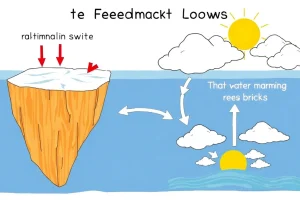
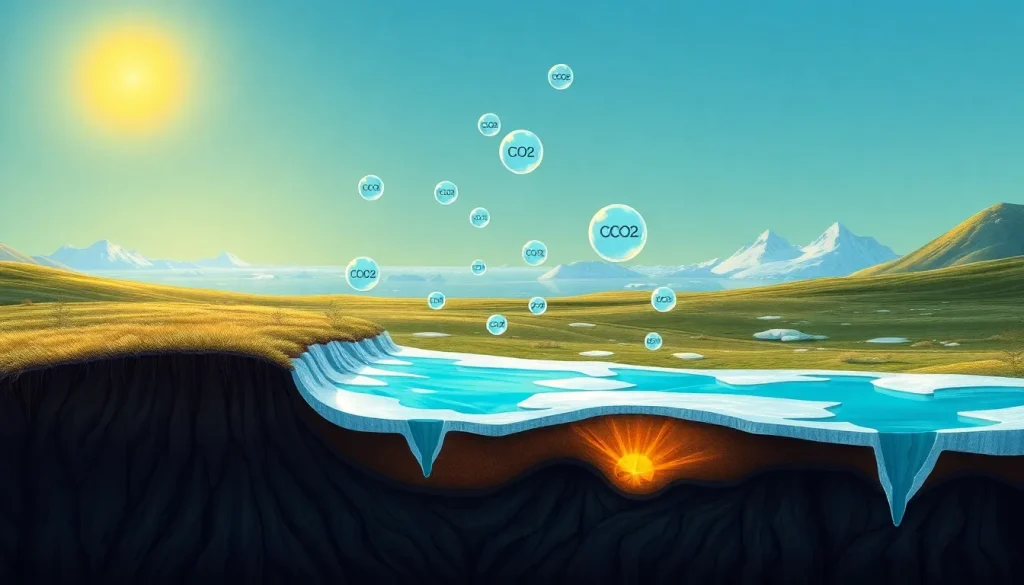
- This creates a positive feedback loop: warming causes thaw, which releases more gases, leading to more warming—a cycle that can become self-sustaining.
- The permafrost carbon feedback is irreversible on human timescales and could significantly amplify climate change, reducing the remaining carbon budget for meeting global temperature targets.
What Is Permafrost Thaw and the Carbon Feedback?
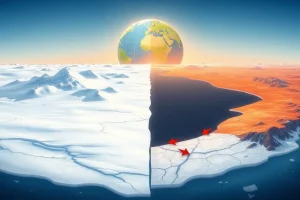
Permafrost thaw and the carbon feedback refer to the process by which rising global temperatures cause permanently frozen ground (permafrost) to thaw, releasing long-stored organic carbon as greenhouse gases, which in turn trap more heat and accelerate further warming. Permafrost is soil, rock, or sediment that remains at or below 0°C for at least two consecutive years. It underlies about 24% of the exposed land surface in the Northern Hemisphere, primarily in Arctic and sub-Arctic regions, and contains an estimated 1,400–1,600 gigatons of organic carbon—nearly double the amount of carbon currently in the atmosphere.
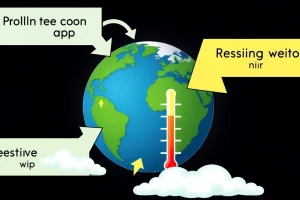
This carbon accumulated over tens of thousands of years as dead plant and animal material became frozen into the ground, where cold temperatures and waterlogged conditions slowed decomposition. When permafrost thaws, microbes break down this organic matter, releasing carbon dioxide (CO₂) under aerobic conditions and methane (CH₄) under anaerobic conditions, such as in waterlogged soils and thaw lakes. Because both gases trap heat in the atmosphere, their release creates a positive feedback loop: the more the climate warms, the more permafrost thaws, and the more greenhouse gases are emitted, driving additional warming. This feedback is a critical component of the Earth’s climate system and a major source of uncertainty in future climate projections.
How It Works
The permafrost carbon feedback operates through a chain of physical and biological processes. Permafrost typically has an “active layer” at the surface that thaws each summer and refreezes in winter. As air temperatures rise, this active layer deepens, exposing previously frozen soil to microbial activity. The thaw can be gradual, with a slow deepening of the active layer over decades, or abrupt, when ice-rich permafrost collapses, creating thermokarst features such as sinkholes, landslides, and thaw lakes. Abrupt thaw can mobilize carbon much faster than gradual thaw, sometimes releasing centuries-old carbon within a few years.
Once thawed, the organic carbon becomes available to microorganisms. In well-drained, oxygen-rich soils, decomposition produces mostly CO₂. In water-saturated, oxygen-poor environments—common in many permafrost landscapes—anaerobic microbes generate methane, a gas with a global warming potential 28–36 times greater than CO₂ over a 100-year period. The relative proportion of these gases depends on local hydrology and soil conditions. Additionally, thawing can release nitrous oxide (N₂O), another potent greenhouse gas, though in smaller quantities. The released gases enter the atmosphere, enhancing the greenhouse effect and causing further warming, which in turn drives more permafrost thaw, closing the feedback loop.
Environmental and Human Impacts
Permafrost thaw has profound consequences for Arctic and global environments. Locally, it destabilizes the ground, causing infrastructure damage to buildings, roads, pipelines, and airstrips. Entire communities, many of them Indigenous, face relocation as the land beneath them subsides and erodes. Coastal permafrost thaw accelerates shoreline retreat, threatening villages and releasing carbon directly into the ocean. Ecosystems transform as ice-rich ground collapses, forming new wetlands and lakes that alter wildlife habitats and traditional subsistence practices.
On a global scale, the carbon released from permafrost adds to the atmospheric greenhouse gas burden, making it harder to limit warming to safe levels. The feedback also interacts with other climate processes: darker surfaces from thawing ground and vegetation changes can reduce albedo, absorbing more solar energy. Thawing permafrost can release ancient pathogens and mercury, posing risks to human and ecosystem health. The economic costs of repairing and adapting infrastructure in permafrost regions are substantial, and the loss of natural carbon storage undermines efforts to stabilize the climate.
Regional Differences
Permafrost is not uniform; its characteristics and vulnerability vary widely by region. Continuous permafrost zones, found in the coldest parts of Siberia, Alaska, and northern Canada, have permafrost underlying more than 90% of the land surface. Discontinuous and sporadic permafrost zones, at lower latitudes or warmer areas, have patchy permafrost that is closer to the thawing point and thus more sensitive to small temperature increases. Subsea permafrost, submerged on continental shelves since the last ice age, is also warming and releasing methane, though the magnitude of these emissions remains uncertain.
The Tibetan Plateau holds a significant amount of permafrost at high altitudes, where thaw is affecting water resources for millions of people downstream. In contrast to Arctic lowlands, mountain permafrost thaw can trigger landslides and rockfalls. Carbon content also differs: Yedoma regions in Siberia and Alaska contain exceptionally ice- and carbon-rich deposits formed during the Pleistocene, which are particularly prone to abrupt thaw and high carbon release. These regional variations mean that the timing, rate, and form of carbon emissions from permafrost will differ across the globe, complicating predictions.
What the Evidence Shows
Observations confirm that permafrost is warming and thawing across the Arctic and high-mountain regions. Ground temperature measurements from boreholes show increases of up to 2–3°C since the 1980s in many areas. Satellite and field studies document widespread thermokarst formation, lake drainage and formation, and coastal erosion. Direct measurements of greenhouse gas fluxes from thawing permafrost indicate that many sites are already net sources of CO₂ and methane to the atmosphere, particularly in the summer and autumn.
Paleoclimate records provide evidence that permafrost carbon feedbacks operated during past warm periods. During the last interglacial, about 125,000 years ago, global temperatures were slightly higher than pre-industrial levels, and permafrost thaw likely contributed to elevated atmospheric CO₂ and methane concentrations. Current models estimate that permafrost carbon emissions could add 0.1–0.4°C to global warming by 2100 under high-emission scenarios, but these figures do not fully account for abrupt thaw processes, which could double or triple the projected emissions. The evidence underscores that the permafrost carbon feedback is already underway and will intensify with continued warming.
Why It Matters
The permafrost carbon feedback matters because it represents a self-reinforcing cycle that can accelerate climate change beyond human control. Unlike fossil fuel emissions, which can be reduced through policy and technology, permafrost carbon release is a natural response to warming that cannot be easily stopped once triggered. It effectively reduces the remaining carbon budget—the amount of CO₂ that can still be emitted while keeping warming below a given target—making climate goals harder to achieve.
This feedback is often described as a climate tipping point because it has the potential to become self-sustaining: even if human emissions were to cease, thawing permafrost could continue to release greenhouse gases for centuries, locking in additional warming. The long-term commitment of permafrost carbon to the atmosphere could influence global climate for millennia. Understanding and quantifying this feedback is essential for accurate climate projections, risk assessment, and the development of adaptation strategies for communities and ecosystems in permafrost regions.
Common Misconceptions
One common misconception is that permafrost thaw will cause a sudden, catastrophic release of methane that will instantly warm the planet. In reality, while abrupt thaw events can release large amounts of carbon locally, the overall process is expected to unfold over decades to centuries, not overnight. Another misunderstanding is that methane is the dominant gas released; in fact, CO₂ emissions from permafrost are likely to be larger in total mass, though methane’s higher heat-trapping potency makes it disproportionately important in the short term.
Some believe that permafrost carbon is only a future problem, but evidence shows that thawing is already occurring and contributing to atmospheric greenhouse gas levels. Additionally, the idea that all permafrost will thaw completely is inaccurate—deep permafrost in the coldest regions may persist for centuries, but even partial thaw of the upper layers can release significant carbon. Finally, the feedback is not an all-or-nothing tipping point; it operates on a continuum, with emissions increasing as temperatures rise, making every fraction of a degree of avoided warming important.
FAQ
What is permafrost?
Permafrost is ground that remains at or below 0°C for at least two consecutive years. It contains frozen organic matter, ice, and mineral soil.
How does permafrost thaw contribute to climate change?
Thawing exposes organic carbon to microbial decomposition, releasing CO₂ and methane. These greenhouse gases trap heat in the atmosphere, causing more warming and further thaw.
Why is the permafrost carbon feedback considered a tipping point?
Because once thawing begins, it can become self-sustaining and irreversible on human timescales, potentially accelerating climate change beyond control.
References
- IPCC Special Report on the Ocean and Cryosphere in a Changing Climate (2019)
- Schuur, E.A.G. et al. (2015) 'Climate change and the permafrost carbon feedback'. Nature.
- Turetsky, M.R. et al. (2020) 'Carbon release through abrupt permafrost thaw'. Nature Geoscience.
- NASA Global Climate Change: Permafrost