In brief
At a glance
Quick Facts
- Verdict
- Mixed
- Problem addressed
- Ensuring carbon credits represent real emission reductions
- Evidence strength
- Moderate
- Potential scale
- Global
- Relative cost
- Moderate
- Time to impact
- Years
Quick verdict
Additionality is a foundational but deeply contested concept in carbon markets. While it is essential for ensuring that carbon credits represent genuine emission reductions, evidence from the largest carbon offset program—the Clean Development Mechanism (CDM)—suggests that a substantial share of projects may not be additional. Newer standards and methodologies have introduced more rigorous tests, but challenges remain. Overall, additionality is a necessary but imperfect tool; its effectiveness depends heavily on the stringency of its application and the governance of the carbon market.
Problem addressed
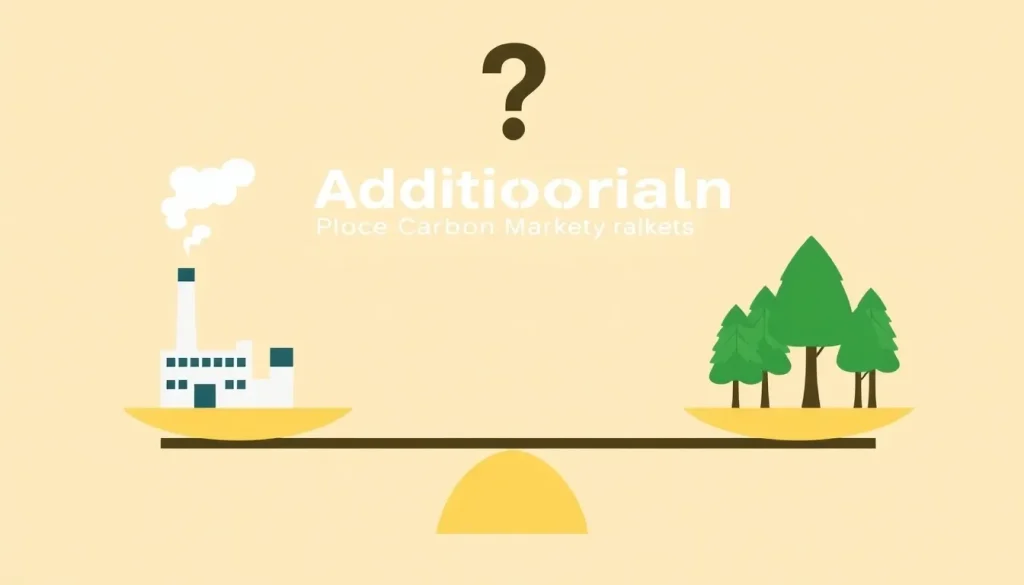
Carbon markets allow emitters to purchase credits from projects that reduce or remove greenhouse gases, effectively offsetting their own emissions. However, if a project would have been implemented anyway—due to existing regulations, financial viability, or common practice—then the credits do not represent a real climate benefit. This is the problem of non-additionality. When non-additional credits are used to offset real emissions, global emissions increase relative to a scenario without the offset. This undermines the environmental integrity of carbon markets and can delay direct emission reductions by regulated entities. The problem is particularly acute in voluntary carbon markets and in sectors where baselines are difficult to establish.
How the solution works
Additionality is operationalized through a set of tests and criteria that a project must pass to be eligible for carbon credits. The most widely used framework, developed under the CDM, involves a stepwise approach:
- Identification of alternatives: The project must demonstrate that there are plausible alternative scenarios to the proposed project, including the continuation of current practices.
- Investment analysis: The project must show that it is not the most financially attractive option without carbon credit revenue, often using benchmark rates of return.
- Barrier analysis: The project must identify barriers (e.g., technological, institutional, financial) that prevent its implementation and that carbon finance helps overcome.
- Common practice analysis: The project must prove that it is not already widespread in the relevant sector and region, indicating that it is not business-as-usual.
If a project fails any of these tests, it is deemed non-additional. In recent years, some standards have moved toward standardized baselines and positive lists—pre-approved project types that are automatically considered additional under certain conditions—to reduce subjectivity and transaction costs. For example, the Gold Standard and Verra’s VCS have developed additionality tools that incorporate these elements. The process typically requires third-party validation by accredited auditors, who review the project’s additionality documentation and may conduct site visits.
Evidence strength
The evidence on additionality is mixed and often contested. Numerous studies have assessed the additionality of CDM projects, with many concluding that a significant portion are likely non-additional. For instance, research by Haya (2010) on wind projects in India and China found that many would have been built without CDM support due to favorable policies and declining costs. A comprehensive analysis by Cames et al. (2016), commissioned by the European Commission, assessed over 1,000 CDM projects and estimated that only about 2% had a high likelihood of being additional, while over 85% had low additionality. However, these findings have been debated, and some project types (e.g., industrial gas destruction) have been particularly criticized for generating windfall profits. More recent studies on newer standards like the Gold Standard and VCS are less extensive, but early assessments suggest that their stricter rules may improve additionality, though robust independent verification remains limited. Overall, the evidence base is moderate in size but points to significant weaknesses in past practice, with ongoing improvements yet to be fully validated.
Potential scale
Additionality is not a solution that scales in a physical sense; rather, it is a quality criterion applied to carbon offset projects. The potential scale of its impact is therefore tied to the size of carbon markets. Global carbon markets, including compliance and voluntary segments, were valued at over $270 billion in 2022, covering billions of tonnes of CO2 equivalent. If additionality were perfectly enforced, it would ensure that all these credits represent real emission reductions, potentially avoiding the issuance of billions of tonnes of non-additional credits. However, the practical scale is limited by the ability of regulators and standard-setting bodies to implement and enforce rigorous additionality tests across diverse project types and geographies. In practice, the scale of impact is global but uneven, with some sectors and regions better covered than others.
Cost considerations
Demonstrating additionality adds transaction costs to carbon offset projects. These include the costs of preparing documentation, hiring consultants, and undergoing third-party validation. For large industrial projects, these costs may be a small fraction of total investment, but for small-scale community-based projects, they can be prohibitive. Estimates suggest that additionality-related costs can range from a few thousand to tens of thousands of dollars per project, depending on complexity, and for very small projects may represent a significant share of total project costs. This can exclude small projects from carbon markets, reducing their potential to generate credits. On the other hand, the cost of non-additionality is the issuance of worthless credits, which can undermine market confidence and lead to financial losses for buyers. Thus, there is a trade-off between the cost of rigorous testing and the risk of crediting non-additional activities. Some standards have attempted to reduce costs through simplified modalities for small-scale projects and the use of positive lists.
Implementation time
The additionality assessment is typically conducted during the project design phase, before a project is registered and begins generating credits. The time required can vary from a few months to over a year, depending on the complexity of the project, the responsiveness of validators, and the specific standard’s requirements. For example, under the CDM, the validation and registration process often took 12–18 months. Newer standards may have streamlined processes, but the need for rigorous documentation and stakeholder consultation can still cause delays. The time to impact—i.e., the point at which verified emission reductions occur—depends on the project type; some projects can begin reducing emissions shortly after implementation, while others, like afforestation, may take years to yield measurable results. The additionality assessment itself does not directly delay emission reductions, but it is a prerequisite for credit issuance.
Environmental benefits
When additionality is properly ensured, the environmental benefit is the net reduction in greenhouse gas emissions that would not have occurred otherwise. This can contribute to climate change mitigation by offsetting emissions from sectors where abatement is difficult or costly. However, if additionality is weak, the environmental benefit may be negligible or even negative, as the issuance of non-additional credits allows emitters to increase their own emissions without a corresponding real-world reduction. Quantifying the overall environmental benefit of additionality as a concept is challenging because it depends on the quality of its implementation. In well-regulated systems with rigorous testing, the benefit can be substantial; in lax systems, it may be minimal. Studies of the CDM have suggested that the actual emission reductions achieved may be far lower than the number of credits issued, implying a significant environmental shortfall and the creation of “hot air” credits that do not represent real mitigation.
Social and economic co-benefits
Projects that are truly additional often bring co-benefits such as local employment, technology transfer, improved air quality, and sustainable development. For example, a renewable energy project in a rural area may provide clean electricity and jobs while reducing emissions. However, if a project is non-additional, these co-benefits would have occurred anyway, and the carbon credit revenue may simply provide a windfall to project developers without generating extra social value. In some cases, the pursuit of additionality can lead to perverse outcomes: project developers may exaggerate barriers or choose less sustainable technologies to appear additional, potentially reducing co-benefits. Overall, the social and economic co-benefits of additionality are contingent on the integrity of the assessment process.
Risks and unintended consequences
The main risk of additionality requirements is that they may be too stringent, excluding genuine projects and stifling investment in emission reduction activities. This can slow the growth of carbon markets and reduce the availability of offsets, potentially increasing compliance costs for regulated entities. Conversely, if requirements are too lax, the market may be flooded with low-quality credits, eroding trust and environmental integrity. There is also a risk of gaming: project developers may manipulate baselines, overstate barriers, or structure projects to meet additionality criteria on paper while being business-as-usual in reality. Additionally, the focus on project-level additionality can create a fragmented approach that misses broader systemic changes; for instance, a project may be additional in isolation but part of a sector-wide trend that would have occurred anyway. The high transaction costs of additionality testing can disproportionately burden small-scale and community-based projects, leading to inequitable access to carbon finance. Finally, overly complex requirements can lead to “additionality fatigue,” where developers avoid the market altogether, reducing the overall supply of offsets.
Where it works best
Additionality testing is most effective in sectors and regions where baselines are clear, barriers are demonstrable, and projects are not already financially attractive. Examples include:
- Landfill gas capture and utilization in countries with no existing regulations requiring such capture.
- Renewable energy projects in least developed countries where grid electricity is predominantly fossil-based and renewable technologies face significant financial and institutional barriers.
- Afforestation and reforestation on degraded lands where there is no commercial incentive for tree planting.
- Energy efficiency improvements in industries or buildings where upfront costs are high and payback periods are long without carbon finance.
Standardized baselines and positive lists can work well in these contexts by reducing subjectivity and transaction costs while maintaining environmental integrity.
Where it may not work
Additionality testing is particularly challenging in the following situations:
- Grid-connected renewable energy in countries with strong renewable energy policies or rapidly declining technology costs, where projects are often financially viable without carbon credits.
- Sectors with rapidly changing baselines, such as energy efficiency in fast-growing economies, where it is difficult to establish what would have happened in the absence of the project.
- Projects that are already common practice, such as certain types of biomass energy or industrial process improvements, where it is hard to prove that a specific project is not business-as-usual.
- Very small-scale projects where the cost of additionality demonstration can exceed the value of the credits, making participation uneconomical.
In these contexts, alternative approaches such as sectoral crediting or policy-based offsets may be more appropriate.
Comparison with alternatives
Several alternatives to project-level additionality testing have been proposed or implemented:
| Approach | Description | Strengths | Weaknesses |
|---|---|---|---|
| Standardized baselines | Pre-determined emission benchmarks for a sector or region, against which projects are compared. | Reduces subjectivity and transaction costs; can be more transparent. | May not capture project-specific circumstances; requires regular updating. |
| Positive lists | Pre-approved project types that are automatically considered additional under certain conditions. | Simplifies process for small-scale and common project types; lowers barriers to entry. | Risk of including non-additional activities if lists are not carefully designed and updated. |
| Sectoral crediting | Crediting emission reductions at the sector level rather than project level, based on sector-wide performance benchmarks. | Addresses leakage and systemic changes; can drive large-scale transformation. | Complex to implement; requires robust data and governance; may not reward early movers. |
| Policy-based offsets | Crediting emission reductions from the implementation of government policies (e.g., feed-in tariffs). | Can support transformative policies; aligns with national development goals. | Difficult to prove causality and additionality of the policy itself; risk of crediting business-as-usual policies. |
| No offsets (carbon tax or cap-and-trade without offsets) | Pricing carbon without allowing offsets, thus avoiding additionality issues entirely. | Eliminates the risk of non-additional credits; simpler to administer. | May increase compliance costs; does not channel finance to emission reduction projects in developing countries. |
Each alternative has trade-offs, and the optimal approach may involve a combination of methods tailored to specific contexts.
Case studies
CDM wind projects in India and China: Numerous studies have questioned the additionality of wind projects registered under the CDM. Haya (2010) found that many projects in India were financially viable without carbon credits due to government incentives and declining turbine costs. In China, the situation was similar, with the CDM providing windfall profits to developers. These findings contributed to reforms in the CDM and the eventual exclusion of many grid-connected renewable projects from some carbon markets.
HFC-23 destruction projects: Under the CDM, projects that destroyed HFC-23, a potent greenhouse gas byproduct of refrigerant production, generated a large number of credits. However, it was later revealed that some facilities were increasing production to generate more HFC-23 and thus more credits, creating a perverse incentive. This case highlighted the risks of poor additionality testing and led to the suspension of such projects in some programs.
Gold Standard improved cookstove projects: The Gold Standard has been applied to numerous improved cookstove projects in Africa and Asia. These projects must demonstrate that the cookstoves would not be adopted without carbon finance, often through barrier analysis and evidence of market failures. While some evaluations have found that these projects can be additional and deliver significant health and environmental benefits, others have raised concerns about overestimation of fuel savings and the durability of the stoves. The additionality of these projects remains an area of active research and debate.
Final assessment
Additionality is an indispensable concept for the environmental integrity of carbon markets, but its practical implementation is fraught with challenges. The evidence from the CDM era shows that without rigorous and independent testing, a large share of credits may not represent real emission reductions. Newer standards have made improvements, but the risk of non-additionality persists, particularly in rapidly changing sectors and in the absence of strong regulatory oversight. For carbon markets to be a credible tool for climate mitigation, additionality must be continuously strengthened through better methodologies, transparent data, and robust governance. However, additionality alone cannot guarantee the quality of carbon credits; it must be complemented by other safeguards such as permanence, leakage prevention, and accurate baseline setting. Ultimately, the pursuit of additionality is a balancing act between ensuring environmental integrity and enabling a functional, inclusive carbon market. It is most worth pursuing in contexts where baselines are clear and barriers are demonstrable, and where the benefits of carbon finance can genuinely shift investment toward low-carbon alternatives.
FAQ
What is additionality in carbon markets?
Additionality is the principle that a carbon offset project must result in emission reductions that would not have occurred in the absence of the carbon credit revenue. It ensures that offsets represent real, additional climate benefits.
Why is additionality important?
Without additionality, carbon markets could issue credits for projects that would have happened anyway, leading to an increase in global emissions when those credits are used to offset actual emissions. This undermines the environmental integrity of the market.
How is additionality tested?
Additionality is typically tested using a combination of barrier analysis (identifying obstacles that prevent the project from being implemented without carbon finance), investment analysis (showing the project is not financially viable without carbon credits), and common practice analysis (demonstrating that the project is not already widespread in the relevant sector and region).
References
- Haya, B. (2010). Carbon Offsetting: An Efficient Way to Reduce Emissions or to Avoid Reducing Emissions? An Investigation and Analysis of Offsetting Design and Practice in India and China. PhD thesis, University of California, Berkeley.
- Cames, M., Harthan, R. O., Füssler, J., Lazarus, M., Lee, C. M., Erickson, P., & Spalding-Fecher, R. (2016). How additional is the Clean Development Mechanism? Analysis of the application of current tools and proposed alternatives. Öko-Institut.
- UNFCCC. (2012). Methodological Tool: Tool for the demonstration and assessment of additionality. (Version 07.0.0).
- Gold Standard. (2021). Additionality Tool. Version 2.0.
- Verra. (2023). VCS Standard, v4.4. (Section on Additionality).