In brief
At a glance
Quick Facts
- Verdict
- Both are necessary, with trade-offs
- Problem addressed
- Excess atmospheric CO2 driving climate change
- Evidence strength
- Moderate to strong for nature-based; limited for technological
- Potential scale
- Global, but with significant constraints
- Relative cost
- Nature-based: low to moderate; technological: high
- Time to impact
- Nature-based: years to decades; technological: immediate upon deployment
Quick verdict
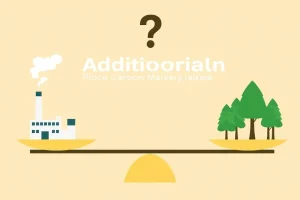
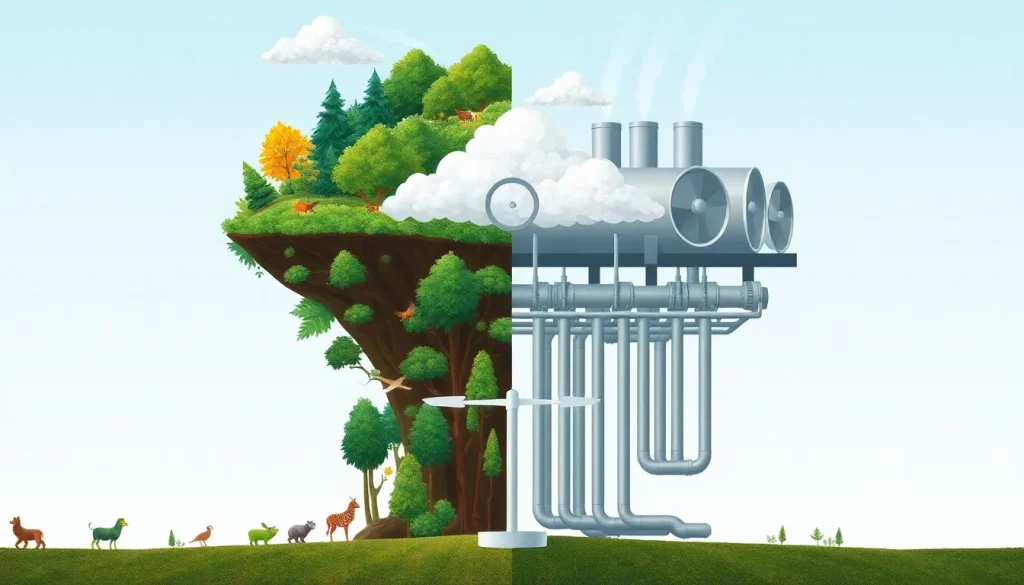
Both nature-based and technological carbon removal are essential to meet climate goals, but they differ markedly in maturity, cost, permanence, and co-impacts. Nature-based solutions (e.g., afforestation, soil carbon sequestration) are currently more cost-effective and provide immediate environmental and social co-benefits, yet face risks of reversal and saturation. Technological approaches (e.g., direct air capture, bioenergy with carbon capture and storage) offer high permanence but remain mostly at pilot or early commercial stages, with high costs and significant energy and resource requirements. A portfolio that combines both, alongside deep emission reductions, is the most prudent path.
Problem addressed
Atmospheric carbon dioxide (CO2) concentrations have risen to levels unprecedented in human history, driving global warming and climate disruption. Even with aggressive emission reductions, many scenarios assessed by the Intergovernmental Panel on Climate Change (IPCC) indicate that removing hundreds of billions of tonnes of CO2 from the atmosphere this century will be necessary to limit warming to 1.5°C or 2°C. Carbon dioxide removal (CDR) is thus not an alternative to mitigation but a complementary strategy to address residual emissions from hard-to-abate sectors and to eventually achieve net-negative emissions.
How the solution works
Nature-based carbon removal relies on enhancing natural biological or geochemical processes that capture and store CO2. Key methods include:
- Afforestation and reforestation: Trees absorb CO2 through photosynthesis and store carbon in biomass and soils.
- Soil carbon sequestration: Agricultural practices such as no-till farming, cover cropping, and compost application increase organic carbon in soils.
- Blue carbon: Restoration and conservation of coastal ecosystems (mangroves, salt marshes, seagrasses) that sequester carbon in sediments.
- Peatland restoration: Rewetting drained peatlands to halt oxidation and rebuild carbon stores.
Technological carbon removal uses engineered processes to capture CO2 directly from the atmosphere or from biomass, then store it permanently. Principal methods include:
- Direct air capture (DAC): Chemical sorbents or solvents bind CO2 from ambient air; the captured CO2 is then concentrated and stored underground or used in products.
- Bioenergy with carbon capture and storage (BECCS): Biomass is grown, burned for energy, and the resulting CO2 is captured and geologically stored.
- Enhanced weathering: Crushed silicate minerals are spread on land or in the ocean to accelerate natural reactions that bind CO2.
- Ocean alkalinity enhancement: Adding alkaline substances to seawater to increase CO2 uptake and storage.
Evidence strength
Nature-based methods have a long history of practice and a substantial body of field research. Afforestation and soil carbon sequestration are supported by decades of ecological and agricultural studies, with well-understood carbon uptake rates and co-benefits. However, the permanence of carbon storage and the risk of saturation or reversal under climate change remain areas of active research and debate. For example, the vulnerability of forests to fire, pests, and land-use change can release stored carbon, and soil carbon gains can plateau or reverse if management changes.
Technological methods are far less mature. Direct air capture has been demonstrated at pilot and small commercial scales (e.g., Climeworks, Carbon Engineering), but long-term performance, energy efficiency, and cost data are limited. BECCS relies on well-established biomass energy and carbon capture technologies, but integrated large-scale BECCS systems have not been deployed. Enhanced weathering and ocean alkalinity enhancement are still largely at the research and small-scale field trial stage, with significant uncertainties about effective rates, environmental side effects, and monitoring. Most evidence for technological CDR comes from modeling studies and small-scale pilots, not from full-scale, long-term operational data.
Potential scale
Nature-based solutions have a finite scale limited by land availability, competition with food production, biodiversity conservation, and water resources. Global estimates for afforestation/reforestation potential range from 0.5 to 10 GtCO2 per year, depending on assumptions about land use and climate. Soil carbon sequestration could contribute 2–5 GtCO2 per year, but saturation and reversibility are concerns. Blue carbon and peatland restoration have smaller but significant potential, on the order of 0.5–2 GtCO2 per year combined. Overall, nature-based CDR is unlikely to exceed 10 GtCO2 per year sustainably.
Technological methods, in theory, could scale to much larger levels—potentially tens of GtCO2 per year—but are constrained by energy requirements, costs, and geological storage capacity. Direct air capture, for instance, would require a massive build-out of facilities and low-carbon energy sources to avoid net emissions. BECCS is limited by sustainable biomass supply and land competition. Enhanced weathering faces logistical challenges in mining, grinding, and distributing vast quantities of rock. Realistic near-term deployment is far below theoretical maximums.
Cost considerations
Nature-based solutions are generally the most cost-effective CDR options today. Afforestation and reforestation costs are often estimated at $10–$50 per tonne of CO2, though this varies widely by region and land opportunity cost. Soil carbon sequestration can be even cheaper, sometimes below $10/tCO2, but measurement and verification add costs. Blue carbon and peatland restoration tend to be more expensive, in the range of $20–$100/tCO2.
Technological methods are currently far more expensive. Direct air capture costs are highly uncertain, with estimates ranging from $100 to over $600/tCO2 for early plants, though learning rates and scale could reduce this to $100–$200/tCO2 in the long term. BECCS costs depend on biomass and capture technology, typically estimated at $100–$200/tCO2. Enhanced weathering and ocean alkalinity costs are even less certain, with preliminary estimates of $50–$200/tCO2 but large uncertainties. All technological methods require significant upfront capital and ongoing energy inputs.
Implementation time
Nature-based projects can often begin quickly—trees can be planted within a season, and soil management changes can be adopted within a year. However, carbon removal is gradual: forests take decades to reach maximum carbon uptake, and soil carbon builds slowly. The full climate benefit is realized over years to decades, and permanence requires ongoing stewardship.
Technological methods require years for planning, permitting, and construction. A direct air capture plant might take 2–5 years to build, and scaling to meaningful capacity would take decades. Once operational, removal is immediate and continuous, but the lead time to significant global capacity is long. BECCS facilities face similar timelines. Enhanced weathering could be deployed more quickly if integrated into existing agricultural practices, but verification of carbon removal is slow.
Environmental benefits
Nature-based solutions often provide substantial co-benefits: biodiversity habitat, improved water quality, reduced soil erosion, flood regulation, and cooling through evapotranspiration. Afforestation can restore degraded land and enhance ecosystem services. Soil carbon practices improve soil health and agricultural resilience. Blue carbon ecosystems protect coastlines and support fisheries.
Technological methods have fewer direct environmental co-benefits. DAC and BECCS plants have a land footprint, though much smaller than nature-based per tonne of CO2 removed. They can be sited on non-arable land. However, they require significant energy and material inputs, which can have upstream environmental impacts (e.g., mining for sorbents, biomass cultivation). Enhanced weathering may improve soil fertility but could also release heavy metals or alter pH if not carefully managed.
Social and economic co-benefits
Nature-based projects can support rural livelihoods, create jobs in forestry and sustainable agriculture, and provide recreational and cultural value. They can also contribute to climate adaptation by reducing heat stress and erosion. However, benefits depend on equitable governance and land rights; poorly designed projects can displace communities or restrict access to resources.
Technological CDR could create new industries and high-skilled jobs in engineering, manufacturing, and operations. It may also enable continued use of fossil fuel infrastructure in a net-zero world, though this is controversial. Direct community benefits are less direct than nature-based approaches, and large-scale deployment could face public opposition, particularly regarding CO2 transport and storage.
Risks and unintended consequences
Nature-based solutions face the risk of reversal: carbon stored in forests or soils can be released by wildfires, pests, disease, or land-use change. Climate change itself increases these risks. Monoculture plantations can harm biodiversity and water resources. Large-scale afforestation in inappropriate areas (e.g., grasslands, savannas) can reduce albedo and actually warm the local climate, offsetting some cooling benefit. Competition for land can drive up food prices and exacerbate food insecurity.
Technological methods carry risks of high energy and resource use. If powered by fossil fuels, DAC or BECCS could have a net positive carbon footprint. CO2 leakage from geological storage is a concern, though well-selected sites are considered low-risk. Enhanced weathering could lead to dust pollution or heavy metal contamination. A major risk is moral hazard: the perception that CDR will be available at scale may reduce the urgency to cut emissions, leading to delayed action and higher cumulative emissions.
Where it works best
Nature-based solutions are most effective in regions with suitable climate, soils, and land availability, and where co-benefits align with local development goals. Tropical and temperate zones with high biomass productivity are ideal for afforestation. Soil carbon sequestration works well in degraded agricultural lands. Blue carbon is best suited to coastal areas with existing or restorable wetlands. Success depends on strong governance, secure land tenure, and community engagement.
Technological methods are best deployed where there is access to abundant low-carbon energy (e.g., solar, wind, nuclear) and suitable geological storage (e.g., saline aquifers, depleted oil and gas fields). DAC can be located anywhere with energy and storage access, making it flexible. BECCS requires sustainable biomass supply chains. Enhanced weathering is most promising in warm, humid regions with acidic soils that accelerate mineral dissolution.
Where it may not work
Nature-based solutions are a poor fit in water-scarce regions where tree planting could exacerbate water stress, or in areas with high land costs and competing uses. Afforestation in boreal regions can reduce albedo and have limited net climate benefit. Soil carbon sequestration is less effective in already carbon-rich soils or where management changes are not maintained. Projects that ignore local land rights or fail to provide alternative livelihoods often fail.
Technological methods face challenges in regions without suitable geology for CO2 storage, or where public acceptance is low. High energy costs or reliance on fossil fuels can undermine net removal. Enhanced weathering may be ineffective in dry or cold climates where reaction rates are slow. Ocean alkalinity enhancement is still poorly understood and may face governance and ecological risks in international waters.
Comparison with alternatives
Both nature-based and technological CDR must be compared against the primary alternative: rapid and deep emission reductions. No CDR method can substitute for cutting fossil fuel use and halting deforestation. Among CDR methods, nature-based approaches are cheaper and more ready now, but technological methods offer greater permanence and scalability in the long run. A portfolio that combines both, along with emission cuts, is widely recommended. For example, nature-based solutions can provide near-term removal and co-benefits while technological methods are scaled up. Some methods, like BECCS, straddle the line, using biological growth with engineered storage. The choice depends on local context, cost, and risk tolerance.
Case studies
Afforestation in China: Large-scale tree-planting programs, such as the Grain for Green project, have increased forest cover and carbon stocks, but some plantings in arid regions have suffered high mortality and water stress, highlighting the need for appropriate species and locations.
Soil carbon projects in Australia: The Emissions Reduction Fund has supported soil carbon sequestration through changed grazing and cropping practices. Results have been mixed, with challenges in measurement and permanence, but some projects have shown verifiable carbon gains.
Climeworks DAC plant in Iceland: The Orca plant captures about 4,000 tonnes of CO2 per year using geothermal energy and stores it underground via the CarbFix process. It demonstrates technical feasibility but at a high cost (estimated $600–800/tCO2) and very small scale relative to global emissions.
BECCS pilot in the UK: Drax Power Station has piloted BECCS by co-firing biomass with coal and capturing CO2. The project has faced criticism over biomass sustainability and net carbon accounting, illustrating the complexities of BECCS.
Enhanced weathering trials: Small-scale field trials in the US and Europe have shown that basalt dust can increase soil carbon and crop yields, but the net CO2 removal is difficult to quantify and varies with conditions.
Final assessment
Both nature-based and technological carbon removal are necessary components of a comprehensive climate strategy, but they are not interchangeable. Nature-based solutions offer immediate, cost-effective removal with valuable co-benefits, yet their permanence is uncertain and scale is limited. Technological methods promise durable, large-scale removal but are currently expensive, energy-intensive, and unproven at scale. The evidence strongly suggests that neither category alone can deliver the required CDR, and both must be pursued alongside aggressive emission reductions. Policy should support research, development, and deployment of a diverse CDR portfolio, with robust monitoring, verification, and safeguards to minimize risks and ensure equitable outcomes. In the near term, nature-based solutions can be scaled responsibly where they align with local needs, while technological methods require sustained investment to bring down costs and demonstrate viability. Ultimately, the most effective approach is to avoid the need for excessive CDR by cutting emissions as rapidly as possible.
FAQ
What is the main difference between nature-based and technological carbon removal?
Nature-based methods rely on enhancing natural processes like photosynthesis or soil carbon storage, while technological methods use engineered systems to capture CO2 directly from the air or from biomass and store it permanently. Nature-based approaches are generally cheaper and provide co-benefits but have higher risks of reversal; technological methods offer more durable storage but are currently expensive and energy-intensive.
Which type of carbon removal is more cost-effective?
Nature-based solutions such as afforestation and soil carbon sequestration are currently far more cost-effective, with typical costs ranging from $10 to $100 per tonne of CO2. Technological methods like direct air capture are much more expensive, with current estimates of $100 to over $600 per tonne, though costs may decline with innovation and scale.
Can carbon removal replace the need to reduce emissions?
No. Carbon removal is not a substitute for deep and rapid emission reductions. It is needed to address residual emissions from hard-to-abate sectors and to eventually achieve net-negative emissions, but relying on CDR instead of cutting emissions would be extremely costly, risky, and could lock in further warming. The priority remains reducing fossil fuel use and deforestation.
References
- IPCC, 2022: Climate Change 2022: Mitigation of Climate Change. Working Group III Contribution to the Sixth Assessment Report.
- National Academies of Sciences, Engineering, and Medicine, 2019: Negative Emissions Technologies and Reliable Sequestration: A Research Agenda.
- Fuss, S. et al., 2018: Negative emissions—Part 2: Costs, potentials and side effects. Environmental Research Letters, 13, 063002.
- Minx, J.C. et al., 2018: Negative emissions—Part 1: Research landscape and synthesis. Environmental Research Letters, 13, 063001.
- Smith, P. et al., 2016: Biophysical and economic limits to negative CO2 emissions. Nature Climate Change, 6, 42–50.