In brief
At a glance
Quick Facts
- Definition
- The process of removing natural resources from the Earth for human use.
- Main types
- Mining, drilling, logging, fishing, agriculture, and water extraction.
- Global material extraction
- Over 100 billion tons of raw materials are extracted annually worldwide.
- Non-renewable resources
- Fossil fuels, metals, and minerals that exist in finite quantities.
- Renewable resources
- Timber, fish, freshwater, and agricultural products that can regenerate if managed sustainably.
- Environmental impact
- Habitat destruction, water pollution, soil erosion, and greenhouse gas emissions.
- Economic role
- Foundation of industrial supply chains and a major source of employment and revenue in many countries.
- Sustainability challenge
- Balancing current demand with the need to preserve resources and ecosystems for future generations.
Key Takeaways
- Resource extraction is the process of removing natural resources from the Earth for human use, including mining, drilling, logging, and agriculture.
- It is the foundation of modern economies, providing raw materials for energy, construction, manufacturing, and food production.
- Extraction activities can cause significant environmental degradation, such as deforestation, water pollution, and habitat loss, and can lead to social conflicts.
- Sustainable management and technological innovation are essential to balance resource needs with long-term environmental and social well-being.
What Is Resource Extraction?
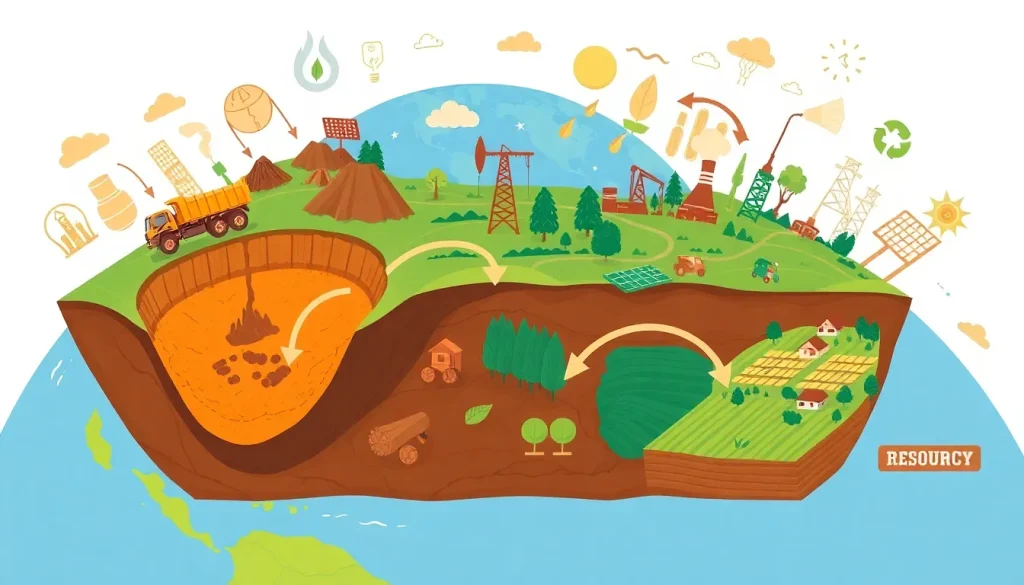
Resource extraction is the process of removing natural resources from the Earth or its ecosystems for direct human use or further processing. These resources include minerals, fossil fuels, timber, water, and biological materials such as fish and agricultural crops. Extraction is the first step in the production chain that transforms raw materials into goods and services, making it a fundamental activity of any economy. Without resource extraction, modern society would lack the metals for electronics, the fuels for transportation, the wood for construction, and the food to sustain populations.
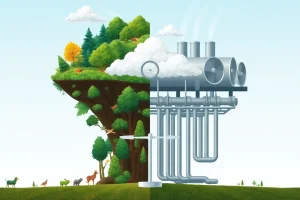
The practice spans a wide range of industries and scales, from small-scale artisanal mining and subsistence farming to large multinational operations involving open-pit mines, offshore oil platforms, and industrial logging. While extraction provides essential inputs for development, it also raises critical questions about sustainability, environmental stewardship, and social equity. The way resources are extracted—and the rate at which they are consumed—directly affects ecosystems, climate, and the well-being of communities, making resource extraction a central topic in discussions about sustainable development.
Overview
Resource extraction is categorized based on the type of resource and the method used. Non-renewable resources, such as fossil fuels (coal, oil, natural gas) and minerals (iron, copper, gold), exist in finite quantities and are formed over geological timescales. Their extraction typically involves mining, drilling, or quarrying. Renewable resources, including timber, fish, freshwater, and agricultural products, can regenerate over time if managed properly, but they are often extracted at rates that exceed natural replenishment, leading to depletion.
The scale of extraction has grown dramatically since the Industrial Revolution, driven by population growth, urbanization, and rising consumption. Today, the global economy extracts over 100 billion tons of raw materials annually, a figure that continues to rise. This massive throughput places immense pressure on the planet’s ecosystems and resource bases, prompting calls for a transition toward circular economies that minimize virgin material extraction through reuse, recycling, and efficiency.
How It Works
Resource extraction follows a general sequence: exploration, development, extraction, and reclamation. Exploration involves surveying and testing to locate and quantify resource deposits. Once a viable site is identified, development includes building access roads, processing facilities, and other infrastructure. The extraction phase then removes the resource using techniques suited to its type and location. Finally, reclamation aims to restore the site to a stable condition, though the effectiveness of reclamation varies widely.
Methods differ by resource. Surface mining (open-pit, strip mining) is used for minerals near the surface, while underground mining targets deeper deposits. Oil and gas extraction employs drilling, often combined with hydraulic fracturing or offshore platforms. Logging ranges from selective cutting to clear-cutting. Agriculture involves tilling soil, planting, and harvesting. Each method has distinct environmental footprints, energy requirements, and waste streams. Technological advances, such as directional drilling and precision agriculture, have increased efficiency but also enabled extraction in previously inaccessible areas, intensifying impacts.
Environmental and Human Impacts
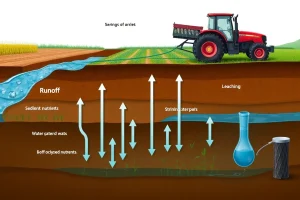
Resource extraction can cause severe environmental damage. Mining and drilling often lead to deforestation, soil erosion, and contamination of water sources with heavy metals or chemicals. The removal of vegetation disrupts habitats and biodiversity. Fossil fuel extraction and processing are major sources of greenhouse gas emissions, contributing to climate change. Even renewable resource extraction, such as large-scale agriculture, can degrade soil, deplete aquifers, and pollute waterways with fertilizers and pesticides.
Human communities are also affected. Extraction projects can displace indigenous peoples and local populations, leading to loss of livelihoods and cultural heritage. The influx of workers can strain local infrastructure and create social tensions. Health impacts from pollution, such as respiratory diseases from mining dust or waterborne illnesses from contaminated supplies, are common in extraction regions. Conflicts over resource rights and revenues—sometimes called the “resource curse”—can fuel corruption and violence, particularly in countries with weak governance.
Importance and Impact
Resource extraction is indispensable to modern civilization. It supplies the raw materials for energy, construction, manufacturing, and technology. Metals like lithium and cobalt are critical for batteries and electronics; oil and gas power transportation and industry; timber and minerals build homes and infrastructure. The extraction sector also provides employment and revenue for many nations, especially in developing countries where natural resources are a primary economic asset.
However, the economic benefits are often unevenly distributed. Resource-rich regions may experience boom-and-bust cycles, leaving behind environmental degradation and social disruption once extraction ends. The global demand for resources drives geopolitical strategies and can lead to conflicts over access and control. As the world transitions to renewable energy, the extraction of materials for solar panels, wind turbines, and batteries is increasing, shifting the geography and nature of resource dependence.
Solutions
Addressing the challenges of resource extraction requires a multi-faceted approach. Technological innovation can reduce the environmental footprint of extraction through more efficient processes, better waste management, and restoration techniques. For example, precision mining uses sensors and data analytics to minimize waste, while bioremediation employs organisms to clean contaminated sites. Recycling and the circular economy aim to reduce the need for virgin material extraction by keeping resources in use longer.
Policy and governance play crucial roles. Stronger regulations can enforce environmental standards, protect community rights, and ensure fair revenue sharing. International initiatives, such as the Extractive Industries Transparency Initiative (EITI), promote accountability. Companies are increasingly adopting sustainability frameworks and reporting on environmental, social, and governance (ESG) criteria. Consumer awareness and demand for ethically sourced products also drive change, encouraging certification schemes like Fairtrade and the Forest Stewardship Council.
Benefits, Limitations and Trade-offs
Resource extraction provides undeniable benefits: it fuels economic growth, creates jobs, and supplies the materials needed for infrastructure, technology, and daily life. Many developing countries rely on extraction for a significant share of their GDP and government revenues. The sector can also spur local development through investments in roads, schools, and health services.
Yet these benefits come with trade-offs. Extraction often causes irreversible environmental damage, such as biodiversity loss and water pollution. The economic gains may be short-lived if resources are depleted without reinvestment. Social costs, including displacement and health impacts, can outweigh the benefits for local communities. Balancing these factors requires robust governance, transparent decision-making, and a commitment to equitable distribution of both the benefits and the burdens of extraction. The transition to a low-carbon economy introduces new trade-offs, as the demand for minerals for clean energy technologies may increase pressure on certain ecosystems and communities.
FAQ
What is resource extraction?
Resource extraction is the process of removing natural resources—such as minerals, fossil fuels, timber, and water—from the Earth or its ecosystems for human use. It is the first step in producing goods and services.
How does resource extraction affect the environment?
It can cause deforestation, soil erosion, water pollution, habitat destruction, and greenhouse gas emissions. The severity depends on the method, scale, and management practices.
Why does resource extraction matter?
It provides the raw materials essential for modern life, from energy and construction to technology and food. However, it also poses sustainability challenges that affect economies, communities, and the planet.
References
- United Nations Environment Programme (UNEP). Global Resources Outlook. Available at: https://www.resourcepanel.org/global-resources-outlook
- U.S. Geological Survey (USGS). Mineral Commodity Summaries. Available at: https://www.usgs.gov/centers/national-minerals-information-center/mineral-commodity-summaries
- World Bank. Extractive Industries Transparency Initiative (EITI). Available at: https://eiti.org/
- Intergovernmental Panel on Climate Change (IPCC). Reports on land use and resource extraction. Available at: https://www.ipcc.ch/