In brief
At a glance
Quick Facts
- Verdict
- Mixed
- Problem addressed
- Reducing greenhouse gas emissions cost-effectively
- Evidence strength
- Moderate
- Potential scale
- Global
- Relative cost
- Moderate
- Time to impact
- Years to decades
Quick verdict
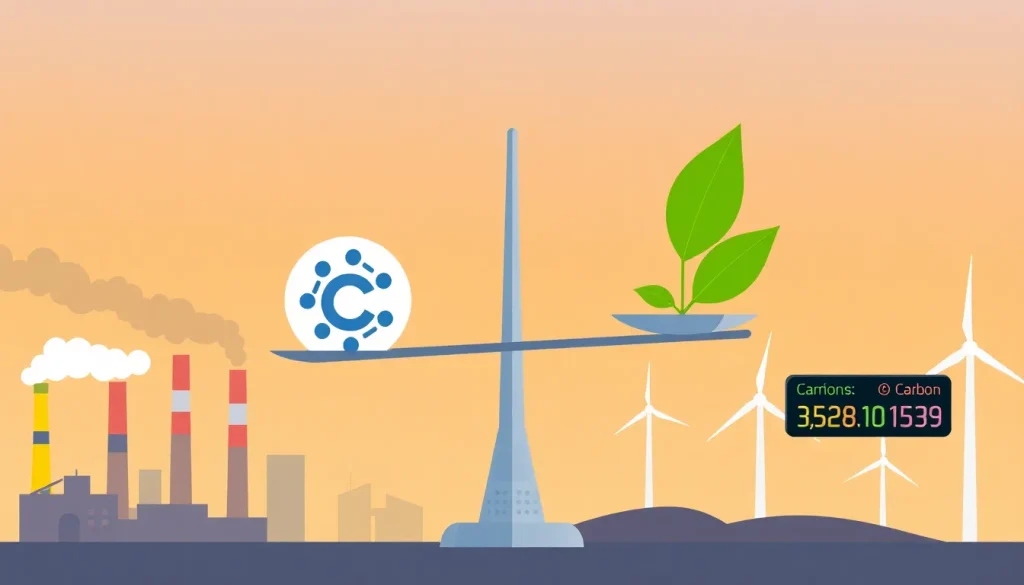
Carbon markets can accelerate decarbonization under the right conditions, but they are not a guaranteed solution. Well-designed emissions trading systems (ETS) with robust caps, transparent monitoring, and limited offsets have demonstrably reduced emissions in some regions, such as the European Union. However, many carbon markets suffer from weak rules, overallocation of permits, and questionable offset quality, which can undermine their environmental integrity. The evidence suggests that carbon markets are a useful tool when embedded in a broader policy mix, but they are not a substitute for direct regulation, investment in clean technology, or phase-out of fossil fuels.
Problem addressed
Carbon markets aim to reduce greenhouse gas (GHG) emissions by putting a price on carbon. The core problem is that the atmosphere is a global commons, and emitters do not bear the full social cost of their pollution. By creating a market for emission allowances or credits, carbon pricing internalizes the externality, incentivizing emitters to reduce their carbon footprint in the most cost-effective way. The ultimate goal is to drive decarbonization across sectors—power generation, industry, transport, and even land use—by making low-carbon alternatives more competitive.
How the solution works
Carbon markets generally fall into two categories: cap-and-trade systems and baseline-and-credit systems (often involving carbon offsets).
- Cap-and-trade: A government sets a limit (cap) on total emissions for covered sectors and issues a corresponding number of allowances. Companies must hold enough allowances to cover their emissions; they can trade allowances, creating a market price. The cap declines over time, reducing total emissions. Examples include the EU Emissions Trading System (EU ETS) and the California Cap-and-Trade Program.
- Baseline-and-credit: Projects that reduce emissions below a baseline can earn credits, which can be sold to emitters seeking to offset their emissions. These are often used in voluntary carbon markets or as compliance offsets within cap-and-trade systems. Examples include the Clean Development Mechanism (CDM) under the Kyoto Protocol and various voluntary standards like Verra’s VCS.
In theory, carbon markets find the cheapest abatement opportunities, lowering the overall cost of meeting climate targets. They also generate a carbon price signal that encourages innovation and long-term investment in low-carbon technologies.
Evidence strength
The evidence on carbon markets’ effectiveness is mixed and context-dependent. The most studied system, the EU ETS, has contributed to emission reductions in the power and industrial sectors. Research suggests that the EU ETS caused a reduction of about 1.2 billion tons of CO₂ between 2008 and 2016 (roughly 3.8% of total capped emissions) relative to a counterfactual, with no significant negative economic impact. However, early phases suffered from over-allocation of free allowances, leading to low prices and limited abatement. California’s cap-and-trade program has helped the state meet its emission targets, but its impact is difficult to isolate from complementary policies like renewable portfolio standards.
Evidence for voluntary carbon markets is weaker. Studies have found that a large share of offset projects, particularly under the CDM, did not deliver additional emission reductions—meaning the reductions would have happened anyway. A 2016 study by the Öko-Institut found that 85% of CDM projects had a low likelihood of being additional. More recent assessments of voluntary forest carbon credits have revealed systemic over-crediting. Thus, while well-regulated compliance markets show promise, the evidence for voluntary offsets is often poor.
Potential scale
Carbon markets could theoretically cover a large share of global emissions. As of 2023, about 23% of global GHG emissions are covered by carbon pricing initiatives, including both emissions trading systems and carbon taxes, according to the World Bank. The EU ETS covers around 40% of EU emissions. China’s national ETS, launched in 2021, is the world’s largest by covered emissions, initially covering the power sector (about 4 billion tons of CO₂). If all major economies implemented robust carbon markets, coverage could exceed 50% of global emissions. However, scaling up faces political and technical hurdles, including sectoral coverage (e.g., agriculture, transport), international linkage, and ensuring market integrity.
Cost considerations
Carbon markets are often promoted as a cost-effective way to reduce emissions because they allow abatement to occur where it is cheapest. The cost to society is reflected in the carbon price, which varies widely: the EU ETS price rose from below €10/tCO₂ in 2017 to over €100/tCO₂ in 2023, while prices in voluntary markets average a few dollars per ton. High prices drive deeper decarbonization but can face political resistance. Transaction costs for monitoring, reporting, and verification (MRV) can be significant, especially for offset projects. Overall, carbon markets can lower the total cost of meeting a given emission target compared to rigid regulations, but the cost-effectiveness depends on market design and the availability of genuine low-cost abatement options.
Implementation time
Establishing a carbon market typically takes several years from design to full operation. The EU ETS took about five years from initial proposal (2000) to launch (2005). China’s national ETS was piloted in regions from 2013 before national launch in 2021. Once operational, a market can begin delivering emission reductions relatively quickly if the cap is stringent, but the full effect on investment and technology deployment may take a decade or more. Voluntary carbon markets can be set up faster but often lack the regulatory infrastructure to ensure quality. In general, carbon markets are a medium- to long-term tool, not a quick fix.
Environmental benefits
The primary environmental benefit is a reduction in GHG emissions. The EU ETS has contributed to a 35% drop in emissions from covered sectors between 2005 and 2019. However, attributing all reductions to the market is complex because of overlapping policies (e.g., renewable energy targets) and economic changes. Carbon markets can also drive co-benefits like reduced air pollution if they lead to less coal combustion. Offsets can fund projects that protect forests or restore ecosystems, but these benefits are only realized if the offsets are additional and permanent. Poorly designed markets can lead to carbon leakage, where emissions are simply shifted to unregulated regions, negating global benefits.
Social and economic co-benefits
Revenue from auctioning allowances can be substantial. The EU ETS generated over €30 billion in auction revenues in 2022 alone, which member states have used to fund clean energy, energy efficiency, and social programs. California’s program directs a portion of revenue to disadvantaged communities. Carbon markets can also create jobs in clean energy and technology sectors. However, if not designed with equity in mind, they can disproportionately burden low-income households through higher energy costs. Some systems include measures to rebate revenues or provide direct assistance to vulnerable groups.
Risks and unintended consequences
Carbon markets carry several risks. Carbon leakage occurs when companies relocate production to jurisdictions with weaker climate policies, increasing emissions elsewhere. Overallocation of free allowances can depress prices and undermine incentives to reduce emissions. Offset quality is a persistent concern: many offset projects may not be additional, may overestimate emission reductions, or may have negative social impacts (e.g., land grabs). Market manipulation and fraud have occurred in some systems. Price volatility can deter long-term investment. There is also a risk that carbon markets create a “pay-to-pollute” mentality, allowing companies to buy offsets instead of making fundamental changes. Finally, carbon markets can be politically captured, leading to weak caps and loopholes.
Where it works best
Carbon markets are most effective in contexts with strong governance, transparent monitoring, and a stable regulatory framework. They work well for large stationary emission sources like power plants and industrial facilities, where emissions are easier to measure. Sectors with diverse abatement options and a clear price signal can respond efficiently. The EU ETS is often cited as a success after reforms tightened the cap and introduced a Market Stability Reserve. California’s program has also shown that a market can work alongside complementary policies. Markets linked across jurisdictions (e.g., California-Quebec) can enhance cost-effectiveness and reduce leakage risk.
Where it may not work
Carbon markets are less suitable in contexts with weak institutional capacity, corruption, or lack of reliable emissions data. They struggle to cover diffuse sources like agriculture or small-scale industry. In countries where fossil fuel subsidies are high or where there is no political will to enforce a binding cap, a carbon market may be ineffective or even counterproductive. Voluntary carbon markets, in particular, have been criticized for enabling greenwashing without delivering real emission reductions. Markets also may not work well for sectors where technological alternatives are not yet available, as the price signal alone may not be sufficient to drive innovation.
Comparison with alternatives
Carbon markets are one of several policy instruments for decarbonization. Alternatives include:
- Carbon taxes: A direct price on carbon, simpler to administer and provides price certainty, but does not guarantee a specific emission reduction. Often politically more difficult.
- Direct regulation: Technology standards, performance standards, or bans (e.g., phasing out coal, mandating renewable energy). These can be more effective for specific sectors but may be less cost-effective overall.
- Subsidies and incentives: Feed-in tariffs, tax credits, and grants for clean energy. These can accelerate deployment but may be expensive and can lead to market distortions.
- Public investment: Government funding for R&D, infrastructure, and just transition. Essential for long-term transformation but requires fiscal resources.
Most experts agree that a mix of policies is needed; carbon markets can play a central role in providing a broad price signal, but they must be complemented by sector-specific regulations and support for innovation.
Case studies
EU Emissions Trading System (EU ETS): Launched in 2005, it covers power, industry, and aviation. After initial overallocation, reforms from 2018 onward tightened the cap and introduced the Market Stability Reserve. Emissions from stationary installations fell by about 35% between 2005 and 2019. The carbon price rose from under €5 in 2017 to over €100 in 2023, driving significant coal-to-gas switching and investment in renewables. It is widely considered the most successful large-scale carbon market, though challenges remain for sectors like aviation and maritime.
California Cap-and-Trade Program: Started in 2013, covers electricity, industry, and transport fuels. It is part of a broader climate policy package. Emissions in covered sectors have declined, and the state is on track to meet its 2020 and 2030 targets. Auction revenues have funded numerous clean energy and equity programs. However, the program has faced criticism for overallocation and reliance on offsets, some of which have questionable integrity.
Clean Development Mechanism (CDM): Established under the Kyoto Protocol, it allowed developed countries to invest in emission reduction projects in developing countries and earn credits. By 2020, it had issued over 2 billion credits. However, numerous studies found that a large majority of projects were not additional, and the mechanism may have actually increased global emissions in some cases. The CDM is often cited as a cautionary tale for carbon offsetting.
Final assessment
Carbon markets can accelerate decarbonization, but their success is highly contingent on design, governance, and political commitment. When implemented with a stringent, declining cap, robust MRV, limited use of high-quality offsets, and complementary policies, they can drive cost-effective emission reductions and generate revenue for climate action. The EU ETS demonstrates that a reformed market can be a powerful tool. However, carbon markets are not a panacea. They can fail if caps are weak, offsets are bogus, or political will is lacking. For developing countries with limited institutional capacity, carbon markets may be premature. Ultimately, carbon markets should be viewed as one component of a comprehensive climate strategy, not a standalone solution. Their role in accelerating decarbonization will depend on continuous improvement, transparency, and integration with direct regulations and investments.
FAQ
Do carbon markets actually reduce emissions?
Yes, well-designed carbon markets like the EU ETS have contributed to measurable emission reductions. However, the impact depends on the stringency of the cap, the quality of offsets, and complementary policies. Poorly designed markets may have little or no effect.
What is the difference between cap-and-trade and carbon offsets?
Cap-and-trade sets a limit on total emissions and requires emitters to hold allowances; trading creates a carbon price. Carbon offsets are credits from projects that reduce emissions elsewhere, which can be used to compensate for emissions. Offsets are often used in voluntary markets or as a flexibility mechanism within cap-and-trade systems.
Why do carbon prices vary so much across markets?
Carbon prices differ due to variations in market design, stringency of caps, economic conditions, and political factors. Compliance markets with binding caps tend to have higher prices than voluntary markets, where demand is driven by corporate pledges and prices are often much lower.
References
- IPCC, 2022: Climate Change 2022: Mitigation of Climate Change. Working Group III contribution to the Sixth Assessment Report.
- World Bank, 2023: State and Trends of Carbon Pricing 2023.
- European Environment Agency, 2023: EU Emissions Trading System (EU ETS) data viewer.
- Calel, R. and Dechezleprêtre, A., 2016. 'The impact of the European Union Emissions Trading Scheme on technological change', Journal of Political Economy.
- Cullenward, D. and Victor, D.G., 2020. Making Climate Policy Work. Polity Press.