In brief
At a glance
Quick Facts
- Primary nutrients
- Nitrogen and phosphorus are the main nutrients causing eutrophication in water bodies.
- Largest source
- Agriculture is the largest contributor to nutrient loading globally, through fertilizer runoff and animal waste.
- Dead zones
- Nutrient loading has led to over 400 hypoxic zones worldwide, covering more than 245,000 square kilometers.
- Toxic blooms
- Cyanobacterial blooms can produce toxins like microcystin, which are harmful to liver and nervous systems.
- Legacy nutrients
- Nutrients can accumulate in soils and sediments, continuing to affect water quality for decades after inputs are reduced.
- Economic cost
- In the U.S. alone, nutrient pollution is estimated to cause billions of dollars in damages annually to fisheries, tourism, and water treatment.
- Regulatory approach
- Total Maximum Daily Loads (TMDLs) are used to set limits on nutrient inputs to impaired water bodies.
- Natural filters
- Wetlands and riparian buffers can remove up to 90% of nitrogen from runoff before it reaches streams.
Key Takeaways
- Nutrient loading is the process by which excess nutrients, primarily nitrogen and phosphorus, enter water bodies, often from human activities.
- It is a leading cause of eutrophication, triggering harmful algal blooms, oxygen depletion, and ecosystem degradation.
- Major sources include agricultural runoff, wastewater discharge, and atmospheric deposition from fossil fuel combustion.
- Managing nutrient loading is critical for protecting drinking water, aquatic life, and recreational economies.
What Is Nutrient Loading?
Nutrient loading refers to the amount of nutrients, particularly nitrogen and phosphorus, that are introduced into an ecosystem, typically a water body such as a lake, river, estuary, or coastal ocean. These nutrients are essential for plant growth, but when present in excess, they can disrupt natural balances. The term “loading” emphasizes the rate or total quantity of nutrients delivered over time, often from diffuse or point sources. It is a central concept in water quality management and environmental science.
In natural systems, nutrient inputs are typically low and are efficiently cycled by plants, algae, and bacteria. However, human activities have dramatically increased the flux of nitrogen and phosphorus into the environment. Nutrient loading is often measured as the mass of nitrogen or phosphorus per unit area per year (e.g., kg/ha/yr). It can originate from point sources, such as a sewage treatment plant outfall, or nonpoint sources, like agricultural fields where fertilizers are applied. The consequences of excessive nutrient loading are far-reaching, affecting water quality, biodiversity, and human health.
Overview
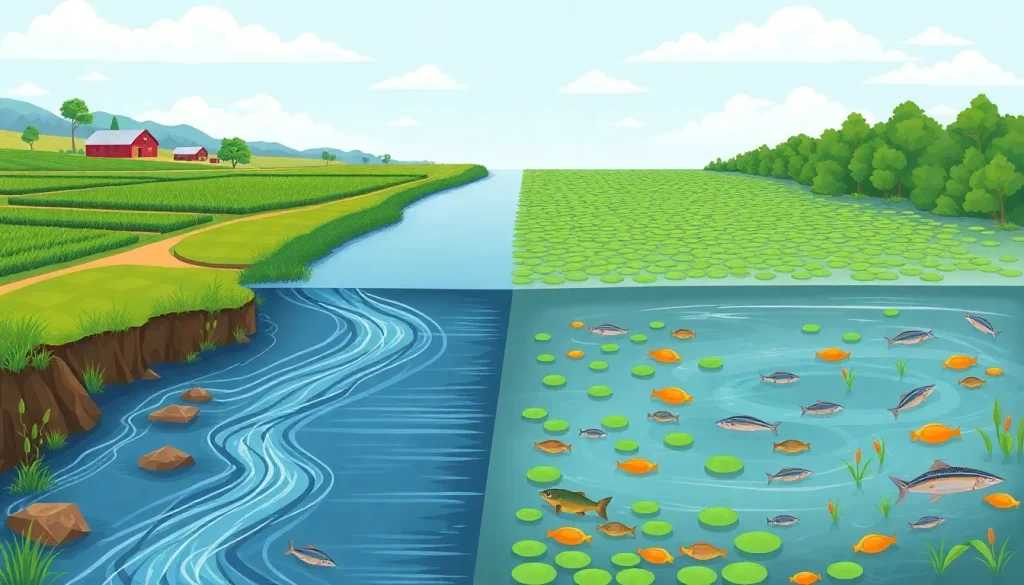
Nutrient loading is a key driver of eutrophication, a process where water bodies become overly enriched with nutrients, leading to excessive plant and algal growth. While nutrients are vital for aquatic life, an overabundance—often from human activities—can cause dense algal blooms, some of which produce toxins harmful to fish, wildlife, and people. As these blooms die and decompose, they consume dissolved oxygen, creating hypoxic or anoxic “dead zones” where most aquatic organisms cannot survive. The scale of nutrient loading has increased dramatically since the mid-20th century, paralleling the intensification of agriculture, urbanization, and industrial activity. Today, it is recognized as one of the most widespread and challenging environmental problems globally, affecting water bodies from small ponds to large marine systems like the Gulf of Mexico and the Baltic Sea.
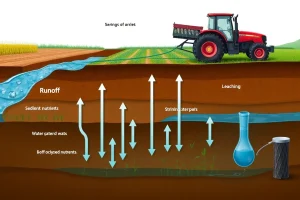
The concept of nutrient loading is not limited to surface waters; it also applies to groundwater, where nitrate contamination from fertilizers can render water unsafe for drinking. The interconnectedness of hydrological systems means that nutrients applied to land can travel far from their source, impacting downstream ecosystems and coastal zones. Understanding nutrient loading is therefore essential for integrated watershed management and for meeting water quality standards set by environmental agencies.
How It Works
Nutrient loading operates through a series of interconnected physical, chemical, and biological processes. Nutrients enter water bodies via runoff, groundwater flow, atmospheric deposition, or direct discharge. Once in the water, they become available for uptake by primary producers—algae, cyanobacteria, and aquatic plants. Under normal conditions, growth is limited by the availability of one key nutrient, often phosphorus in freshwater and nitrogen in marine systems. When excess nutrients are added, this limitation is removed, leading to rapid, uncontrolled growth of algae and plants, a phenomenon known as an algal bloom.
The subsequent decay of this organic matter by bacteria consumes large amounts of dissolved oxygen, a process called biochemical oxygen demand. As oxygen levels drop, fish and other aerobic organisms may die or flee the area. In severe cases, the water becomes hypoxic (low oxygen) or anoxic (no oxygen), creating dead zones. Additionally, some algal blooms, particularly those of cyanobacteria (blue-green algae), can release toxins that are harmful to aquatic life, livestock, and humans. Nutrient loading can also lead to shifts in species composition, favoring fast-growing, opportunistic species over more sensitive ones, thereby reducing biodiversity.
The specific dynamics depend on the water body’s characteristics, such as its depth, flow rate, and residence time. In slow-moving or stratified lakes, nutrients can accumulate and trigger persistent blooms. In rivers, the effects may be more transient but can still cause downstream impacts. In estuaries, where freshwater meets seawater, complex interactions between nitrogen and phosphorus can fuel productivity, often making them highly susceptible to nutrient loading.
Main Causes or Drivers
The primary drivers of nutrient loading are human activities that release nitrogen and phosphorus into the environment. These can be categorized as point sources and nonpoint sources.
- Agricultural runoff: The application of synthetic fertilizers and animal manure to croplands is the largest contributor globally. Excess nutrients not taken up by crops wash into nearby streams and rivers during rainfall or irrigation. Livestock operations also generate large quantities of nutrient-rich waste that can leach into waterways.
- Wastewater and sewage: Treated and untreated sewage from municipal and industrial sources contains high levels of nitrogen and phosphorus. Even advanced treatment plants may not remove all nutrients. In many developing regions, untreated sewage is a major source of nutrient loading.
- Stormwater runoff: Urban areas contribute nutrients from lawn fertilizers, pet waste, detergents, and atmospheric deposition onto impervious surfaces, which then flow into waterways. Combined sewer overflows can release untreated sewage during heavy rains.
- Atmospheric deposition: Nitrogen oxides from fossil fuel combustion and ammonia from agricultural activities can be deposited directly onto water surfaces or land, later entering water bodies. This is a significant source of nitrogen in some regions, particularly downwind of industrial and agricultural areas.
- Aquaculture: Fish farming operations release uneaten feed and fish waste, which are rich in nutrients, into surrounding waters. In some coastal areas, aquaculture is a dominant local source of nutrient loading.
- Industrial discharges: Some industries, such as food processing and chemical manufacturing, release nutrient-rich effluents. While often regulated, accidental spills or inadequate treatment can contribute to loading.
Natural sources, such as weathering of rocks and nitrogen fixation by legumes, also contribute to background nutrient levels, but human activities have roughly doubled the global cycling of nitrogen and phosphorus, overwhelming natural systems.
Environmental and Human Impacts
Excessive nutrient loading has profound ecological and societal consequences. Ecologically, it leads to eutrophication, characterized by harmful algal blooms, loss of submerged aquatic vegetation, and hypoxia. These changes can cause fish kills, disrupt food webs, and reduce biodiversity. Toxin-producing cyanobacteria can contaminate drinking water supplies, posing health risks to humans and animals. For example, microcystin toxins can cause liver damage, while other cyanotoxins affect the nervous system. In marine environments, nutrient loading can contribute to coral reef degradation by promoting algal overgrowth that smothers corals.
Economically, nutrient pollution impacts commercial and recreational fisheries, tourism, and property values. Water treatment costs rise as utilities must remove algal toxins, taste-and-odor compounds, and organic matter. In coastal areas, nutrient loading contributes to the degradation of coral reefs and seagrass beds, which are vital for fisheries and storm protection. Human health can also be affected indirectly through the consumption of contaminated shellfish or water, and directly through skin contact during recreational activities in affected waters. The World Health Organization has recognized cyanobacterial toxins as a significant public health concern.
Furthermore, nutrient loading can exacerbate climate change impacts. Warmer temperatures and increased precipitation intensity can enhance nutrient runoff and algal bloom frequency, creating a feedback loop. Dead zones also produce greenhouse gases like methane and nitrous oxide, contributing to atmospheric warming.
Solutions
Addressing nutrient loading requires a combination of regulatory, technological, and behavioral approaches. Key strategies include:
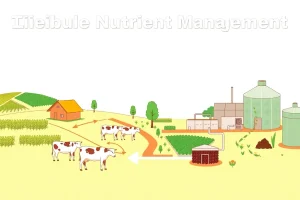
- Improved agricultural practices: Precision farming, cover crops, buffer strips, and reduced fertilizer application can minimize nutrient runoff. Manure management and controlled drainage also help. Conservation tillage and crop rotation improve soil health and nutrient retention.
- Wastewater treatment upgrades: Advanced treatment technologies, such as biological nutrient removal and chemical precipitation, can significantly reduce nitrogen and phosphorus in effluent. Upgrading aging infrastructure and expanding sewerage systems in underserved areas are critical.
- Stormwater management: Green infrastructure like rain gardens, permeable pavements, and constructed wetlands can capture and treat runoff before it reaches water bodies. Retention ponds and bioswales also help filter nutrients.
- Policy and regulation: Setting nutrient criteria for water bodies, enforcing discharge permits, and implementing total maximum daily loads (TMDLs) are critical. Market-based approaches, such as nutrient trading, can provide economic incentives for reducing pollution. The European Union’s Water Framework Directive and the U.S. Clean Water Act are examples of regulatory frameworks.
- Public education and outreach: Encouraging responsible fertilizer use, proper septic system maintenance, and reducing household chemical use can help at the individual level. Citizen science programs can monitor water quality and raise awareness.
- Restoration of natural buffers: Wetlands, riparian zones, and floodplains can naturally filter nutrients and should be protected and restored. These ecosystems can remove significant amounts of nitrogen through denitrification and plant uptake.
Integrated watershed management, which considers all sources and stakeholders, is essential for long-term success. International cooperation is often needed for transboundary water bodies, such as the Baltic Sea, where multiple countries contribute to nutrient loading.
Common Misconceptions
One common misconception is that nutrient loading is only a problem in lakes and ponds. In reality, it affects rivers, estuaries, and coastal marine environments just as severely, often with more complex dynamics due to tidal flushing and salinity gradients. Another misunderstanding is that all algae blooms are toxic; while many are not, even non-toxic blooms can cause ecological harm through oxygen depletion and habitat alteration. Some people believe that nutrient pollution is solely a modern issue, but historical records show that eutrophication occurred in ancient times, though the current scale and frequency are unprecedented. Finally, there is a misconception that solving nutrient loading is simply a matter of reducing fertilizer use; in fact, legacy nutrients stored in soils and sediments can continue to fuel eutrophication for decades, requiring long-term, multi-faceted solutions. Additionally, some assume that nutrient loading is only a freshwater issue, but marine systems are equally vulnerable, and the interaction between nitrogen and phosphorus can differ between fresh and salt water.
FAQ
What is nutrient loading?
Nutrient loading is the amount of nutrients, primarily nitrogen and phosphorus, that enter a water body from various sources, often leading to eutrophication and water quality problems.
How does nutrient loading cause dead zones?
Excess nutrients fuel algal blooms. When the algae die and decompose, bacteria consume oxygen, creating hypoxic conditions that cannot support most marine life, resulting in dead zones.
Why does nutrient loading matter?
It matters because it degrades water quality, harms aquatic ecosystems, threatens human health through toxic blooms and contaminated drinking water, and imposes significant economic costs on communities.
References
- U.S. Environmental Protection Agency (EPA). 'Nutrient Pollution.' https://www.epa.gov/nutrientpollution
- National Oceanic and Atmospheric Administration (NOAA). 'What is a dead zone?' https://oceanservice.noaa.gov/facts/deadzone.html
- Smith, V.H., et al. 'Eutrophication: impacts of excess nutrient inputs on freshwater, marine, and terrestrial ecosystems.' Environmental Pollution, 1999.